Qwen3-TTS Text to Speech – Professional Voice Clone & Natural Speech Synthesis
Description
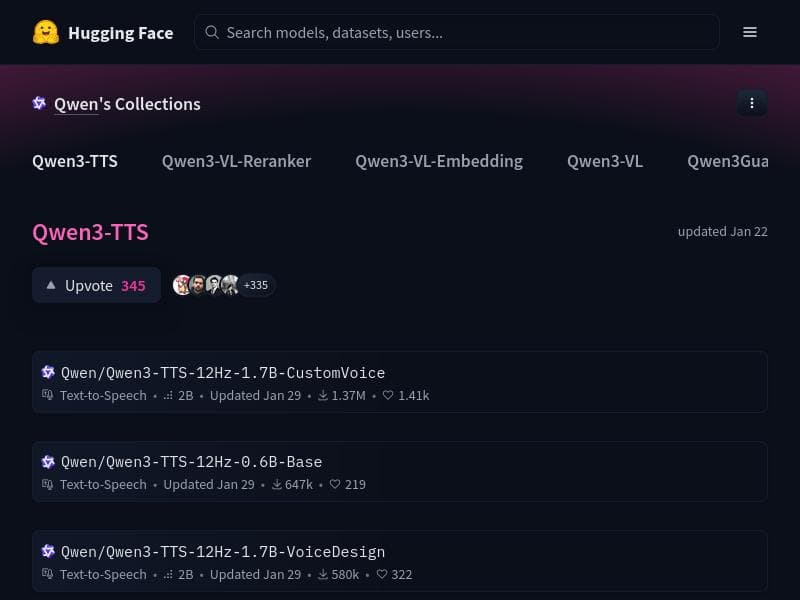
Qwen3-TTS is a cutting-edge open-source text-to-speech model delivering ultra-low latency and rapid 3-second voice cloning for professional-grade, natural-sounding speech synthesis. Ideal for content creators, developers, and businesses, it offers free-form voice design and a dual-track LLM architecture—all at no cost.
Qwen3-TTS Text to Speech – Professional Voice Clone & Natural Speech Synthesis is an advanced open-source AI model designed to convert written text into high-quality, natural-sounding speech. Its core purpose is to provide users with a seamless and efficient way to generate professional-grade audio content without requiring any audio editing expertise. By leveraging state-of-the-art AI technology, Qwen3-TTS enables rapid voice synthesis that sounds authentic and human-like, making it an ideal solution for a wide range of applications including content creation, software development, and business communications. One of the standout features of Qwen3-TTS is its ultra-low latency of just 97 milliseconds, which ensures near real-time speech generation. This makes it highly suitable for interactive applications such as virtual assistants, live broadcasts, and real-time narration. Additionally, the model supports 3-second voice cloning, allowing users to replicate a specific voice quickly and accurately with only a brief audio sample. This capability opens up possibilities for personalized voiceovers, brand-specific audio content, and custom voice assistants. Qwen3-TTS also offers free-form voice design, giving users the flexibility to customize voice characteristics beyond simple cloning. This feature enables the creation of unique voice personas tailored to specific brand identities or creative projects. The dual-track LLM (Large Language Model) architecture further enhances the model's performance by effectively managing linguistic context and acoustic features, resulting in speech that is both contextually appropriate and natural in tone. This tool is best suited for content creators such as podcasters, video producers, and educators who need high-quality voiceovers without the hassle of manual audio editing. Developers can integrate Qwen3-TTS into applications, games, or customer service bots to provide dynamic and engaging voice interactions. Businesses can utilize it for automated announcements, training materials, and marketing campaigns, benefiting from its professional audio output and rapid voice cloning. Qwen3-TTS is completely free to use, making it accessible to individuals and organizations of all sizes. Being open-source, it encourages community contributions and customization, which can lead to continuous improvements and tailored solutions. This pricing model contrasts with many commercial TTS services that charge based on usage or require subscriptions, offering a cost-effective alternative without sacrificing quality. Compared to other text-to-speech solutions, Qwen3-TTS stands out due to its combination of open-source availability, extremely low latency, and fast voice cloning capabilities. While many TTS tools offer natural-sounding voices, few provide such rapid cloning or the ability to design voices freely. Its dual-track LLM architecture also differentiates it by enhancing speech naturalness and contextual accuracy. However, as an open-source tool, it may require some technical knowledge to deploy and integrate effectively, which could be a consideration for non-technical users. Notable limitations include potential challenges in setting up the model for users without programming experience and the need for sufficient computational resources to run the model efficiently. Additionally, while the 3-second voice cloning is impressive, the quality and accuracy of cloned voices may vary depending on the input audio quality and the complexity of the original voice. Users should also consider privacy and ethical implications when cloning voices, ensuring proper consent is obtained. Overall, Qwen3-TTS offers a powerful, flexible, and cost-free solution for anyone looking to generate natural and professional speech from text quickly. Its advanced features and open-source nature make it a compelling choice for developers, creators, and businesses aiming to enhance their audio content and voice applications.

Description
Qwen3-TTS is a cutting-edge open-source text-to-speech model delivering ultra-low latency and rapid 3-second voice cloning for professional-grade, natural-sounding speech synthesis. Ideal for content creators, developers, and businesses, it offers free-form voice design and a dual-track LLM architecture—all at no cost.
Qwen3-TTS Text to Speech – Professional Voice Clone & Natural Speech Synthesis is an advanced open-source AI model designed to convert written text into high-quality, natural-sounding speech. Its core purpose is to provide users with a seamless and efficient way to generate professional-grade audio content without requiring any audio editing expertise. By leveraging state-of-the-art AI technology, Qwen3-TTS enables rapid voice synthesis that sounds authentic and human-like, making it an ideal solution for a wide range of applications including content creation, software development, and business communications. One of the standout features of Qwen3-TTS is its ultra-low latency of just 97 milliseconds, which ensures near real-time speech generation. This makes it highly suitable for interactive applications such as virtual assistants, live broadcasts, and real-time narration. Additionally, the model supports 3-second voice cloning, allowing users to replicate a specific voice quickly and accurately with only a brief audio sample. This capability opens up possibilities for personalized voiceovers, brand-specific audio content, and custom voice assistants. Qwen3-TTS also offers free-form voice design, giving users the flexibility to customize voice characteristics beyond simple cloning. This feature enables the creation of unique voice personas tailored to specific brand identities or creative projects. The dual-track LLM (Large Language Model) architecture further enhances the model's performance by effectively managing linguistic context and acoustic features, resulting in speech that is both contextually appropriate and natural in tone. This tool is best suited for content creators such as podcasters, video producers, and educators who need high-quality voiceovers without the hassle of manual audio editing. Developers can integrate Qwen3-TTS into applications, games, or customer service bots to provide dynamic and engaging voice interactions. Businesses can utilize it for automated announcements, training materials, and marketing campaigns, benefiting from its professional audio output and rapid voice cloning. Qwen3-TTS is completely free to use, making it accessible to individuals and organizations of all sizes. Being open-source, it encourages community contributions and customization, which can lead to continuous improvements and tailored solutions. This pricing model contrasts with many commercial TTS services that charge based on usage or require subscriptions, offering a cost-effective alternative without sacrificing quality. Compared to other text-to-speech solutions, Qwen3-TTS stands out due to its combination of open-source availability, extremely low latency, and fast voice cloning capabilities. While many TTS tools offer natural-sounding voices, few provide such rapid cloning or the ability to design voices freely. Its dual-track LLM architecture also differentiates it by enhancing speech naturalness and contextual accuracy. However, as an open-source tool, it may require some technical knowledge to deploy and integrate effectively, which could be a consideration for non-technical users. Notable limitations include potential challenges in setting up the model for users without programming experience and the need for sufficient computational resources to run the model efficiently. Additionally, while the 3-second voice cloning is impressive, the quality and accuracy of cloned voices may vary depending on the input audio quality and the complexity of the original voice. Users should also consider privacy and ethical implications when cloning voices, ensuring proper consent is obtained. Overall, Qwen3-TTS offers a powerful, flexible, and cost-free solution for anyone looking to generate natural and professional speech from text quickly. Its advanced features and open-source nature make it a compelling choice for developers, creators, and businesses aiming to enhance their audio content and voice applications.
Tool Features
- Open-source Text To Speech
- 97ms latency
- 3-second voice cloning
- Free-form voice design
- Dual-track LLM architecture
Frequently Asked Questions
What is Qwen3-TTS Text to Speech – Professional Voice Clone & Natural Speech Synthesis?
Qwen3-TTS is an open-source AI text-to-speech foundation model that converts text into high-quality, natural-sounding speech with ultra-low latency and fast voice cloning capabilities.
How much does Qwen3-TTS Text to Speech – Professional Voice Clone & Natural Speech Synthesis cost?
Qwen3-TTS is completely free to use, with no subscription or usage fees.
Who is Qwen3-TTS Text to Speech – Professional Voice Clone & Natural Speech Synthesis best for?
It is ideal for content creators, developers, and businesses needing professional-grade voice synthesis, including podcasters, educators, software developers, and marketing teams.
What are the main features of Qwen3-TTS Text to Speech – Professional Voice Clone & Natural Speech Synthesis?
Key features include open-source text-to-speech, ultra-low 97ms latency, 3-second voice cloning, free-form voice design, and a dual-track LLM architecture for enhanced speech quality.
Does Qwen3-TTS Text to Speech – Professional Voice Clone & Natural Speech Synthesis offer a free trial?
Since Qwen3-TTS is free and open-source, there is no need for a trial; users can access and use the tool without cost.
What integrations does Qwen3-TTS Text to Speech – Professional Voice Clone & Natural Speech Synthesis support?
As an open-source model, Qwen3-TTS can be integrated into various applications and platforms by developers, though specific pre-built integrations depend on community or user implementation.
How does Qwen3-TTS Text to Speech – Professional Voice Clone & Natural Speech Synthesis work?
Qwen3-TTS uses a dual-track large language model architecture to process text input and generate natural-sounding speech with minimal latency, including the ability to clone voices from short audio samples.
Sponsored Tools
















Reviews
No reviews yet. Be the first to share your experience.