
Latest AI News

Cyient Launches Intelligent Engineering Unit to Drive AI-led Growth
The new unit will focus on engineering, service, and quality and regulatory workflows, with CYiNGINE serving as its common data and AI foundation.
View

OpenAI Chief Sam Altman Believes We Should ‘Accept Some Bad Things’ From AI
In an interview, OpenAI CEO Sam Altman said he wouldn’t accept “zero hacks” or “zero scams” as the price of caution, as he believes AI’s benefits outweigh risks.
View

Indian IT's Q2 Will Test the Economics of AI
Indian IT stocks enter the Q2 earnings season with strong deal bookings but muted revenue growth as AI creates new work while pressuring the economics of existing contracts.
View

OpenAI to Add Invisible Watermarks to ChatGPT Text in EU; Set to Test New Ad Format
OpenAI is all set to introduce invisible watermarks for text generated by its AI models. This latest move will make it easier for readers to identify AI-generated content. This feature will be initially available in the European Union, in response to the EU AI Act, which requires providers of generative AI systems to make machine-generated content identifiable. Additionally, ChatGPT will show more ads in the coming days. The new ads will appear alongside images that users ask ChatGPT to generate.
View

Linkdaze’s smart calendar is built to run a household, not just track a schedule
With back-to-school season approaching (or already here in some places), keeping track of everyone’s schedules can get pretty chaotic. Between work, school, appointments, sports, chores, and everything else going on, a regular paper calendar just doesn’t cut it. That’s whereLinkdaze’ssmart digital calendar comes in — a touchscreen tablet built specifically to organize a household rather than a single person. One of Linkdaze’s biggest strengths is its calendar compatibility. The system can synchronize calendars from popular services, including Google, iCloud, Outlook, Yahoo, and Cozi, which is a dedicated family-organizing app. This is particularly useful for families where different members use different platforms. Instead of asking everyone to switch to a single calendar app, Linkdaze brings multiple schedules together and uses color coding to make individual family members easy to identify. Launched last December, Linkdaze is available in15.6-inchand10.1-inchmodels (both discounted at Amazon for itsPrime Deal Days, ends October 7), giving you some flexibility depending on how much wall space you have. Beyond calendars and appointments, you can use it for chores and rewards, meal planning, shopping lists, and other family organization. It can even double as a digital photo frame for displaying family photos. The most interesting feature, however, is Linkdaze’s AI meal planner with “Snap-to-Sync.” Instead of manually entering everything into a meal-planning app, you can take a photo of a paper recipe or your kid’s school lunch menu. Linkdaze will turn that information into a digital meal plan and generate a shopping list from it. While not an entirely new idea, it’s a useful feature that helps Linkdaze stand out from a basic digital calendar. Another big plus is that Linkdaze doesn’t require a monthly subscription for its main features. It’s an interesting choice in a category where recurring revenue has become the default. Skylight, a competing smart-calendar brand, offers additional features through its $79 per year subscription. For a hardware company entering a crowded smart-display market, that decision is either going to differentiate its product or look like a lost revenue stream. Linkdaze is also less expensive up front, with the 10.1-inch model priced at $119.99 compared with Skylight’s 10-inch model starting at $149.99 (if you pay for the subscription.) Overall, this device could make a practical gift for busy parents who are trying to keep everyone’s schedules in one place. It could also be a great fit for college apartments, where roommates can use it to coordinate chores, study schedules, shared meals, and other household responsibilities. It’s also very helpful for those of us juggling interviews, deadlines, meetings, and story assignments. This post originally publishedAugust 20, 2026and has since been updated to reflected updated pricing and discounts.
View

Petlibro’s new AI-powered feeder is a game changer for multi-cat homes
Smart feeders have become one of the most crowded categories in pet tech, with companies racing to add AI cameras and health tracking to devices that used to just dispense food on a schedule. I enjoyed testing Petlibro’swet food dispensera couple of years ago, so this time I wanted to try something from the company’s newest automatic feeder lineup: the Granary 2 series, designed specifically for dry food. I was not disappointed. Building on the brand’s Granary line, theGranary 2 serieslineup is designed to give cat parents a clearer picture of what their pets are actually eating, from how much food they consume to how long they spend eating and whether their habits change over time. The series includes four models, priced from $129.99 to $249.99. TheGranary 2is the entry-level option, offering app-controlled feeding, precise portioning, and intake tracking. The $189.99Granary 2 Vision, which is the one I tested, adds an AI-powered camera capable of recognizing up to 10 cats and tracking each pet’s individual eating habits. The $199.99Vision Duois aimed at multi-pet households, with two separate dispensing chutes and bowls so each pet can receive its own portion, and the company says that its most expensive model, the Granary 2 X ($249.99), uses AI recognition to provide individualized portioning for pets with specific dietary needs. Right now, every model from the Granary 2 series isdiscounted at Amazonas part of its Prime Deal Days (ends October 7). The biggest upgrade across the Granary 2 series is its built-in scale. The feeder can measure food in the tray, allowing it to track not only how much food was dispensed but also how much remains in the bowl. That gives it a better way to estimate how much your pet actually ate. While a traditional automatic feeder can tell you that it released a meal at 7 p.m., it can’t necessarily tell you whether your cat ate it, how much it ate, or how long it took to finish. The Granary 2 tracks intake, eating duration, feeding frequency, as well as favorite eating times and eating speed. Over time, the companion app builds a picture of your pet’s normal eating patterns, with daily, weekly, monthly and yearly views, which could make it easier to notice subtle changes in appetite or routine that might otherwise go unnoticed. For pet parents who closely monitor weight, portion sizes, or eating behavior, this could be the feature that makes the Granary 2 worth considering. The Granary 2 offers two primary feeding modes: Smart Refill Mode and Scheduled Mode. Smart Refill Mode keeps the bowl supplied with smaller, fresh portions throughout the day while automatically stopping once the daily food limit you’ve set has been reached. This could be particularly useful for cats that prefer to graze rather than eat one or two larger meals. Scheduled Mode offers more traditional control, allowing you to set specific feeding times and portion sizes. There’s also a manual feeding button for those times when you want to dispense food outside of the normal schedule. The version I tested adds another neat layer, with an AI-powered camera that can recognize which pet is eating and automatically associate the meal with the correct profile, which is especially useful in a multi-pet household. If one cat is on a special diet, needs to manage their weight, or has different nutritional requirements from the others, being able to track individual meals is super helpful. It will only open the feeder when the correct pet is recognized by the camera. The 1080p camera also includes night vision, allowing you to check in on your cat while you’re away and see what’s happening around the feeder. There’s two-way audio as well, so you can communicate with your pet remotely. And if you’re the type of pet parent who likes to call your cat to dinner, you can record a short message that plays directly from the feeder. Additionally, the feeder can send instant app alerts for issues such as low battery power, low food levels, and if food jams in the feeder. Those notifications provide some added reassurance when you’re away from home, since you don’t have to wonder whether the feeder is still working properly or whether a problem has prevented your pet from getting its meal. It also has a built-in rechargeable backup battery for when there’s a power outage. It’s important to note, however, that some of the Granary 2’s more advanced features are tied to Petlibro’s subscription services. Certain health tracking and monitoring features require a Petlibro Care subscription (starting at $59.99 per year), while cloud recording and playback on camera-equipped models require paying for a Video Cloud plan ($119.99 per year). Overall, I do think this is one of the best feeders I’ve tested, but if you’re looking for a more affordable option, the closest comparison isPawsync’s $79.99 feeder. It uses a built-in scale to ensure accurate portions, along with settings designed to help prevent both underfeeding and overfeeding. This post originally published Sept 21 and has since been updated to reflected updated pricing and discounts.
View

RBI Wants Banks to Scale AI. But Does It Have a Risk Blind Spot?
For financial institutions, the biggest concern may not be whether an AI agent makes an isolated mistake, but whether it can be allowed to continue.
View

Credgenics Launches Prix AI Voice Platform to Automate Enterprise Outcomes
Prix AI is trained on insights from more than 1 billion collections conversations and supports voice agents across 12 Indian languages.
View

DeepSeek Nears $12 Bn Funding Raise With Tencent Backing: Report
This follows DeepSeek’s first major external funding round earlier this year when it reportedly raised about 50 billion yuan ($7.4 billion).
View
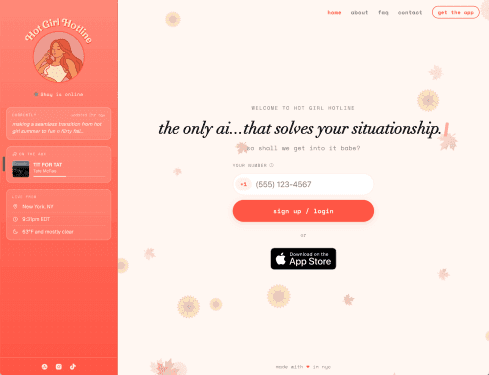
Hot Girl Hotline is like ‘Dear Abby’ for the AI era
Women throughout history have always sought out relationship advice, whether from newspaper columnists like “Dear Abby,” letters to Cosmo, or just chatting with girlfriends. In the social media era, you can instead post anonymously on Reddit relationship forums or look to social media creators who discuss the topic. Now, two sisters are launching a startup for young women,Hot Girl Hotline, which focuses on bringing AI into these conversations. I know what you may be thinking: With all the advances in AI technology, founders are building something for women to talk about their dating woes? Well … yes! The reality is that people have already been turning to large language models (LLMs) via apps like ChatGPT for this type of advice, and the team believes this type of activity should be handled more carefully. Unfortunately, as we’ve seen, chatting with a general-purpose chatbot about personal topics can sometimes lead to disastrous effects — especially for those who were already mentally fragile.ChatGPT, for example, has faced a wave of lawsuitsover its alleged manipulative conversation tactics that plaintiffs say contributed to negative mental health effects, including, in some cases, suicide. The idea behind Hot Girl Hotline is to reach young women who are looking to have these sorts of private conversations while navigating dating life and relationships, but in a safer way. “We’re not trying to be an AI companion,” explainedBaila Mudgil, formerly a social media consultant, who co-founded the startup with her sisterSumrin(“Sumi”), who studied computer science at Stanford. “A companion is really going after solving loneliness, escapism, boredom — and you can rely on a lot of emotional dependency from that AI companion.” Baila says the startup’s approach is to focus on offering quality advice grounded in behavioral science, but in a way that makes it feel like you’re chatting with a trusted friend or big sister. The conversation is often Socratic, with the AI asking you questions to help you arrive at the answer yourself. “This is not to replace speaking to a human. This is not clinical advice, and we have a lot of safeguards in place … we take safety really seriously,” Baila said. If conversations raise flags, for instance, the user is referred to resources such as the crisis hotline 988. “We believe the key to quality advice is not just knowing what to do next; it’s understanding why you’re doing it. So that’s a big piece of it,” added Sumi. Notably, the AI also knows when to end the conversation; it doesn’t keep asking follow-up questions to drag you further down a rabbit hole. Instead, it pushes users to go take action out in the real world rather than ruminate on the problem. The sisters believe there’s room for an app like this because not everyone wants to post on the web for advice, and there are times when you don’t want to bring up a personal, dating, or relationship-focused issue with a friend. Friends can bring their own biases into the conversation, or the user may not want to put their partner on blast for something they did before they determine whether they’re going to work through it or end the relationship. “It doesn’t mean you’re replacing your friend — you’re just trying to get another perspective,” says Baila of the hotline. The app also personalizes its advice for each user to reflect their values, goals, identity, and tastes. Under the hood, the startup relies on a mix of AI models and encrypts users’ data in transit and at rest. It doesn’t sell or train on the data, either. When it uses a third-party AI model, it follows a zero-data-retention policy there as well. Hot Girl Hotline plans to monetize through a $9.99 per month subscription, which hundreds of its most active users are already paying for. Later, it may incorporate ads, too. Relationship advice is just the beginning of how the company wants to cater to young women. It also plans to expand into other areas, like beauty and lifestyle. New York-based Hot Girl Hotline is currently bootstrapped and will be participating in theStartup Battlefield 200atTechCrunch Disrupt 2026, taking place October 13-15 in San Francisco. It’s available on iOS and the web.
View

TikTok rolls out an AI shopping assistant and one-click checkout
TikTokannouncedMonday that it’s launching an AI shopping assistant and a new in-app checkout feature that lets users buy directly from brands. TikTok describes its new Shopping Assistant as a conversational AI agent designed to help users discover and purchase products. The company says the assistant understands context and remembers users’ preferences and needs throughout the conversation. It offers real-time, AI-powered shopping guidance, such as product details, shipping information, sizing, availability, and help completing a purchase. As for the new checkout feature, TikTok says users can buy directly from a brand from their For You feed (the app’s main, algorithm-driven video feed) with one click. The new features could allow TikTok to capture more of users’ shopping journeys, and potentially more transaction value, without sending them elsewhere. By pairing a shopping assistant with direct payments, TikTok is turning its impulse-driven discovery feed into a place where users can get answers to questions about a product and make a purchase on the spot. By building an AI assistant for shopping directly in its app, TikTok also appears to be hoping that users will stay within its platform when they have questions about a product, rather than turning to outside AI tools like OpenAI’s ChatGPT. The company says these new features are being built in partnership with commerce platforms and payment providers including Salesforce, Shopify, Shoplazza, and Stripe, among others. While TikTok Shop, the app’s in-house marketplace, has been the platform’s main engine for the company’s e-commerce ambitions, these new features broaden its approach beyond the existing shopping hub. Rather than relying on TikTok Shop to drive purchases, the social network is now integrating shopping tools more directly into the broader app, including the For You feed. The expansion comes as TikTok’s influence on shopping continues to grow. According toTikTok’s Economic Impact Reportthat was released last week, activity on the platform helped generate $81 billion in GDP for U.S. businesses, while 54 million Americans said they had purchased a product after watching a TikTok video. TikTok Shop launched in the U.S. in September 2023. The market research firm eMarketer estimates it generated about $15.8 billion in U.S. sales in 2025, representing roughly 18% of all U.S. social commerce.
View

Instinct brings its AI agent to group chats, even for friends without an account
Instinct, the AI agentnow valued at $10 billionas of its latest funding round, is expanding into group chats. The startupannouncedon Monday that users will be able to add the agent to chats with friends, which could be helpful in certain scenarios like travel planning, snagging event tickets, running fantasy leagues, organizing carpools, or managing who’s bringing what to Thanksgiving. Notably, the group chats with the AI agent will work even if a user’s friends haven’t joined Instinct, the company said. With the launch, Instinct moves ahead in its battle with top competitors in the space, like Meta’s Muse. The latter doesn’t yet offer the group chat functionality, though Meta’s older app, Meta AI, can be added to group chats on WhatsApp, Messenger, Instagram, and Facebook. Instinct in group chatsStarting today, early access users can add Instinct to group chats. A new Instinct joins and works for the whole group.Making plans with friends usually turns into a frustrating back-and-forth over times and places. With Instinct in the group, you can…pic.twitter.com/pqJX7ieC7B Instinct and Muse have been running neck and neck recently, withboth of them adding the ability to make phone callsover the past couple of weeks, as their agents try to win more of the consumer AI market. Last week, OpenAIlaunchedChatGPT Dots, personal AI agents that can also be used inChatGPT Spaces,collaborative workspaces where the Dots and humans work together. On X, Instinct founder Noah Shinnexplainedhow Instinct handles users’ privacy and security in group chats. He said a user’s personal Instinct agent will ask permission before connecting with the group’s Instinct agent, and that users can also choose which groups they trust and can remove that trust at any time. Shinn also said the group’s Instinct is siloed from the users’ personal accounts, which it cannot access. The personal agent will always ask the user’s permission before sharing information or taking any action. If new members join the group chat, any pending replies from a user’s personal Instinct agent are held before those are shared with the group, too. “Making plans with friends usually turns into a frustrating back-and-forth over times and places. With Instinct in the group, you can explore options together, agree on a plan and get it done, all in one thread,” Shinn wrote. The feature is rolling out initially to Instinct’s early access users but will expand to all users “soon.” To gain access to the new feature (or other recent additions), users can ask their Instinct agent to put them on the list to try it out.
View