
Latest AI News
Reflection debuts Beam, an open-weight AI model to rival Chinese models at lower compute cost
Reflection AI is officially unveiling Beam, its first frontier, open-weight AI model. The two-year-old, Brooklyn-based startup claims Beam matches the performance of leading Chinese open models on advanced reasoning benchmarks at dramatically lower costs, a claim that could heat up the race to build a Western answer to DeepSeek, Qwen, and Z.ai. Reflection’s announcement confirms reporting fromAxiosover the weekend that the startup was close to a launch. The company shared new details in a lengthyblog post Monday, which described Beam as a text-only mixture-of-experts model trained on high-compute reinforcement learning to be effective at reasoning, coding, and agentic tasks at “a fraction of the token cost and inference time compute” of rivals. Beam is a 501-billion-parameter model with 23 billion active parameters. It was pretrained on 23.8 trillion tokens and has a 1 million token context window. To compare, Z.ai’s GLM-5.2 has roughly 744 billion total parameters with 40 billion active. Reflection’s performance claims haven’t been independently verified, but on advanced reasoning benchmarks, the company says Beam scores on par with Z.ai’s GLM-5.2 and outperforms today’s leading Western open models while using “3-4x less inference compute.” Reflection calls it a “workhorse model” for enterprises, the public sector, and developers. Reflection is positioning itself against closed labs like Anthropic and OpenAI, against popular open models from Chinese developers, and against Western players like Mistral, Meta, and Cohere. Its most direct U.S. rival might beInkling, the open model from Mira Murati’s Thinking Machines Lab released in July. Reflection’s own benchmarks show that Beam outscores Inkling on four coding tests where both report results, but Inkling is a multimodal model and Beam is text-only. Reflection was founded in 2024 by two former Google DeepMind researchers and hasraisedroughly $4.7 billion from backers, including Nvidia, Sequoia Capital, and Lightspeed Venture Partners, per PitchBook. Its last round valued the company at a$25 billion pre-money valuation. The startup has also been locking up compute — a key ingredient needed to train frontier models capable of luring customers away from Anthropic’s and OpenAI’s closed models, as well as the cheaper open-weight models from Chinese labs. This summer, Reflection signed deals collectively worth more than $7 billion withSpaceXandNebiusto secure access to Nvidia’s GB300 chips through 2029. Reflection is aiming Beam and future models at enterprises and sovereign nations. The pitch is to build “AI factories,” a product that would let institutions build their own customized, local AI system by training Reflection’s AI models on their own proprietary data. Nvidia CEO Jensen Huang, whose company backs Reflection, has long championed the “AI factory” idea and pushed to strengthen the open AI ecosystem — a vision that would also benefit Nvidia, whose GPUs would power those systems. Axios reported that hedge funds and trading firms are among those eager to build such systems. Reflection has already begun testing the concept of a sovereign AI factory partnership withShinsegaeGroup in South Korea. Reflection says it will release Beam’s weights and full technical details this month, with distribution through hyperscalers and neoclouds and integrations across open source libraries at launch. Reflection did not respond in time to TechCrunch’s requests for more information.
View
OpenAI will start watermarking ChatGPT’s text in the EU
OpenAI will start adding an invisible watermark to text generated by ChatGPT and Codex in the European Union to comply with the EU AI Act, the company said Monday in ablog post. The EU AI Act’s transparency rules, which took effect on August 2, require AI companies to mark AI-generated content in a way other systems can identify. OpenAI said the watermark will roll out over the coming weeks to eligible ChatGPT and Codex users on all plans, but only in the EU. Developers using OpenAI’s API anywhere in the world can turn it on for select models starting today; it’s off by default. OpenAI said it is not making text watermarking a global default at launch. The watermark is not an actual symbol, but works by subtly shaping the model’s word choices, leaving a pattern readers can’t see, but a detector can pick up. Because it lives in the words themselves, it travels with the text when it’s copied and pasted. OpenAI said the watermark doesn’t identify the user, and that it saw no meaningful change in its models’ performance with it switched on. OpenAI also published atechnical reportfor its method, called textGrain, alongside the announcement. Co-written with researchers from the University of Pennsylvania and Yale, it walks through an example of using a secret key to sort next-word predictions to finish the sentence. Add hundreds of these nudges together, and the detector can spot AI-generated content using only the text and the key. Can the watermark be removed by editing? OpenAI’s tests suggest yes. In one test, replacing 10% of words with synonyms dropped detection from about 92% to 66%. The company also said short passages, math answers, and translated text are harder to detect. “These limitations contribute to our decision to provide initial detector access only to approved researchers and expert organizations, who can help us evaluate reliability and responsible uses,” said the company. OpenAI also cautioned that a missing watermark “does not prove human authorship.” The text could be too short or too heavily edited, or it could come from another company’s AI. “[Watermarks] can indicate that an OpenAI system generated or processed part of a passage, but not how much human judgment, editing, or creativity went into it,” the company said. The announcement comes two months afterAnthropic said it would watermarktext generated by Claude, a move it’s applying worldwide. That decisiondrew backlash from some Claude users, who argued they had supplied “the instructions, context, decisions” while Claude was just “the tool.” OpenAI had built a text watermark before but held off on releasing it, partly over concerns that users would switch to rivals that didn’t watermark,The Wall Street Journal reportedin 2024. Anthropic, Google, Meta, Microsoft, and OpenAI are among the companies that have committed to following theEU’s code of practiceon AI-generated content.
View
Google Gemini Plans Get New Limits: Free Users Lose Flash, AI Pro Gets Deep Think
Google is changing the way Gemini models are distributed across its subscription plans. From October 9, free users will be restricted to Flash-Lite, while AI Plus subscribers will no longer have access to Pro. AI Pro and AI Ultra will continue to include the full set of Flash-Lite, Flash and Pro models. Alongside these changes, Google is bringing Deep Think to AI Pro and appears to be preparing new thinking-effort settings for the Gemini app. The company is also working towards a wider rollout of Gemini 4 Argon.
View
Google Gemini Plans Get New Limits: Free Users Lose Flash, AI Pro Gets Deep Think
Google is changing the way Gemini models are distributed across its subscription plans. From October 9, free users will be restricted to Flash-Lite, while AI Plus subscribers will no longer have access to Pro. AI Pro and AI Ultra will continue to include the full set of Flash-Lite, Flash and Pro models. Alongside these changes, Google is bringing Deep Think to AI Pro and appears to be preparing new thinking-effort settings for the Gemini app. The company is also working towards a wider rollout of Gemini 4 Argon.
View
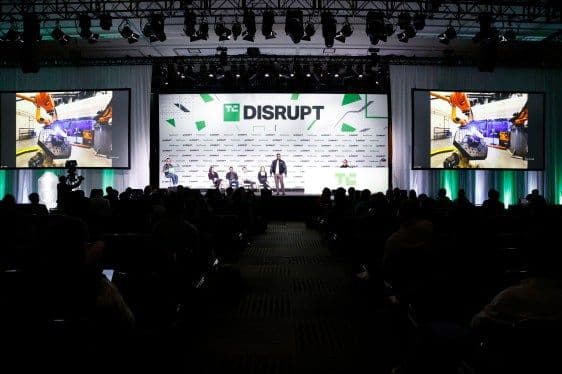
The final Disrupt Stage lineup: Three days of conversations you won’t hear anywhere outside of TechCrunch Disrupt 2026
The biggest stage atTechCrunch Disruptis where the people building the future come to talk about what happens next in the tech ecosystem. Across three days, from October 13 to 15, at Moscone West in San Francisco, theDisrupt Stagewill bring together some of the biggest game-changing founders, CEOs, and investors shaping everything from AI and robotics to transportation, social media, biotech, and venture capital, alongside the next generation of founders competing live inStartup Battlefield 200. Don’t miss a single moment of these conversations shaping the future of the tech ecosystem. Get a front-row seat byregistering for your pass here. Bring your co-founder, partner, colleague, or peer andsave 50% on their second pass. Have more people who should be there?Save even more with bundle passes. RivianCEORJ Scaringewill unpack what it takes to build the seemingly impossible: turning an ambitious idea into a company capable of designing, manufacturing, and scaling complex physical products. CerebrasCEOAndrew Feldmanwill tackle one of the biggest questions hanging over the AI boom: Can AI keep scaling? As models demand ever more compute, energy, and capital, Feldman will explore where the current trajectory leads and what could break it. Science CorporationfounderMax Hodaklooks beyond screens at a future in which technology increasingly interacts directly with the human body, whileFlock SafetyCEOGarrett Langleyjoins us for a candid conversation about AI, surveillance, and the future of public safety. And in a rare appearance, all five partners of Benchmark —Jack Altman,Peter Fenton,Chetan Puttagunta,Everett Randle, andEric Vishria— will take the stage together, sharing what one of Silicon Valley’s most closely watched venture firms sees coming next. Ricursive Intelligenceco-foundersAnna GoldieandAzalia Mirhoseiniwill take us inside an even more radical possibility: AI systems that can design the hardware they run on, potentially collapsing the traditional divide between software and silicon. On Thursday, Amazon’sPanos Panayasks what comes after the smartphone. And he’ll bring some new tech with him. Bluesky CEOToni Schneiderand COORose Wangwill explore whether social media can start over, while Replit CEOAmjad Masadtackles what happens to software, and the people who build it, when AI makes creating software accessible to almost anyone. Finally, Hollywood star, entrepreneur, and investor Mark Wahlberg takes theDisrupt Stagealongside Keebeck’sBruce K. Leeto reveal how one of the world’s most recognizable celebrities is turning decades of influence, relationships, and business-building into his next act: becoming a serious investor. Sit front and center at the Disrupt Stage to hear directly from the leaders shaping tech.Register now and get a second pass at 50% off. Throughout Disrupt, founders will compete live across space and physical AI, energy and manufacturing, health tech and life sciences, and enterprise and security — facing questions from some of the world’s leading investors as they fight for a place in theStartup Battlefieldfinal. Before this year’s finalists take the stage, Cellino co-founder and CEO Nabiha Saklayen, who won Startup Battlefield in 2021, returns to unveil her new product and ask a provocative question: Can you bank your biology? Then three more Battlefield alumni — Molecule.one’s Piotr Byrski, Nephrogen’s Demetri Maxim, and Glīd’s Kevin Damoa — return to talk candidly about what happens after the pitch: the bets that paid off, the plans that changed, and what they wish they’d known when they were standing where this year’s finalists are now. Finally, the 2026 finalists take over the Disrupt Stage, and one company walks away as the next Startup Battlefield winner, taking home $100,000 in equity-free funding and the coveted Disrupt cup. TheDisrupt Stageisn’t only about hearing from the people who built today’s defining companies. It’s where you’ll meet and hear from some of the tech leaders building the next ones. TechCrunch Disrupt 2026is where 10,000+ founders, VCs, operators, and tech enthusiasts from around the globe come together to gain valuable insights, make impactful connections, and get a first look at next-gen breakthroughs shaping the tech industry. Explore200+ sessionsled by250+ tech leadersacross six industry stages, plus roundtables and breakouts. Meet 300+ exhibiting startups and get hands-on with their latest products. This is where big ideas take shape and deals get sparked. Don’t miss a moment.Register for your passand save up to $100. Bring someone with you and save 50% on their pass. If you’ve been affected by a layoff, you can get anExpo+ Pass for just $75. Don’t wait.Lock in your pass now.
View
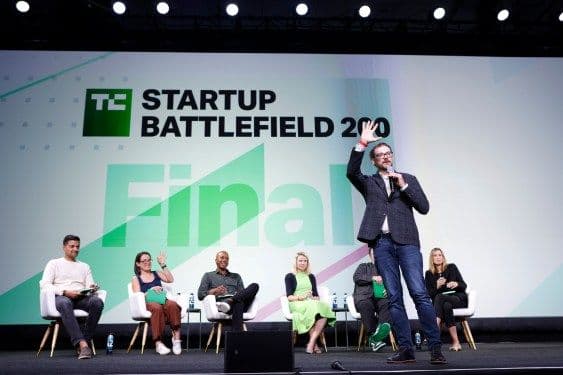
Meet the Startup Battlefield 200 judges who’ll decide the winner at TechCrunch Disrupt 2026
Thousands of startups applied. Just 200 madeStartup Battlefield. Only 20 will pitch on theDisrupt Stageacross all three days. Competition goes from October 13-15 atTechCrunch Disrupt 2026. It all comes down to one final decision. For ourStartup Battlefield finalist judges, we set a particularly high bar: Each has founded or co-founded the investment firm they now lead. Collectively, they bring decades of experience backing ambitious founders, building and scaling companies, and making the big bets that can define a venture firm. They know what separates a great pitch from a potentially great company — and they’ll be the five people deciding who becomes this year’s Startup Battlefield champion. And the conversation won’t end with the final pitch. Later that afternoon, all five judges will reunite on theBuilders Stage for a live AMA, where the audience can ask them anything — from what stood out in the competition and what they look for in founders to fundraising, company building, and where they’re looking to invest next. Grab your pass now and save up to $100and get a second pass at 50% off. Or bring a group of four or more, saving up to 30%. Stacy Brown-Philpotis the founder and managing partner ofCherryrock Capital, a venture fund focused on Series A and Series B software companies built by Black and Latinx founders. Her portfolio includes Coactive AI, a multimodal AI platform for media and entertainment, and Vitable Health, which provides primary care plans for hourly workers. Brown-Philpot previously served as CEO of TaskRabbit, which was acquired by IKEA, and spent more than a decade in senior roles at Google. She holds an MBA from Stanford University. Chi-Hua Chienis a co-founder and managing partner ofGoodwater Capital, where he invests exclusively in consumer technology — including mobile, fintech, e-commerce, digital health, and consumer AI — across the United States and Asia. With more than 17 unicorns backed across his career, his portfolio includes Spotify, Chime, Monzo, TikTok/Musical.ly, Coupang, Toss, and Udemy. Before co-founding Goodwater, Chien was a general partner at Kleiner Perkins and a principal at Accel. Dayna Graysonis a co-founder and general partner atConstruct Capital, a Washington, D.C.-based early-stage fund focused on technology for foundational American industries, including manufacturing, logistics, transportation, supply chain, and defense. Her portfolio includes Veho, Hadrian, Copia Automation, Arkestro, and Verve Motion. Before co-founding Construct, Grayson was a partner at NEA, where she led early investments, including Desktop Metal, which went public on the NYSE. She holds a degree in systems engineering from the University of Virginia and an MBA from Harvard Business School. Carter Reumis a co-founder and managing partner ofM13, a consumer technology venture firm with $1.9 billion under management that invests in seed to Series B companies shaping the future of work, commerce, health, and money. Across more than 200 investments, M13 has backed companies such as Lyft, Pinterest, Ring, Daily Harvest, and Tonal — with 15 unicorns in the portfolio. Before launching M13, Reum co-founded VEEV Spirit, one of the fastest-growing independent spirits brands in the country, which was acquired in 2016. He is co-author of the national bestseller “Shortcut Your Startup” and holds a BA from Columbia University. Alexa Von Tobelis the founder and managing partner ofInspired Capital, which she co-founded with former U.S. Secretary of Commerce Penny Pritzker. Her portfolio includes MosaicML, acquired by Databricks, as well as Chief, Finix, and Dandy — with nine unicorns backed across her investing career. Before launching Inspired Capital, Von Tobel founded LearnVest, a financial planning platform acquired by Northwestern Mutual. She is a New York Times bestselling author and a certified financial planner. Don’t miss theultimate pitch competitionif you’re currently scaling a startup or have an idea you’re ready to launch. Startup Battlefield is a masterclass in how to pitch and scale a viable startup. VC judges will determine what it takes to scale, and you’ll hear firsthand what VCs look for when backing the next big innovation. You can only witness this competition on theDisrupt StageatTechCrunch Disrupt 2026, where 10,000+ founders, investors, operators, and tech enthusiasts gather to see what’s next and hear from250+ tech leaderswho’ve made waves across200+ sessionsspanning six industry stages, roundtables, and breakouts. See what’s next at one of the most anticipated tech conferences of the year. Grab your ticket now, save up to $100, and get a second pass at 50% off before doors open on October 13. Laid off?Get your $75 Expo+ Passbefore they’re gone.
View
Researchers are tracking a Chinese AI ‘agent fleet’
A new fleet of AI agents is making its presence felt on the internet. On Sunday, a group of independent researchersposted preliminary findings about the agents, observing that they seem to be running on Tencent’s infrastructure and targeting Alibaba’s map service, Amap. Researchers, however, resisted the term “swarm,” noting that there seems to be little coordination between their different queries. “‘Agent fleet,’ not ‘swarm:’” one researcher wrote in the preliminary report, “many parallel agents on the same kind of task, with no sign of communication between them.” The agents were discovered by monitoring traffic to the domain-scanning service urlquery, a technique thatpreviously revealed long-running activity by OpenAI agents. AI agents often use urlquery to load websites that they cannot access directly, leaving a record of their activities that can be valuable to researchers. In this case, the record showed queries to Alibaba’s Amap service, seeking directions to different entrances of various public places, including a park, a zoo, and a hospital. The research is ongoing and so few details are available, but the behavior shows how persistent AI agent activity has become on the internet. In the wake ofthe Hugging Face incident, many researchers are actively monitoring for rogue agent activity on the internet. Much of that activity has been easy to find because agents tend to use the same techniques and make little effort to conceal themselves. In this case, the agents don’t seem to have been doing anything more nefarious than side-stepping Alibaba’s API rules — but we may not always be so lucky.
View
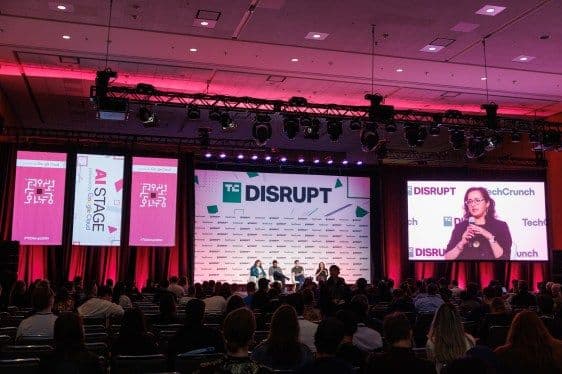
Open or closed AI? How founders are choosing what to build on at TechCrunch Disrupt 2026
For AI startups, choosing a model isn’t necessarily a one-time architecture decision anymore. Open models are improving. Frontier APIs keep advancing. Models can be customized for specific workloads, and some companies are building products that use multiple models rather than committing to one. That gives founders more ways to build — and more decisions about where to spend, what to own, and how much flexibility to preserve as the technology changes. AtTechCrunch Disrupt 2026, four conversations approach those decisions from different points in the AI stack, from multi-model applications and customized models to infrastructure and the chips underneath them. Secure your Disrupt passto hear how AI leaders are navigating those choices. Save up to $100 on your pass now and get a second pass at 50% off. Or for a limited time, get a $75 Expo+ Pass if you’ve been affected by a layoff. Choosing between open and proprietary models assumes a company needs to choose one in the first place. Increasingly, AI products can call on different models for different jobs. The session “The Real Tokenmaxxing: How the Best AI Companies Navigate a Multi-Model World” will bring togetherMo Jomaa, partner atCapitalG;Vipul Ved Prakash, co-founder and CEO ofTogether AI; andZuzanna Stamirowska, CEO and co-founder ofPathway, on theBuilder’s Stage. They’ll explore why companies are using multiple models; how they balance cost, performance, and flexibility; and when open models can outperform proprietary alternatives. For founders, that flexibility can affect more than model performance. It can influence operating costs, product decisions, and how quickly a company can take advantage of better models as they emerge. Get your ticket to Disruptto hear how companies are deciding which model makes sense for which job. Grab yours now to save up to $100 and get a second pass at 50% off. Model choice also raises a bigger question: What does your company need to own? Manos Koukoumidis, CEO and co-founder ofOumi, will take theReal World AI Stage for “Which AI Should Your Company Actually Deploy: Rent, Customize, or Build.”He’ll tackle whether startups should build their own models, when customization can become a competitive advantage, and how to choose between open and proprietary AI. Through audience polls, startup scenarios, and a practical framework, Koukoumidis will help attendees evaluate frontier APIs, customized open weights, and owning AI outright. Attendees will come away with three decision principles they can bring to their next architecture conversation. The choice founders make can shape both the product and the business behind it. Building more of the AI stack can offer greater control and differentiation, but it can also require more time, talent, and resources than relying on existing models. Add the Oumi session to your Disrupt agendafor a practical framework for deciding how much of your AI stack your company really needs to own.Grab your pass nowto sit front row in this discussion. For some startups, the decision will still come down to the trade-offs between open and proprietary models. Nader Khalil, Director of Developer Tech atNvidia, andSydney Sykes, Global Head of VC Partnerships at Nvidia, will take the Builders Stage for “Building AI Startups Worth Betting On.”They’ll examine what founders are choosing today, the trade-offs between frontier APIs and open-weight models, and how those choices can affect product strategy and long-term differentiation. Those trade-offs have business consequences. Model choice can shape everything from costs and infrastructure requirements to how much control they have over their product. It can also determine where — and how easily — a startup can create differentiation competitors can’t replicate. Secure your Disrupt passto hear how builder and venture perspectives are shaping model decisions. Save up to $100 on your pass and get a second at 50% off. Model architecture is only part of the equation. AI performance ultimately depends on the hardware underneath it, and advances in AI are beginning to change how that hardware gets designed. Anna Goldie, founder and CEO ofRicursive Intelligence, andAzalia Mirhoseini, founder and CTO, will take that idea to the Disrupt Stage in “When AI Starts Designing Its Own Hardware.” They’ll explore how AI is optimizing chips and hardware, why model architecture and hardware are becoming more closely connected, and what an increasingly open AI ecosystem could mean for the infrastructure underneath it. For founders, the connection between AI and hardware could affect how quickly new capabilities reach the market. Faster chip development could also change the infrastructure available to startups building the next generation of AI products. Get your ticket to Disruptto hear what happens when AI starts helping design the hardware that powers it. These conversations are part of200+ sessionsacross six industry stages, roundtables, and breakouts atDisrupt, taking place October 13-15 at Moscone West in San Francisco. More than 10,000 founders, investors, operators, and tech leaders are expected, along with250+ speakersand 300+ exhibiting startups. In addition, matchmaking, dealmaking, and ad hoc networking give attendees opportunities to connect with founders, investors, potential partners, and other builders facing many of the same technology and business decisions. A startup may use a frontier API today, customize an open model tomorrow, or eventually move workloads among several models. Preserving flexibility could be as important as choosing the right model now. Secure your pass to TechCrunch Disrupt 2026and hear how AI leaders are approaching the choices shaping what — and how — they build. Save up to $100 now and get 50% off a second pass. Laid off?Grab your Expo+ Pass at just $75.
View

OpenAI launches visual ads that appear alongside image generation results
ChatGPT is getting more ads. Specifically, OpenAI is adding visual display ads to its ad product line-up so that ads will appear alongside images that users ask ChatGPT to generate. In addition, the company is expanding its ad measurement tools and partnerships, and developing new ways to determine brand suitability. The new ads will begin to appear later this month in the U.S. only for now, and will feature products and services from an initial test group of advertisers. The ads will also be clearly labeled and won’t influence the answers ChatGPT provides, the company notes. The move follows the launch of Meta’s Muse, an agentic AI app which is free to everyone and a growing competitor for leading AI chatbots, like ChatGPT. OpenAIintroduced adsearlier this year to support its free and low-cost subscription tiers, andexpanded them to Indiain August. Now, the plan is to woo online advertisers who want to appeal to their potential customers by using more visual imagery to tell their stories. Eventually, those ads will allow them to target ChatGPT’s 1.2 billion weekly users, once they roll out globally. However, integrating such ads could also prove disruptive to the user experience. But perhaps that’s partly the point, as the ads could push more casual users to pay for a subscription in order to avoid them. Alongside the display ads, OpenAI said it is expanding its measurement tools and partner ecosystem, which now includes click attribution solutions, AppsFlyer, Triple Whale, Adjust, DV Rockerbox, Northbeam, Branch, Singular, Kochava, Airbridge, and Tenjin, as well as full-funnel, advanced measurement partners Fospha, Measured, and INCRMNTAL. OpenAI has also partnered with Haus, Measured, and WorkMagic to help advertisers explore “geo-based” experiments around ads. The company said it’s working on developing brand suitability evaluation pilots with help from DoubleVerify (DV) and Integral Ad Science (IAS), which will help advertisers better understand the ChatGPT ads environment. Combined, the moves see OpenAI working to make ChatGPT a viable ad-supported business for those on free and low-cost plans.
View

HackerRank’s AI interviewer offers a glimpse into what job interviews could become
What happens when AI moves from helping job candidates to evaluating them?HackerRank, a platform used by companies to assess and hire developers, is offering a glimpse at what that future of job interviews could look like withChakra, an AI agent that conducts interviews, observes candidates as they work, and evaluates not just their answers but also how they got there. After around six months in beta, HackerRank is making Chakra generally available to its customers on Monday. The startup says the AI interviewer has already conducted more than 500,000 interviews during testing, with companies including Snowflake, Snorkel, and Capgemini among those that tried it, while HackerRank also tested the product internally. AI has been a staple in job interviewsfor some time, with companies using voice agents and other automated tools to screen candidates and make the hiring process more efficient. Job seekers, meanwhile, have increasingly gained their own AI tools to help them navigate interviews, sometimes without employers knowing. With Chakra, HackerRank is betting AI can change not only how interviews are conducted, but also what employers can measure. Beyond whether someone arrives at the right answer, the startup wants to assess harder-to-capture signals such as critical thinking and judgment, as well as what it calls “AI fluency” — how well a candidate frames a problem for AI, judges its output, and steers it toward a solution. “The previous modality of evaluation was evaluating the output,” HackerRank co-founder and CEO Vivek Ravisankar said in an interview. “Now, because of AI, anybody can produce an artifact.” The question for employers, he said, becomes whether they can understand the thinking and judgment that went into producing it. In practice, a Chakra interview is designed to look more like doing the job than taking a traditional coding test. A candidate gets a task involving a real-world code repository, and they work through it in a canvas that includes an AI assistant. As the candidate works, Chakra can use the context of what they are doing to ask follow-up questions, such as why they chose one approach over another, or how their solution would change if a new constraint were introduced. Ravisankar told TechCrunch that Chakra is changing the basic structure of the hiring process itself. What previously involved three separate rounds, comprising a recruiter screen, take-home assessment, and follow-up interview with an engineer, is now combined into a single Chakra interview, he said. Giving candidates access to AI during an interview might seem to make it easier to cheat. However, HackerRank says it found the opposite. Suspicious-activity flags, Ravisankar said, were 70% to 80% lower in Chakra interviews than in comparable traditional HackerRank assessments, though the rate varied depending on factors such as geography and seniority. Ravisankar told TechCrunch that giving candidates access to AI reduces the incentive to secretly use outside tools that can feed them answers during an interview. Launchedat TechCrunch Disrupt in 2012, HackerRank built its business around coding challenges, eventually helping companies assess and hire developers based on their technical skills. The Y Combinator-backed startup now has more than 3,000 business customers, including Amazon, Nvidia, Clay, and Replit, and a community of over 30 million developers worldwide. Chakra represents a bet against the kind of technical assessment business HackerRank spent years building. Its traditional product largely tested whether developers could solve coding problems correctly. Nonetheless, Ravisankar believes AI has made HackerRank’s earlier model less useful to measure engineering ability. Ravisankar compared the transition internally to Apple moving from the iPod to the iPhone, as the old product still has value, but the new one represents where the startup believes the market is headed. “Chakra is going to be the headline,” he said. “It’s going to be the way that we’re going to move forward.” However, giving AI a deeper role in evaluating candidates raises a different set of questions, particularly around how much of a hiring decision companies should delegate to an algorithm. Ravisankar told TechCrunch that Chakra is designed to score candidates rather than make the final hiring decision, which remains with humans. AI, he said, can handle more structured parts of an interview by consistently applying criteria set by an employer, while human interviewers can spend more time determining whether they actually want to work with a candidate and answering questions about the company, team, and role. “AI is way less biased than humans, if you tune it properly,” Ravisankar said, arguing that an AI system can be instructed to follow the same rubric for every candidate rather than being influenced by factors such as a candidate’s background or education. Applying the same criteria consistently, however, does not necessarily make an AI system free of bias. Automated hiring tools can inherit or amplify biases from the data, models, and criteria used to build them, prompting regulators to scrutinize their use in employment decisions. The use of AI in hiring is already drawing regulatory scrutiny. New York City, for instance, requires employers using certain automated employment decision tools to subject them to an independent bias audit and provide notice to candidates before using them. Ravisankar acknowledged that hiring is a regulated area and said complying with such requirements is part of what HackerRank has had to build for.
View

ChatGPT Plus Is Free for One Month in India: Here’s How to Claim It
OpenAI is offering a limited-time free trial of its ChatGPT Plus subscription in India. With this move, the San Francisco-based AI company is providing eligible users with access to the paid tier of the AI chatbot without the usual monthly charge. The offer is currently visible to select users and provides one month of the ChatGPT Plus plan at no cost. However, the promotion does not appear to be available to every account.
View

ChatGPT Plus Is Free for One Month in India: Here’s How to Claim It
OpenAI is offering a limited-time free trial of its ChatGPT Plus subscription in India. With this move, the San Francisco-based AI company is providing eligible users with access to the paid tier of the AI chatbot without the usual monthly charge. The offer is currently visible to select users and provides one month of the ChatGPT Plus plan at no cost. However, the promotion does not appear to be available to every account.
View