
Latest AI News
Hark releases an AI personal assistant with a focus on privacy
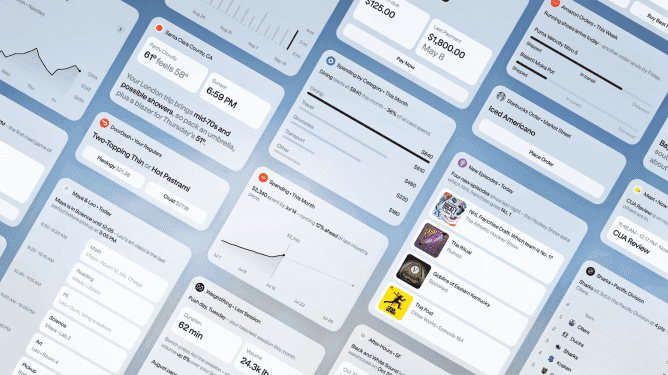
From Muse to Instinct to Dots, tech firms are hunting for the user experience that will make an AI personal assistant a must-have product. Hark, a startup founded less than a year ago by serial founder Brett Adcock, is throwing its hat in the ring today with the wide release of Hark Pro. Users can access the service for free, with a subscription tier for heavy users. The company sees its mission as building a user interface for AI, not creating AGI or curing cancer. The foundation is a model trained specifically for computer use, and that’s what Hark Pro does — it uses your computer for you. That’s perhaps a less ambitious claim than some frontier labs are making, but a little humility goes a long way in winning over users. And rather than an app, Hark’s goal is to create an operating system for the AI computers of our future. Hark Pro is a full-screen experience with a kind of homepage, featuring a central chat dialog and a feed populated by prompts for actions you might need it to take and visualizations the company calls “panels” that offer mini-dashboards for things you’re interested in. The background is a piece of custom imagery tailored to the weather and time where you are. Like other AI assistants, users configure it to access their digital life — email, calendar, hard drive, credit cards, etc. Then, it can take on digital tasks as well as fielding classic chatbot questions. Abidur Chowdhury, a former Apple staffer who leads design at Hark, demoed the product for me. It proactively asked him about expenses he needed to approve, emails he needed to respond to, a meeting with this reporter, and, of course, pointed out that he needed to book a flight for a trip and offered to take care of it. (“I know the flight thing is put to death,” he admits, grinning.) That does get at the challenge with these apps: One of the harder things for users is actually coming up with useful tasks they are capable of accomplishing. Chowdhury says he was impressed when the AI assistant recently recognized that one of his colleagues needed to renew their car registration at the California DMV, and handled it through the agency’s website. One notable UX choice that Hark makes is showing the user how the agent navigates the web in a small window, an action most AI assistants perform without it surfacing in the app, which Chowdhury says is intended to build trust with users that the agent is doing the right thing. That matters because part of Hark’s pitch is that they are not Meta or OpenAI — “we’re not here to like sell you ads and steal your data,” Chowdhury says. To truly leverage these models, users will need to share their entire digital lives. Beyond very realcybersecurity concerns, will users be comfortable with a company like Meta having its productscreate detailed profilesof their friends and family? Asked about that kind of profiling, Chowdhury says that “we are doing work to understand you, and be helpful for what you need, but it’s really like task-related — it’s really about how Hark can help take something off your plate and be useful.” What sets Hark Pro apart from its competitors, Chowdhury says, is its effort to fully subsitute for your computer, but also his belief that it just works better. “Please compare it to the others, be critical,” he says. “It might not be faster than Muse, but it will give you a better result, and it will work end-to-end instead of asking you to take over at a point.” One open question is what kind of model best suits the AI personal assistant. Hark’s is explicitly trained for computer use, which makes it faster and cheaper at those tasks, but it’s not clear how much it is trading away the broader knowledge and capability of a frontier LLM. This software is only half the promise of Hark; Chowdhury made his name designing devices at Apple and Hark promises to release an AI-native device to support its software in 2027. They’re still cagey about the form it will take, with Chowdhury bemoaning the “creep factor” of wearable cameras. “I will give you this: The first product that we’re building is a product that’s never ever existed before,” he says. We’ll have to wait and see if this is mere hype and Hark puts out some retread tech instead of a truly novel product. “It’s so hilarious to me that you have AI now, you have a chatbot, and you type stuff in with a keyboard,” Chowdhury says. “Fifty years later and the future of computing is still a terminal.”
View

The next hurdle for AI agents: getting websites to let them in
Personal AI agents, like Meta’s Muse, Instinct, ChatGPT’s Dots, and others, are kicking off a new wave of consumer AI that involves more than just responding to queries. These AI agents can actually get things done on users’ behalf, like booking flights, making dinner reservations, ordering groceries, and more, all without having to be technical enough to set up OpenClaw or some other agent on your own computer. But consumers adopting these agents are often running into issues when the website on the other end of their request blocks the AI from completing the job. Most recently,Amazon began blocking Meta’s Muse AI agentfrom its retail site, meaning that the agent could no longer browse or make purchases from its product catalog. However, the problem is not limited to Amazon or Muse. User complaints across social media indicate their agents are often running into similar blocks. Some of these are intentional, like Amazon’s, while others are the result of websites’ traditional anti-bot measures designed to protect against spam and malicious activity. What’s not clear to the end user is whether or not the block is accidental on the website owner’s part, which leaves them frustrated with both the service provider or retailer and the agent trying to facilitate the transaction. For instance, TechCrunch has seen ahandfulofcomplaintson social media claiming that Muse couldn’t complete a purchase on Walmart’s retail website. (NBC also reportedthat this was a problem Walmart had faced in its tests of the AI agent.) But a spokesperson for Walmart told us these weren’t intentional. In fact, Walmart is partnered with Muse, as wasannounced at Meta’s Connect developer conferencein September. The company said it wants to be where its customers are, and that now includes being available through AI agent experiences. The issue that Walmart customers often appear to be running into (see below) is that the website presents a button that has to be clicked to verify the visitor is human. If that experience is interrupted, the check could fail, and the agent gets booted out. It’s an indication that the current technology we use to verify humans and keep websites safe from spam and bots may not be the best fit for the agent-first era of the web we’re now moving into. To address this problem, industry partners including Meta, Walmart, Stripe, Sierra, Genesys, Rocket, NiCE, and Decagon have begunworking on an open standardthat would dictate how AI agents can communicate with businesses, helping to separate the good bots acting on behalf of the user and the bad. This protocol will be specifically focused on agent-to-agent communication for the purposes of online commerce, Meta said in ablog post. This is frustrating.@Walmartin their attempt to stop agent from making purchases has gone too far and is essentially blocking actual human from making purchase on their website. I tried to purchase something directly and I can't even sign in.pic.twitter.com/CRAgkrCCa0 In the meantime, consumer confusion abounds. Although Walmart is at least trying to be accessible via AI agents, other companies aren’t so keen on the idea or haven’t fully embraced the technology. For example, flight booking is currently one of the main use cases being positioned for agents, but many people have reported issues with airlines rejecting their agents’ requests. Delta, for instance, told us that the company is taking steps to protect customers from unauthorized automated activity, and that if it were to open up to AI agents, it would have to be done with “security and the customer experience in mind.” “While Delta does not currently have a partnership or integration that enables a third-party AI agent to shop for or book Delta flights on a customer’s behalf on our digital platforms, we’re continuing to evaluate how new technology, including external AI agents, could enhance the way customers engage with Delta,” said Delta’s general manager of Global Communications, Heena Chavda, in response to our questions about whether or not it was blocking agents, as some users complained. United was not quite as direct as Delta, but a spokesperson pointed us to the part of its Terms of Use policy, which says that the user agrees “not to use any robot, spider, other automatic device, or manual process to monitor or copy this website or the content contained therein or for any other unauthorized purpose without United’s prior written permission.” (United didn’t respond to a follow-up question about whether it was blocking specific personal AI agents, like Muse.) Early adopters’complaintsacrosssocialmediahave referenced a number of brands that are reportedlyblockingAI agents,includingYelp,eBay,Zillow,Pizza Hut,Adidas,andvariousairlines. Some believe that the blocking activity seems to have recentlyincreased. A couple of people even said eBaysuspendedtheiraccountsbecause of their use of agentic AI. Another complained thatGoogle kicked out Instinctwhile it was cleaning up their Gmail inbox for them. Looks like@adidaswon't get my business tonight 😪pic.twitter.com/DXcPYE5S6O Despite the push to have agents book tables at restaurants and other tedious tasks, Yelp told us that it doesn’t permit non-human traffic on its platform unless the agent has paid to access Yelp’s content and data through itsdata licensing program. That means agents trying to use its site to get a quote, add a user to a waitlist, or book them a table will likely fail if they don’t have a formal partnership with Yelp. eBay told TechCrunch that its approach is not to prohibit all third-party shopping agents from completing purchases. Instead, its policies restrict unauthorized agents and actions, like automated scraping and model training. Adidas, Zillow, and Pizza Hut either didn’t respond or declined to provide a comment by the time of publication. One major company involved in this space is Cloudflare, which offers sites protection from AI agents that could be training on its data and managing other automated activity. SomesuspectthatCloudflare and other content delivery networks (CDNs) like it are currently disrupting Muse traffic. This isattributedto a change to crawler defaults on September 15, which allows site owners to block AI training while allowing other types of bots. Existing sites that were previously set to block AI bots for security reasons were then shifted to block AI agents on any pages that had ads. However, when we asked if Cloudflare had any insight into what was happening with the blocking of these personal AI agents, like Muse and others, the company said it didn’t have any specific data to share at this time. It pointed us instead to its free public data hub,Cloudflare Radar. The site shows the increase in bot activity (which Cloudflare has also commented on previously), but it doesn’t help differentiate between the good bots and the bad ones. Cloudflare also has a vested interest in mitigating AI traffic to websites, as itnow runs a marketplacewhere AI bots have to pay for the data they access. It recently began testinga new web browser built specifically for AI agents. Given the rapidly evolving space, Meta’s decision to form specific brand partnerships for Muse access seems to be the right way to go, as is its decision to focus on new standards. In doing so, it assures its customers that its agent, at least, is welcome at these partners’ sites — so any issues with access would be reportable bugs. Meta also maintains a list of “connectors” (a.k.a. partners) inside the Muse app, which continues to grow. Many of Meta’snewly announced partnershaven’t yet shown up in this list. But given Muse’s rapidexpansion, which now includespartnered tools for small businesses, a bigger reorganization of Muse’s connector list is likely soon to be underway. “Turning away a personal agent means turning away the customer behind it. We’d rather work with businesses to address the underlying concerns than see them lose that customer,” Meta said in its announcement about the newly announced plans to develop a standard. “There is a path that is good for users and good for businesses. It starts with clear norms, gives businesses more predictable control, and evolves toward a more efficient way for agents to work together.”
View

AI computing startup Lambda to raise $4B ahead of planned IPO
Cloud provider Lambda is raising up to $4 billion at a $14.5 billion pre-money valuation, marking what could be its last private round before a planned 2027 IPO, according toThe Wall Street Journal.Coatue Management and Blackstone are leading the round. A letter to investors reviewed by the Journal shows Lambda’s backlog grew from $15 billion in June to $50 billion in September. While that might look like a hearty increase in demand, much of that increase appears to be driven by a$35 billion commitmentfrom one company: Anthropic, which signed a deal with Lambda in late August. That means Lambda’s valuation, which has climbed significantly since its2025 funding round, could be leaning heavily on Anthropic’s ability to keep paying. Still, with reliable GPU capacity so scarce, investors are clearly still willing to bet on companies that provide it, especially ones with large contracts with a major AI lab. For neoclouds like Lambda, demand isn’t so much the problem as is the cost of meeting it. Data center buildouts are largelyfunded by debt— of which Lambda just raised anadditional $1 billionlast week — andlenders are getting choosierabout who they offer cash to and under what circumstances. Lambda’s decision to raise more now not only sets the tone for its IPO pricing, but also gives it access to more capital before the scrutiny of public markets arrives. If and when Lambda does IPO — the company wasreportedlymeant to debut this year, but has pushed that back amid market uncertainty — it will join other Nvidia-backed neoclouds, likeCoreWeaveandNebius, that now depend on the health of their stock to fund their data center buildouts. British neocloudNscalefiled for an IPO last month and is expected to begin trading soon. Lambda, Coatue, and Blackstone did not immediately respond to a request for comment.
View

How AI decision models could change content moderation
As decision models spread across the industry, a company called Musubi has a new idea for how to put them to work: moderating content. On Tuesday, Musubi announced a lightweight decision model made for real-time moderationcalled PolicyLM-1.7B, released with open weights. The idea is to take a content policy written in plain English and apply it to messages in under 50 milliseconds. Musubi’s model is designed to be similar in cost and speed to the AI classifier systems that power moderation on most social platforms — but because it has the flexibility of a modern LLM, it can apply complex policies without special training. Even more important, the model won’t need new training when the policy changes, allowing for human policy-setters to iterate as much as they need. As Musubi co-founder and chief AI officer Filip Jankovic sees it, it gives platform managers a way to label content proactively. “Product teams just want a better understanding of what’s happening on their platform, especially as the amount of content is exponentially increasing,” Jankovic says. “Being able to label all of that in a very scalable, customizable way is extremely useful.” Decision models have become a hot topic in the AI world sincethe release of TypeSafe AI’s Jev in September, which was shortly followed by competing decision models fromOpenAIandAmazon. Instead of outputting text, a decision model outputs outcome probabilities, though in this case the model outputs a binary judgement: Either the content is in the category or it isn’t. By limiting the model’s output to a set of predetermined choices, decision models are able to run faster and cheaper than large language models, while still maintaining the flexibility of the transformer architecture. One early use case is reining in misbehavior by AI agents — so it’s only natural to apply the same technology to human misbehavior. Notably, Jankovic says his interest in decision models predates Jev, tracing it back toa 2024 project called GLiNER(Generalist Model for Named Entity Recognition) that deployed many of the same techniques. Still, Musubi isn’t wary of the comparison. If anything, the company is eager to use the new interest in decision models to shine a light on content moderation. “If Jev caught your eye, PolicyLM-1.7B is the same kind of model, trained specifically for content moderation, that you can run yourself,” the product announcement reads.
View
Get all your questions answered at TechCrunch Disrupt 2026: The full breakout session agenda revealed
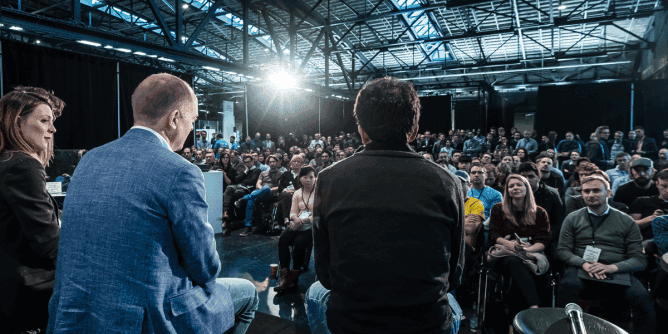
TechCrunch Disrupt 2026lands at Moscone West in San Francisco on October 13-15, bringing together 10,000+ founders, investors, operators, and tech leaders for three days of ideas, connections, and conversations about what’s coming next.Register now, save up to $100 off your pass, and get a second at 50% off. Some of the most practical conversations won’t happen on any of the industry stages.Disrupt’s breakout sessionsare built to go deeper and give you the mic to ask your burning questions to the leaders. Each 50-minute session combines expert insight with audience Q&A, giving you more room to unpack a problem, challenge assumptions, and leave with ideas you can actually put to work. The room capacity is limited, and attendance is first come, first served. This year’s lineupgets into the questions founders and operators are dealing with right now: How do you build with AI agents? Where will value accrue as AI shifts from training to inference? What does physical AI really mean? How do you run a better fundraiser? And how does AI change the way you grow companies and teams? Get into the room, get your questions answered, and make the connections that’ll spark your next move in the ecosystem.Save up to $100 on your pass and 50% on a second.Bring a group of four-plusto save more and get more insights. If you’ve recently been laid off,get a $75 Expo+ Passbefore they run out. Get to know the sessions and tech leaders shaping the conversation on theDisrupt agenda. Susan Schofer, Partner and Chief Science Officer, SOSV HAX; andDuncan Turner, General Partner and Managing Director, SOSV HAX Sponsored bySOSV AI is moving beyond software and into machines that need to perceive, reason, and act in unpredictable environments. Schofer and Turner break down what actually qualifies as physical AI, why building it requires a different playbook, and what investors are looking for in companies trying to define the category. Steve AndroulakisandSachin Malhotra, Members of Technical Staff,Anthropic What does an AI-agent workflow look like when the people using it build AI for a living? Anthropic’s Androulakis and Malhotra show how they run multiple Claude agents in parallel, delegate real engineering work, review output, recover when agents get things wrong, and make agents part of their everyday jobs. Robbie Goldfarb, Co-founder,Forum AI As AI takes on more consequential work, accuracy alone isn’t enough. Drawing on experience spanning misinformation, online safety, and work with foundation-model labs, Goldfarb explores how expert human judgment can become scalable evaluations — and what it will take to build AI systems people can actually rely on. Hagay Lupesko, SVP, AI Cloud,Cerebras Systems; andRudina Seseri, Founder and Managing Partner,Glasswing Ventures As frontier models become increasingly commoditized, AI’s economics are shifting from training toward inference. This session looks at where defensibility comes from when the model itself isn’t the moat, why latency is becoming part of the product, and what those changes mean for infrastructure decisions, startup economics, and what investors will look for next. Dr. Rumman Chowdhury, CEO and Co-founder,Humane Intelligence;Payal Kadakia, Founder,ClassPass;Cassie Kozyrkov, Founder,Kozyr; andHolly Ransom, CEO,Emergent Sponsored by Signify Business Cash World Elite Mastercard by Wells Fargo The fundamentals of building a company may not have changed, but the tools certainly have. Leaders spanning AI, data, entrepreneurship, and strategy examine how founders can use AI to make better decisions and move faster — while understanding where bias, judgment, and the human side of company building still matter. Speakers to be announced Sponsored by Fidelity Private Shares A successful fundraise starts long before the pitch. This interactive session takes founders through the process from both sides of the table, covering investor targeting, relationship building, outreach, maintaining momentum, cap tables, data rooms, and due diligence. Come away with practical ways to run a more organized and effective raise. Bruce K Lee, CEO and Founder,Keebeck Wealth Management; andAbhi Tiwari, Co-founder and General Partner,Blank Ventures Building and funding a company requires one mindset. Becoming an investor requires another. Lee and Tiwari explore what happens when entrepreneurs move from raising capital to allocating it — and why founders may want to start thinking about their post-exit strategy long before an exit actually happens. Dr. Brian Cameron, Interim Chief Technology Officer, The Aerospace Corporation;Bosco Lai, CEO, Little Place Labs; andShawn Sloan, Corporate Fellow for Artificial Intelligence, The Aerospace Corporation Sponsored byThe Aerospace Corporation Space may look like a specialist market, but many of its problems will feel familiar to AI builders: huge data streams, autonomous decisions, real-time processing, and complex agent systems. This session maps those capabilities to real space applications and shows founders where new commercial and government opportunities are opening up. Dr. Irena King, Founder and CEO,Surgicure Technologies;Dr. Richard Munassi, Accelerator Managing Director and Chief Strategy Officer,Tampa Bay Wave;Ashley Paston, Partner,General Catalyst; andEmily Zhen, Principal,HealthQuest Capital Sponsored by Tampa Bay Wave Great companies can still run bad fundraising processes. This session gets into the mistakes that derail rounds, from positioning and preparation to investor strategy and execution. Expect practical lessons, real examples, and a clearer framework for taking your next raise from the first pitch through to close. Patrick Burke, Managing Director,Hostinger Sponsored by Hostinger AI is compressing the distance between spotting an opportunity and acting on it. Using examples from Hostinger, Burke explores how startups can identify underpriced distribution channels, shorten the loop between market signals and product launches, experiment faster, and put agentic marketing workflows to work to drive growth. Ethan Batraski, Partner,Venrock;Ivan Poupyrev, Founder and CEO,Archetype AI; andIan Rountree, General Partner,Cantos The real physical AI opportunity isn’t simply understanding the world — it’s acting in it. Builders and investors explore the execution layer between perception, decision, action, and verification, and why the companies that can reliably close that loop could become some of the most durable businesses in industrial AI. Nomi Khedawala, Senior Technical Program Manager,Reddit AI can change how work gets done, but companies still depend on people, trust, and execution. Khedawala explores how leaders can build stronger alignment across teams, spot breakdowns before they become bigger problems, and create systems that support accountability and sustainable high performance as organizations scale. The industry stages show you where technology and the startup market are heading.The breakout roomsgive you the chance to get closer to the problems — and the people solving them. With limited capacity and first-come, first-served access, these are sessions worth adding to your Disrupt schedule early. TechCrunch Disrupt 2026 takes place October 13-15 at Moscone West in San Francisco.Register now to save up to $100before doors open, plus get 50% off a second ticket for your co-founder, colleague, partner, or peer.Save even more with a groupof four or more. Laid off?Grab your $75 Expo+ Passbefore they run out.
View

Pinterest’s AI now turns beauty Pins into action plans
Pinterest on Tuesday showed off a new feature that will leverage AI to take action on your saved inspiration from beauty-related Pins, like hair and nail ideas, and turn them into actionable plans you can take with you to the salon. “Beauty Guides,” which are powered by the company’s visual intelligence and generative AI technology, Pinterest Intelligence, will translate Pins into terms and phrases used by stylists and nail artists that everyday users may not know, like “balayage,” “root melt,” or “almond nails.” The feature is a small but practical way to introduce AI into users’ everyday lives, as it slots into something that people are already doing: bringing a photo of their inspiration to the salon. That’s useful to a large extent, but having the right terminology at hand while you discuss what parts of the look you want to edit or change can be useful as well. Plus, the guides offer the sort of information that can help users plan for their visit, like the time each part of the process may take and the cost. (Balayage goes into the hundreds of dollars, so that’s information you might like to have up front!) The action guides will show up when you tap on the “Get the Guide” button within the app, and will then offer details about what, specifically, you should ask for to achieve the same look, the time it takes, price range, and maintenance requirements, like how often you’ll need to trim, tone, or touch up, for instance. At launch, the feature will work across Pins related to hairstyle, color, nail shape, and finish.
View

Mistral’s new 1T model aims to leapfrog closed and open rivals
The race between open and closed AI is on, and Europe is still in the mix. On Tuesday, French AI labMistral AIreleasedMistral Large 4(ML4), a new large multimodal model aiming toleapfrogboth American and Chinese rivals — following what French president Macrondescribedas “a third way in AI.” Amid a growing divide between closed models thatcan be unpluggedand open models that are often made in China, Mistral is positioning ML4 as an alternative to both. Nicknamed Le Chonk in reference to its 1 trillion parameters, ML4 is definitely not small; but is not an open-weight model yet. For the time being, it can only be accessed via a public guardrail endpoint, but Mistral plans to make its weights available in just three weeks, after safety testing is complete. “In the meantime, we’ll work with trusted partners and governments to make sure that the open source weights can be used to defend, but not to [perform] malicious attacks,” Mistral VP Science Pierre Stock told TechCrunch. Security concerns have been mounting in recent months, particularly amongMistral’s core audience— enterprises and institutions. At the same time, an open-weight model is easier to audit, Stock said. Another important behind-the-scenes aspect is that ML4 was trained entirely on Mistral’s compute; using only 4,000 Nvidia GPUs “which is two to three times less than our Chinese competitors, and significantly less than the closed source competitors,” Stock said. With benchmark results still pending, Mistral hopes ML4 will be best in class among open-weight models, especially outside of China, but not only, Stock said. Thanks to focused training, it could also outperform closed models in specific areas that are key to its customers, and where multimodal capabilities can add value. According to Stock, ML4’s optimized use cases include cybersecurity and finance, but also chip design, which is core to two of Mistral’s main backers — Dutch giant ASML, whichled its Series C, and Samsung, whichled its Series Dlast month at a €21 billion valuation (about $24.39 billion). At the time, the companytried to conveythat its decision to host Chinese models wasn’t a pivot intobecoming a mere inference provider. With Le Chonk in its corner, the company believes it should still be considered a frontier lab as well.
View

LibreOffice says ‘no AI’ is now a software feature
If you’re looking for a document editor thatdoesn’tuse artificial intelligence,LibreOfficemay be just the software for you. The Document Foundation, the nonprofit software maker behind the open source document editor LibreOffice, saidin a blog postthis week that while it does not reject AI out of hand, it “will not add” AI to its software for the foreseeable future. The blog post comes weeks after the release of the latest version of LibreOffice in late August, in which the nonprofitreiteratedthat the software “contains no generative AI features.” LibreOffice saidat the timethat this was a “deliberate design position” to ensure that users’ documents are not uploaded to a server for processing and that no part of the software requires a network connection to function. The nonprofit added that its software is used by tens of millions of people and organizations, and that users should retain control over their data. “Any organisation handling confidential, legally privileged or personal data needs to know where that data goes, and the only assurance that survives an audit is that it does not leave the machine,” the organization said. LibreOffice says users can still choose to use AI tools by installing software extensions that connect the document editor to local AI models. The decision to eschew including AI features bucks the trend of many software makers today that try to pack in as much AI as possible, even to the detriment of the user experience. The so-called “enshittification” of modern software by packing in unnecessary and bloated features, like chatbots and AI assistants, prompted some developers to create or include features thatblockorremove AIfeatures altogether. AI tools often require the users’ data to be uploaded and processed on a remote server, which the user has no control over how the data is stored or for how long. LibreOffice said that there is currently “no integration” that meets all of its requirements, such as ensuring that the users’ data stays on their device and that there is no reliance on a single AI provider, among other considerations. The organization’s criteria for including AI into its software is not a “definitive rejection,” but the decision was an assessment of the technology today, rather than a “judgement on the value of the sector.” “Until then, there will be no AI of any kind in the default installation; extensions will be available for those who wish to integrate AI features, and we will closely monitor where the technology is actually heading,” saidLibreOffice’s blog post. LibreOffice is one of themany kinds of open source and alternative softwareused to escape the clutches of Silicon Valley tech giants.
View

Anthropic is giving startups a free year of Claude Team and $1,000 in credits
On Tuesday, Anthropic announced an expansion of its Claude for Startups program, offering subsidized access to its AI models and a variety of other benefits to qualifying companies. The new version of the program, which launched as part ofAnthropic’s SF Tech Week event, provides a free year of Claude Team, Anthropic’s paid plan for groups, with up to five premium seats, as well as $1,000 in API credits for building with Claude. Companies will also get access to Claude Marketplace, which lets them build plug-ins for the service. Companies can also book virtual office hours with Anthropic’s Applied AI team. “We created this program because we believe the benefits of AI will reach most people through the companies that build on top of models, rather than through the models alone,” Anthropic said in an announcement. “That makes partnering closely with founders and developers central to our mission.” Companies are eligible if they were founded in the last five years or received funding in the last two years. Interested companies can apply through theClaude for Startupsprogram page.
View

Mirror Particle is building a ‘world model’ of human behavior
Startups that promise to predict how humans will behave are having a moment. Over the past year,Simile raised $200 millionat a $2 billion valuation;Aaru raised $88 millionat a $1 billion valuation; and Humans&, an AI startup that announced a massive$480 million seed roundin January at a $4.48 billion valuation, launchedPersimmonto model human behavior. The status quo for human behavior prediction today relies heavily on large language models (LLMs) that are prompted or fine-tuned to role-play as a target demographic. But two-year-old, San Francisco-basedMirror Particlethinks that approach is fundamentally broken. “It’s like bringing a super soaker to Niagara Falls,” says Abhivyakti Ahuja, co-founder and CEO of Mirror Particle, which provides brands with an AI engine that predicts consumer behavior and the reasons behind it. “LLMs have been trained on hundreds of billions of data points. How much can you influence its behavior by [fine-tuning] with such a small amount of data? It’s still stuck in the past.” Ahuja doesn’t think LLMs see the world the way a human does. “LLMs are modeling written language, but humans are made of visual perception, spatial reasoning, social intelligence.” Relying on them, she says, means getting insights based on what humansdon’tnotice, which is beside the point when trying to predict human behavior. Mirror Particle is taking another approach: building a foundation model, or as Ahuja describes it, a world model built from scratch that simulates why humans do what they do and how human behavior changes over time. “We don’t want to capture the static person,” Ahuja said. “We want to capture the changing person. That means capturing the longitudinal data on how people are changing, what triggers are changing them and to what degree.” If they aren’t changing, she added, “that’s also a signal.” Mirror Particle has already raised an angel round and says it’s close to closing its first venture round. The company is also competing next week inStartup Battlefield 200, TechCrunch’s renowned startup competition taking place atTechCrunch Disrupt 2026in San Francisco on October 13-15. The startup relies on a proprietary combination of data that includes its clients’ customer data, current events, pop culture, social media, and more to model a demographic segment, thinking of it as a system that evolves over time and tracking how motivations shift as it moves through experiences. Much of the focus is on “revealed behavior” — what people actually do rather than self-reported survey answers. Like its rivals, Mirror Particle’s initial go-to-market strategy focuses on where budgets already exist for these kinds of insights: market research and brand and product strategy. Mirror might, for instance, help a beauty brand not just write better ad copy for makeup that would appeal to Gen Z, but also determine if that demographic even wants that product. “What if [the target demographic] doesn’t want eyeshadow palettes?” Ahuja said. “Maybe blush is a better option to go for if you want to sell a product to this market.” Mirror Particle’s prediction engine also provides customers with the “why” behind current or future behavior — the motivations, constraints, and additional context that justify its recommendation, helping brands make smarter decisions. In one early pilot, a well-known pet food brand wanted to know what imagery to put on the packaging to boost sales. Chicken? Beef? Vegetables? Mirror’s technology found that the brand was asking the wrong question. The imagery didn’t matter. The problem was that the brand was so recognizable that it was considered mass market and cheap, and sales would plateau until it addressed that perception issue. “The way we see our model evolving is like how a baby learns about the world,” Ahuja said, noting that babies move from vision to language to body awareness to social intelligence. That fundamental interest in modeling the human brain comes from Ahuja’s background studying neuroscience and computer science. Originally from India, she ended up studying at the University of Toronto, where she became inspired by AI pioneer Geoffrey Hinton’s contributions to neural networks. After school, Ahuja ended up at Amazon Robotics building robots that build other robots. That’s where she met her co-founders, Will Song and Thomson Yen. Song has spent a chunk of his career building sales personalization engines, and Yen focused on using deep learning to learn about how AI agents understand human behavior. The startup’s long-term vision is to be the “general layer for anticipating human behavior” and moving from broader population-level analyses to individual-level insights. “We just need a better model of humans if we’re going to work alongside AI and with each other,” Ahuja said. Check out Mirror Particle and many other innovative startups that have been vetted by TechCrunch’s editorial team next week atDisrupt in downtown San Francisco. The winner of this year’s Startup Battlefield will be decided by our slate of VC judges on the afternoon of Thursday, October 15.
View

Why IIT Madras is Shunning the YC Model for its ₹1,000 Cr Deeptech Fund
IIT Madras, IIT Madras Research Park, and Unicorn India Ventures recently achieved the first close of a ₹1,000 crore fund for early-stage deeptech startups.
View

Karnataka Reworks Global Innovation Alliance for Long-Term International Tech Partnerships
The GIGA initiative intends to provide a more permanent entry point into Karnataka's technology ecosystem.
View