
Latest AI News

OpenAI says GPT 5.6 is the ‘preferred model’ for Microsoft Copilot 365 amid breakup chatter
Earlier this week, Bloombergreported thatMicrosoft was replacing some of OpenAI’s software with its own in-house models in an effort to cut costs. Those in-house models, known as MAI, were increasingly being used to power apps like Word and Excel, the outlet noted. The story raised an increasingly common question about the two companies, which were once seemingly inseparable, and have recently sentmixed signalsabout the status of their situationship: Were the two companies drifting apart? Now, OpenAI is attempting to put any insinuations of such a break to rest. DuringOpenAI’s launch of GPT 5.6on Thursday, the company announced that it would become the “preferred model” powering Microsoft’s 365 Copilot. OpenAI noted ina blog postpublished Thursday that GPT 5.6 would support Microsoft users across the company’s suite of productivity apps, including Word, Excel, PowerPoint, and Cowork. “Our partnership with Microsoft has always been about bringing the benefits of advanced AI to more individuals and organizations, and we’re excited to continue building on that shared commitment,” OpenAI wrote in a blog post. What being a “preferred model” actually means isn’t entirely clear, other than that OpenAI’s software will continue to power Microsoft’s apps. That said, it was never reported that ChatGPT’s software would stop powering Microsoft’s apps — merely that Microsoft was relying increasingly on its own software in an effort to reduce costs. The new “preferred model” disclosure doesn’t appear to negate that previous reporting.
View

New York Times says OpenAI hid evidence in ChatGPT copyright trial
The New York Times and The Daily News claim that OpenAI has been lying about its ability to search customer chat log data and training datasets for their copyrighted works. It’s the latest escalation in a two-yearlawsuit against the AI firmfor allegedly violating copyright law by training its generative AI models on the Times’ content and reproducing that journalism in user outputs. Throughout the case, OpenAI has argued that it lacked the ability to search its own training corpus. It also argued that searching or producing its massive collection of ChatGPT conversations would be technically burdensome and would raiseuser-privacy concernsbecause the logs would need to be retrieved, processed, and de-identified. The outlets sought that data to determine whether their copyrighted journalism was present in OpenAI’s training dataset and whether and how often ChatGPT generated responses using or reproducing their content. In an April court-ordered deposition, OpenAI data privacy engineer Vinnie Monaco allegedly revealed that OpenAI had already conducted internal searches and evaluations of its training corpus to search for copyrighted journalism works. Monaco’s deposition also allegedly revealed that, beginning before the NYT filed its lawsuit, OpenAI had already amassed a database of about 78 million de-identified ChatGPT conversations that it was using internally to determine how much it was infringing on others’ works. On top of that dataset, OpenAI also allegedly implemented a “Bloom” filter as part of a set of tools called “Project Giraffe,” which detected and kept a record of regurgitation in outputs, shortly after the lawsuit was filed. Those last two revelations are particularly significant. The plaintiffs had originally asked OpenAI to provide a sample of 120 million chat logs, but OpenAI had negotiated to bring the sample down to just 20 million. OpenAI finally submitted that sample to the courts last December, but it had allegedly included so many redactions as to render the sample “unusable,” in the court’s words. The plaintiffs also claimed OpenAIdeleted billionsof ChatGPT outputs after they filed suit in direct violation of the court’s preservation order, and that the AI giant substituted millions of logs in the requested sample. In other words, they claim OpenAI made it needlessly difficult to obtain information that the company had already collected. “If OpenAI genuinely believed that copying our clients’ journalism was fair and legal, it wouldn’t have hid the truth about having done it,” Ian B. Crosby, lead counsel for the plaintiffs, said in a statement. Now, the NYT and The Daily News are asking the judge to discipline OpenAI for allegedly withholding evidence and messing with the discovery process. They are asking the court to prevent OpenAI from using the 20 million chat log sample as evidence, claiming it is unreliable; to accept as fact that ChatGPT logs would have shown major regurgitation and grounding of the plaintiffs’ content; to prevent OpenAI from arguing that its provided chat logs don’t demonstrate substantial regurgitation; and to make OpenAI pay legal fees for having to chase down this evidence. In a statement, OpenAI spokesperson Drew Pusateri denied the allegations, accusing the Times of trying to access private user conversations as its case weakens. “As the Times’ case weakens and they’ve been forced to drop claims against us, they’re persisting with their efforts to invade the privacy of people who have nothing to do with this case, including by making these blatantly false allegations,” Pusateri said. “We’ll continue defending our users’ privacy and the long-established principles of fair use.”
View

Meta enters the crowded AI coding battle with Muse Spark 1.1
Meta publicly launched a new version of Muse Spark on Thursday, a multimodal AI model designed for agentic coding that aims to compete with similar products offered by OpenAI and Anthropic. Spark 1.1, the first version of whichwas announced in April, can engage in multistep reasoning and handle complex processes, manage digital workflows, and deploy new features in enterprise systems, the company says. Meta is a bit behind its competitors here; Anthropic and OpenAI haveoffered similar modelsfor quite some time. But that doesn’t mean Meta’s entry into the market isn’t a threat. An ongoing source of competitiveness within the AI industry remains the cost of usage, and Meta appears to be offering a competitive rate. Reutersreports thatthe company will charge $1.25 per million input tokens and $4.25 per million output tokens. That puts it in line with (albeit slightly above) Anthropic’s Claude Haiku 4.5 and OpenAI’s GPT-5.6 Luna. Meta’s pitch to users is Spark’s ability to handle large agentic workloads, fix bugs, and help with large code migrations — the kind of automation that enterprises are increasingly turning to AI companies to provide. “Muse Spark 1.1 delivers exceptional performance in personal agentic tasks that require planning and orchestration across a range of external apps and services,” the companywrote in a blog post. Meta has released a handful of foundation AI models over the past few years. The Muse Spark release was apparently important enough to compel CEO Mark Zuckerbergto poston X for the first time in three years. Zuckerberg’s last post was in July 2023, around the time the platform rebrandedfrom Twitter to X. In his post, Zuckerberg called Spark “a strong agentic and coding model at a very low price,” noting that the model was “strongest at agentic performance, tool use, and computer use.” Zuckerberg also noted that there was “more to come soon” — implying that the company plans to release additional models. It’s been a big week for AI announcements — particularly for Meta, which alsounveiled a new AI image-generation modelon Tuesday, dubbed Muse Image. Other releases this week have includeda newversion of Grokfrom SpaceXAI and anew family of modelsfrom OpenAI, GPT-5.6, that also dropped Thursday. Suffice it to say that the competition within the AI industry is as healthy as ever, and companies that wish to stand out from their peers have their work cut out for them.
View

Can AI answer the $3 trillion question?
Three years ago, Sequoia partner David Cahn was one of the first people to do the math and put a number on the implications of Silicon Valley’s titanic spend on AI infrastructure. In2023, he was reacting to Nvidia’s reported annual GPU revenue of $50 billion. Starting with that figure, and adding in the implied costs of operating the data centers and the margins for their operators, he deduced that $200 billion in revenue would be required to pay back the up-front investment. He took it as a challenge, asking entrepreneurs to come up with AI products and services to make use of, and generate revenue from, all that infrastructure. Fast-forward to today, adding up three years of hyperscaling, and Cahn’s got anew numberon AI infrastructure spending for 2026: $1.5 trillion. All told, he calculates that the AI industry will have to earn $3 trillion to justify all those chips and other data center expenditures. And that’s probably an underestimate — the rising costs of memory and the increasing use of exotic or inference-specific chips will drive that number up. “Recently,” he writes, “the required revenue per GW of CapEx has sharply increased due to these bottleneck dynamics and rising costs of construction.” On the other side of the ledger, Anthropic is thought to have hit$60 billion in ARR, while OpenAI reportedly earned$13 billionin 2025 (although inNovember 2025, it said it was at $20 billion ARR) and is presumably making more this year. But there’s clearly a large gap to be closed. Someone minding that gap is Torsten Slok, the chief economist at Apollo, the giant asset manager. In arecent note, he points out that the hyperscalers — Google, Meta, Microsoft, and Amazon — are all predicting massive accelerations in their free-cash flow in 2028. That is, they expect to see the payback from all those chips they bought. What if they don’t? Slok notes a risk we’re currently seeing across AI usage: More organizations turning to cheaper open weight models, often Chinese, not those built by the frontier labs, and overall token prices falling. OpenAI’s latest model, per CEO Sam Altman, is54% more token efficienton coding tasks. That’s good for users fretting about the cost of their AI agents, but it may be bad for companies building token factories should users not wildly increase their overall token usage with them. Slok worries that if hyperscalers don’t meet their cash-flow goals, the market reaction could be severe —“with so much riding on so few names,” he writes, “a slower payoff wouldn’t just be a sector problem, it would risk tipping the economy into recession and the S&P 500 into a correction.” Just something to keep in mind as you’re herding your AI agents toward cheaper tokens.
View

Elon Musk praises Mythos/Fable, promises not to ‘cut off’ Anthropic
Should Anthropic trust Elon Musk to host its models? After users on X implied that Musk could wake up one day and simply boot the AI lab from SpaceX’s servers as a way to kneecap a rival, Muskrepliedwith glowing praise for the AI lab. He said that such a trick was “not my style.” “I was clearly wrong about Anthropic,” Musk wrote on Thursday, referring to his September 2025post on Xin which he said, “Winning was never in the set of possible outcomes for Anthropic.” Of course, even at that time, Anthropic could already be considered a winner; the company was reported to have thebiggest AI market share with enterprises. It seems those anti-Anthropic days are behind Musk — and not just on X. As of July 2026, Anthropic is one of SpaceX’s largest customers. To recap: Anthropic signeda deal in Mayto buy 300 megawatts of compute, the entire output of xAI’s Colossus 1 data center near Memphis, Tennessee. (Musk’s xAI merged with SpaceX in February.) Anthropic agreed to pay $1.25 billion per month through May 2029, a deal worth about $40 billion in revenue for SpaceX’s xAI unit.Google, by the way, also signed a dealto rent SpaceX infrastructure through June 2029, for $920 million per month. Musk insists that this wasn’t a dangerous decision by Anthropic and that he’s full of admiration for the rival. “They are obviously currently the leader in AI. No company has released a model as good as Mythos/Fable and they will undoubtedly have Mythos 2 ready soon. And I would never cut them off in a way that hurt them badly, even as a competitor. That’s not my style,” he wrote. He offered as proof of his don’t-squeeze-competitors style Tesla’s decision in 2014 (which was outlined in a now deleted company blog post and now housed under itspatent pledge) to not initiate patent lawsuits against anyone who, in good faith, wants to use its technology. He also noted that Tesla opened its Supercharger network and charging port design to competitors. “SpaceX launches competing satellite systems with no increase in price or use of unfair terms. Even my worst enemies can attack me on this platform,” he wrote, listing another example. Of course, Musk is not exactly above tactics aimed at rivals, especially those with whom he has a history. Hesued OpenAI, for instance. Anthropic doesn’t have to rely on Musk’s sticking to his “style,” though. There would certainly be contractual consequences if Musk suddenly shut down Anthropic’s infrastructure. Not to mention the massive benefits for SpaceX to keep that deal intact. Not only does Anthropic pay handsomely, but also SpaceX’s engineers may learn how to build for, and support,Anthropic’s rapidly growing AI, just likeAmazon’s engineers do. That proximity might have other benefits as well. During his trial against OpenAI, Musk acknowledged that AI “distilling” was real — a process in which one model maker sets up many fake accounts to send prompts to a competitor in order to learn how it works. As the New York Timesreported, when a lawyer asked him if xAI had ever distilled technology from OpenAI, Musk replied: “Generally AI companies distill other AI companies.” Anthropic in Februaryaccused three Chinese model makersof doing this to Claude. Presumably, Anthropic and Google feel they have safeguards against SpaceX doing this while they are using its infrastructure. But hosting Anthropic’s compute could still give SpaceX greater visibility into how the company operates than most competitors would ever have. There appears to be nothing but upside for Musk’s company in this partnership at the moment. As for tomorrow, and as the three-year contract ages, who knows?
View
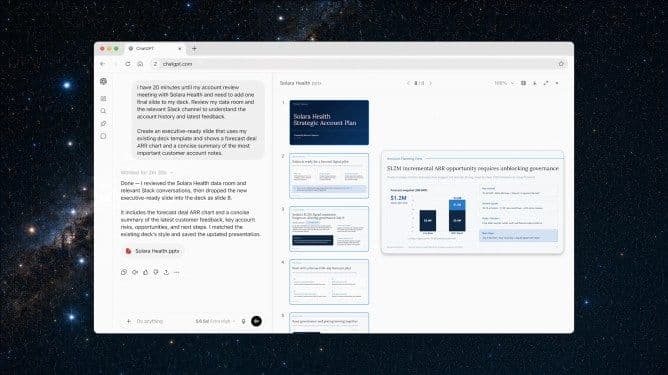
OpenAI is shutting down Atlas, but its AI browser ambitions are still growing
OpenAI issunsettingAtlas, the AI-powered browser itlaunched in Octoberwith ChatGPT at its core. But it’s not giving up on the idea that AI should help people browse the web. Instead, it’s taking some of the agentic browsing features it tested in Atlas and redistributing them across ChatGPT’s desktop app and a Google Chrome extension. The move to shut down Atlas comes a few months after OpenAI’s CEO of applications Fidji Simo told the team tocut back on “side quests,”which led to the AI firm shutting down its AIvideo-generation tool Sora. For much of the past year, the AI industry had been engaged in awar to unseat Chromeas the place where people spend most of their time online. Perplexity launched Comet, The Browser Company launched Dia, and Google and Microsoft have updated Chrome and Edge, respectively, with new AI-powered features. After a few months of experimenting, OpenAI appears to have concluded that the browser is a feature, not the destination. So it’s folding Atlas’ browser-like agent capabilities into the places people already work — and that includes Chrome. OpenAI is launching a ChatGPT extension on Chrome that gives it access to the context of the page you’re viewing, lets users ask questions about web pages, summarize content, or start longer tasks all from the browser. It’s a direct competitor to Google’s Gemini Side Panel, which performs several of the same tasks. OpenAI is also boosting its ChatGPT desktop app by featuring a more robust browser that allows users to browse websites, log into accounts, download files, and interact with web pages without leaving ChatGPT. A separate cloud browser runs remotely on OpenAI’s servers as a place where the app’s agents can complete tasks on a user’s behalf. Together, the updates turn ChatGPT into a continuous workspace that spans Chrome, the desktop app, and an AI agent.
View
An AI agent startup just let its agent run its $100 million fundraise
There’s something almost too meta about this one,via Bloomberg. Lyzr, a three-year-old, Jersey City, New Jersey, startup that helps enterprises build AI agents, used its own AI agent to raise its own round. The system, SivaClaw, reportedly fielded questions from more than 130 investors, drafted investment memos, and even tracked which slides backers lingered on. It basically ran point on the startup’s $100 million Series B (at a roughly $500 million valuation) while proving that the product actually works. It’s hard to imagine a cleaner sales pitch. But the most telling detail, per Bloomberg’s retelling, is how little legwork was involved. Lyzr told the outlet it pulled in $400 million in interest from Silicon Valley, the Middle East, and financial-sector investors without a founder ever needing to fly out and do the traditional laps up and down Sand Hill Road for coffee meetings and warm intros. That may be the real story of this go-go moment: there’s so much capital chasing AI bets that startup founders with traction barely have to leave their desks to raise nine figures.
View

OpenAI launches its new family of models with GPT-5.6
OpenAI unveiled its newest family of models on Thursday, introducing a new set of heavyweight programs into an increasingly crowded field of AI offerings. GPT-5.6 comes in three variants: Sol (considered its workhorse), Terra (a more intermediate option), and Luna (its budget friendly option). These models expand what users can do across a variety of fields — with the company promising powerful capabilities in enterprise work, coding, and even scientific research. CEO Sam Altman has promised that his company’s newest models are orders of magnitude more efficient and cost-effective than previous versions, recentlytelling CNBCthat Sol is 54% more token efficient when it comes to AI coding tasks. Most notably, the company calls 5.6 its “strongest cybersecurity model yet, achieving frontier performance with significantly fewer tokens.” Indeed, much hubbub has been made about the model’s cyber capabilities, as the Trump administration previouslysought to restrict its rollout, ostensibly due to fears of how the model could be misused. GPT-5.6 supports defensive activities, including threat modeling, code review and patching, and blue teaming (simulating an attack on your own systems to find weaknesses before real hackers do). OpenAI also released a new tool calledChatGPT Work, which — just as it sounds — is designed as a workplace companion for enterprise teams, running on desktop, web, and mobile, that can help with daily clerical tasks, like drafting documents, spreadsheets, and presentations. OpenAI’s newly announced family of models follows on the heels of similar releases this week from competitors SpaceXAI and Meta. However, GPT-5.6 and its attendant marketing seems most designed to take aim at OpenAI’s primary opponent, Anthropic. Anthropic has managed to make itself thelikable underdogof the AI race, focusing fixedly on enterprise customers and winning a growing share of support as a result. Not to be outdone, OpenAI cites theArtificial Analysis Coding Agent Index, a notable benchmarking metric, to claim that its latest family of models outshines Anthropic’s models at every turn. OpenAI calls Sol its “best coding model yet,” and has explicitly compared it to Anthropic’srecently released (and much hyped) Fable. Using the Coding Agent Index, OpenAI claims that Sol “sets a new state of the art at 80, 2.8 points above Fable 5, while using less than half the output tokens, taking less than half the time, and costing about one-third less.” It adds: “That advantage extends across the family: Terra performs just above Fable 5, while Luna outperforms Opus 4.8.” The company says that 5.6 is now available across ChatGPT, Codex, and the OpenAI API. Availability per million tokens is priced as follows: Sol is $5 input / $30 output, Terra is $2.50 input / $15 output, and Luna is $1 input / $6 output.
View
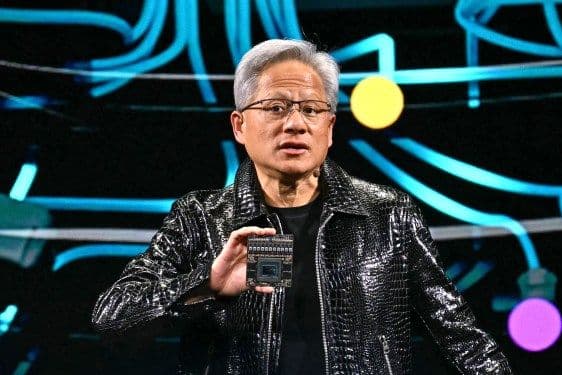
Nvidia is a victim of the compute marketplace it created
Long the leading light of the industry, Nvidia has had a bad couple of months. Bloomberghas the ugly details, but the upshot is that the company’s stock price has fallen 15% since its peak in May, even as projected revenue continues to grow. Compared with expected earnings, the company is now cheaper than the S&P average; investors are paying less per dollar of Nvidia’s projected profit than they do for the typical large American company. Money is still flooding into AI infrastructure stocks, but it’s mostly going into memory companies. Over the same period, Micron — one of the world’s largest makers of DRAM, the standard type of memory chip found in computers and servers — has nearly tripled in value, establishing memory as the new bottleneck for data centers and the hot new AI trade. The basic reason is simple: The GPU shortage that looked so alarming last year has eased off a bit. At the same time, data centers need all the memory money can buy. For anyone who appreciates Nvidia’s technological accomplishments, this can feel a bit deflating. There’s a lot of genuinely impressive technology behind Nvidia’s rise, both in developing CUDA, its widely adopted programming platform that made Nvidia GPUs the default engine for AI research, and in pushing the pace of GPU development to a speed few thought possible. Nvidia’s success is the kind of thing you can write whole books about, and the GPUs themselves are among the most complex devices ever produced, right at the bleeding edge of human capability. For memory companies like Micron, the story is much simpler. They build high-bandwidth memory chips — specialized components designed to move data in and out of processors as fast as possible — which have been getting incrementally better for 20 years. Without the chips or the companies changing too much, the service they provide suddenly became very valuable — and since demand is growing faster than anyone can scale up supply, they have been able to increase prices tenfold over the past year. This, via Datatrack, is what the spot price for DRAM — the price buyers pay for chips on the open market, as opposed to long-term contract rates — looks like since 2023: You might think there was some amazing technical breakthrough in the summer of 2025, but no, the industry as a whole just vastly underestimated how much memory it would need for the data center buildout. In comparison, this (viathe compute marketplace Ornn) is how the spot price for an hour of time on an Nvidia H100 GPU has changed over the last year: Just like Nvidia’s stock price, there’s a peak in May (around $3.20 an hour) and then a steady drop-off. For better or worse, Nvidia’s value as a company is tied to the price of compute and that price is falling. Micron and its cohort are tied to the price of DRAM, and that price keeps rising. When I talked to Ornn co-founder and CTO Wayne Nelms about the forces driving that disparity, he framed it as a simple issue of supply and demand.Google,Amazon,Microsoft, and evenOpenAIhave launched their own custom processors to lessen their dependence on Nvidia; even if those chips aren’t as good as the latest model from Nvidia, they’re good enough to drive down the price of compute. “More GPU and accelerator players are entering the market. Everyone wants to make their own silicon, but no one is making their own DRAM,” Nelms told me. “Until there’s a major technological breakthrough on HBM [high-bandwidth memory], a shift in supply and demand, or someone new [enters the market in memory], I think things will more or less persist as we see today.” It’s a frustrating state of affairs for Nvidia, and largely a product of its own success. Having proven how valuable compute can be, the company finds itself at the center of a market everyone wants to be in — while simpler technologies and less interesting companies get rich on the sidelines.
View
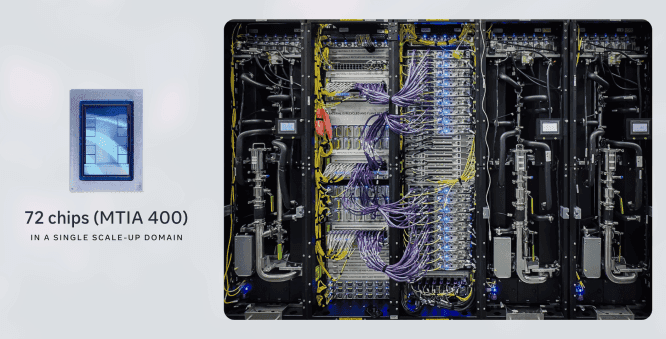
Meta’s new AI chips will begin production in September
In a bid to lower its GPU costs amid an unprecedented component shortage, Meta is on track to start making the latest versions of its AI-specific chip in September, Reutersreported, citing an internal memo. At least one chip sailed through its testing phase in about six weeks, the memo said. Meta is working with Broadcom on the chip design, but it will use Taiwan Semiconductor Manufacturing Company (TSMC) to manufacture them. It is also buying RAM from Samsung, storage from Sandisk, and fiber-optic equipment from Sumitomo Electric, according to the report. Metadetailedthe four new chips, developed under its Meta Training and Inference Accelerator (MTIA) program, in March, some of which are currently in deployment or will be this year or next. The company is taking a modular approach to designing these chips, anticipating that their needs will change as AI evolves rapidly by the time the chips are in production. “Each MTIA generation builds on the last, using modular chiplets, incorporating the latest AI workload insights and hardware technologies, and deploying on a shorter cadence,” the company wrote at the time. The chips are expected to help the company save on buying GPUs from chipmakers like Nvidia and AMD, although it still expects to spend plenty with those providers as well, Reuters reports. Meta intends to use the MTIA chips for training models for its ranking and recommendation algorithms, broader AI workloads, and inference aimed at its applications. The social media company has beenproducing its own AI chips since 2023. Meta has been spending massively on securing enough compute capacity to power its various AI efforts. The company in April said itexpectscapital expenditures between $125 billion and $145 billion this year, a lot of which is going toward its AI efforts. The company has been striking data center and power deals across the world, spending tens of billions to secure computing capacity to train and deploy its newMuse Sparkseries of AI models. It plans to deploy 7 gigawatts of compute this year, and double that next, according to Reuters, which cited the memo. It alsosigned a dealwith ARM last year to secure compute for its recommendation systems, in addition to a multibillion-dollar deal withAMD for its Instinct GPUsand a multibillion-dollar deal withAmazon to use the cloud giant’s homegrown CPUsfor AI-related needs. Meta isn’t the only company trying to stem the tide of capital going to Nvidia. OpenAI last monthunveiledan inference processor that it is building with Broadcom, and Anthropic is said to be consideringdeveloping its own chipswith Samsung.AmazonandGoogleboth develop their own chips for AI training and inference, and there’s ahost of startupsbuilding in the space to meet skyrocketing demand. Meta declined to comment.
View

How to stop Meta’s AI image generator from using your Instagram photos
On Tuesday, Metalaunched“Muse Image,” a new AI image-generation feature that allows users to create original images, edit existing photos, and even generate custom ads directly within its apps. But one capability has quickly become the center of controversy. Muse Image allows users to generate AI images using photos from public Instagram accounts. As long as a person’s profile is public, another user can tag that account and use their images as part of an AI-generated creation. (Only private accounts and accounts belonging to users under 18 are automatically excluded from the feature.) One huge concern is consent. Users may have no idea that their public photos can be incorporated into AI-generated images by strangers, and they aren’t even notified when someone reuses their public content. Plus, making it easy to manipulate people’s images opens the door to misuse, harassment, impersonation, and nonconsensual image editing. If you’re looking toopt outof this, here’s how you can do it. Muse Image arrives at a time when AI tools are being increasingly integrated into social media platforms. As tech companies race to roll out new generative AI features, many experts argue that stronger privacy protections and greater transparency are needed, so users fully understand how their photos and personal data are being used. Public skepticism around AI is already high. According to aPew Research Centersurvey, 35% of respondents said they’re more concerned than excited about the growing use of artificial intelligence. Additionally, Meta’s track record on user privacy has also fueled skepticism surrounding its latest AI feature. In 2019, the U.S. Federal Trade Commission (FTC) imposed a$5 billion fineagainst Facebook, concluding that the platform had violated a 2012 consent order by misleading users about how much control they had over their personal information. This followed a high-profile scandal where political consulting firm Cambridge Analytica gained access to data from up to 87 million Facebook users through a personality quiz app. Facebook’s platform policies at the time allowed developers to collect information about those users’ friends without their knowledge or explicit consent.
View

How did the government decide OpenAI’s frontier model was safe to release?
OpenAI is rolling out its latest advanced LLM, Sol, for wide public access. Sol is considered to be at least on par with Anthropic’s Fable, a model whose capabilities (or ownership) stressed out the White House enough to that it was briefly banned from public access. So how did these models get the ok for release? Short answer: Nobody’s quite sure. “Frankly, I don’t have visibility into those exact processes, so yes, I don’t feel like I have enough information to say whether they’re adequate or not,” Mina Narayanan, a senior research analyst at Georgetown’s Center for Security and Emerging Technology, told TechCrunch. “Anthropic did say that they were in conversations with the government, and that they developed a classifier to detect jailbreak attempts, and they’ve implemented defensive gap strategies to prevent future jailbreaks, but exactly what that dialog looked like between the government and Anthropic and OpenAI is unclear.” Dean W. Ball, a former Trump policy advisor who now works for OpenAI,wrotethat “nobody knows what the requirements are to get licensed” in his newsletter last month. Andy Konwinski, a computer scientist who co-founded Databricks, Perplexity, and the Laude Institute, said he’s never spoken to anyone who understands the process, even employees at frontier labs. “It’s existentially a problem,” he tells TechCrunch. “Safety or not, it’s about who has the power to make decisions—who gatekeeps and decides on permissions?” Eighteen months into the Trump administration, there is still little clarity about how to move forward, despite—or, some critics allege, because—of the industry figures setting policy. Last month, afterweeks of infighting, an executive order was published laying out a roadmap for evaluating frontier models, but the specifics have yet to be filled in, other than what won’t exist. “There will not be an FDA for AI,” Sriram Krishnan, a former Andreesen Horowitz partner who served as a senior advisor for AI in the White House until last month,toldthe Financial Times. Notably, there’s still no agreement on what kinds of models require government scrutiny, or what agency or agencies should perform those evaluations. For now, the Department of Commerce’s Center for AI Standards and Innovation seems to be taking the lead, but the executive order instructs six cabinet agencies to determine a final process by early August. What has emerged in the meantime is, at best, ad hoc. OpenAI CEO Sam Altmansaidon CNBC that the process involved conversations with the officials like Secretary of Commerce Howard Lutnick, Secretary of the Treasury Scott Bessent, and US national cyber director Sean Cairncross, but it’s not clear who the experts that tested the models were or how they did that. OpenAI declined to share details on the government’s process with TechCrunch, but pointed to the results of several external evaluations by organizations like UK AISI, SecureBio and Irregular in the latest model’ssafety card. As with Anthropic’s Fable roll-out, OpenAI previewed the model for the government and select users ahead of wider release, but we don’t know who who all of those users were or how they were chosen. In a late Juneblog post, the company said “we don’t believe this kind of government access process should become the long-term default,” saying it would work with the government to develop a different path forward. The backdrop to those conversations, however, includes Altman reportedlyofferingas much as 5% to OpenAI’s equity for the administration’s so-called “Trump Accounts,” and OpenAI president Greg Brockman’s role asthe largest publicly-known donorto Trump’s mid-term political operation. It’s hard for outside observers to separate those activities from the government’s apparently lighter-touch approach to regulating Sol. Amthropic’s Fable, on the other hand, was briefly pulled from wider access when the US government forbade its use by foreign nationals, partly because of real concerns about users jail-breaking the model to access hacking capabilities and partly due to personality clashes between Anthropic and the Trump administration. The threat of an export ban may have also led OpenAI to be more cooperative with the government’s (unknown) requests. From an industry perspective, a hands-off approach to regulation might be nice, but one that depends on personal connections to administration officials creates uncertainty and bad incentives. Konwinski told TechCrunch that he worries true experts in this technology—”safety researchers, alignment researchers, interpretability researchers, but also data people, and people from all over the stack”—aren’t playing enough of a role in the model release process. Konwinskiarguesthat an “open commons” is the best way to actually balance safety and innovation. He points to models like the FDA, the NIH, or the national labs, which convene researchers, government officials, and private companies to reach a consensus on safety issues. Some of that comes down to the incentives of capitalism that have motivated AI researchers for more than a decade, and played out in the court room during Elon Musk’s lawsuit challenging OpenAI’s corporate structure. Ball points out that the nature of the AI business requires companies to recoup much of their training costs shortly after their models are released and are further ahead of the competition.“Even if their intentions are good, there’s very clear legal obligations and fiduciary responsibility that are built right into the operating procedures,” Konwinski points out. Ball, inhis post, argued that the way forward will depend on third-party auditing organizations, licensed by the government, that will evaluate frontier labs’ approach to safety. Konwinski, too, is bullish about new institutional formats like focused research organizations that could help more disinterested experts from academia and the non-profit world access and evaluate frontier models. For now, the secrecy around the development of AI isn’t going away, but it also will seed political challenges for an industry that Americansincreasingly view with skepticism. “There’s not a sense that responsible people are driving forward these changes,” University of Wisconsin-Madison computer science professor Remzi Arpaci-Dusseau said last week at the Open Frontier conference. At the same event, David Siegel, the computer scientist who founded Two Sigma, one of the most successful quantitative hedge funds, asked attendees to “imagine a situation, which I think would be very bad, [where] a small number of firms control the technology; the government, in their secretive laboratories, is evaluating whether or not the technology is suitable for use; and the general public and scientific community doesn’t really have any access to any of that stuff.” It seems like we don’t need to imagine it.
View