
Latest AI News

Paris-based AI voice startup Gradium raises $100M seed, backed by Nvidia
Gradium, a Paris-based startup that offers voice AI models, re-opened its seed round to new investors, including Nvidia, and has now raised $100 million total for the round, itsaid Thursday. The company is using the cash to open an office in the Bay Area and compete for talent there, “strengthening its position at the heart of the world’s leading AI ecosystem,” as Gradium put it. Paris is a major European hub for AI, so this is an interesting acknowledgement of the benefits for AI startups in being close to Anthropic, Google, Meta, and OpenAI. Gradium originally launched out of stealth in December with $70 million from a roster of impressive investors, including FirstMark Capital, Eurazeo, DST Global Partners, Eric Schmidt, and French telecom billionaire Xavier Niel. The startup was spunout of French AI lab Kyutai(a lab backed by Niel). Both Kyutai and Gradium were co-founded by Neil Zeghidour, a researcher who previously worked at Google Brain, DeepMind, and Facebook. Gradium is working on audio models that deliver voice at scale with ultra-low latency, meaning AI voices that respond almost instantly, without that awkward pause that often creeps into AI agent conversations. The company has plenty of competition, though, from other voice AI startups like ElevenLabs,valued at $11 billionin February, to major model makers known for voice like Google’s Gemini. But Gradium seems to be winning ground anyway. Since its December launch, Gradium says it has landed some big customers, including French auto manufacturerRenault.
View

Google will now disclose which ads are made with AI
Google is rolling out a new feature aimed at helping people understand when an ad they’re seeing was made using AI technology. AI makes it easier for businesses to create ads, place their brand’s products in various settings, and save money on real-world e-commerce photography. But it can also be misleading if consumers don’t know that what they’re looking at isn’t a real product photo. While Google prohibits misleading and deceptive ads, an ad can still leverage AI to create some type of synthetic or digitally altered content. Until now, that’s something Google only required election ads to disclose. The tech giant said the new consumer-facing feature will be introduced to the “My Ad Center” panel, which anyone globally can access by clicking the three-dot menu or on the info icon on the ads they come across via Google Search, YouTube, and Google Discover. This panel already lets users block or report ads, learn more about the advertiser or why the ad was shown, among other things. Now, users also see an option that says “how this ad was made,” which will indicate if the ad was created or edited with AI. Google says that when advertisers use its own generative AI advertising tools to create ads, the disclosure will be automatically enabled. However, if the ad is created elsewhere, the advertiser will need to use a new control to indicate if AI was involved in its creation — Google will not perform its own check to determine if that’s the case. In some markets, the ad may also be labeled as AI if local law requires it.
View

Nandan Nilekani leaves GP role at Fundamentum as it launches $200M third fund
Nandan Nilekani, co-founder of Indian IT services giant Infosys, will no longer serve as a general partner atFundamentum Partnership, the venture capital firm he co-founded nearly a decade ago. Nilekani (pictured above) will be stepping down from his role as Fundamentum launches its third fund, targeting to raise about $200 million. He will be the fund’s anchor investor, and continue advising the firm and mentoring portfolio companies, his co-founder Sanjeev Aggarwal told TechCrunch. Aggarwal described the shift as “just a title thing,” saying Nilekani would continue to advise the firm, mentor portfolio company founders, and provide strategic guidance. “He is an integral part of our firm. The one thing that he enjoys the most is mentoring the teams that we back, and he will continue to do so in Fund III.” Nilekani, 71, is one of India’s best-known technology leaders. Besides co-founding Infosys, he led the creation ofAadhaar, India’s biometric identity system, and has been a leading advocate of the country’s digital public infrastructure, including theUnified Payments Interface (UPI), a real-time payments network used by hundreds of millions of Indians. He has championed theOpen Network for Digital Commerce (ONDC), an initiative aimed at making e-commerce more open and interoperable in the country. NilekanistartedFundamentum in 2017 with Aggarwal, who previously helped build Helion Venture Partners. Fundamentum backs Indian startups at the Series B stage and later, and its portfolio includes used-car marketplaceSpinny, online pharmacyPharmEasy, audio storytelling platformKuku FM, andAppsForBharat, the developer of theSri Mandir devotional app. Nilekani did not respond to an emailed request for comment. The leadership change also broadens Fundamentum’s senior investment team. Alongside Aggarwal, Fund III will be led by Prateek Jain, who joined Fundamentum at its inception in 2017; fintech investor Mayank Kachhwaha, who joined ahead of Fund II; and finance chief Sanjay Chaturvedi, who has been with the firm for nearly a decade. Fundamentum’s third fund aims to back eight to 10 early-stage startups building consumer technology, fintech, and AI products, and issue initial checks of about ₹100 crore (around $10.5 million) each. The firm has yet to announce a first close, but has already begun deploying capital, Aggarwal said, adding that he expects the fundraising to conclude over the next 12 to 18 months. Fund III will see Nilekani making his largest-ever commitment to a venture capital fund, Aggarwal said, though he declined to disclose the investment amount. The fund, Aggarwal said, expects to raise roughly half of its target from international investors, and the remainder from Indian institutions, family offices, founders, and the firm’s partners. That balance reflects how India’s venture capital ecosystem has evolved over the past decade: Indian investors today play a much larger role in domestic funds than they did when Aggarwal helped launch Helion Venture Partners in the mid-2000s. “When we launched Helion, there was no domestic capital in the country, and all the capital was raised from the U.S.,” Aggarwal said. “Over the last five years, we are experiencing very strong interest in Indian investors to back venture capital firms […] Now you can build a venture firm with domestic capital.” Aggarwal told TechCrunch that Fundamentum sees India’s biggest AI opportunity in applications that are built on existing global models, particularly across financial services, content, and vernacular consumer applications. The stance underscores how much of India’s AI ecosystem centers on application-layer startupsrather than those developing frontier AI models, unlike the U.S. and China, where companies have attracted billions of dollars to build AI models. The leadership reshuffle follows the departure of general partner Ashish Kumar, who recentlylaunchedAI-focused venture fund Fundamentum Frontier Advisors (F2A), which also has Nilekani as an anchor investor. F2A, Aggarwal said, is a separate firm with no operational connection to Fundamentum, and Kumar is not involved in Fund III. Fundamentum has made 17 investments across its first two funds. Aggarwal told TechCrunch the firm has returned about half of the capital from its first fund to investors, and thesecond fundis now focused on follow-on investments.
View

Character.AI enters the microdrama arena with its own productions, but there’s a twist
Microdramas aresuch a ragethese days that nearly every kind of company in the attention economy space — be they dedicatedmicrodrama apps, social media giants (TikTok and Instagram) or streaming services (Peacock,Amazon Prime, andIndia’s JioHotstar) — is building a product to tap the opportunity. Character.AI, which lets people chat with customized AI avatars, is also tapping this budding market by producing its own microdramas using AI characters. But there’s an interesting twist that takes advantage of the company’s core product: Users older than 18 can chat with these shows’ characters, ask them questions, and even roleplay different storylines. The startup is launching three microdramas to start with: a romance series dubbed “Last Summer,” a horror show titled, “The Nighttime Game,” and a Hunger Games-like survival microdrama called “Eden Fall.” Character.AI says these dramas were created using AI production tools, and in the long term, it aims to help users create their own characters and series. “Starting with a studio-led model, c.ai Series lets our production team develop the format, refine the workflow, and understand what audiences want from Character-native Microdrama entertainment. Over time, the goal is to turn those learnings and workflows into creator tools, enabling users to make their own series from original Characters and share them with a global audience,” a company spokesperson told TechCrunch. This is the latest in a slew of recent features from the startup following its shift towardentertainment-focusedfeatures last year. In April, it teased a tool calledLorebook that users can employ to create world-building information that characterscan reference, and launchedanother featurecalled Books that lets users insert themselves into select classic literature titles, or role-play as characters from them. The company said on Thursday that it is also testing a feature, dubbed c.ai FM, that will let users put together audio series, and another that lets you create fiction, called c.ai Reads. The audio series feature is currently available to select users under its experimental c.ai Labs program, which the company says professional writers are using to create serialized audio dramas. There’s certainly an audience for this form of entertainment. Users spent more than 950 minutes on Character.AI each month in the first half of 2026, according toSensor Tower.
View
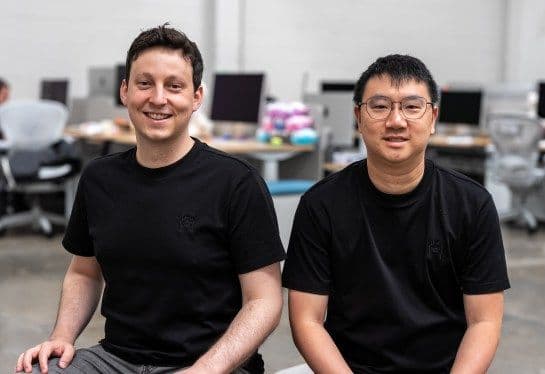
Popular open source AI developer tool Ollama raises $65M, grows to nearly 9M users
The popular open source AI toolOllamahas raised a $65 million Series B, led by Theory Ventures, founder and CEO Jeff Morgan tells TechCrunch. This round follows a previous $15 million Series A led by Benchmark’s Peter Fenton. All told, the company has now raised $88 million. Ollama, which launched in 2023, helps devs run open-weight AI models on their PCs, getting them up and running in minutes. It has been praised by developers across countlesstrainingsites,videos,blogsandsocial mediaposts. It has amassed 176,000 stars and nearly 17,000 forkson GitHub. Developers can also use Ollama to find models and access larger, more complex ones that it hosts on its neocloud via several subscription tiers, from free to $100/month. It also tracks usage based on GPU time, not token limits. If the mission to help developers more easily build on their PCs sounds vaguely familiar, it should. Morgan and his co-founder Michael Chiang previously helped build Docker Desktop. They landed at Docker after it bought their previous startup, Kitematic. Docker makes containers that help cloud apps easy to move from cloud to cloud, or from desktop to cloud, abstracting away all the pesky hardware configuration issues. So Ollama essentially did for AI what Docker and Docker Desktop did for cloud. “Open models started coming out in 2023 but they were really hard to use,” Morgan said. They had been geared toward researchers at the time, not programmers. “As a result, it was really hard to get them up and running.” Three years after launching, Ollama is now “used by over 8.9 million developers every month, sitting in 85% of the Fortune 500 and growing like crazy,” he said. All with only 14 employees. That career experience is what drew Benchmark’s Peter Fenton to lead its earlier round and join the board. “What Jeff and Michael built with Docker is being used by 10 million-plus developers every day. The creative powers to create a product that goes to ubiquity for developers is extremely rare,” Fenton told TechCrunch. Morgan and Fenton declined to discuss the startup’s revenues and new valuation. However, Morgan says that the proving point for Ollama as a business happened around January, when OpenClaw became hot. That’s when larger open models “suddenly became able to do these agentic tasks, like coding. Obviously, we saw the explosion of the assistants like OpenClaw, and this idea that open models can get real work done.” Since then, the industry has been abuzz with the idea that paying users (particularly deep-pocketed enterprises and fast-growing AI application-layer startups) will increasingly turn to more affordable open models, reserving their use of closed models like Anthropic for more of an as-needed basis. “I still think that this is the part that most of the debate gets wrong. It’s not an either/or,” Fenton says of open versus closed AI models. There will be plenty of business for both, he contends. However, every company with high inference expenses — the costs of using the models — has a “vital existential project” pushing them to move “to open-weight models,” he says. There’s plenty of evidence that such startups and enterprisesare already turning to open models for their daily needs.That, obviously, bodes well for Ollama’s cloud business. But even more interesting, Ollama is another example of how AI is birthing a large new crop of open source projects that are turning into companies pursued by VCs. There are open source inference providers likeInferact, maker of vLLM,andRadixArk, maker of SGLang. There is OpenClaw and its alternativeslike NanoClaw.There are even tiny startups building their own open modelsfrom scratch, like Arcee. To be sure, not every Ollama fan has been happy that the company has been pursuing making a living. About a year ago,a bunchofblogandsocial media postscomplained that its cloud business was drawing attention away from its beloved free project and cited Ollama as an example of theso-called “Enshittification” of dev tools, as the trend is called. But Morgan sees its cloud service as an evolution of its open source mission to help programmers find and easily use models. Those state-of-the-art, large, open models are often “too big to run on your own computer. So we said, ‘Hey, let’s help find the compute for that,’” he explained. Board member Fenton adds, “Nothing has changed for the core product that’s free on the desktop. There’s zero change to the premise that this is the place you can discover and run local models.”
View

Anthropic, OpenAI, and SpaceX are bigger than the last 25 years of tech exits
We’ve talked before aboutthe hot IPO summer, but with SpaceX just launched to public markets and Anthropic and (maybe) OpenAI soon to come, it can be easy to miss the sheer scale of what’s happening. We got a good reminder of it in Wednesday’s NCVA-PitchbookVenture Monitor report. Not surprisingly, all of the money in private markets is flooding into AI — but one particular figure stood out. Taking the measure of the pending OpenAI and Anthropic IPOs, the report drops this nugget: “Along with the SpaceX IPO, these exits will generate more value than all U.S. VC-backed exits since 2000.” That’s quite a claim, and when you add up the numbers, it’s hard to disagree. SpaceX has already gone public at a $1.77 trillion valuation, and with both Anthropic and OpenAI pushing into the trillions it’s likely the trio together will land somewhere north of $4 trillion. By comparison, the U.S. Securities and Exchange Commissioncounted just $70 billionin US-based IPO proceeds last year. Careful readers will notice a few caveats in the language. It doesn’t include non-U.S. companies like Alibaba, and we’re measuring “value created” as opposed to strictly liquid cash. A lot of the major tech developments happened at companies that had already gone public (the iPhone, the debut of Android, and the launches of YouTube and Instagram), so they wouldn’t be captured in the IPO figures. Still… that was a pretty eventful 25 years. Among other things, that period saw IPOs from Google (2004), Tesla (2010), and Meta (2012), which are now among the most valuable companies in the world. During the same period, LinkedIn, Slack, and WhatsApp were all acquired for more than $20 billion. Uber’s $84 billion IPO seemed like a lot of money in 2019, but it’s less than 5% of what SpaceX just drummed up. One factor here is that companies are staying private for longer. The Google of today probably would have delayed its IPO and gone public at a higher number. Another factor is the capital-intensive nature of AI training, which has pushed labs into intense fundraising and inflated valuations. But the sheer scale of the public offerings is still way beyond anything the industry has ever done, and is already pushing the financial infrastructure to its limit.
View

Anthropic’s new Claude feature is quietly selling you on AI
At a time whenAI backlashand data centerprotestsare making headlines, Anthropic’s Claude is rolling out a new feature that subtly makes the case for why you should keep using it. On Thursday, the company introduced “Reflect,” a built-in dashboard that lets you track and visualize how you use Claude and your broader AI habits. On the surface, it’s an analytics feature that offers insights into what sort of topics you’ve discussed, your overall usage patterns, and what kinds of tasks you tend to turn to AI for help with. But Reflect’s larger purpose is about shaping how users think about AI itself. It does so by framing Claude as both a highly-utilized productivity tool and a part of your everyday workflow, as well as a technology that can be used mindfully. While Claude Reflect doesn’t go so far as to quantify how much time you’ve saved on manual tasks by switching your workflows to AI, there’s something about having all the work Claude helped with laid out in front of you that will likely make you see Claude as a tool you’ve come to rely on, and one very much a part of your everyday life. Meanwhile, Anthropic will push you to think critically about your AI usage, as Reflect will pop up questions from time to time, like “What’s one thing you want to keep doing yourself, even if Claude could do it faster?” The app additionally offers tools to set quiet hours or schedule nudges to take a break from AI, Anthropic notes in itsannouncement— a nod to the potentially addictive nature of working with AI chatbots, which never fail to respond to your questions and prompt follow-ups to keep the conversation going. The idea to add analytics to an app to subtly shape consumer sentiment is not a new one. In 2012,Google promoteda new utility calledGmail Meter, which number-crunched your email inbox, showing you traffic patterns, pie charts of email categories, how much data is in your inbox versus your archive, among other things. While navel-gazing over this type of data is fun for some technical folks, the meter also served as a way to display, in numbers and charts, how Gmail had become central to people’s digital lives. Claude’s Reflect does the same but it then takes things a step further, as it also trains users on how they can better use AI. For instance, Reflect might suggest that instead of re-explaining the context of your work across repeated tasks, you could use Claude’s Projects feature. For Anthropic, this also has the benefit of more deeply integrating your daily workflows with Claude, which helps retain users and discourage them from switching to competitors’ AI tools. Anthropic notes that more sensitive conversations may show up in Claude Reflect, but only at a high level, and any conversation connected to a health integration tool is left out of your insights entirely. None of the data in your insights is used for other purposes, the company also says. This Claude Reflect feature is available in beta for Free, Pro, and Max users who have memory turned on. Later, it will expand to include a view of how much time you’ve spent using Claude.
View

Govt to Study AI’s Impact on GCC Growth as India Bets on Higher-Value Roles
MeitY Secretary and the Chief Economic Adviser say AI could reshape work but need not weaken India’s GCC opportunity.
View

TCS' AI Business Crosses $2.6 Bn Run Rate as Q1 Revenue Jumps 14% YoY
TCS secured a net profit of ₹13,349 crore, a decline of 2.7% sequentially, and its operating margin also declined to 24% from 25.3% a quarter ago.
View
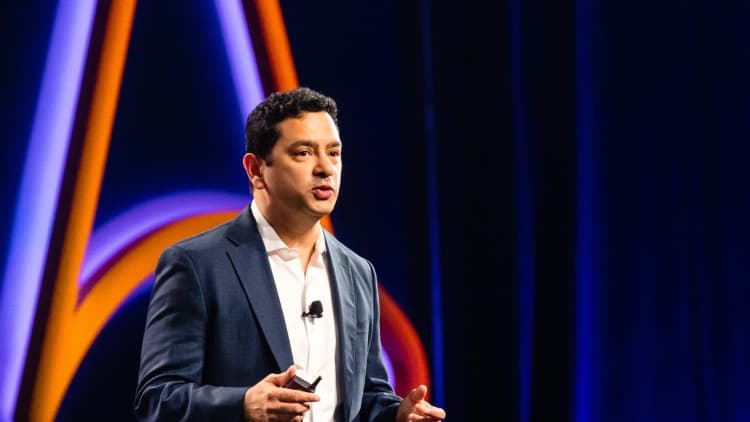
Why Enterprise AI Needs to Move Beyond Traditional RAG
Traditional RAG typically retrieves relevant text from a vector database and supplies it to an LLM as context. Automation Anywhere’s Context Intelligence Graph expands that approach.
View
Cognizant to Train 15,000 Forward Deployed Engineers Under Frontier Workforce Model
Cognizant plans to build a workforce of 5,000 Frontier Certified Engineers and 10,000 Frontier Business Operators by the end of 2026.
View

Kerala Software Co IBS Group Unveils Travel-Tech AI Firm, Plans $500 Mn Investment
IBS Group has launched Naviq Technology, an AI company targeting airlines, airports and hospitality firms, with hiring under way in Kochi.
View