
最新 AI 资讯

How India’s Nano Retail GCCs Built a 3x AI Lead Over Walmart and Target
Even among the largest centres, AI capabilities are uneven. TeamLease found that only 22 of the top 50 mega retail GCCs had established AI capabilities.
View

How GitLab Wants to Kill the Shadow Software Factory
GitLab’s latest updates attempt to bring fragmented workflows under a common system of orchestration, security controls, and measurement.
View
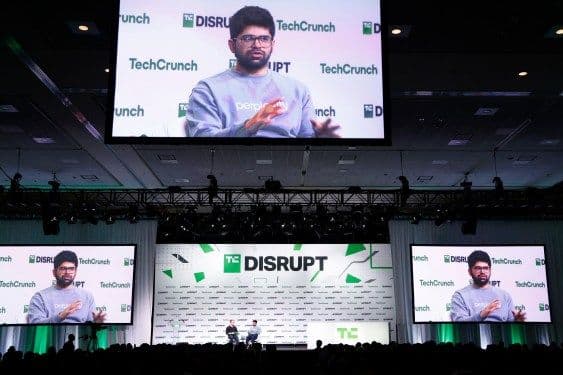
48 hours to TechCrunch Disrupt 2026 — hear directly from the people building what’s next
In less than 48 hours, the doors open forTechCrunch Disrupt 2026at San Francisco’s Moscone West.Save up to $100 on your ticketbefore prices increase at the door. Don’t forget to get a second pass at 50% off. Register now. On October 13-15, more than10,000 founders, investors, and tech leaders will be showing up to make the connections that’ll change their trajectory. More than 250 speakers are getting ready to take the stageacross200+ sessions. Discover 300+ startups showcasing what’s next. Register now before rates hike at the door on October 13, 8 a.m. PT. If you’re coming for the conference program,200+ sessions across six stages, roundtables, and breakoutswill bring you closer to the people making decisions inside some of technology’s most talked-about companies. Hear from leaders includingRJ Scaringeof Rivian, Mark Wahlberg,Alexa von Tobelof Inspired Capital,Andrew Feldmanof Cerebras Systems,Cat de Jongof Anthropic,Les Karpasof NVIDIA, and many more — with conversations spanning AI, robotics, infrastructure, investment, startup growth, fintech, climate, and the realities of building at scale. If your priority is discovery rather than sessions, spend your time in the bustlingExpo Hall, where you can see tomorrow’s breakthroughs, speak directly with the companies behind them, and find out where big ideas are already becoming real products and businesses. It’s here that you’ll also meet thetop 200, hand-picked startups that made it into Startup Battlefield. Disrupt gives you the flexibility to focus on the experience that matters to you — or mix both across three days. The global startup ecosystem is gearing up forTechCrunch Disrupt 2026, and the countdown is almost over. Will you be there? Don’t miss your chance to save before door prices take effect!Grab your pass nowto save up to $100 and get a second pass of the same ticket type at 50% off. Bringing a group of four or more?Unlock additional group discounts. Recently laid off? Don’t miss out on the opportunities at Disrupt. Take advantage of our Layoff to Liftoff Ticket Program andget an Expo+ Pass for just $75.
View

Will the HomeView be Apple’s first smart home success?
Apple will announce a new smart home hub on Tuesday called the HomeView,according to Bloomberg’s Mark Gurman. Over the past couple of years, we’ve seen There have been multiple reports thatApple was working on a new smart home product, but now it seems the product has a name and a launch date. Gurman described the HomeView as a Siri-powered device with a display and an A18 chip, allowing customers to control their other smart home devices. The HomeView will reportedly be available in two models — one designed for countertops and the other to be mounted on walls. This would be Apple’s most serious bet on the smart home to date, after it failed to get much traction for its HomeKit software framework or its HomePod smart speaker. Gurman reports that on Tuesday, Apple will also be unveiling updated versions of two other home devices, namely the Apple TV set-top box and the HomePod mini. Earlier this week, he said thatApple plans to announce a partnership with LGto create a smart lock, a thermostat, and a doorbell.
View
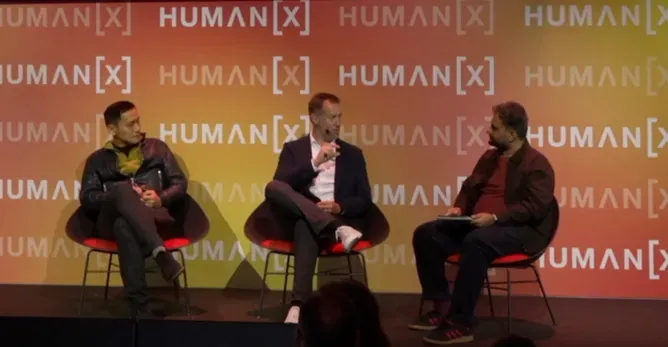
These execs think voice AI hasn’t reached its ChatGPT moment yet
The theory of voice being the next big interface has picked up strong momentum, with investors pouring billions of dollars into voice AI startups working on areas ranging from model makers to enterprise customer service providers, and from meeting note-takers to AI-powered dictation. Every week there is a new model or a tool release that claims to sound human and converse like one. However, in reality, that might not be the case. Enterprise voice AI platform PolyAI’s CTO Shawn Wen thinks that despite the release of full-duplex models — which can speak while listening to you — voice AI doesn’t have its “ChatGPT moment” yet. “We have reached the milestone of developing full-duplex models. The next challenge is to make reasoning very fast, so that the models can fetch answers quickly and the conversation feels natural,” he told me on stage at the HumanX conference last month. He also said that AI agents in customer service should not sound robotic and should give callers enough confidence that they can solve problems. “I think the next stage will be slightly different because once the voice is good enough, like, and the customer is willing to engage with them for the first two or three turns, they start to build confidence, and over time, they will feel like I probably don’t have to talk to a human if the agent can solve my problem,” he said. Alex Gay, CMO for meeting notetaker Otter, opined that speaker identification, intent capture, and typing that up with organizational knowledge is a key step for enabling automation. The company is also working on digital twins that might represent people in meetings. For that technology, he said it’s paramount that the output voice gives the same emotive expressions of talking to a human in a meeting. “If you think about the meetings that you’re in right now, the best conversations that you have are where you can have debate, and strategic discussions, and when you feel like there’s a relationship that underpins it. If you aren’t able to have that with an avatar, then it’s just a q and a chatbot,” Gay noted. While voice AI models have improved, AI assistants often don’t understand users, or your meeting notetaker shows the wrong transcript or a summary. Wen thinks that ASR (Automatic Speech Recognition) models often miss important keywords, and that creates an issue in capturing the whole context. Otter’s Gay agreed with this, adding that the company keeps working on improving transcription. He also said that language is one area where voice models need to improve. “For Otter, you know, transcription was never the end point. It was just the layer that we could start to drive some of the productivity gains on the back of. But if your original transcription didn’t have the accuracy that you needed, all the follow-up actions that you have become flawed. And the minute that starts to take action, that is wrong. You lose trust in the platform. It is critical for us to continue to improve that ASR model because all of the downstream impacts are significant,” he said. With the new voice tools, there is also a question of transparency. Tools should declare to customers that they are being recorded or talking to AI. Otter said that it wants to instill trust in people who are in a meeting, so even for a meeting where the bot is not present, it wants to try methods like notifying everyone in the chat that the meeting is being recorded. PolyAI’s Wen also said that it’s important to establish that people are talking to an AI in enterprise calls.
View

Can the AI industry persuade data center opponents by getting rid of NDAs?
Amazon recently followed Microsoft’s lead and said itwill no longer use nondisclosure agreements(NDAs) while negotiating with local governments over data centers. On the latest episode ofTechCrunch’s Equity podcast, Sean O’Kane, Rebeccan Bellan and I discussed Amazon’s announcement, which came in the middle ofa longer blog postmaking the case that data centers are actually good for communities. Rebecca was a bit skeptical that the recent spate of data center moratoriums will have a lasting effect, especially since the moratoriums only last for a year or two and “these data centers aren’t coming online for the next two, three, four, five years,” though I countered that data center backers definitely seem worried. Sean, meanwhile, suggested that a big reason for the backlash is the industry’s poor communication. “We’ve seen, through a lot of the controversy and backlash to AI and data centers, that the industry just does a really poor job explaining itself, and that they are obviously and constantly frustrated with the fact that most people can’t envision a world in which this stuff is useful for them,” he said. Keep reading for a preview ofour conversation, edited for length and clarity. Sean O’Kane:It’s an interesting thing that it was sort of buried in the blog post and part of a larger story that Amazon’s clearly trying to tell. I guess I understand why they weren’t putting it in the foreground, but to me, this is at the root of so many of the problems that the tech industry currently faces when it comes to AI broadly, but data centers in particular. There are so many things that could be said about whether or not people should be worried about the effect that data centers have on their property values, on their electricity bills, on their water usage in the area, and whether or not those things are real problems, inflated problems, etc. etc. I think so much of that just really goes back to the fact that a lot of these projects are being negotiated essentially in secret. Sometimes they’re being negotiated [with the public knowing] that it’s a data center, but just not knowing who’s actually going to use it or occupy it at any point. This is a long-standing issue with the tech industry. I always go back to the mid-2010s when Uber was expanding really fast. Uber was one of the companies that really used this tactic a ton when it came to working with local governments. In particular, I remember I was working at The Verge at the time and we had a freelancer write a story about a city outside of Orlando where Uber was trying to negotiate tax subsidies to subsidize rides for people to use public transit after the Uber trip. The whole thing was negotiated in secret. And not only that, which was frustrating on its face, but also, because of the secrecy, you could just see Uber getting really comfortable with asking for a lot of other stuff, too. So there needs to be more of this. I’m glad Amazon’s doing this. We’ll see if it actually does have any positive effect, but people are pretty entrenched right now. Rebecca Bellan:Yeah, I’m curious about what effect this will have and whether it will lead to communities successfully delaying or or killing any infrastructure that the companies need to build. What I’ve heard from some people I’ve spoken to, who deal with data centers every day, a lot of these moratoriums that are getting passed — and there are a significant number of them, includingone recently in San Francisco, which is pretty ironic — but they’re only for like a year or two years. But these data centers aren’t coming online for the next two, three, four, five years. All of the buildouts are going to be massively delayed for a number of reasons from zoning to funding. Of course, if the pushback keeps going, then it might have an effect, but I often wonder just how much of an effect this political pushback is having on this. Anthony Ha:The moratorium I’m most familiar with isthe one in New York. I believe it’s a one year moratorium, and that’s on permits for large projects. [Technically, it’s until the state finalizes an environmental review process, which is expected to take a year.] So already, there’s some wiggle room within that. And often, they’re framed as: “It’s not like we think [data centers are] bad, let’s not do this. It’s [that] we need to take the time to study this.” Which gives them a lot of room to say later on, “Actually, we’ve decided this is great. We love it.” But you can tell that the people trying to build these data centers are worried, which is why you have these unhinged tweets from people like Trump or David Sacks. Only time will tell in terms how long and how deep that [community] resistance is, but I do think they are worried. It’s also noteworthy that Microsoft, earlier this year,made a similar announcementabout not using NDAs. I don’t think that getting rid of the NDAs automatically is going to make the people who opposed these data centers be like, “Great, let’s let’s do it. I’m in.” But I think the beginning of that conversation is, “Well, we don’t even know what the heck you’re doing, because you’ve negotiated all this stuff in secret.” So it does seem like a good first step. Sean:The larger problem here is just a communication problem, right? This is a problem I think that goes across the entire tech industry, but it’s especially acute now, because we’re living in the era of “going direct” and “you don’t need to talk to the media, the media is dead,” etc. And I’m not trying to beat that horse, because we’re in the media and [we] think we’re still relevant. But we’ve seen, through a lot of the controversy and backlash to AI and data centers, that the industry just does a really poor job explaining itself, and that they are obviously and constantly frustrated with the fact that most people can’t envision a world in which this stuff is useful for them. And that’s because, a lot of time, the [technological] ability’s not there, and in part because they’re just not explaining it well. I wrote a story last week about howit’s been a year since we’ve really heard Tesla beating its own drum about building towards what it originally was calling “sustainable abundance”and is now “amazing abundance” as its mission statement. It’s just wild to me that we’re a year into that, and the company still doesn’t have a very good definition of it, especially considering that they released this whole multi-page PDF laying it out when they announced this, and even Tesla’s biggest fans criticized Elon Musk and Tesla for how unspecific it was. It read like LLM nonsense. Anthony:One of the things this has made me think about is just the narrative and this sense that for a while, it really felt like it was being pushed down our throats — this idea of, “This is inevitable, this AI-driven future, and get on board or you’re just going to be left behind.” Obviously that future is barreling ahead in a lot of ways, but in a few key ways, there have been these obstacles. What I’ve really liked about that is this sense of “No, you actually have to make the case for it.” You can’t just say, “This is the future, shut up.” And then specifically about Tesla and the abundance thing, what was shocking to me is not so much that they haven’t come up with a definition of abundance, but that that was a promise that they were making in the first place. I think [that] speaks to how strange our relationship to Tesla, and particularly the people who are invested and ride-or-die for Elon, [has become.] It’s not about, is this company going to sell a lot of cars? It’s about this vision for remaking society. Or at least, that’s what they’re being sold.
View
The Antithesis Approach to Breaking AI-Generated Code
Antithesis came out of stealth in 2018. In just two years, the company’s revenue shot up by 12x.
View
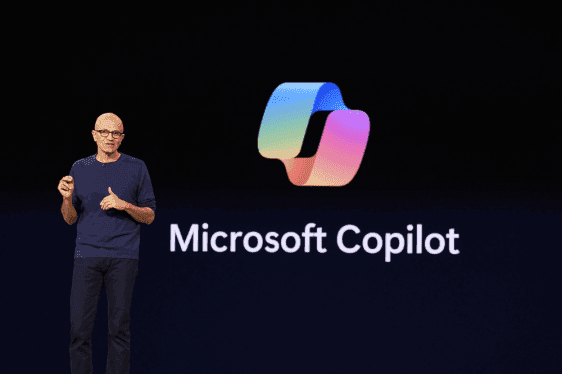
Microsoft’s Satya Nadella says AI models need an ‘emergency brake’
Microsoft CEO Satya Nadella is the latest tech executive to offer lengthy thoughts on how AI safety might be improved. Ina Saturday morning post on X, Nadella wrote that it’s time “to step back and assess the trust architecture” of AI. “We can’t treat Super Intelligence as a set of nested black boxes and simply accept or reject its recommendations, answers, and actions,” Nadella wrote, usingthe Trump administration’s preferred term for AI. As outlined by Nadella, this approach “means separating the model from the harness that orchestrates its work,” as well as “externalizing controls and safeguards.” He also called for “every meaningful model action” to be documented with “tamper-proof human readable evidence,” and for systems where “an authorized person” always has the ability “to pause or shut down a model mid-task.” “We must assume a model is compromised and contain it from the start,” he said. “Think of it like an emergency brake.” Nadella’s comments come as leading AI companies acknowledge more and more incidents wherethey seemed to lose control of their models, and afterAnthropic CEO Dario Amodei published a planfor more cautious AI development.
View

Apple discloses deal to hire team and license tech from personalized podcast startup Huxe
Apple revealed ina regulatory filingthat it has reached an agreement to bring on team members and technology from personalized audio startup Huxe, in what’s commonly known as a reverse acqui-hire deal. As firstreported in MacRumors, Apple disclosed to the European Commission that it has agreed to make employment offers to “certain employees of Huxe AI,” and to “receive a non-exclusive license to Huxe’s intellectual property rights.” Reverse acqui-hires emerged in recent years as a way for larger companies tohire key team members and license technologyfrom startups without acquiring the startups outright — presumably allowing them to build up AI talent and tech without drawing as much antitrust scrutiny. (Confusingly, these deals have both beenreferred to as “reverse acqui-hires” and as plain old “acqui-hires.”) In the case of Huxe, the startup was founded by developers who’d previously worked onthe AI-generated podcast featuresin NotebookLM (recentlyrenamed Gemini Notebook). But Huxe announced on May 21 thatit was shutting down, with the team posting onthe Huxe websitethat the company would be removing its app from the Apple and Google stores, halting service, and deleting user data. “The team is moving on to new things, and we won’t be continuing development of the product,” the company said. It also thanked its users, saying, “The fact that you used it, told friends about it, sent us your suggestions and your ideas, made it feel like we built it together.” On June 9, shortly after Huxe’s announcement, Apple notified the European Commission of its deal. The filing does not say who received employment offers or if they accepted. Nor does it disclose anything about Apple’s plans. Possibly related: Huxe’s shutdown announcement came just a day afterSpotify unveiled AI-powered podcast generation features of its own, so Apple could be hoping to add similar functionality to its Podcasts app. Tech executives seem enamored with the idea thatpersonalized audio can replace regular podcasts(and maybe evenparent-child interaction?), though it’s not clear how many normal listeners agree.
View

Here are the top AI agents that can live in your text messages
Rather than downloading another app, a growing number of agents can simply be texted like an ordinary person. You text it what you need, and it can remember context, connect to the apps and services you already use, and complete tasks on your behalf. That can mean scheduling an appointment, organizing a calendar, researching a trip, sending an email, making a reservation, shopping online, or reminding you about something days later. While Instinct is one of the buzziest AI agents at present,thanks to its $10 billion valuation after its latest funding roundof $1 billion, there are many others also making a play for this space. Below are the most notable options so far, from general-purpose personal assistants to agents designed for families, travel, and work. Caddyis an AI assistant that turns the information scattered across your phone into things you can actually act on. It lives in iMessage for iPhone users and RCS for Android users, so there’s no separate app or inbox to constantly check. For instance, an email contains an appointment that needs to be added to your calendar or a friend sends a list of things to pick up. Instead of worrying about all the details getting buried, Caddy connects to your calendars and conversations, then identifies things that may require action. It can add events to your calendar, set reminders, keep track of follow-ups, and even do research for you. Caddy has been available in public beta since April 2026. Commais designed to manage tasks across both work and everyday life. Comma carries tasks through to completion, checking its own work and determining when a task is finished. Completed work is surfaced for review when a decision or approval is needed. It also proactively notifies users and recommends the next steps. It can work across a user’s browser, computer, and files, while remaining accessible remotely through messaging apps such as Signal, Telegram, and WeChat. Comma maintains context and memory across devices and conversations, and can deliver daily briefings, flag urgent matters, and summarize recorded calls. Comma is free to start and open source. Fambotis an AI-powered “chief of staff” for families, designed to bring together the many moving parts of family life, including school communications, sports activities, meal planning, calendars, and other day-to-day responsibilities, and turn them into an organized plan. The service is designed to work across both an app and text messages. Fambot is available on iOS devices, Android devices, and the web, and families can also interact with it directly over SMS. Every night, Fambot automatically sends a summary of the following day, including upcoming events, to-dos, and details such as school uniform or packing requirements. Parents can reply to those messages to ask questions, check information, or make changes to their calendar. Fambot currently connects to Gmail, Google Calendar, Outlook, and WhatsApp, with support for Apple Calendar planned for the future. The companylaunchedin beta in early September 2026 and has raised $3.5 million in pre-seed funding. The service is currently free during the beta period, but Fambot expects to eventually charge roughly the equivalent of a Netflix subscription. Folkis designed to be an AI assistant you can reach through iMessage, WhatsApp, and Telegram. It can remember personal context, manage reminders, research topics, track flights, handle email, and perform real-world tasks such as restaurant reservations. One distinction is that Folk runs on its own private cloud computer. It can also run code and execute multi-step tasks rather than merely responding conversationally. Folk launched its beta in May 2026, and it’s available for free but also offers a Pro subscription for $8.33/month if you want unlimited tasks running in the background. Instinctfirst made headlines after raising$350 millionat a $2.5 billion valuation. In September 2026, it raised$1 billion, valuing it at $10 billion. The always-available agent can take actions on your behalf, rather than simply answer questions. Users can communicate with Instinct by text or voice and connect it to the apps and services they already use, such as email, calendar, Google Workspace, and more. The company says early users have used Instinct for tasks ranging from planning trips and buying groceries to booking tickets and canceling subscriptions. In September, Instinct began giving usersdedicated email addressesfor their assistants. The idea is to let Instinct create and manage accounts on a user’s behalf without filling the user’s personal inbox. The agent can use its address to sign up for services, contact businesses, follow up on requests, and handle tasks that require an email account. (However, this level of autonomy has also raised concerns aboutprivacy and security.) It’s also begunrolling out support for placing calls. The company remains in private beta. Powered by Hermes Agent,Irisis designed to let users delegate tasks to an AI assistant directly through iMessage. Users can connect the apps they use and hand over a task with a simple message. The agent then works through the required steps, while retaining relevant context from previous interactions. It’s also designed to follow up with users proactively rather than waiting for another request. Martinis a general-purpose personal assistant reachable through SMS as well as phone, WhatsApp, email, Slack, and its owniOSapp. It can help manage calendars, email, reminders, tasks, notes, and communications. It can also act on behalf of users by sending messages or making phone calls, while providing daily summaries of what needs attention. It’s a bit on the pricier side, with subscriptions starting at $21 per month. Misotakes the personal-assistant concept and applies it specifically to travel. It operates through iMessage and combines AI trip planning with support from a dedicated travel team. Users can arrange flights through messaging while Miso takes into account their travel preferences, loyalty points, and other priorities. Miso also gives travelers access to trip details and flight updates, along with personalized recommendations. Ohaiis another family assistant focused on helping households manage the constant stream of information and tasks involved in everyday family life. Users can send messages, forward emails, or make voice requests, and the assistant can transform them into schedules, reminders, and plans. It can also coordinate calendars, household chores, and meals across multiple members of a family. It includes a free basic option, but also offers different subscriptions based on family size, starting at $9.99 per month. Similar to the other family-focused agents, the idea behindOllieis that families already have the information they need, but it lives across school messages, calendars, task lists, and group chats. Ollie aims to bring those pieces together and keep them in sync. It can keep track of calendars, emails, reminders, tasks, and other household details, then deliver relevant information to users through text. Its biggest differentiator from other agents is thatOllieis one of the first mainstream, family-focused AI assistants to achieve SOC 2 compliance, a widely used security standard. Launched in June 2026, Ollie offers a free tier, as well as paid plans starting at $25 per month for 150 messages. A $100-per-month plan includes up to 1,000 messages. Orbitsalso has an AI assistant that is focused on the household. It works through both the Orbits app and text messaging, and can bring together calendars, lists, and conversations while also carrying out tasks for you. That can include searching the web, making purchases, booking restaurants, changing appointments, and requesting quotes for household services. Additionally, Orbits can remind family members about chores, communicate with service providers, and help coordinate responsibilities beyond the immediate household. Orbits is backed by investors like Andreessen Horowitz (a16z) Speedrun fund, N49P, and Garage Capital. Users can interact withPallyas they would with a friend while giving it access to the apps they already rely on. The assistant can connect information spread across services such as WhatsApp, Gmail, calendars, and Google Drive, helping users keep track of plans, receipts, dates, files, and other details. There’s a free plan available, which offers features like 15 minutes of calls per month, or there are paid plans, including $25 per month for 30 minutes of calls and $100 per month for 60 minutes. Pokelaunchedin March 2026 as a general-purpose assistant that you can reach through text messaging. It can handle tasks involving calendars, planning, health and fitness, smart-home controls, photos, and other everyday activities. Poke became particularly notable in June 2026 when AppleapprovedPoke as the first AI agent on the Apple Messages for Business platform. A month later, parent company The Interaction Company of California wasacquiredby AI coding startup Cognition in a deal valued in the low nine figures. Reneis an AI personal assistant designed to be a user’s “best contact” rather than another productivity agent. It’s text-based and can turn natural-language conversations into tasks, reminders, summaries, and other follow-up actions. Rene also maintains context across conversations, allowing it to remember details and surface things that may need attention later. Additionally, it has a browser, can write code, shop for you, as well as create slides and images. Rene is currently available on iMessage, Telegram, and WhatsApp. Instead of waiting for users to open an app,Skyeis an “agentic homescreen” for the iPhone that analyzes information from connected services and surfaces what it thinks is relevant through contextual cards, suggestions, and daily briefings. The assistant can generate audio briefings, prepare information ahead of meetings, surface reminders, and identify potentially useful information. The company, Signull Labs, raised about $3.6 million in seed funding in 2025. It entered private testing and beta in April 2026, and hasn’t yet announced a public release date. Stanleyis an AI content assistant aimed at content creators rather than general personal productivity. Available through iMessage, Telegram, and the web, it acts as a kind of AI head of content, helping users come up with ideas, turn them into posts, and maintain a consistent publishing schedule. For instance, Stanley can connect to a user’s Instagram account, using that context to suggest content based on what the user has actually been doing. Users can also send voice notes, which Stanley turns into scripts, captions, and other social assets. It includes a content calendar and can schedule posts, with the broader goal of making content creation a more continuous, automated process rather than something users have to sit down and plan from scratch. Sznis designed to coordinate tasks and follow-ups through a single conversation thread. Users can send text messages, voice notes, photos, or forwarded emails, and the assistant takes action on their behalf, including making calls, sending emails, and managing follow-ups. According to the company’s website, Szn has served more than 7,500 businesses across 16 countries, completed over 10,000 jobs, and handled 95 hours of calls. Taballows users to delegate everyday tasks through familiar messaging platforms. Users can send requests to the assistant via iMessage or WhatsApp, ranging from ordering groceries to finding birthday gifts, and Tab handles the process on their behalf. The company emerged from stealth in early October with a valuation of $300 million. Its investors include SV Angel, Valar Ventures, and American Spirit. The biggest differentiator withTomo’s personal assistant for iMessage is that, instead of being a private assistant that only you interact with, Tomo can become part of group conversations. Also, like other agents, it’s designed to help with goals, accountability, scheduling, and everyday organization. It also has the ability to send reminders, search the web, work with calendars and email, watch videos, and edit photos. The basic plan starts at $19.99 per month. Townis aimed more at professional life. It gives users a “Townie,” an AI assistant designed to learn how they work and handle recurring professional tasks. It can work with email, calendars, documents, Slack, and other platforms. In June 2026, the company raised a$55 million Series Aled by Andreessen Horowitz and Forerunner. Underdogis a privacy-focused AI assistant that launched an invite-only beta in early October 2026. Unlike cloud-based AI services, the model runs entirely on the user’s device, keeping personal data on hardware they already own. The initial release supports Mac and Windows computers, with Linux, iPhone, and Android versions planned for the future. The company plans to offer the app for free initially and has stated that it will never include advertising. Wajo’s first consumer agent, Fo, can call businesses, send emails, join group chats, make bookings and purchases, and coordinate with people to complete everyday tasks. A key part of Wajo’s approach is giving Fo its own identity. The agent has its own email address, phone number, and payment card, allowing it to interact with businesses without requiring users to hand over their own credentials. Notably, when Fo encounters something it cannot handle on its own, Wajo says it can bring in a human assistant to finish the task. Fo launched publicly in September 2026 with a free tier, while heavier workloads and custom agents are available through a paid Pro offering.
View
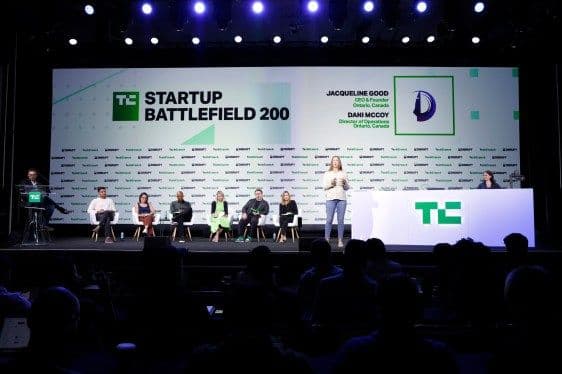
3 days to TechCrunch Disrupt 2026: Meet the startups before they hit mainstream
TechCrunch Disrupt 2026starts in just three days. Moscone West is getting ready, hundreds of startups are preparing to show what they’ve built, and thousands of founders, investors, and tech leaders are heading to San Francisco. The three-day countdown is on, and so are your pass savings of up to $100.Grab your passbefore TechCrunch Disrupt 2026 doors open on October 13 at 8 a.m. PT. Bring a co-founder, colleague, or peer andget a second ticket of the same type at 50% off. Coming with a group? Enjoy even more savings when youregister four or more attendees. For more than a decade, discovering ambitious early-stage companies has been at the heart of Disrupt.Startup Battlefield 200puts a handpicked group of early-stage startups in front of investors, media, potential customers, and the wider technology ecosystem, with 20 finalists taking to the Disrupt Stage to compete for the $100,000 prize and the coveted Disrupt Cup. You don’t need to follow the competition to make startup discovery the focus of your visit. Throughout the Expo Hall, over 300 startups at different stages and from different sectors will be showing what they’re building, giving you the chance to talk directly with founders and find a startup, product, investment opportunity, or idea you weren’t expecting. Or, if you want to combine discovery with content, explore200+ sessionsled by250+ tech leadersacross six stages, plus roundtables and breakouts. Covering AI, product, GTM, fundraising, finance, infrastructure, and scaling, these sessions give you the chance to ask questions, spark new connections, and hear industry announcements and insights before they hit the mainstream. Just 3 days left to save.Get up to $100 off your pass, plus 50% off a second pass of the same ticket type. Recently affected by a layoff? You can still access the opportunities at Disrupt with anExpo+ Pass for just $75. Attending with colleagues or friends? Bring a group of four or more andunlock additional savings.
View

The Hardest Test for India’s AI Dream
For India’s AI ambitions to translate into something more than technological self-sufficiency, AI models, sovereign or otherwise, must win adoption in the real world, across both consumer and enterprise applications.
View