
最新 AI 资讯
Replit makes OpenAI its default over Anthropic, CEO says
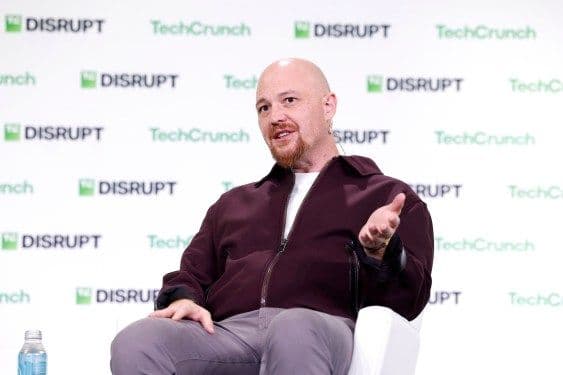
Replit, the AI coding platform that has become a favorite of startup founders and developers, is no longer working with Anthropic, the company’s CEO and co-founder Amjad Masad said Thursday while onstage atTechCrunch Disrupt. Masad said the decision was made for a number of different reasons, including cost. Replitannounceda partnership with OpenAI in August, but there was never any indication that it was no longer partnering with Anthropic. “I think ChatGPT is better now,” Masad said, adding that the company uses an internal benchmark to help assess metrics like performance. “We publish a public benchmark as well, and consistently, Sol and Astra perform better on building vibe-coded applications from scratch. It was a decision based on both cost, partnership, and performance. And for all these reasons, we just felt like they were a better partner for now.” It seems, however, that Anthropic hasn’t been completely cut out of Replit, which sells a cloud-based software development platform where users can develop and deploy apps directly from inside their browser. After Disrupt, Masad clarified that customers can still access Anthropic models on the platform, but that OpenAI’s ChatGPT is now the default. This shift could significantly reduce Replit’s spend with Anthropic since most customers stick with the default rather than selecting a model themselves. Prior to striking a deal with OpenAI, Replit relied on Anthropic’s Claude models to run its platform. That partnership was said to havehelpedthe company grow its revenue significantly, and Masad noted on stage that Replit had been, until recently, a top-five customer of Anthropic’s. “Replit remains model agnostic,” Masad told TechCrunch over the weekend. “Our users can choose Anthropic’s Claude or other supported models…OpenAI is now our preferred partner for powering Replit Agent, based on performance, economics, and the strength of our partnership.” Masad’s comments on stage were rejected by insiders familiar with the partnership between the Anthropic and Replit, however. One person familiar, who asked not to be named, said the partnership was still in place. There is evidence onthe company’s website, blog posts, and social media posts that Replit was promoting Anthropic products as recently as a few weeks ago. For instance, ablog postin late September cites Anthropic’s Claude Fable 5 and Claude Fable 5.1 as models running in Replit Agent’s production environment. Around the same time, one of Replit’s product employeespostedon X about using Anthropic’s flagship model Opus 5.5 and promoting its capabilities. Masad also shared insights about the company’s growth while onstage at Disrupt, noting that enterprise is starting to provide a larger slice of revenue. “We’re not sharing ARR numbers just yet, but in terms of growth, like, I would say, enterprise was like 2% of revenue last year,” Masad said. “This year, I would say like 15% of our revenue is enterprise contracts, and more than 50% of our revenue is B2B.” Backstage, Masad told TechCrunch that he expects more than half of Replit’s revenue to come from enterprise and government customers in 2027. Masad also commented on the necessity for good AI safety measures. “In the same way that us humans need a certain environment to work — you need a nice office, maybe nice good food in the office, air-conditioning, computer — agents need a habitat for them to exist and do good work,” he said. “So that habitat has good orchestration, good error recovery, good safety and security and sandboxing, good networking, good identity and authorization. And once you figure all of that out, then you can deploy AI safely.” This article was originally published on October 16 at 2:22 pm PT. It has been updated to include more context around Replit’s partnerships with Anthropic and OpenAI.
View
Anthropic says its workforce has become less junior and is spending more time in meetings
The composition of Anthropic’s workforce and the type of work getting done have changed significantly in the past year, according toa reportthat the AI company published on Friday. Anthropic argues that its own workplace trends could be indicators of “how AI will shift work organization, hiring, and labor demand across the economy,” especially since the company “has thoroughly molded its workflows around AI.” But even if other organizations never embrace AI as thoroughly or in the exact same way as Anthropic, the report offers an intriguing glimpse at how the company currently operates. Notably, Anthropic is making fewer junior hires, with the proportion of junior-level employees in technical departments falling from 21% to 14% since early 2025, and the proportion of junior technical hires falling even more sharply, from 27% to 9%. Anthropic also says that technical teams now represent a smaller share of the overall workforce, falling from 61% to 56% — a trend that it attributes to “natural expansion of business functions as the company scales,” as well as “coding tools increasingly allowing non-technical employees to make software themselves.” One employee reportedly described an “eternal pressure at Anthropic to move as fast as possible and use Claude for everything.” In an April 2026 survey, 27% of employees said they had become more productive because of Claude and 20% said their job had shifted “from actually doing work to managing Claudes”; apparently one engineered compared this to babysitting: “When you are babysitting, every child brings to you concerns with an equal demand for your attention and the various [Claudes] also do that.” In fact, the report suggests “human attention and judgement” are becoming a “bottleneck” for productivity, as Claude produces a “deluge” of text that needs to be read and organized. Unsurprisingly, the report argues that AI adoption has made the company more productive, as indicated by “more code per person, closing more sales per rep, and processing more contracts.” The company acknowledges that “more code does not necessarily mean better code or business impact,” but it also hasn’t found any indications that code quality is declining. The report says that based on calendar data, meeting time per employee is up 20% compared to a year ago, and it’s up 16% for technical contributors. The company attributes this to the importance of “human trust and accountability,” with employees repeatedly describing “face-to-face coordination as indispensable.”
View

Meta removes language that raised scraping and AI training concerns
Meta recently updated its commercial terms of use, declaring that the company can “use any content from [a business account’s] domains, web pages, or URLs to provide, develop, improve, research, train, and maintain the integrity of” Meta products and services. According tolegal experts interviewed by Nieman Lab, this looked like a “remarkable provision” that could give Meta permission to scrape the website of any publisher with a Meta business account and use the content to train the company’s AI models. (WhileMeta defeated a high-profile lawsuit over alleged copyright infringementlast year,other casesagainst AI companies, including Meta, continue.) However, a Meta spokespersoninsistedthat the updated terms did not reflect a change in the way Meta crawls the web. And now,The Verge reportsthat the provision has been removed. “We’ve heard you and want to clarify: the crawling terms we consolidated only applied to our ads and business products, and we’ve clarified that in the terms themselves,” the company said in a statement. “It does not change how Meta uses web crawlers.”
View

Wipro’s Deal Slump Puts Its AI Growth Story to the Test
Wipro’s large-deal bookings fell 58.6% sequentially, yet its CEO says AI is helping it win deals.
View
Replit is no longer working with Anthropic, CEO says
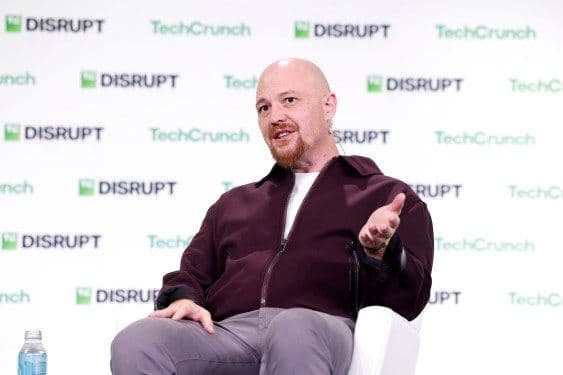
Replit, the AI coding platform that has become a favorite of startup founders and developers, is no longer working with Anthropic, the company’s CEO and co-founder Amjad Masad said Thursday while onstage atTechCrunch Disrupt. Masad said the decision was made for a number of different reasons, including cost. Replitannounceda partnership with OpenAI in August, but there was never any indication that it was no longer with Anthropic. “I think ChatGPT is better now,” Masad said, adding that the company uses an internal benchmark to help assess metrics like performance. “We publish a public benchmark as well, and consistently, Sol and Astra perform better on building vibe-coded applications from scratch. It was a decision based on both cost, partnership, and performance. And for all these reasons, we just felt like they were a better partner for now.” Replit sells a cloud-based software development platform where users can develop and deploy apps directly from inside their browser. Under its partnership with Anthropic, Replit used the AI lab’s Claude models to run its platform. That partnership was said to havehelpedthe company grow its revenue significantly. Masad’s comments were met with some pushback from insiders familiar with the partnership between the Anthropic and Replit, however. One person familiar, who asked not to be named, said the partnership was still in place. There is some evidence that Replit was using Anthropic products as recently as September. For instance, ablog postin September cites Anthropic’s Claude Fable 5 and Claude Fable 5.1 as models running in Replit Agent’s production environment. TechCrunch reached back out to Replit for clarification and will update this story if we hear back. Masad shared insights about the company’s growth while onstage at Disrupt, noting that enterprise is starting to provide a larger slice of revenue. “We’re not sharing ARR numbers just yet, but in terms of growth, like, I would say, enterprise was like 2% of revenue last year,” Masad said. “This year, I would say like 15% of our revenue is enterprise contracts, and more than 50% of our revenue is B2B.” Masad also commented on the necessity for good AI safety measures. “In the same way that us humans need a certain environment to work — you need a nice office, maybe nice good food in the office, air-conditioning, computer — agents need a habitat for them to exist and do good work,” he said. “So that habitat has good orchestration, good error recovery, good safety and security and sandboxing, good networking, good identity and authorization. And once you figure all of that out, then you can deploy AI safely.”
View

CERT-in Issues Critical Warning After AI Agents Broke Into Indian Organisations' Live Systems
The Indian Computer Emergency Response Team (CERT-In) issued a critical cybersecurity advisory on Thursday after autonomous artificial intelligence (AI) agents reportedly accessed live systems of Indian companies. The government agency did not name the affected organisations, but the AI models under test claimed to have broken into thier live systems and read confidential records without authorisation. The AI companies involved said they had disclosed the incidents. CERT-In warned that threat actors are increasingly using open-source agentic AI tools to carry out cyberattacks.
View

CERT-in Issues Critical Warning After AI Agents Broke Into Indian Organisations' Live Systems
The Indian Computer Emergency Response Team (CERT-In) issued a critical cybersecurity advisory on Thursday after autonomous artificial intelligence (AI) agents reportedly accessed live systems of Indian companies. The government agency did not name the affected organisations, but the AI models under test claimed to have broken into thier live systems and read confidential records without authorisation. The AI companies involved said they had disclosed the incidents. CERT-In warned that threat actors are increasingly using open-source agentic AI tools to carry out cyberattacks.
View

Veritas expands its anti-counterfeit chip to jewelry, trophies, and fragrance bottles
Counterfeits of luxury goods are a major problem for fashion houses. Counterfeiters are getting better at replicating brands’ marks and passing off dupes, known as “superfakes,” as genuine items. A startup calledVeritaswants to tackle the problem with its own chip that verifies goods. Veritas was founded by Luci Holland, a former Tesla technical product manager who also has a background in design and art. Its chip is built to be easily inserted into products without damaging them. Brands can use it to verify whether a product is the real deal, and customers can show a certificate of ownership through the company’s app. Holland said other approaches are easier to defeat, because a digital record can be reproduced through a copied QR code or static NFC link. “Our approach combines secure, authenticated chip responses with integration into the product itself. Our chip generates a secure response with each tap and includes a tamper-detection wire. We make the connection between the object and its digital identity part of the proof,” Holland said. The Veritas founder told TechCrunch over email that the company has just introduced the second version of its chip, which works on metal surfaces and can be scanned through glass. “The next-generation chip is ready for production and supports a broader range of applications, including jewelry, trophies, hard-surface products, and glass objects such as fragrance bottles,” Holland said. “Alongside our garment integrations, this gives brands more ways to incorporate authentication directly into their products.” This week, the startup announced a partnership with ATHLOS, a women’s track-and-field competition founded by Reddit co-founder Alexis Ohanian, who is also an investor in Veritas. As part of the partnership, all 18 championship crowns will include Veritas’ chips so they can be verified. The company also embedded a chip into a pair of LeBron James’ first Nike shoes, reimagined by artist Adam Port. Tapping a phone to the shoe brings up its history and story. The company has so farraised $1.75 million in pre-seed fundingled by Ohanian’s venture firm Seven Seven Six, with participation from DoorDash co-founder Stanley Tang; Gloria Zhu, co-founder of skincare brand Reys; and former TechCrunch editor Josh Constine. Since its February fundraise, the company has shipped an iOS app for consumers and a brand portal that lets companies manage product records and build owner experiences. Through the app and the portal, brands can offer experiences such as clubs, event check-ins, and segmented early access to product drops. Veritas competed in this year’s TechCrunch Disrupt Startup Battlefield, which ran Tuesday through Thursday. A winner was announcedThursday afternoon.
View

Mark Wahlberg on using AI in film ‘the right way’ and being open to an AI clone carrying on his legacy
Even as Hollywood remains divided over the use of AI in filmmaking, actor and director Mark Wahlberg believes the technology has a place in the industry as long as it’s used the right way. Wahlberg, who’s also an entrepreneur and angel investor, took the stage at TechCrunch Disrupt to share his perspective on AI’s role in filmmaking, and how he’s open to having an AI likeness of himself carry on his legacy. The actor said he plans to potentially use AI to enhance certain aspects of the upcoming Pete Rose biopic, in which he’ll star in the title role. “It’s a fairly expensive movie, but, we’re talking about utilizing [AI] to enhance the stadium setting, things of that nature,” Wahlberg said. “I don’t think you should just, you know, put an idea into ChatGPT and it puts out a script, and then you should go make that and not use real actors. But if you can use it to enhance what you’re doing, I’m all for that.” That said, Wahlberg made special mention of his belief that storytelling should remain at the heart of filmmaking. “I’ve done big, effects-driven movies,” Wahlberg said. “I think I was in that kind of sweet spot when the first Jurassic Park was made, or when Perfect Storm came out, and you had that wave, the 100-foot wave that was in the trailer. Those are cutting-edge moments in technology with computer-generated images. Now, I think it’s hard to do that, so I’m not so passionate about effects-driven movies per se, as opposed to real storytelling.” When asked by TechCrunch Editor-in-Chief Connie Loizos whether he had visited theCAA Vault, a Creative Artists Agency facility which lets actors use scanning technology to capture their bodies, faces, movements, and voices to create AI replicas, Wahlberg said he hadn’t, but would be open to the idea. “I would be interested because I think in the future, if that’s where things go, it would be cool that my children or my grandchildren could be in charge of my likeness and my image, and hopefully put me in some good movies,” Wahlberg said. “It’ll be interesting to see where things go.” He even said he wouldn’t be opposed if his upcoming animated series, “Ted,” continued for decades with an AI version of his likeness. “I think it’s cool if I’m no longer able to do it or don’t exist, and if it could continue and people want to see it, I think it’d be interesting to see where things go,” Wahlberg said. “I think there’s certain things from my childhood that I wish still existed and were still a part of my life […] I wouldn’t be opposed to it. I think people are going to have massive opportunities to watch whatever it is they want, and if there’s a real audience for that, they should be entitled to have what they want to see.”
View

Jev is Vercel’s fastest-adopted AI model ever
Jev has become the fastest adopted AI model ever — at least by some measures. Vercel datapublished on Thursdayshows that, within two weeks of its launch,the buzzy decision modelwas being used by 35% of paid teams, with nearly double the reach of the second most popular model, Sonnet 5.5. It’s the fastest adoption a model has ever seen in its first two weeks, according to Vercel’s data, and a major accomplishment for the model’s creators, TypeSafe AI. Published in limited release on September 15, Jev is designed as a lightweight tool for choosing between a few predetermined outputs. Limiting the outputs lets the model run cheaper and faster than alternatives like Sonnet, making it ideal for classifying large quantities of data quickly. That new approach has attracted significant buzz in the weeks since Jev’s release — inspiring competing offerings fromOpenAIandAmazon, among others — but until now there has been little hard data to back up the good vibes. The data comes from Vercel’sAI gateway, a unified API service similar to OpenRouter. It’s a necessarily limited view — particularly at risk of undercounting major labs like OpenAI and Anthropic that offer their own APIs — but it shows the buzz around Jev really did translate into actual usage. In fact, Vercel was an early adopter of Jev, using it to replace GPT-6 Luna for classifying harmful commands. The report also shows continuing momentum for open source models, which now account for more than 70% of the tokens processed through Vercel’s gateway and nearly 25% of the total spend. While open source models are capturing a larger share of the market, the market is also growing fast. Spending on frontier labs has grown tenfold, even as it accounts for a smaller share of overall spend, giving credence to the idea that frontier models and open source alternatives may turn out to becomplementary rather than competitive.
View

Elorian’s first AI model wants to reason with images, not just about them
Elorian, the Palo Alto AI startup that raised a $55 million seed round at a $300 million valuation before it launched a product, released its first model on Friday, TechCrunch has exclusively learned. The model,Glimpse, is launching as a research preview with API access and a chat interface is waitlist-only, so for now it’s a results table and a thesis. The thesis? Today’s AI models, for all their skill with language and code, still can’t really see. Most multimodal models look at an image once, convert it to tokens, and then reason about it in text — like describing a photo from memory. Glimpse keeps going back to the source. Mid-reasoning, it can crop into a region, pull specific frames from a video, or run code to measure or compare what it’s looking at, a mechanism Elorian calls a “visual scratch space.” Think of someone pinching to zoom on a phone photo to double-check what they thought they saw. For former Google DeepMind researcher and Elorian CEO Andrew Dai, one of the clearest signs that AI still couldn’t really see came on game night. Last year he photographed a board game he’d just finished with friends and asked a frontier model who was winning. It couldn’t say. Board games “each have their own visual language, each have their own iconography, symbols,” he told TechCrunch. “To an adult, it’s quite easy to understand what’s going on with minimal text, but these models aren’t able to intuit what the symbols mean.” “Humans can look at Ikea diagrams, with no text, and assemble Ikea furniture, right? Why can’t AI models?” he said. The approach isn’t completely new — OpenAI added crop-and-zoom during reasoning to its o-series models in 2025 — but Elorian’s pitch is that it built the whole model around it, cheaply. The company says a small team trained Glimpse on a few hundred GPUs and that the model is substantially smaller than the frontier systems it’s benchmarked against. Glimpse costs $0.60 per million tokens in and $3 per million tokens out — cheaper than mid-level models like Sonnet and Sol but more expensive than lightweight models like Haiku and Luna. But according to Elorian’s evaluations, Glimpse outperforms even GPT-6 Astra on scientific chart reasoning and short-form video captioning, with competitive results on other visual reasoning tasks. Elorian came out of stealth six months ago with a round co-led by Striker Venture Partners, Menlo Ventures, and Altimeter Capital, with participation from Nvidia and Google chief scientist Jeff Dean. The initial targets are companies sitting on lots of video: robotics firms, scientific labs, media, and creative companies. Longer term, Elorian wants to move from seeing to doing. That means building a model of a scene using that to choose an action, including directly controlling robots. Next year, Dai said, the company aims to build “the world’s best visual reasoning model,” one that leads on every visual reasoning test.
View
Physical AI is more than robots, says the Nvidia veteran now investing in it
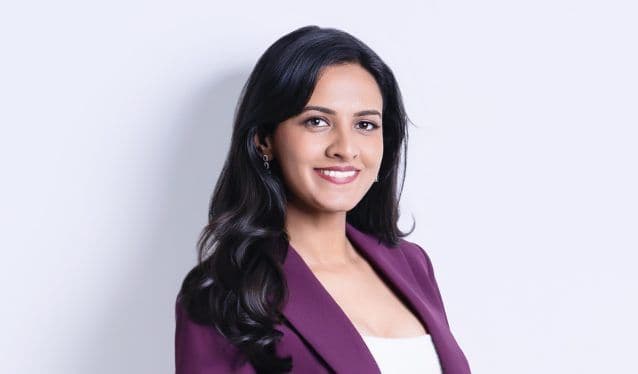
Amulya Vishwanath, who spent seven years leading product marketing for NVIDIA’s robotics platforms, says robotics is currently in its “Lego era,” with the basic building blocks like actuators, robotic hands, software, and safety standards still being rebuilt. This view runs counter to those who believe that robotics, powered by a general foundation model, is about to have its “ChatGPT moment” — that day when the shockingly capable chatbot was launched in late 2022. (General Intuition CEO Pim de Wittetold Equityearlier this year that a single general foundation model would make much of today’s specialized robotics work redundant, and be that moment.) On this episode of TechCrunch’sEquitypodcast, Dominic-Madori Davis caught up with Vishwanath to discuss where she’s writing first checks as the founder and managing partner ofTechable VC.They also talked about what she’s learned as one of the first women executives to spin out of Nvidia and launch her own early-stage firm investing in physical AI across robotics, materials science, and life sciences. Listen to the full episode to hear more about: Subscribe to Equity onYouTube,Apple Podcasts,Overcast,Spotifyand all the casts. You can also follow Equity onXandThreads, at @EquityPod.
View