Description
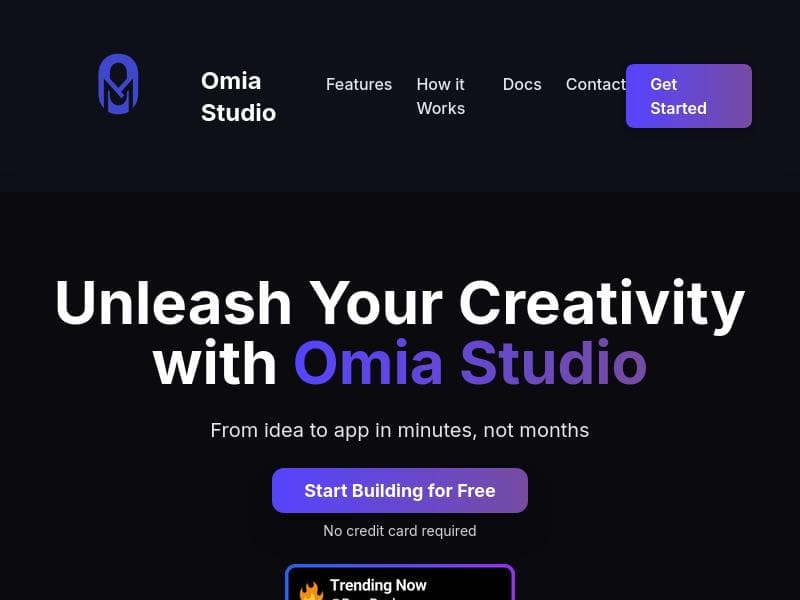
Omia Studio is a cutting-edge AI-native platform that transforms wireframes and prompts into fully functional web and mobile app frontends, while enabling developers to seamlessly connect Python backends. Ideal for designers and developers seeking rapid, collaborative app creation with clean control, it accelerates deployment from concept to launch in minutes.
Omia Studio is an innovative AI-native development platform designed to streamline the creation of real web and mobile applications. Its core purpose is to bridge the gap between design and development by leveraging artificial intelligence to automatically assemble frontend interfaces from wireframes or natural language prompts. This unique approach allows designers and developers to rapidly prototype and ship functional applications without the traditional bottlenecks of manual frontend coding. Users connect their backend logic using Python, making it highly flexible and accessible for developers familiar with this popular programming language. By combining AI-driven frontend generation with a clean, collaborative environment, Omia Studio empowers teams to build sophisticated apps in minutes rather than days or weeks. At the heart of Omia Studio are several key features that distinguish it from conventional app builders. First, its AI integration enables the automatic assembly of frontend components based on user-provided wireframes or descriptive prompts. This reduces the need for detailed UI coding and accelerates the design-to-development workflow. Second, Omia Studio incorporates a canvas technology that provides an interactive design space where users can visually manipulate UI elements, enhancing creativity and precision. This canvas environment supports real-time collaboration, allowing multiple stakeholders to contribute and iterate seamlessly. Third, the platform offers a user-friendly development environment tailored for both designers and developers. Backend connections are handled through Python, giving developers full control over application logic while maintaining a clean separation from the AI-generated frontend. This design ensures that technical users retain flexibility and control, while non-technical users can focus on design and user experience. Omia Studio is best suited for application designers, frontend developers, and small to medium-sized development teams seeking to accelerate app creation without sacrificing quality or control. It is particularly valuable for startups and product teams that need to prototype and iterate quickly, as well as agencies that want to deliver client projects faster with AI-assisted workflows. Use cases include building interactive web dashboards, mobile apps, internal tools, and customer-facing applications where rapid deployment and collaboration are critical. The platform’s Python backend integration also makes it ideal for teams with existing Python expertise who want to leverage AI to enhance frontend development. Regarding pricing, Omia Studio offers a freemium model, allowing users to get started without upfront costs. The free tier provides access to core features and basic AI assembly capabilities, making it accessible for individual developers and small teams experimenting with AI-driven app development. Paid plans likely unlock advanced AI functionalities, increased collaboration options, and expanded backend integration features, though specific pricing tiers and limits are not detailed in the provided information. This pricing strategy makes Omia Studio competitive and approachable for a wide range of users. When compared to alternative app development platforms, Omia Studio stands out due to its AI-native approach to frontend assembly and its seamless Python backend integration. Unlike traditional low-code or no-code tools that rely heavily on manual UI configuration, Omia Studio automates much of the frontend creation process, saving significant time and effort. Its canvas technology also offers a more interactive and collaborative design experience than many competitors. However, unlike some no-code platforms that abstract away backend logic entirely, Omia Studio requires users to connect backends via Python, which may be a consideration for non-developers. This trade-off provides greater flexibility and control for developers but may introduce a learning curve for purely visual creators. Notable limitations include the reliance on Python for backend integration, which may exclude users without programming skills or those using other backend languages. Additionally, while AI assembly accelerates frontend creation, complex or highly customized UI requirements might still necessitate manual adjustments. The freemium pricing model may also impose usage limits that could affect larger teams or enterprise users. Finally, as an emerging platform, Omia Studio’s ecosystem and third-party integrations may be less mature compared to established development tools, potentially impacting extensibility. Despite these considerations, Omia Studio represents a compelling option for teams looking to harness AI to revolutionize app development workflows.

Description
Omia Studio is a cutting-edge AI-native platform that transforms wireframes and prompts into fully functional web and mobile app frontends, while enabling developers to seamlessly connect Python backends. Ideal for designers and developers seeking rapid, collaborative app creation with clean control, it accelerates deployment from concept to launch in minutes.
Omia Studio is an innovative AI-native development platform designed to streamline the creation of real web and mobile applications. Its core purpose is to bridge the gap between design and development by leveraging artificial intelligence to automatically assemble frontend interfaces from wireframes or natural language prompts. This unique approach allows designers and developers to rapidly prototype and ship functional applications without the traditional bottlenecks of manual frontend coding. Users connect their backend logic using Python, making it highly flexible and accessible for developers familiar with this popular programming language. By combining AI-driven frontend generation with a clean, collaborative environment, Omia Studio empowers teams to build sophisticated apps in minutes rather than days or weeks. At the heart of Omia Studio are several key features that distinguish it from conventional app builders. First, its AI integration enables the automatic assembly of frontend components based on user-provided wireframes or descriptive prompts. This reduces the need for detailed UI coding and accelerates the design-to-development workflow. Second, Omia Studio incorporates a canvas technology that provides an interactive design space where users can visually manipulate UI elements, enhancing creativity and precision. This canvas environment supports real-time collaboration, allowing multiple stakeholders to contribute and iterate seamlessly. Third, the platform offers a user-friendly development environment tailored for both designers and developers. Backend connections are handled through Python, giving developers full control over application logic while maintaining a clean separation from the AI-generated frontend. This design ensures that technical users retain flexibility and control, while non-technical users can focus on design and user experience. Omia Studio is best suited for application designers, frontend developers, and small to medium-sized development teams seeking to accelerate app creation without sacrificing quality or control. It is particularly valuable for startups and product teams that need to prototype and iterate quickly, as well as agencies that want to deliver client projects faster with AI-assisted workflows. Use cases include building interactive web dashboards, mobile apps, internal tools, and customer-facing applications where rapid deployment and collaboration are critical. The platform’s Python backend integration also makes it ideal for teams with existing Python expertise who want to leverage AI to enhance frontend development. Regarding pricing, Omia Studio offers a freemium model, allowing users to get started without upfront costs. The free tier provides access to core features and basic AI assembly capabilities, making it accessible for individual developers and small teams experimenting with AI-driven app development. Paid plans likely unlock advanced AI functionalities, increased collaboration options, and expanded backend integration features, though specific pricing tiers and limits are not detailed in the provided information. This pricing strategy makes Omia Studio competitive and approachable for a wide range of users. When compared to alternative app development platforms, Omia Studio stands out due to its AI-native approach to frontend assembly and its seamless Python backend integration. Unlike traditional low-code or no-code tools that rely heavily on manual UI configuration, Omia Studio automates much of the frontend creation process, saving significant time and effort. Its canvas technology also offers a more interactive and collaborative design experience than many competitors. However, unlike some no-code platforms that abstract away backend logic entirely, Omia Studio requires users to connect backends via Python, which may be a consideration for non-developers. This trade-off provides greater flexibility and control for developers but may introduce a learning curve for purely visual creators. Notable limitations include the reliance on Python for backend integration, which may exclude users without programming skills or those using other backend languages. Additionally, while AI assembly accelerates frontend creation, complex or highly customized UI requirements might still necessitate manual adjustments. The freemium pricing model may also impose usage limits that could affect larger teams or enterprise users. Finally, as an emerging platform, Omia Studio’s ecosystem and third-party integrations may be less mature compared to established development tools, potentially impacting extensibility. Despite these considerations, Omia Studio represents a compelling option for teams looking to harness AI to revolutionize app development workflows.
Tool Features
- Create apps with AI integration
- Canvas technology for interactive design
- User-friendly development environment
Frequently Asked Questions
What is Omia Studio?
Omia Studio is an AI-native development platform that automatically assembles frontend interfaces for web and mobile apps from wireframes or prompts, allowing developers to connect backend logic using Python and rapidly build real applications.
How much does Omia Studio cost?
Omia Studio uses a freemium pricing model, offering free access to core features with paid plans likely providing advanced AI capabilities, enhanced collaboration, and expanded backend integration options.
Who is Omia Studio best for?
It is best suited for application designers, frontend developers, startups, and small to medium-sized teams who want to accelerate app development with AI-assisted frontend assembly and maintain backend control via Python.
What are the main features of Omia Studio?
Key features include AI-driven frontend assembly from wireframes or prompts, an interactive canvas technology for design and collaboration, and a user-friendly development environment that integrates Python backends.
Does Omia Studio offer a free trial?
Yes, Omia Studio offers a freemium plan that allows users to try core features at no cost, enabling experimentation with AI-powered app development before upgrading.
What integrations does Omia Studio support?
Omia Studio primarily supports backend integration through Python, allowing developers to connect custom backend logic to AI-generated frontends; details on other third-party integrations are currently limited.
How does Omia Studio work?
Users provide wireframes or natural language prompts describing their app’s frontend, which Omia Studio’s AI assembles automatically. Developers then connect backend functionality using Python, enabling rapid app deployment with collaborative design tools.
Sponsored Tools
































Reviews
No reviews yet. Be the first to share your experience.