Description
Toolhouse revolutionizes the way developers equip large language models with actionable functions and real-time knowledge by enabling function calling with just three lines of code. Ideal for enterprises and AI developers, it accelerates AI agent creation, deployment, and multi-channel processing, making complex AI integrations faster and more accessible.
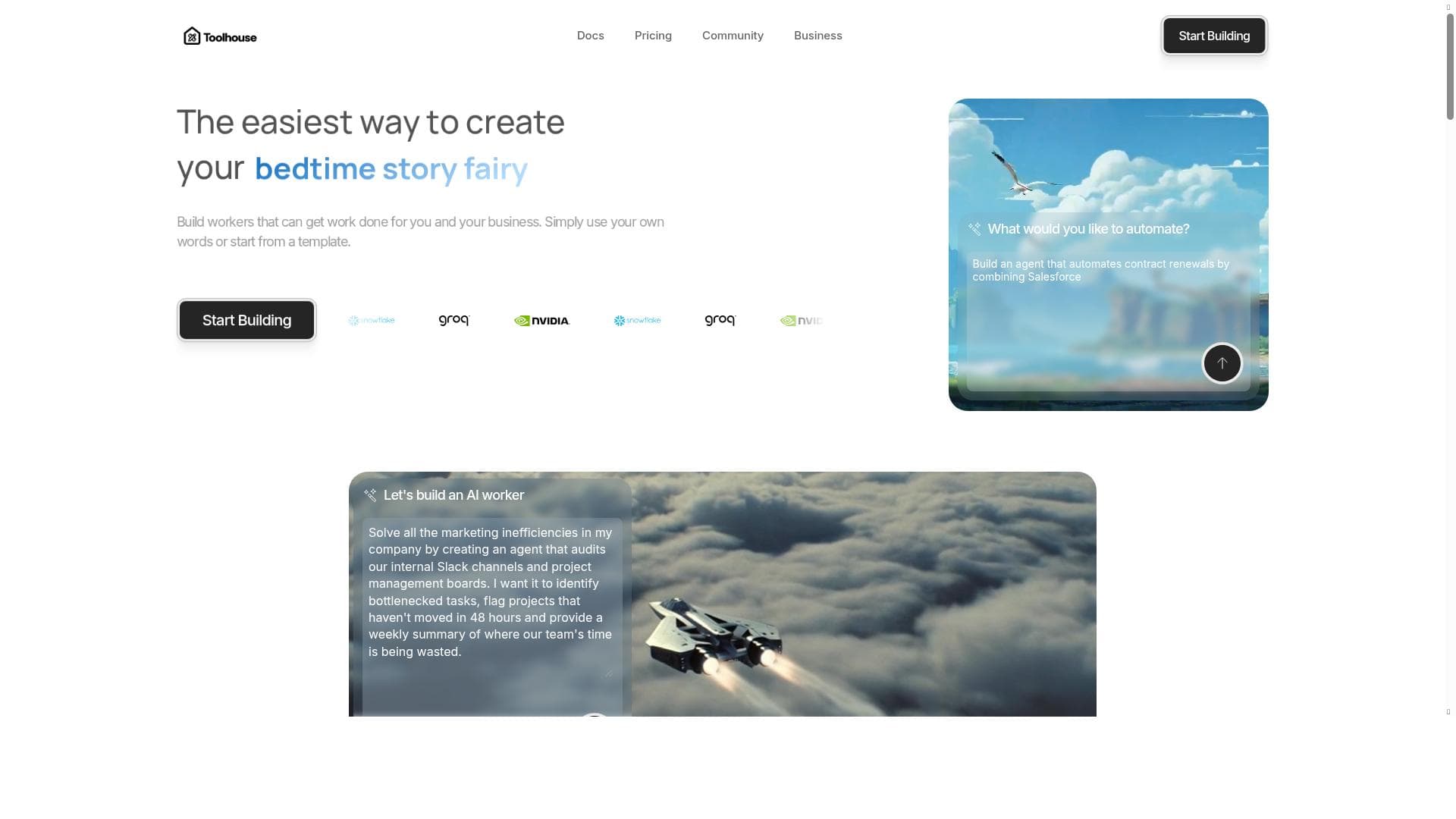
Toolhouse is a comprehensive cloud infrastructure platform designed to empower large language models (LLMs) by seamlessly integrating them with actionable functions and external knowledge sources. Its core purpose is to drastically reduce the complexity and development time typically associated with enabling LLMs to perform real-world tasks through function calling. By offering a streamlined approach that requires only three lines of code to implement function calls, Toolhouse allows developers and organizations to build intelligent AI agents quickly and efficiently. This makes it an invaluable resource for teams looking to accelerate AI deployment without sacrificing flexibility or control. At the heart of Toolhouse’s capabilities is its ability to build AI agents directly from simple prompts, eliminating the need for extensive coding or manual integration work. Once an agent is created, it can be shipped to production with a single click, simplifying the deployment process and enabling rapid iteration. Toolhouse also comes pre-integrated with web scrapers, which allows AI agents to access and retrieve up-to-date information from the internet dynamically. This feature is particularly useful for applications requiring current data or real-time knowledge. Another standout feature is Toolhouse’s support for retrieval-augmented generation (RAG), a technique that enhances the quality and relevance of AI-generated responses by incorporating external documents and databases during the generation process. This ensures that the AI’s outputs are grounded in factual information rather than relying solely on pretrained knowledge. Additionally, Toolhouse supports multi-channel processing (MCP), enabling AI agents to handle inputs and outputs across various communication channels simultaneously. This makes it ideal for use cases that span chatbots, email automation, voice assistants, and more. Toolhouse is trusted by industry leaders such as Cloudflare, NVIDIA, Groq, and Snowflake, which speaks to its robustness and enterprise-grade reliability. Its target users include AI developers, startups, and enterprises looking to integrate advanced AI functionalities into their products or services without the overhead of building complex infrastructure from scratch. Use cases range from customer support automation and intelligent data retrieval to complex workflow automation and real-time decision-making. Regarding pricing, Toolhouse operates on a paid model, though specific pricing tiers or plans are not publicly detailed. Interested users typically need to contact the company directly to receive customized pricing based on their usage and requirements. This approach is common among enterprise-focused AI platforms that offer scalable solutions tailored to different business sizes and needs. Compared to alternatives, Toolhouse stands out due to its minimal code requirement, comprehensive cloud infrastructure, and pre-built integrations that accelerate time-to-market. While other platforms may offer function calling or RAG capabilities, Toolhouse combines these with multi-channel support and production-ready deployment in a single package. However, potential users should consider that the lack of publicly available pricing and the paid-only model might be a barrier for smaller teams or hobbyists seeking free or open-source solutions. One notable consideration is that, as a cloud-based service, Toolhouse requires internet connectivity and may involve data privacy considerations depending on the nature of the information processed. Organizations with strict data governance policies should evaluate compliance aspects before adoption. Additionally, while Toolhouse simplifies many technical challenges, users still need a foundational understanding of AI prompts and workflows to maximize the platform’s benefits. In summary, Toolhouse offers a powerful, developer-friendly environment for building, deploying, and scaling AI agents that leverage LLMs with actionable knowledge and function calling. Its rich feature set, trusted clientele, and ease of use make it a compelling choice for businesses aiming to harness AI’s potential rapidly and reliably.

Description
Toolhouse revolutionizes the way developers equip large language models with actionable functions and real-time knowledge by enabling function calling with just three lines of code. Ideal for enterprises and AI developers, it accelerates AI agent creation, deployment, and multi-channel processing, making complex AI integrations faster and more accessible.
Toolhouse is a comprehensive cloud infrastructure platform designed to empower large language models (LLMs) by seamlessly integrating them with actionable functions and external knowledge sources. Its core purpose is to drastically reduce the complexity and development time typically associated with enabling LLMs to perform real-world tasks through function calling. By offering a streamlined approach that requires only three lines of code to implement function calls, Toolhouse allows developers and organizations to build intelligent AI agents quickly and efficiently. This makes it an invaluable resource for teams looking to accelerate AI deployment without sacrificing flexibility or control. At the heart of Toolhouse’s capabilities is its ability to build AI agents directly from simple prompts, eliminating the need for extensive coding or manual integration work. Once an agent is created, it can be shipped to production with a single click, simplifying the deployment process and enabling rapid iteration. Toolhouse also comes pre-integrated with web scrapers, which allows AI agents to access and retrieve up-to-date information from the internet dynamically. This feature is particularly useful for applications requiring current data or real-time knowledge. Another standout feature is Toolhouse’s support for retrieval-augmented generation (RAG), a technique that enhances the quality and relevance of AI-generated responses by incorporating external documents and databases during the generation process. This ensures that the AI’s outputs are grounded in factual information rather than relying solely on pretrained knowledge. Additionally, Toolhouse supports multi-channel processing (MCP), enabling AI agents to handle inputs and outputs across various communication channels simultaneously. This makes it ideal for use cases that span chatbots, email automation, voice assistants, and more. Toolhouse is trusted by industry leaders such as Cloudflare, NVIDIA, Groq, and Snowflake, which speaks to its robustness and enterprise-grade reliability. Its target users include AI developers, startups, and enterprises looking to integrate advanced AI functionalities into their products or services without the overhead of building complex infrastructure from scratch. Use cases range from customer support automation and intelligent data retrieval to complex workflow automation and real-time decision-making. Regarding pricing, Toolhouse operates on a paid model, though specific pricing tiers or plans are not publicly detailed. Interested users typically need to contact the company directly to receive customized pricing based on their usage and requirements. This approach is common among enterprise-focused AI platforms that offer scalable solutions tailored to different business sizes and needs. Compared to alternatives, Toolhouse stands out due to its minimal code requirement, comprehensive cloud infrastructure, and pre-built integrations that accelerate time-to-market. While other platforms may offer function calling or RAG capabilities, Toolhouse combines these with multi-channel support and production-ready deployment in a single package. However, potential users should consider that the lack of publicly available pricing and the paid-only model might be a barrier for smaller teams or hobbyists seeking free or open-source solutions. One notable consideration is that, as a cloud-based service, Toolhouse requires internet connectivity and may involve data privacy considerations depending on the nature of the information processed. Organizations with strict data governance policies should evaluate compliance aspects before adoption. Additionally, while Toolhouse simplifies many technical challenges, users still need a foundational understanding of AI prompts and workflows to maximize the platform’s benefits. In summary, Toolhouse offers a powerful, developer-friendly environment for building, deploying, and scaling AI agents that leverage LLMs with actionable knowledge and function calling. Its rich feature set, trusted clientele, and ease of use make it a compelling choice for businesses aiming to harness AI’s potential rapidly and reliably.
Tool Features
- Build AI agents from a simple prompt
- Ship to production in one click
- Pre-integrated with scrapers
- Supports retrieval-augmented generation (RAG)
- Supports multi-channel processing (MCP)
- Trusted by Cloudflare, NVIDIA, Groq, and Snowflake
Frequently Asked Questions
What is Toolhouse?
Toolhouse is a cloud infrastructure platform that enables developers to equip large language models (LLMs) with actions and knowledge through simplified function calling, allowing rapid creation and deployment of AI agents.
How much does Toolhouse cost?
Toolhouse operates on a paid pricing model, but specific pricing details are not publicly listed. Prospective users need to contact Toolhouse directly for customized pricing based on their usage and requirements.
Who is Toolhouse best for?
Toolhouse is best suited for AI developers, startups, and enterprises looking to build and deploy AI agents quickly, especially those needing multi-channel processing, retrieval-augmented generation, and seamless integration with external data sources.
What are the main features of Toolhouse?
Key features include building AI agents from simple prompts, one-click production deployment, pre-integration with web scrapers, support for retrieval-augmented generation (RAG), multi-channel processing (MCP), and trusted enterprise-grade reliability.
Does Toolhouse offer a free trial?
There is no publicly available information indicating that Toolhouse offers a free trial. Interested users should contact the company directly to inquire about trial options or demos.
What integrations does Toolhouse support?
Toolhouse comes pre-integrated with web scrapers and supports integration with various data sources to enable retrieval-augmented generation. It is also designed to handle multi-channel inputs and outputs, facilitating integration across communication platforms.
How does Toolhouse work?
Toolhouse works by allowing developers to create AI agents from simple prompts and connect them to external functions and knowledge sources with minimal code. It supports function calling, data retrieval, and multi-channel communication, enabling rapid deployment and scaling of intelligent AI applications.
Socials
Use ToolSponsored Tools





























Reviews
No reviews yet. Be the first to share your experience.