Description
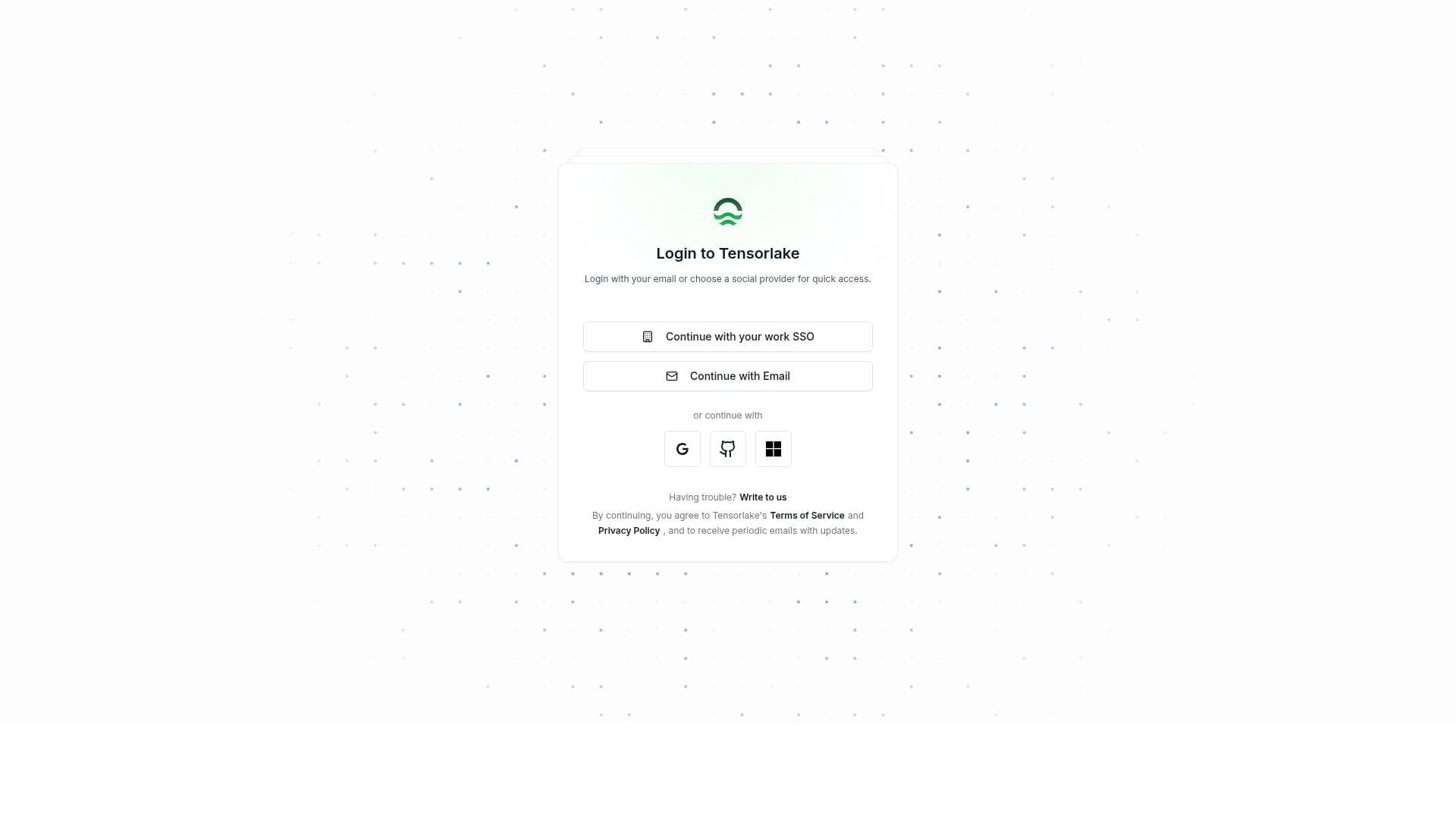
Tensorlake Cloud revolutionizes document ingestion and data orchestration by combining human-like layout understanding with scalable Python-based AI workflows. Ideal for enterprises and data scientists, it streamlines complex document parsing and AI model deployment within a single, integrated platform.
Tensorlake Cloud is a cutting-edge platform designed to streamline document ingestion and data orchestration by leveraging advanced AI and machine learning technologies. At its core, Tensorlake enables users to parse real-world documents with a human-like understanding of layout and structure, which is critical for extracting meaningful data from complex formats such as invoices, contracts, forms, and reports. The platform’s ability to interpret document layouts accurately allows organizations to automate data extraction processes that traditionally required manual intervention, thereby improving efficiency and reducing errors. One of the standout features of Tensorlake is its support for building, training, and deploying AI models within a comprehensive environment tailored for data science workflows. Users can create Python-based workflows that are scalable and production-ready, making it an ideal solution for enterprises looking to integrate AI-driven document processing into their existing systems. The platform offers robust tools for model development, including data preprocessing, feature engineering, and model evaluation, all within a unified interface. This end-to-end capability ensures that data scientists and developers can iterate quickly and deploy models with confidence. Tensorlake also excels in its integrations, providing seamless connectivity with other tools and platforms commonly used in data science and enterprise environments. This interoperability facilitates smooth data flow and orchestration across different systems, enhancing overall productivity. Whether it’s integrating with cloud storage, databases, or analytics platforms, Tensorlake’s flexible architecture supports diverse workflows and use cases. The platform is particularly well-suited for organizations that handle large volumes of documents and require automated, reliable data extraction to drive business processes. Industries such as finance, insurance, legal, and healthcare can benefit significantly from Tensorlake’s capabilities. For example, financial institutions can automate invoice processing and compliance checks, while healthcare providers can extract patient information from medical records efficiently. Data scientists and AI practitioners who need a robust environment for developing and deploying AI models will also find Tensorlake invaluable. Regarding pricing, Tensorlake offers a freemium model, allowing users to access core features at no cost, which is ideal for evaluation and small-scale projects. For enterprises and users with advanced needs, premium plans provide enhanced capabilities, higher usage limits, and dedicated support. This pricing structure makes Tensorlake accessible to a broad range of users, from individual developers to large organizations. When compared to alternatives, Tensorlake stands out due to its unique combination of document layout understanding and Python-based workflow orchestration at scale. While other platforms may focus solely on document parsing or AI model deployment, Tensorlake integrates these functionalities into a single cohesive environment. This reduces the complexity of managing multiple tools and accelerates time-to-value. However, users should consider that the platform’s advanced features may require some familiarity with Python and AI concepts to fully leverage its potential. Notable considerations include the learning curve associated with mastering the platform’s comprehensive toolset and the need for adequate computational resources when training large AI models. Additionally, while Tensorlake supports a wide range of document types, extremely specialized or highly unstructured documents may require custom model tuning. Overall, Tensorlake offers a powerful, scalable solution for organizations aiming to harness AI for document processing and data orchestration, combining ease of use with enterprise-grade capabilities.

Description
Tensorlake Cloud revolutionizes document ingestion and data orchestration by combining human-like layout understanding with scalable Python-based AI workflows. Ideal for enterprises and data scientists, it streamlines complex document parsing and AI model deployment within a single, integrated platform.
Tensorlake Cloud is a cutting-edge platform designed to streamline document ingestion and data orchestration by leveraging advanced AI and machine learning technologies. At its core, Tensorlake enables users to parse real-world documents with a human-like understanding of layout and structure, which is critical for extracting meaningful data from complex formats such as invoices, contracts, forms, and reports. The platform’s ability to interpret document layouts accurately allows organizations to automate data extraction processes that traditionally required manual intervention, thereby improving efficiency and reducing errors. One of the standout features of Tensorlake is its support for building, training, and deploying AI models within a comprehensive environment tailored for data science workflows. Users can create Python-based workflows that are scalable and production-ready, making it an ideal solution for enterprises looking to integrate AI-driven document processing into their existing systems. The platform offers robust tools for model development, including data preprocessing, feature engineering, and model evaluation, all within a unified interface. This end-to-end capability ensures that data scientists and developers can iterate quickly and deploy models with confidence. Tensorlake also excels in its integrations, providing seamless connectivity with other tools and platforms commonly used in data science and enterprise environments. This interoperability facilitates smooth data flow and orchestration across different systems, enhancing overall productivity. Whether it’s integrating with cloud storage, databases, or analytics platforms, Tensorlake’s flexible architecture supports diverse workflows and use cases. The platform is particularly well-suited for organizations that handle large volumes of documents and require automated, reliable data extraction to drive business processes. Industries such as finance, insurance, legal, and healthcare can benefit significantly from Tensorlake’s capabilities. For example, financial institutions can automate invoice processing and compliance checks, while healthcare providers can extract patient information from medical records efficiently. Data scientists and AI practitioners who need a robust environment for developing and deploying AI models will also find Tensorlake invaluable. Regarding pricing, Tensorlake offers a freemium model, allowing users to access core features at no cost, which is ideal for evaluation and small-scale projects. For enterprises and users with advanced needs, premium plans provide enhanced capabilities, higher usage limits, and dedicated support. This pricing structure makes Tensorlake accessible to a broad range of users, from individual developers to large organizations. When compared to alternatives, Tensorlake stands out due to its unique combination of document layout understanding and Python-based workflow orchestration at scale. While other platforms may focus solely on document parsing or AI model deployment, Tensorlake integrates these functionalities into a single cohesive environment. This reduces the complexity of managing multiple tools and accelerates time-to-value. However, users should consider that the platform’s advanced features may require some familiarity with Python and AI concepts to fully leverage its potential. Notable considerations include the learning curve associated with mastering the platform’s comprehensive toolset and the need for adequate computational resources when training large AI models. Additionally, while Tensorlake supports a wide range of document types, extremely specialized or highly unstructured documents may require custom model tuning. Overall, Tensorlake offers a powerful, scalable solution for organizations aiming to harness AI for document processing and data orchestration, combining ease of use with enterprise-grade capabilities.
Tool Features
- Advanced AI and machine learning tools
- Support for building, training, and deploying AI models
- Comprehensive environment for data science workflows
- Robust integrations with other tools and platforms
Frequently Asked Questions
What is Tensorlake?
Tensorlake is a cloud-based platform designed for document ingestion and data orchestration, enabling users to parse complex documents with human-like layout understanding and build scalable Python-based AI workflows.
How much does Tensorlake cost?
Tensorlake offers a freemium pricing model, providing free access to core features for evaluation and small projects, with premium plans available for advanced capabilities and higher usage limits.
Who is Tensorlake best for?
Tensorlake is best suited for enterprises and data scientists who need to automate document processing, build and deploy AI models at scale, and orchestrate data workflows efficiently, especially in industries like finance, healthcare, insurance, and legal.
What are the main features of Tensorlake?
Key features include advanced AI and machine learning tools, support for building, training, and deploying AI models, a comprehensive environment for data science workflows, and robust integrations with other tools and platforms.
Does Tensorlake offer a free trial?
Yes, Tensorlake provides a freemium plan that allows users to try core features for free, enabling evaluation and development of small-scale projects without upfront cost.
What integrations does Tensorlake support?
Tensorlake supports robust integrations with various tools and platforms commonly used in data science and enterprise environments, including cloud storage services, databases, and analytics platforms, facilitating smooth data orchestration.
How does Tensorlake work?
Tensorlake works by ingesting real-world documents and applying AI-powered layout understanding to extract data accurately. Users can then build Python-based workflows to process, analyze, and orchestrate this data at scale, deploying AI models within a unified platform.
Sponsored Tools





































Reviews
No reviews yet. Be the first to share your experience.