Description
Shakespeare is the only fully open source and decentralized AI web builder that lets you create professional websites effortlessly while maintaining full control over your data and code. Ideal for developers, entrepreneurs, and privacy-conscious users, it supports multiple AI providers and integrates seamlessly with Git for collaborative, version-controlled projects.
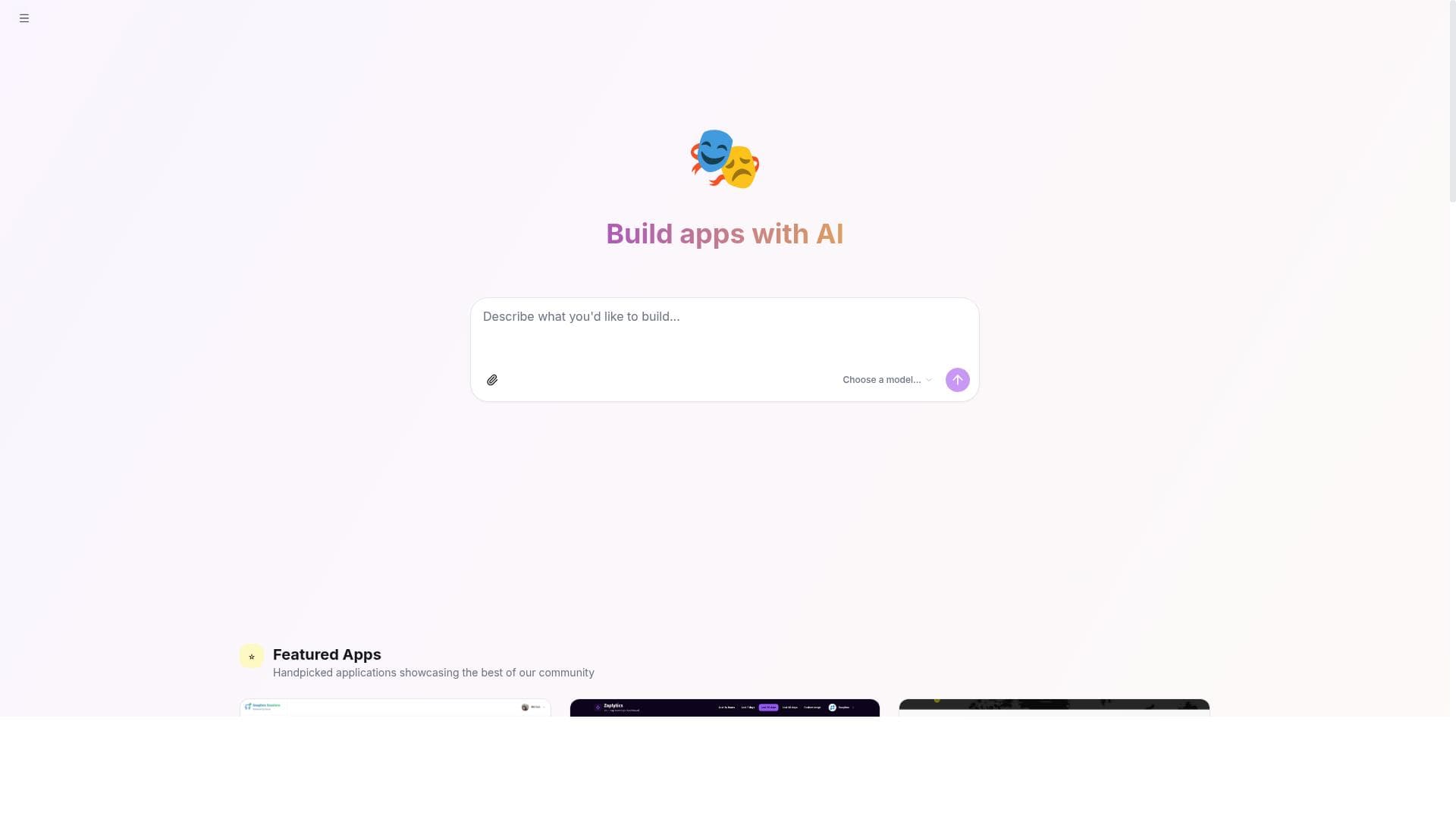
Shakespeare is a groundbreaking AI-powered web builder designed to empower users to create professional websites and custom applications without requiring any coding skills. Its core purpose is to democratize web development by providing a fully open source and decentralized platform that leverages artificial intelligence to translate user requirements into functional, polished sites. Unlike traditional website builders that often lock users into proprietary ecosystems, Shakespeare offers unparalleled freedom by allowing users to choose from a wide range of AI providers, including OpenRouter, PayperQ, Z.ai, OpenAI, Anthropic, xAI, and even local AI models. This flexibility ensures users can tailor the AI backend to their preferences or privacy needs, breaking free from vendor lock-in and fostering a truly customizable development experience. One of Shakespeare's standout features is its commitment to data sovereignty and user control. All project files are stored locally on the user's computer rather than on external servers, providing instant access and complete ownership of data. This approach not only enhances privacy but also improves performance and reliability since users are not dependent on cloud storage or third-party hosting. Additionally, Shakespeare integrates professional version control directly into its environment, enabling users to track changes, roll back to previous versions, and collaborate seamlessly through Git providers like GitHub, GitLab, or any other Git-based platform. This makes it an ideal tool for teams and open source projects, as users can import projects from Git repositories and invite contributions via an "Edit with Shakespeare" badge. The platform's user interface is designed to be highly interactive and intuitive. Users describe their app or website requirements in natural language, and Shakespeare's AI engine generates the corresponding code and structure. For those who want to dive deeper, a built-in file explorer and code editor allow full access to every file, enabling manual edits and fine-tuning. Users can also upload their own images, logos, and other assets directly into their projects, ensuring complete creative control. The tool supports file attachments within apps, further extending its versatility for building complex, feature-rich applications. Shakespeare is best suited for a wide range of users, from non-technical entrepreneurs and small business owners who want to quickly launch professional websites, to developers and open source contributors seeking a flexible, AI-assisted coding environment. Its decentralized nature and support for multiple AI models make it particularly appealing to privacy-conscious users and those interested in experimenting with different AI technologies. Collaborative teams benefit from its Git integration and version control capabilities, which streamline project management and foster community-driven development. The platform is available for free, making it accessible to anyone interested in exploring AI-assisted web development without upfront costs. This free access includes all core features, encouraging widespread adoption and experimentation. Compared to other AI web builders that often rely on proprietary AI services and cloud storage, Shakespeare stands out by offering full transparency, local file storage, and multi-provider AI support. This positions it uniquely in the market as a truly open source and decentralized alternative. However, users should consider that because Shakespeare stores files locally and depends on user-selected AI providers, the experience may vary based on the AI model chosen and the user's technical setup. While the tool simplifies web development significantly, users with no coding background might still face a learning curve when managing Git repositories or editing code manually. Additionally, since it is open source and community-driven, support and documentation may not be as extensive or polished as commercial alternatives. Nevertheless, for those prioritizing control, privacy, and flexibility, Shakespeare offers a compelling solution that challenges the status quo of AI web builders.

Description
Shakespeare is the only fully open source and decentralized AI web builder that lets you create professional websites effortlessly while maintaining full control over your data and code. Ideal for developers, entrepreneurs, and privacy-conscious users, it supports multiple AI providers and integrates seamlessly with Git for collaborative, version-controlled projects.
Shakespeare is a groundbreaking AI-powered web builder designed to empower users to create professional websites and custom applications without requiring any coding skills. Its core purpose is to democratize web development by providing a fully open source and decentralized platform that leverages artificial intelligence to translate user requirements into functional, polished sites. Unlike traditional website builders that often lock users into proprietary ecosystems, Shakespeare offers unparalleled freedom by allowing users to choose from a wide range of AI providers, including OpenRouter, PayperQ, Z.ai, OpenAI, Anthropic, xAI, and even local AI models. This flexibility ensures users can tailor the AI backend to their preferences or privacy needs, breaking free from vendor lock-in and fostering a truly customizable development experience. One of Shakespeare's standout features is its commitment to data sovereignty and user control. All project files are stored locally on the user's computer rather than on external servers, providing instant access and complete ownership of data. This approach not only enhances privacy but also improves performance and reliability since users are not dependent on cloud storage or third-party hosting. Additionally, Shakespeare integrates professional version control directly into its environment, enabling users to track changes, roll back to previous versions, and collaborate seamlessly through Git providers like GitHub, GitLab, or any other Git-based platform. This makes it an ideal tool for teams and open source projects, as users can import projects from Git repositories and invite contributions via an "Edit with Shakespeare" badge. The platform's user interface is designed to be highly interactive and intuitive. Users describe their app or website requirements in natural language, and Shakespeare's AI engine generates the corresponding code and structure. For those who want to dive deeper, a built-in file explorer and code editor allow full access to every file, enabling manual edits and fine-tuning. Users can also upload their own images, logos, and other assets directly into their projects, ensuring complete creative control. The tool supports file attachments within apps, further extending its versatility for building complex, feature-rich applications. Shakespeare is best suited for a wide range of users, from non-technical entrepreneurs and small business owners who want to quickly launch professional websites, to developers and open source contributors seeking a flexible, AI-assisted coding environment. Its decentralized nature and support for multiple AI models make it particularly appealing to privacy-conscious users and those interested in experimenting with different AI technologies. Collaborative teams benefit from its Git integration and version control capabilities, which streamline project management and foster community-driven development. The platform is available for free, making it accessible to anyone interested in exploring AI-assisted web development without upfront costs. This free access includes all core features, encouraging widespread adoption and experimentation. Compared to other AI web builders that often rely on proprietary AI services and cloud storage, Shakespeare stands out by offering full transparency, local file storage, and multi-provider AI support. This positions it uniquely in the market as a truly open source and decentralized alternative. However, users should consider that because Shakespeare stores files locally and depends on user-selected AI providers, the experience may vary based on the AI model chosen and the user's technical setup. While the tool simplifies web development significantly, users with no coding background might still face a learning curve when managing Git repositories or editing code manually. Additionally, since it is open source and community-driven, support and documentation may not be as extensive or polished as commercial alternatives. Nevertheless, for those prioritizing control, privacy, and flexibility, Shakespeare offers a compelling solution that challenges the status quo of AI web builders.
Tool Features
- Build custom apps with AI assistance
- Open source AI builder environment
- Supports multiple AI models
- File attachment support for app building
- Interactive UI for describing app requirements
- Integration with GitHub for cloning apps
Frequently Asked Questions
What is Shakespeare?
Shakespeare is a fully open source and decentralized AI web builder that enables users to create professional websites and custom applications without coding. It uses AI to generate sites based on user descriptions and offers full code access, local file storage, and integration with Git platforms.
How much does Shakespeare cost?
Shakespeare is available for free, providing access to all its core features without any subscription or payment requirements.
Who is Shakespeare best for?
Shakespeare is ideal for non-technical users wanting to build websites quickly, developers seeking an AI-assisted coding environment, open source contributors, and privacy-conscious individuals who want full control over their data and AI model choice.
What are the main features of Shakespeare?
Key features include AI-assisted custom app building, support for multiple AI models, local file storage for data sovereignty, built-in version control with Git integration, an interactive UI for describing app requirements, a file explorer and code editor, and the ability to upload custom assets.
Does Shakespeare offer a free trial?
Shakespeare is completely free to use, so there is no need for a trial period.
What integrations does Shakespeare support?
Shakespeare integrates with Git providers such as GitHub, GitLab, and any other Git-based platform, allowing users to clone repositories, track changes, and collaborate seamlessly.
How does Shakespeare work?
Users describe their desired website or app in natural language through an interactive UI. Shakespeare's AI engine then generates the corresponding code and project files, which are stored locally. Users can edit code manually, manage versions via Git, and choose from multiple AI providers to power the generation process.
Sponsored Tools

































Reviews
No reviews yet. Be the first to share your experience.