Netlify Database
Description
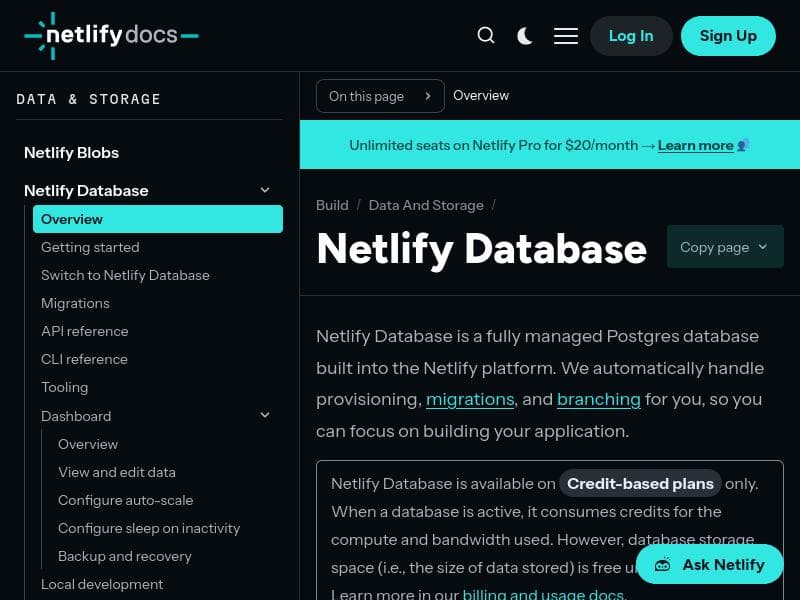
Netlify Database is a fully managed PostgreSQL service uniquely integrated with the Netlify platform, offering zero-config setup, automatic database branching for deploy previews, and built-in migration support. It’s ideal for developers building full-stack Jamstack and serverless applications who want seamless, isolated database environments without the hassle of manual management.
Netlify Database is a fully managed PostgreSQL database service designed to integrate seamlessly with Netlify projects, providing developers with a robust, scalable, and developer-friendly backend data solution. Its core purpose is to simplify database management by automating complex tasks such as branching, migrations, and local development workflows, allowing developers to focus on building full-stack applications without the overhead of managing database infrastructure. By embedding the database directly into the Netlify platform, it offers a streamlined experience that tightly couples frontend deployments with backend data layers, making it an ideal choice for modern Jamstack and serverless applications. One of the standout features of Netlify Database is its zero-configuration Postgres integration. Developers can provision a fully functional PostgreSQL database without manual setup or configuration, reducing the time and complexity traditionally associated with database management. Another key capability is automatic database branching, which creates isolated database instances for each deploy preview. This means that every feature branch or pull request gets its own dedicated database environment, enabling safe and parallel development workflows without risking data conflicts or corruption. Additionally, Netlify Database includes platform-managed database migrations, which automate schema changes and version control for database structures, ensuring smooth updates and consistency across environments. The platform also supports full-stack applications, providing seamless connectivity between frontend code and backend data. Its local development experience is optimized to mirror production environments, allowing developers to test and debug their applications with confidence before deployment. Integration with the broader Netlify ecosystem means that database operations, deployments, and previews are unified under a single platform, simplifying project management and reducing context switching. Netlify Database is best suited for frontend developers, full-stack engineers, and teams building Jamstack, serverless, or static web applications who want a hassle-free, scalable database solution tightly integrated with their deployment pipeline. It is particularly valuable for projects requiring isolated development environments, such as feature branches or collaborative teams, where database state separation is critical. Use cases include e-commerce sites, content management systems, SaaS applications, and any project that benefits from a managed PostgreSQL backend with minimal operational overhead. In terms of pricing, Netlify Database is offered for free, making it accessible for individual developers, startups, and teams looking to experiment or build production applications without upfront database costs. This free tier encourages adoption and lowers the barrier to entry for leveraging a managed PostgreSQL service within the Netlify ecosystem. Compared to alternatives, Netlify Database stands out by providing native integration with Netlify’s deployment and preview infrastructure, a feature not commonly found in standalone database providers. While traditional managed PostgreSQL services require separate configuration and management, Netlify Database automates and abstracts these complexities, delivering a more cohesive developer experience. However, it may not yet offer the extensive customization or advanced enterprise features available in some dedicated database platforms, which could be a consideration for very large-scale or highly specialized applications. Notable limitations include its current focus on PostgreSQL only, which might not suit developers needing other database types like NoSQL or multi-model databases. Additionally, since it is tightly coupled with the Netlify platform, it is best used within that ecosystem; teams using other hosting or deployment services might find integration less straightforward. Finally, while the free pricing is attractive, users should evaluate performance and scaling capabilities for high-demand production workloads to ensure it meets their needs. Overall, Netlify Database offers a compelling, developer-centric managed PostgreSQL solution that enhances the Netlify platform by simplifying database management, enabling isolated development environments, and streamlining full-stack application workflows.

Description
Netlify Database is a fully managed PostgreSQL service uniquely integrated with the Netlify platform, offering zero-config setup, automatic database branching for deploy previews, and built-in migration support. It’s ideal for developers building full-stack Jamstack and serverless applications who want seamless, isolated database environments without the hassle of manual management.
Netlify Database is a fully managed PostgreSQL database service designed to integrate seamlessly with Netlify projects, providing developers with a robust, scalable, and developer-friendly backend data solution. Its core purpose is to simplify database management by automating complex tasks such as branching, migrations, and local development workflows, allowing developers to focus on building full-stack applications without the overhead of managing database infrastructure. By embedding the database directly into the Netlify platform, it offers a streamlined experience that tightly couples frontend deployments with backend data layers, making it an ideal choice for modern Jamstack and serverless applications. One of the standout features of Netlify Database is its zero-configuration Postgres integration. Developers can provision a fully functional PostgreSQL database without manual setup or configuration, reducing the time and complexity traditionally associated with database management. Another key capability is automatic database branching, which creates isolated database instances for each deploy preview. This means that every feature branch or pull request gets its own dedicated database environment, enabling safe and parallel development workflows without risking data conflicts or corruption. Additionally, Netlify Database includes platform-managed database migrations, which automate schema changes and version control for database structures, ensuring smooth updates and consistency across environments. The platform also supports full-stack applications, providing seamless connectivity between frontend code and backend data. Its local development experience is optimized to mirror production environments, allowing developers to test and debug their applications with confidence before deployment. Integration with the broader Netlify ecosystem means that database operations, deployments, and previews are unified under a single platform, simplifying project management and reducing context switching. Netlify Database is best suited for frontend developers, full-stack engineers, and teams building Jamstack, serverless, or static web applications who want a hassle-free, scalable database solution tightly integrated with their deployment pipeline. It is particularly valuable for projects requiring isolated development environments, such as feature branches or collaborative teams, where database state separation is critical. Use cases include e-commerce sites, content management systems, SaaS applications, and any project that benefits from a managed PostgreSQL backend with minimal operational overhead. In terms of pricing, Netlify Database is offered for free, making it accessible for individual developers, startups, and teams looking to experiment or build production applications without upfront database costs. This free tier encourages adoption and lowers the barrier to entry for leveraging a managed PostgreSQL service within the Netlify ecosystem. Compared to alternatives, Netlify Database stands out by providing native integration with Netlify’s deployment and preview infrastructure, a feature not commonly found in standalone database providers. While traditional managed PostgreSQL services require separate configuration and management, Netlify Database automates and abstracts these complexities, delivering a more cohesive developer experience. However, it may not yet offer the extensive customization or advanced enterprise features available in some dedicated database platforms, which could be a consideration for very large-scale or highly specialized applications. Notable limitations include its current focus on PostgreSQL only, which might not suit developers needing other database types like NoSQL or multi-model databases. Additionally, since it is tightly coupled with the Netlify platform, it is best used within that ecosystem; teams using other hosting or deployment services might find integration less straightforward. Finally, while the free pricing is attractive, users should evaluate performance and scaling capabilities for high-demand production workloads to ensure it meets their needs. Overall, Netlify Database offers a compelling, developer-centric managed PostgreSQL solution that enhances the Netlify platform by simplifying database management, enabling isolated development environments, and streamlining full-stack application workflows.
Tool Features
- Zero-config Postgres database integration
- Isolated database branches for development
- Platform-managed database migrations
- Full-stack app support
- Seamless integration with Netlify platform
Frequently Asked Questions
What is Netlify Database?
Netlify Database is a fully managed PostgreSQL database service that integrates directly with Netlify projects, providing automated database branching, migration support, and a streamlined local development experience.
How much does Netlify Database cost?
Netlify Database is currently offered for free, allowing developers to use a managed PostgreSQL database without any upfront costs.
Who is Netlify Database best for?
It is best suited for frontend and full-stack developers building Jamstack, serverless, or static web applications on the Netlify platform who need seamless database integration and isolated development environments.
What are the main features of Netlify Database?
Key features include zero-config PostgreSQL integration, isolated database branches for deploy previews, platform-managed database migrations, full-stack app support, and seamless integration with the Netlify platform.
Does Netlify Database offer a free trial?
Yes, Netlify Database is available for free, effectively serving as a free trial with no cost to get started.
What integrations does Netlify Database support?
Netlify Database is natively integrated with the Netlify platform, enabling smooth workflows between frontend deployments, deploy previews, and backend database environments.
How does Netlify Database work?
It provisions a managed PostgreSQL database automatically linked to your Netlify project, creates isolated database branches for each deploy preview, manages schema migrations, and provides a local development environment that mirrors production.
Socials
Use ToolSponsored Tools


































Reviews
No reviews yet. Be the first to share your experience.