Atlas Cloud
Description
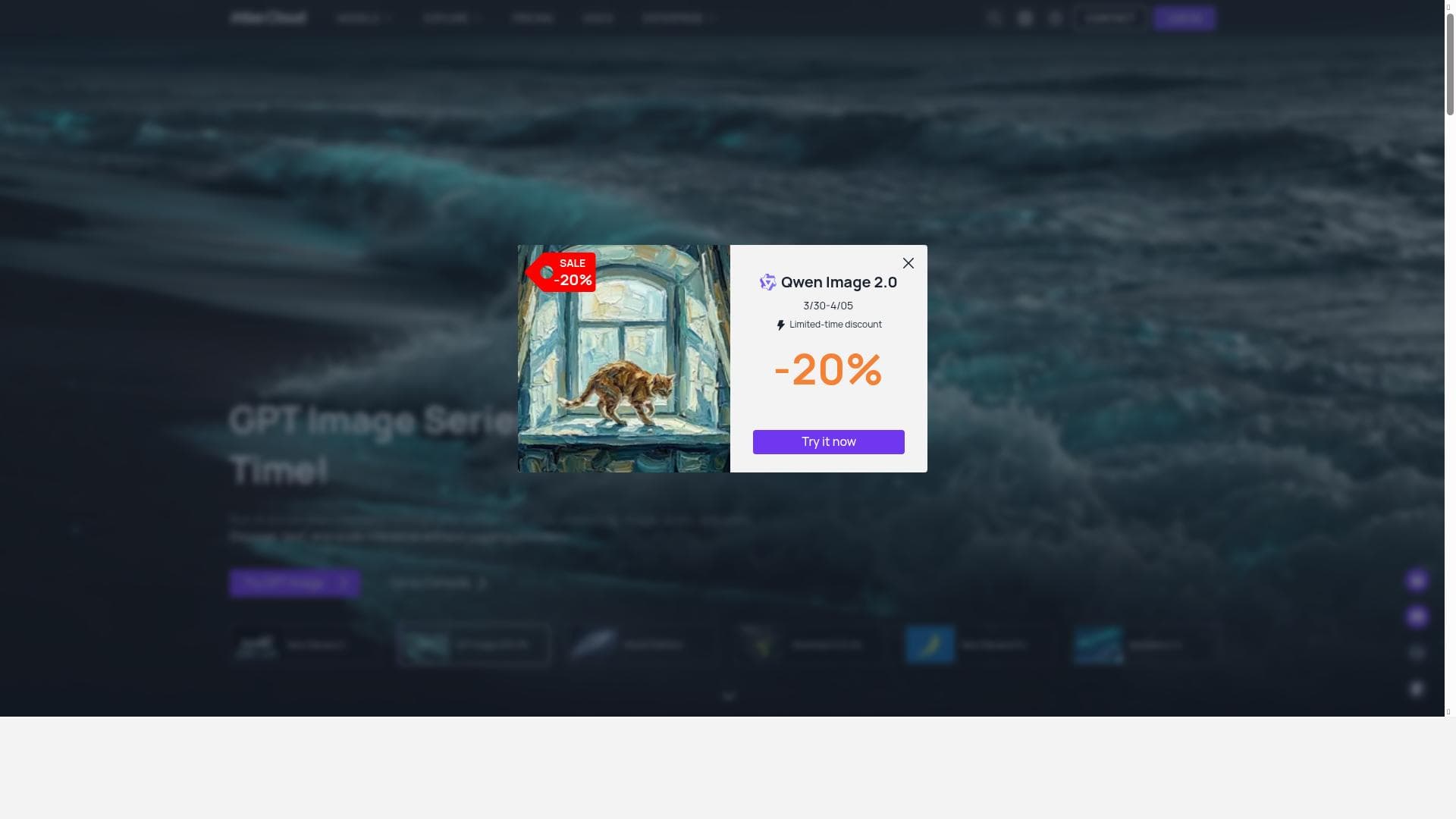
Atlas Cloud is a versatile AI cloud platform offering unified API access to over 300 AI models across chat, image, video, and audio modalities. Its GPU-powered fast inference and OpenAI-compatible API make it ideal for developers and enterprises seeking seamless, scalable AI integration without juggling multiple providers.
Atlas Cloud is a comprehensive AI cloud platform designed to simplify and accelerate the deployment of artificial intelligence applications by providing access to over 300 diverse AI models through a unified API. Its core purpose is to serve as a one-stop hub where developers, enterprises, and AI enthusiasts can seamlessly integrate, scale, and manage AI-powered functionalities without the complexity of juggling multiple providers or APIs. By hosting a vast array of models such as Veo 3, Sora 2, Wan 2.5, Nano Banana, DeepSeek, GPT, Claude, and Flux, Atlas Cloud caters to a wide spectrum of AI needs ranging from natural language processing and computer vision to audio and video analysis. This extensive model library enables users to select the most appropriate AI capabilities for their specific applications, whether it be chatbots, image recognition, video processing, or audio transcription. One of the standout features of Atlas Cloud is its full-modal inference platform that supports chat, image, video, and audio modalities. This versatility allows developers to build multi-modal AI solutions that can handle complex workflows involving different types of data inputs and outputs. The platform’s unified API simplifies integration by providing a consistent interface to access all hosted models, eliminating the need to learn multiple APIs or manage disparate AI services. Furthermore, Atlas Cloud offers an OpenAI-compatible API, making it straightforward for developers already familiar with OpenAI’s ecosystem to migrate or extend their applications with minimal friction. Performance is another critical aspect of Atlas Cloud’s offering. Powered by GPUs, the platform delivers fast inference speeds essential for real-time AI applications and interactive user experiences. It also supports serverless AI deployment, which means users can run AI models without managing underlying infrastructure, enabling scalable and cost-efficient operations. The platform’s global infrastructure ensures reliability and low latency by distributing workloads closer to end-users worldwide. Additionally, flexible pricing options, including a freemium model, make Atlas Cloud accessible to startups, individual developers, and large enterprises alike. Atlas Cloud is particularly well-suited for businesses and developers who require robust AI capabilities without the overhead of managing multiple AI vendors or complex infrastructure. Use cases span customer service automation with advanced chatbots, content moderation using image and video analysis, personalized recommendation engines, real-time transcription and translation services, and multimedia content creation. Its broad model library and scalable infrastructure make it ideal for AI startups, SaaS providers, and enterprises looking to embed AI into their products or workflows quickly and reliably. In comparison to alternatives, Atlas Cloud’s key advantage lies in its extensive model catalog combined with a unified and OpenAI-compatible API, which reduces integration complexity and vendor lock-in. Many competing platforms offer either a limited set of models or require users to interact with multiple APIs to access different AI functionalities. Atlas Cloud’s serverless deployment and GPU-accelerated inference further differentiate it by enabling high-performance AI applications without the need for dedicated hardware or complex DevOps. However, potential users should consider that while the platform supports a vast number of models, the quality and suitability of each model can vary depending on the specific application. Users may need to experiment with different models to identify the best fit. Additionally, as with any cloud-based AI service, data privacy and compliance requirements should be carefully evaluated, especially for sensitive or regulated industries. Lastly, while the freemium pricing model allows for initial exploration, scaling up usage may incur costs that should be planned for accordingly. Overall, Atlas Cloud presents a powerful, flexible, and developer-friendly AI platform that streamlines access to a wide range of AI models and capabilities, making it a compelling choice for anyone looking to build, deploy, and scale AI applications efficiently.

Description
Atlas Cloud is a versatile AI cloud platform offering unified API access to over 300 AI models across chat, image, video, and audio modalities. Its GPU-powered fast inference and OpenAI-compatible API make it ideal for developers and enterprises seeking seamless, scalable AI integration without juggling multiple providers.
Atlas Cloud is a comprehensive AI cloud platform designed to simplify and accelerate the deployment of artificial intelligence applications by providing access to over 300 diverse AI models through a unified API. Its core purpose is to serve as a one-stop hub where developers, enterprises, and AI enthusiasts can seamlessly integrate, scale, and manage AI-powered functionalities without the complexity of juggling multiple providers or APIs. By hosting a vast array of models such as Veo 3, Sora 2, Wan 2.5, Nano Banana, DeepSeek, GPT, Claude, and Flux, Atlas Cloud caters to a wide spectrum of AI needs ranging from natural language processing and computer vision to audio and video analysis. This extensive model library enables users to select the most appropriate AI capabilities for their specific applications, whether it be chatbots, image recognition, video processing, or audio transcription. One of the standout features of Atlas Cloud is its full-modal inference platform that supports chat, image, video, and audio modalities. This versatility allows developers to build multi-modal AI solutions that can handle complex workflows involving different types of data inputs and outputs. The platform’s unified API simplifies integration by providing a consistent interface to access all hosted models, eliminating the need to learn multiple APIs or manage disparate AI services. Furthermore, Atlas Cloud offers an OpenAI-compatible API, making it straightforward for developers already familiar with OpenAI’s ecosystem to migrate or extend their applications with minimal friction. Performance is another critical aspect of Atlas Cloud’s offering. Powered by GPUs, the platform delivers fast inference speeds essential for real-time AI applications and interactive user experiences. It also supports serverless AI deployment, which means users can run AI models without managing underlying infrastructure, enabling scalable and cost-efficient operations. The platform’s global infrastructure ensures reliability and low latency by distributing workloads closer to end-users worldwide. Additionally, flexible pricing options, including a freemium model, make Atlas Cloud accessible to startups, individual developers, and large enterprises alike. Atlas Cloud is particularly well-suited for businesses and developers who require robust AI capabilities without the overhead of managing multiple AI vendors or complex infrastructure. Use cases span customer service automation with advanced chatbots, content moderation using image and video analysis, personalized recommendation engines, real-time transcription and translation services, and multimedia content creation. Its broad model library and scalable infrastructure make it ideal for AI startups, SaaS providers, and enterprises looking to embed AI into their products or workflows quickly and reliably. In comparison to alternatives, Atlas Cloud’s key advantage lies in its extensive model catalog combined with a unified and OpenAI-compatible API, which reduces integration complexity and vendor lock-in. Many competing platforms offer either a limited set of models or require users to interact with multiple APIs to access different AI functionalities. Atlas Cloud’s serverless deployment and GPU-accelerated inference further differentiate it by enabling high-performance AI applications without the need for dedicated hardware or complex DevOps. However, potential users should consider that while the platform supports a vast number of models, the quality and suitability of each model can vary depending on the specific application. Users may need to experiment with different models to identify the best fit. Additionally, as with any cloud-based AI service, data privacy and compliance requirements should be carefully evaluated, especially for sensitive or regulated industries. Lastly, while the freemium pricing model allows for initial exploration, scaling up usage may incur costs that should be planned for accordingly. Overall, Atlas Cloud presents a powerful, flexible, and developer-friendly AI platform that streamlines access to a wide range of AI models and capabilities, making it a compelling choice for anyone looking to build, deploy, and scale AI applications efficiently.
Tool Features
- Full-modal inference platform supporting chat, image, video, and audio
- Unified API for accessing over 300 AI models
- OpenAI-compatible API for easy integration
- Supports real-time inference and serverless AI deployment
- Includes models like DeepSeek, GPT, Claude, and Flux
- Enables seamless scaling of AI inference
- No need for provider switching
Frequently Asked Questions
What is Atlas Cloud?
Atlas Cloud is an AI cloud platform that hosts over 300 AI models, providing a unified API for developers and businesses to access and deploy AI capabilities across chat, image, video, and audio modalities with fast GPU-powered inference.
How much does Atlas Cloud cost?
Atlas Cloud offers a freemium pricing model, allowing users to start using the platform for free with limited access, and provides flexible paid plans for scaling usage based on specific needs and consumption.
Who is Atlas Cloud best for?
Atlas Cloud is best suited for developers, startups, SaaS companies, and enterprises looking to integrate a wide range of AI models into their applications quickly and efficiently without managing multiple AI providers.
What are the main features of Atlas Cloud?
Key features include a full-modal inference platform supporting chat, image, video, and audio; a unified API for over 300 AI models; OpenAI-compatible API; real-time inference; serverless AI deployment; GPU-accelerated performance; and a reliable global infrastructure.
Does Atlas Cloud offer a free trial?
Yes, Atlas Cloud provides a freemium plan that allows new users to try the platform with limited access to its AI models and features before committing to paid plans.
What integrations does Atlas Cloud support?
Atlas Cloud supports integration through its unified API, which is OpenAI-compatible, enabling easy integration with existing applications and workflows that use OpenAI APIs or standard REST API calls.
How does Atlas Cloud work?
Atlas Cloud works by hosting a large collection of AI models on a GPU-powered cloud infrastructure, providing users with a single API endpoint to access and run inference on these models in real time, supporting serverless deployment and seamless scaling.
Socials
Use ToolSponsored Tools































Reviews
No reviews yet. Be the first to share your experience.