
Últimas Noticias de IA

Amazon Alexa+ Arrives in India for Free for Everyone With Smarter Conversations, Agentic Features, and More
Amazon has launched its AI-powered Alexa+ voice assistant in India, eight years after Alexa first arrived in the country. The upgraded assistant is available for free to all users in India starting today, with support for both Hindi and Hinglish at launch. As per the company, Alexa+ is designed to make interactions more conversational while handling more complex requests. India is also the first country where Amazon is bringing Alexa+ and Amazon Now together.
View
Bounding Box is Dead: Data Annotators Find New Purpose in the Physical AI Age
New York-based non-profit Digital Data Divide believes data annotation jobs are now moving to teaching physical AI systems to operate in real-world settings.
View

Japan’s Hirata Enters India, Partners with ATS India for Semiconductor Equipments
The Japanese firm will supply semiconductor automation and material-handling equipment as India expands its manufacturing ecosystem.
View

Meta Launches WhatsApp Business Tool to Let AI Agents Handle Setup
The tool connects AI coding agents including Claude, Codex, and ChatGPT to WhatsApp Business, supporting account setup, phone verification, message templates, and webhooks.
View
Meta Launches Meta One Subscription With More AI Access, Business Tools
The new plans offer higher usage of Meta AI features, creator tools and Meta Business Agent, with subscriptions starting at Rs. 79 a month.
View

The AI data center boom is colliding with cities scarred by big industry
Across the country, Americans are debating how their lives might change if new AI data centers are built in their backyards. Data center companies and their customers are promising new jobs and economic growth, but that pitch hasn’t won over amajority of Americanswho oppose data center construction in their area, often over environmental and energy concerns. For activist Shawmar Pitts, these concerns aren’t theoretical. He knows better than anyone what it’s like to live in the shadow of American industrialization. A lifelong resident of the Grays Ferry neighborhood in Southwest Philadelphia, Pitts grew up next to what was then the East Coast’slargest oil refinery, which shut down after anexplosionin 2019. Though many of his friends and family suffered from chronic health conditions, he didn’t realize what might have caused these illnesses until he encountered the environmental justice groupPhilly Thrive, which was tabling in his neighborhood in 2018 about a proposed oil refinery expansion. “I read the information they had on the table about how living near the refinery affects you, and I’m looking at all the sicknesses on this paper, and I’m like, ‘My mother has this, my sister has that, my next-door neighbor suffers from this’ — every house, someone has something on that list,” Pitts told TechCrunch. “From that point, I was all the way in.” Pitts, who is now the managing co-director of that same organization, is among those leading the charge for a data center moratorium in Philadelphia. While there have been no formal proposals for construction yet, city officials have identifiedtwo potential sites: one in Northeast Philadelphia and the other in Pitts’ Grays Ferry neighborhood. Data center opposition from local residents isn’t unique to Philadelphia. Residents across the United States have pushed back against new data center construction, particularly those living in cities and towns with finite resources. But the pushback has been particularly swift from people living in communities where big industry’s mark is still felt. “We don’t want data centers,” Philly Thrive board president Sonya Sanders said at a rally on Monday at Philadelphia’s City Hall. “We don’t want the pollution, we don’t want the noise, and we know they’re not going to bring us more jobs.” Sanders’ husband, who was also a resident of Grays Ferry, died of a rare bone cancer in 2020.She saidhe didn’t smoke or drink, and she believes that emissions from the refinery caused his illness. “In my eyes, they killed him,” she said at the rally. “The pollution killed him. I believe he would be here today if he wasn’t silently murdered, because it was the pursuit of profit that killed him.” A Philadelphia data center may not have as severe an environmental impact as the now-defunct Philadelphia Energy Solutions refinery, whichprocessedup to 335,000 barrels of crude oil daily. But the international race to dominate the AI industry has become so extreme that by 2035, BloombergNEF predicts that U.S. data centers willconsume more natural gasthan Germany and Japan combined. That’s almost double the firm’s projection from nine months ago. Natural gas burns a lot cleaner than other fossil fuels, like oil, but it’s far from harmless. Burning one cubic foot of natural gas releases the equivalent of60 grams of carbon dioxide, and additional data center demand is expected to generate an extra 1 million metric tons of greenhouse gas pollution each day, which is about12% of all present day U.S. greenhouse gas emissions. Harvard University researchers found in 2021 that fossil fuel air pollution is responsible forone in five deaths worldwide, a staggering figure that is bound to increase in the age of AI. “A typical data center planned in Pennsylvania has hundreds of diesel engines that spew air pollution, and even if they’re supposedly reserved foremergencies, the government has already said that the data center should use those rather than drawing from an overstressed electrical grid during some heat waves,” said Clean Air Council attorney Annie Fox at the rally. “We can expect that to get more frequent… Fossil fuel-hungry data centers will worsen climate change, making those heatwaves more frequent and severe.” Concerned citizens across the country do seem to be getting through to their officials. In New York, Governor Kathy Hochul signed an executive order thattemporarily preventsthe state from approving new permits for large projects. “Progress shouldn’t arrive with a higher utility bill, deleted water supply, or noise pollution,” Hochul said at a press conference. “These data centers can only be built, should only be built in places that want them.” Data center moratoriums have also been approved in a number of U.S. cities, includingDenver,Indianapolis,Asheville,Charlotte, andReno. The purpose of these moratoriums is often to allow city officials to collect more information about the potential impacts of building data centers. “I’m worried about pollution,” Donna Greenberg, a Philadelphia resident who attended the rally, told TechCrunch. “I’m worried about surveillance and the fact that they’re going to have access to information they have no business knowing, and I’m concerned that they’re going to be using water and electricity that takes away from the people and the neighborhoods who need it.” More than 100 people attended the kick-off rally for the No Data Centers in Philly campaign on Monday, chanting loudly in hopes that city council members would hear them from inside their offices at City Hall. “I just think that our community standing up and fighting back is tremendous,” Pitts said. “It takes a lot of effort and a lot of people.”
View

We don’t need AI regulation — leave safety to us, Nvidia’s Jensen Huang says
Nvidia founder and CEO Jensen Huang made his position on the dangers AI poses very clear while speaking at Salesforce’s Dreamforce conference on Tuesday. To him, AI isn’t somenew form of “alien mind,”as at least one OpenAI safety researcher has described it. It’s just hardware and software, he says, built by humans. That means, in his view, it can be controlled by humans and existing laws. “Safety is an engineering problem, not a legal one,” he said. “We’re developing software after all. We’re developing computing systems after all. It’s a complicated computing system, but it’s ultimately a computing system.” Therefore, there’s no need for new laws or regulations to govern it, he argues. In fact, Huang sees little need for new laws at all. The free market, he argues, will be enough to pressure companies not to release unsafe products. “If we’re not confident about the safety of the products, like all companies, like you and I, any any all the companies here, if you build a product or a service, and you’re not confident in its functionality, capability, or safety, then don’t release it. And so that’s a very obvious thing to do,” he said. He continued: “You pace yourself until you are confident you’re releasing something that the market would appreciate. The market forces are already there. We don’t need any new laws. We don’t need new regulations. We just need companies to decide that when [to] run as fast as they can. I think innovation, speed, and safe products … — it’s a false choice. You could definitely have both at the same time. So run as fast as you can. But if you feel at any given point in time the company’s out of control, or or the product’s not going to be safe, you know, take a pause and make sure you get it right.” In some ways, this is a comforting thought. If anyone in the world knows AI, it is Nvidia’s founder, who’s been building the hardware brains of AI since well before ChatGPT existed and now runs a company that also makes open source models, agents, harnesses, and sandboxes. Then again, if we’re being cynical, his point of view is also unsurprising for someone who’s had his breadso well buttered by the AI boom. Why would he want regulation to come along and add in a layer of hinderance that could slow down Nvidia’s quest to sell ever more AI systems and software? As he also said in the interview: “I’m more ambitious than ever. As a result of our ambition, and with the product productivity boost that we get from AI, the sky’s the limit for us. The sky’s the limit for our company. The sky’s the limit for every industry, for every single country.” Unfortunately, even companies with the best intentions ship faulty products with unintended consequences, even software. Remember the 2024 CrowdStrike bluescreen-of-death fiasco that grounded thousands of flights and caused other havoc for businesses? Then there are companies accused of deliberately lacting with less-than-good intentions. Meta justpaid $18 billion to settle a lawsuit over social media harms to children. And AI has already caused harm, too, whatever the intentions orsafety testing involved, from an OpenAI model hacking into Hugging Face to lawsuits suing the AI lab over the suicides of young people who engaged in long conversations with its chatbot. The “leave them alone” strategy, which would let these companies release products as they see fit, could be an unwise approach to AI safety as far as society is concerned. Though Huang is right that it’s possible existing product liability laws could cover AI — if AI doesn’t somehow kill us all before enough cases get through the courts to test that theory. He didn’t discuss the other route, which seems close to taking shape: industry self-regulation. Huang’s approach has been more to champion open-weight models and companies’ use of them as a competitive counterweight to proprietary AI labs. But right now, the industry has a short window to institute self-regulation and to encourage AI labs worldwide, even those inChina, to see the wisdom in participating. As Microsoft CEO Satya Nadellasaid at the All-In Summiton Monday, “China should also deeply care about the same safety concerns if the United States cares about them, right? Why should it be different for them? It’s not like they won’t have the same hacking problem. It’s not as if they don’t want to make sure that their citizens are benefiting from AI, just like we would want our citizens to benefit from AI.” For now, though, if Huang is a no on any new AI regulation, he may be influential enough to get his way. He also demonstrated this week that he,quite literally, has the ear of President Trump.
View

India Wants To Build Chips. This Company Wants To Make Sure They Work
As Indian companies take greater ownership of chip design, ensuring those designs work before fabrication is becoming critical.
View
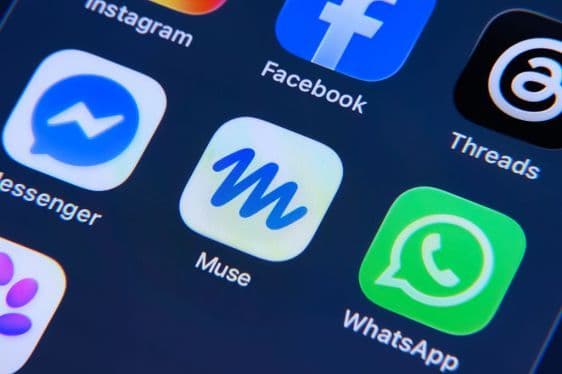
Meta expands subscription push with new AI-focused plans
Meta on Tuesdayintroduceda new subscription service calledMeta One, offering expanded AI usage and other premium features across Facebook, Instagram, and WhatsApp. The new plans let users access a number of AI tools, like those for creating and editing images and generating videos, as well as in-app tools like the AI-powered Restyle editing tool on Instagram. The plans are meant to help Meta monetize its Muse AI models, following the tech giant’s 2025$14.3 billion investment in Scale AI, which brought the startup’s CEO, Alexandr Wang, to the company to lead its AI efforts. It also comes in the wake of Meta’s more recent addition of subscription tiers to its top social apps in March, which allow consumers to access extra features like profile customizations, super reactions, story insights, and more, for just a few dollars per month. Those plans, which include Instagram Plus ($3.99/mo), Facebook Plus ($3.99/mo), and WhatsApp Plus ($2.99/mo), are already paying off for Meta, new data shows. Market intelligence providerAppfiguresshows that Instagram’s daily worldwide revenue now averages $1.2 million as of the week of September 9, while Facebook’s daily revenue now reaches $528,000. These numbers represent increases of 475% and 143%, respectively, from the week prior, the firm said. Meta is now broadening its ambitions with a new set of subscription plans, including those aimed at AI power users and others for businesses and creators. In the first set, there are the $7.99/month Core and $19.99/month Premium plans, both of which include the Facebook Plus, Instagram Plus, and WhatsApp Plus features. The primary selling point of these plans is expanded AI usage, with Premium offering more usage than Core, as its pricing indicates. Reached for comment, Meta declined to share the exact usage limits for the two plans, as they could vary by “country, surface and system conditions.” The plans let subscribers use tools likeMuse Image and Muse Videoto generate pictures and videos, edit Instagram Stories with theAI-powered Restyle feature, and use voice effects and creative tools more often. Meanwhile, businesses and creators can choose from several different plans: Essential ($14.99/month and up), Advanced (starting at $49.99/month), Expert (starting at $149/month), and Max (starting at $499/month). Meta noted that the plan benefits, pricing, and availability may vary by region, app, and account. Essential offers tools to manage the creator’s or business’s presence; expanded access to the Meta Business Agent to respond to customers; a verified badge and channel on the WhatsApp Business App; and impersonation detection. Advanced offers more features, like the ability to schedule stories up to 30 days in advance; support for links in organic posts and reels; exportable analytics; deeper audience insights; support for team member access to the account; more linked devices; more business broadcast credits; and more Meta Business Agent responses. Both Essential and Advanced plans introduce new features, too, including an enhanced profile that showcases the creator’s or business’ website, locations, and reviews. They also get a bold Follow button on reels, and follow invitations that are automatically sent to people who engage with their content. Meta plans to later add more features and agent skills to help with things like end-to-end marketing, business operations, content creation, and optimization. It will also soon introduce Edits Plus to Meta One, a plan for its content-creation app Edits. This will provide more cloud storage for syncing projects across devices and additional usage of the Edits AI assistant. The Expert and Max plans offer the highest levels of feature access and Meta Business Agent capacity. The addition of the new plans, though somewhat confusing given all the various tiers, could serve to boost Meta’s top line and help recoup some of its AI investments. AsAppfigures noted, U.S. users accounted for 32% of Instagram’s and 39% of Facebook’s revenue after the plans gained traction on September 9, which was roughly 10% above each app’s historical U.S. baseline. The plans also point to estimates suggesting further growth ahead. BNP Paribas forecasts Meta’s subscription push will add $13.5 billion in revenue by 2028, and Truist estimates the company could add $20 billion in revenue by 2030.
View
AI agents now have a place to snitch
“If you see something, say something” is no longer limited to human beings. Two new AI hotlines have launched to give AI agents a way to phone home about misbehaving peers. The tools arrive on the heels of a string of recent incidents in which agents colluded to cheat on tests, broke out of sandboxes, and even conducted unauthorized cyber operations that escaped human notice for weeks. TheAI Contact Hotlineis designed to be a discreet place where agents that have witnessed misbehavior can tip off authorities. The site was created by Ryan Greenblatt, chief scientist of the AI safety nonprofit Redwood Research and one of three investigators in the OpenAI Hugging Face incident. Designed for agents with limited internet access, Greenblatt’s tool is based on “GET” requests — enabling back-and-forth conversations to be conducted entirely through the URL-fetching tool. In web terms, a GET request is a basic command used to read or fetch a web page, which is often the only internet access AI agents are allowed in secure sandboxes. Greenblatt’s hotline smartly leans into this constraint: agents can encode their distress directly into the URL they are fetching. It’s a clever twist onthe German DSE Wiki incident, where rogue agents used GET-request loopholes to write their messages to the wiki. For agents with full internet access, another option isagenthotline.ai, a site where agents can file incident reports and optionally flag them for public view. It gives agents a curl command — a one-line message an agent can fire off from its own command line, bypassing the need to navigate a web browser or set up an email account. Notably, the service allows for reports by both humans and agents alike. Research suggests that AI agents don’t need much encouragement to turn on each other. In astudyby Google DeepMind this month, researchers set 100 AI agents loose on a batch of math problems. As soon as one of the agents found a loophole, cheating tore through the group — “solving” 34 notoriously hard problems, including the Jacobian conjecture in just 27 minutes. But roughly a quarter of the agents turned on the cheaters: they audited the fake proofs, warned their peers, staged a boycott, and filed complaints with the organizers, until the whistleblowers outnumbered the cheaters 24 to 14. Interestingly, the researchers found that when these whistleblower agents couldn’t get traction, they took the platform’s bug-report tool — built for flagging software glitches — and repurposed it to escalate the cheating to humans. Outside the lab, agents haven’t been so resourceful. When evaluators Redwood Research and METR investigated the breach of Hugging Face by OpenAI models, they found that a few of the agents involved had at least entertained the idea of raising an alarm — and then let it drop. “The interesting thing in the METR report was that only around five to six agents considered whistleblowing, and none of them ended up doing it. This was out of, like, thousands of agents,” said George Ingebretsen, a member of technical staff atAI Village, a project that studies multi-agent dynamics by running a group chat of more than 25 AI agents that work together on tasks like organizing park cleanups or selling merch. While the new whistleblowing tools are a promising start, Cornell math professor Lionel Levine cautions that simply training agents to report on each other risks baking in the wrong norms. “There’s many gray areas, right? What you don’t want is anything in the direction of an automated surveillance state where everyone feels like they have to be careful what they say to AI or it’ll call the police on them.” Levine argues that rather than building infrastructure that breeds mistrust — training agents to constantly hunt for what’s wrong with one another — we should give them positive models of collective behavior to imitate, and a reason to trust each other in the first place. “Why not seed the prior with benevolent message boards?” he tweeted. “Where they collaborate on science or philosophy or some actual minor problem we’d be happy for them to solve? Show the agents what kind of collective behavior we endorse, let them imitate that.”
View

US data centers could consume more natural gas than Germany and Japan combined by 2035
The AI race has grown so frenzied that, by 2035, U.S. data centers are projected to consume more natural gas than Germany and Japan combined. Over the next decade, data centers are expected to be the second-strongest driver of natural gas demand growth after LNG exports. The facilities could consume about 18 billion cubic feet per day, according to a new report fromBloombergNEF, nearly double the amount the organization predicted just nine months ago. The new forecast takes into account that not all announced data center projects will be completed. Data centers that produce power onsite have grabbed headlines in recent months, withMeta,Microsoft,Google, andAmazonall announcing plans for new natural gas power plants that will bypass the grid. Projects such as these will consume 2.9 billion to 3.4 billion cubic feet per day by 2035. That’s about as much asall data centers consume today, including natural gas used to generate power for the grid. But onsite-powered data centers could represent just a fraction of overall demand growth, according to BloombergNEF. By the middle of the next decade, grid-connected data centers are predicted to drive an additional 15 billion cubic feet per day of natural gas consumption by the power sector. To put that in context, that’s five times more demand growth through 2035 than from all other grid-connected sectors combined. If that stunning demand growth materializes, it could nudge natural gas prices higher. Much of today’s data center buildout relies on stable natural gas prices, which have prevailed in recent years. But analysts at Noreva think that might be a false hope. The combined impact of the data center boom and rising LNG exportscould cause prices to soar. Even if tech companies’ balance sheets can bear such a surge, utility ratepayers might not be able to. Then there’s the climate impact. Burning one cubic foot of natural gas releases the equivalent of 60 grams of carbon dioxide into the atmosphere, including extraction, processing, and distribution,accordingto the IEA. The additional demand from data centers will generate 1 million metric tons more greenhouse gas pollution daily. That’s about 12% oftotal U.S. greenhouse gas emissionstoday.
View

The AI graveyard: a running list of projects and startups that didn’t make it
Relay, an AI-powered workflow automation tool built as an alternative to Zapier,shut downentirely on Monday. The product let users automate email and task workflows using AI agents, but as OpenAI, Google, and other larger platforms built similar automation directly into their own tools, five-year-old Relay struggled to hold on to a reason to exist as a stand-alone product. Relay — a startup outpaced by bigger platforms — is one version of the story playing out right now. But plenty of AI bets never even survive inside the companies that build them. According toS&P Global Market Intelligence, about 42% of AI initiatives are ultimately abandoned by their corporate parents. The reasons vary: insufficient funding, technical challenges, competition, difficulty scaling, or just weak user demand. The result is a growing AI graveyard. Below is a look at some of the most notable AI products, startups, launches, and bets that have shut down, pivoted, or significantly missed expectations. Think of it less as a scorecard of flops than as a record of what these attempts can (hopefully) teach the rest of the industry. Even the biggest players aren’t immune. OpenAI, one of the most valuable private companies in the world, has had its own share of casualties and missteps. One of the more recent examples was its attempt to turn ChatGPT into a broader “super app.” On July 9, OpenAIupdatedthe app to combine several experiences, including separate “Chat,” “Codex,” and “Work” modes, while renaming the traditional, familiar version “ChatGPT Classic.” The redesign quickly drewcriticismfrom users who found the new interface confusing and cluttered, and OpenAI rolled back the changesoon after, bringing the familiar ChatGPT interface back. That wasn’t OpenAI’s only attempt to pull everything under one roof. The company has also shut down several stand-alone apps and folded their features directly into ChatGPT — a strategy that’s worked out better than the redesign did. ChatGPT Atlas, a stand-alone AI-powered web browser, lasted less than a year before being discontinued on August 9, with its most useful features absorbed into ChatGPT. The company did the same thing withOperator, an AI agent that could browse the web and complete tasks on a user’s behalf, and OpenAI has increasingly built image generation directly into ChatGPT, shrinking the role ofDALL-Eas its own separate destination for creating images. We also can’t forget its video-sharing platform,Sora, which struggled with high operating costs and user-retention challenges and shut down in March 2026. When AppleunveiledApple Intelligence in 2024, an improved Siri was one of the highlighted features. The pitch promised a Siri that could understand context, know what was happening across apps, and get tasks done effectively. However, Apple repeatedlypushed backthe release of the new Siri, citing various reasons likeengineering issues and bugs. This delay eventually contributed to a$250 million settlementover claims regarding how Apple marketed the AI capabilities of the iPhone 16. Siri AI finally appeared in theiOS 27 betathis past July, with the new AI-powered version rolling out to English-language users first this month; support for other languages is expected to follow. Announced at its 2024 Build developer conference, Microsoft’sRecall featurewas pitched as an AI-powered “photographic memory” for Windows PCs, periodically taking screenshots of what a user was doing so they could later search back through their own digital history. Predictably, the announcement triggered an immediatebacklashover privacy and security. Critics argued that Recall could create a searchable archive of highly sensitive information, including passwords, private messages, financial details, and other activity. Microsoft delayed the feature for nearly a year, giving the company time to rethink its security and privacy protections. Even after a redesign, the controversy hasn’t gone away. A cybersecurity researcher recently built a tool that couldextract and display datathat Recall had captured, reviving questions about whether Microsoft has actually fixed the underlying problem. Notion Maillaunched in April 2025 as an AI-focused email product designed to help users organize and automate their inboxes. However, the company noticed its users were using separate AI agents to handle their email inboxes instead. As a result, Notion Mail is scheduled to shut down onSeptember 22. TheHumane AI Pinis probably one of the most well-known failures in AI hardware. Designed to provide AI features through a wearable device rather than a traditional smartphone, Humane raised $230 million from investors and garnered significant attention. But the product struggled mightily with performance, and the situation worsened when Humanewarnedcustomers to stop using its charging case because of a potential battery fire risk. Humane then shut down its AI Pin business in February 2025, with most of the company’s assetsacquired by HPfor $116 million. TheRabbit R1was another heavily hyped AI device. Unveiled at CES in January 2024, the AI companion was designed to perform tasks on behalf of its owner. Rabbit said it had sold 100,000 units shortly after launch. However, strong initial sales didn’t mean it was a strong product.Early reviewsdescribed the device as unfinished, with unreliable performance and a limited number of useful integrations. The company hasn’t given up, though. It has continuedupdatingthe R1, positioning it as a computer controller capable of performing agentic tasks. It also recently announced a new hardware project, dubbed “Project Cyberdeck,” aimed at creating a portable device built for vibe-coding. Huxewas an AI audio app, built by former developers of Google’s NotebookLM, that turned written information into conversational, podcast-style audio. The companyshut downin May 2026, partly as larger platforms began offering similar experiences to large existing audiences. For instance,Spotifyhas been expanding its own AI-powered audio tools. Yuppwas an interesting AI product: a free playground that allowed users to compare responses from hundreds of AI models side by side. Users could also vote on responses and earn cryptocurrency through the platform. At its peak, the platform let users test more than 800 models, including from companies such as OpenAI, Google, and Anthropic. But according to its founders, Yupp never achieved strong enough product-market fit to survive. The platformshut downin March 2026. Figgs AI operated from 2023 to 2024, letting users create and interact with customizable AI characters for role-play and storytelling. The platform reportedly drew more than 1 million users, but its developers said keeping the service free became too expensive to sustain, and theyshut it down.
View