
Últimas Noticias de IA

SK Hynix reportedly in talks with Intel to build memory chips in US
South Korean memory chip giant SK Hynix is in discussions with Intel to manufacture RAM chips in the U.S. for the first time, Reutersreported, citing anonymous sources. The companies have reportedly discussed various options, one of which would have SK Hynix leasing space at Intel’s planned factory in Ohio to manufacture the chips. The chipmakers are also said to be considering a joint venture that could include cloud-service providers. SK Hynixtold TechCrunch on Wednesdaythat nothing has been finalized yet. “SK Hynix is exploring various options to strengthen its global competitiveness, but no specific plans or arrangements have been finalized at this time,” the Korean semiconductor company said in a statement. “No decisions have been made regarding the two scenarios mentioned in the article.” The Korean chip giant, which hasbenefited massivelyfrom skyrocketing demand for high-bandwidth memory RAM chips used in data centers for AI applications,is already building a $3.8 billionadvanced packaging and research facility for AI chips in West Lafayette, Indiana, with mass production expected to begin in 2029. The factory will use DRAM wafers made in South Korea and package them into HBM chips. It remains unclear what types of memory chips the company would produce in Ohio if the deal goes through. As a global chip shortage worsens, the Trump administration is seeking to expand production on American soil. The White House saidin Januarythat it could impose broader tariffs on semiconductor imports while offering tariff relief to companies investing in domestic manufacturing. SK Group Chairman Chey Tae-won signaled support for U.S. chip production in July,sayingthe company should build factories in the U.S., if feasible, alongside those in South Korea’s Honam region. That month, the chipmakerlistedits American depository receipts on the Nasdaq, broadening its access to American investors. The potential deal with Intel could face scrutiny at home. Seoul holds that the decision would be up to SK Hynix, but any plan involving strategically important chip technology could trigger a government review under a law designed to prevent sensitive technology from being transferred overseas, according to Reuters. Intel and SK Hynix have done business before: In 2020, Intelsoldits NAND flash-memory business to SK Hynix for $9 billion. Intel did not immediately respond to TechCrunch’s request for comment outside regular business hours.
View

3 days left to exhibit: Get your brand in front of VCs and high-value leads at TechCrunch Disrupt 2026
If you’re looking for opportunities to demo your breakthrough to VCs and build a powerful lead-gen, then thisFriday, September 18 at 11:59 p.m. PT, is your last day to book yourexhibit tableatTechCrunch Disrupt 2026. OnOctober 13-15 at Moscone West in San Francisco, 10,000+ founders, investors, operators, and tech leaders come together to discover startups, source deal flow, find products, and build partnerships. Your6′ × 30″ exhibit tableputs your startup in the highest-traffic area of Disrupt for three days. Use it to: Your package also includes 10 team passes, website and app branding, press-list access, Silver Tier sponsor branding, and more. Founders can access additional opportunities, including the Deal Flow Café and Investor-to-Founder Networking. Three days. Limited tables.Book yours before September 18 at 11:59 p.m. PT. Join 250+ top-tier tech leaders across 200+ sessions on six industry stagesto get practical insights on building, funding, and scaling in today’s tech landscape. Use interactive sessions and AI-powered matchmaking tomeet the people who can help move your business forward. And discover 300+ startups and watch Startup Battlefield 200 to find your next product, partner, or investment opportunity. Save up to $200 on your ticket before prices increase on September 25.
View

Next wave of VCs judging Startup Battlefield 200 contenders at TechCrunch Disrupt 2026 revealed
A great pitch doesn’t winStartup Battlefield 200. A great company does. That’s why the VCs sitting in the judges’ seats matter so much. They aren’t looking for polished presentations or clever demos — they’re looking for founders solving real problems with businesses that can endure. Every question they ask is designed to uncover what slides and rehearsed answers can’t: conviction, clarity, execution, and whether this company has the potential to become the next category leader. For more than 15 years, Startup Battlefield has helped launch companies that went on to define entire markets, and every year a new group of founders earns the chance to join that legacy. Today, we’re introducing the next wave of judges who’ll take their seats atTechCrunch Disrupt 2026, happening on October 13-15 at Moscone West in San Francisco. They’ll spend each day evaluating ambitious startups across industries, asking the tough questions founders hope for — and sometimes fear. If you want to understand how experienced investors really evaluate early-stage companies, there’s no better place to watch than Startup Battlefield, live on the Disrupt Stage. Be sure to snag savings of up to $200 on your Disrupt 2026 ticket before rates increase on September 25 at 11:59 p.m. PT.Register here. Now, without further ado, meet the next five judges joining this year’s Startup Battlefield, the ultimate startup pitch competition. Aditi Maliwal, General Partner, Upfront Ventures Aditi Maliwalis a general partner atUpfront Ventures, where she invests at the pre-seed and seed stages in fintech, enterprise SaaS, AI applications, and developer tools. Her portfolio includes Clair, Writer, Arcade, and General Translation. Maliwal previously held roles at Google and Deutsche Bank and led the Series A investment in Chime during her tenure at a prior firm. She is Upfront’s first San Francisco-based partner. Michael Palank, General Partner, MaC Ventures Michael Palankis a general partner atMaC Ventures, a majority Black-owned venture firm that backs seed-stage consumer and enterprise companies through a culturally driven investment thesis, with a focus on AI, fintech, healthcare, media, entertainment, and aerospace and defense. Before transitioning to venture, Palank worked in Hollywood talent representation at William Morris and Overbrook Entertainment, Will Smith’s production company. Nell Daly, Co-founder and Managing Partner, Revenge Capital Nell Dalyis the co-founder and managing partner ofRevenge Capital, an evergreen sector-agnostic fund focused on backing overlooked founders — including women, BIPOC, LGBTQIA+, disabled, and neurodiverse entrepreneurs — across the United States and United Kingdom. Before launching the fund, Daly worked as a psychotherapist, a background she draws on directly in her founder-first investment approach. Grace Ge, Partner, Amplify Partners Grace Geis a partner atAmplify Partners, where she invests in AI, developer tooling, data infrastructure, and modern SaaS — with a particular focus on the layer between foundation models and enterprise applications. Her portfolio includes Pinecone, Eppo, Vivun, Orb, and Avoca. Amplify’s broader portfolio includes Datadog, Fastly, Temporal, dbt, and Modal. Ge was named to the Forbes 30 Under 30 list for Venture Capital. Crystal Huang, General Partner, Google Ventures Crystal Huangis a general partner atGV, where she focuses on enterprise SaaS, AI infrastructure, and fintech — with a particular lens on product-led and developer-led go-to-market strategies. Her portfolio companies include Typeface, Pecan AI, Sardine, Cacheflow, PostHog, Roboflow, and Sift. Before joining GV, Huang was an investor at NEA and GGV Capital and worked in technology mergers and acquisitions at Blackstone. Get to know all the VC judges on theDisrupt agenda. TechCrunch Disrupt 2026is happening October 13-15 in San Francisco, bringing 10,000+ tech leaders, VCs, and founders together to meet the next generation of breakout startups, connect with the leaders who could change their startup’s trajectory, and get a front-row seat to where the industry is headed.Save up to $200 on your ticketbefore rates increase on September 25. Save even more when youregister as a group.
View

Threads’ new features let podcasters promote shows and reach listeners
Metaannouncedon Wednesday that its social network and X rival Threads is rolling out new tools that will allow podcast creators to promote their shows, grow their audiences, and engage existing listeners directly on the platform. The news comes as X has also more recently been encouraging its creators to directly post videos on the platform, especially podcasts, to earn revenue and grow engagement. While Threads is not yet looking to host podcasts, it wants to make its platform a hub for posting and discussion. To start, Threads will display a podcast profile card and banner on a creator’s profile and in their posts. Plus, when creators post episode links, they appear as tappable cards in the post, allowing users to easily listen. The feature also lets podcast hosts directly post transcripts for listeners to read along with the episode, and they can tag featured guests, which displays a card related to that. Users can save any of these posts, making it easy to listen to the episode at a later time. Threads will additionally be able to send reminders to creators when their new episode drops to post on Threads, which could help boost their engagement with listeners. The social platform is also providing tools that offer insights into how the audience is engaging with creators’ posts, with metrics like views over time by followers, non-followers, and all. Last year, Threads rolled out new tools to increase discussion around podcasts, with features like better link cards and linking their profile with their podcasts. Threads is now close to X in terms of users, as Meta’s social network reached500 million active users in June.
View

Robots are waiting for a ChatGPT moment: Nvidia’s Les Karpas explains why at TechCrunch Disrupt 2026
The world hasn’t been the same since ChatGPT made its debut in November 2022, when seemingly out of nowhere, a means of engaging with large language models propelled AI beyond hype and into day-to-day reality. Robotics, like AI, has been discussed, built upon, and in some ways adopted for a long time now, but it’s yet to have that big breakthrough moment. And atTechCrunch Disrupt 2026, Nvidia Inception’s Global Head of Physical AI,Les Karpas, will dive into why that is and what could change that in his session on the Real World AI Stage,Robots Are Waiting for Their ChatGPT Moment. Here Is What Is Standing in the Way. After all, anyone who’s seenNvidia CEO Jensen Huang’s keynotes the past few yearsknows the company is bullish about the robotics field. And you can get the opportunity to listen as Karpas details the limitations and opportunities in the AI and robotics spaces firsthand at Disrupt.From October 13-15 at San Francisco’s Moscone West, you and 10,000+ tech leaders, founders, and investors can catch Karpas and the rest of our extensive AI-focused lineup, which ranges from building companies to building in the real world. Act now and get your ticket tosave up to $200 before September 25, after which our prices increase. Save up to 30% when you bring a group, since the Disrupt experience is meant to be shared. Karpas’ POV on the core limitation facing general-purpose robots is simple to understand but wildly complicated to resolve. Nobody has an internet-wide dataset for physical AI in the way OpenAI, Anthropic, and others had for language. Even self-driving fleets from Waymo and its competitors were able to build datasets through years of accumulated road miles, datasets that are still expanding market by market. A growing ecosystem of startups is now trying to manufacture that scale artificially through simulation, synthetic data, and foundation models trained across many robot forms simultaneously. And that challenge of bridging the digital and physical iswhy we created the Real World AI Stage. Karpas will be joined by founders from Shield AI, Colossal Biosciences, FieldAI, and Foxglove, as they walk through the unique challenges and opportunities they face. Karpas is one of the best-positioned people in the world to answer the question his session presents. AsNvidiaInception’s Global Head of Physical AI, he coordinates the company’s relationship with the wide-ranging startup ecosystem stretching across robotics, automotive, manufacturing, mobility, smart cities, and much more. The same companies trying to solve that data gap are the ones he regularly interfaces with. And his path to getting there is one that speaks to the cross-disciplinary skills the robotics industry demands. Across roles at Stanley Black & Decker, Intellectual Ventures, Herman Miller, iRobot, Cirque du Soleil, and more, he’s been an architect, manufacturing engineer, startup CEO, venture studio executive, and corporate venture capitalist. This is your chance to hear firsthand how Nvidia is thinking about the single biggest bottleneck in physical AI, and what it’ll take to clear it. That kind of insight could give you a leg up on your competition or spark an idea that could fuel your next startup venture. That kind of inspiration is what Disrupt is all about, and you can get it only by being in the room and making connections during the event. Act swiftly to get the ticket that gives you the kind of access you need, whether it’s new sources of fundraising or new startups to invest in.Lock in your trip before prices increase on September 25. Bring a group and save up to 30% on bundle passes.
View
Anthropic merges Claude chat and Cowork in one interface
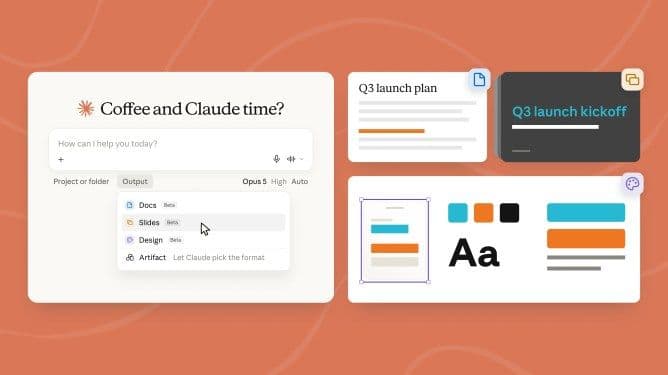
Anthropic is merging its front-end for Claude chat and Cowork, making it less confusing for people to decide which tab to use for different tasks. The unified interface lets users access chat, Cowork, and Artifacts (Claude’s interactive workspace feature) within one window. Claude Design, which was introduced in April for website and prototype design, also works anywhere within Claude. Before this rollout, the company said customers often struggled to choose the right tab for the right task. With the new design, Claude automatically routes requests without having to switch tabs or windows. The idea is to remove confusion about which feature to pick and use just one front-end to route work to different parts of the app. Hopefully, OpenAI also takes a cue from this rollout and fixes ChatGPT’s interface across the platforms. Anthropic is also adding dedicated features for making presentations and documents. Users can ask the AI assistant to create, edit and present slides, and can also download the generated presentation as a PDF or PowerPoint. Similarly, with the Docs feature, users can work alongside Claude to create sections, ask questions, and comment on completed parts. Users can share generated documents or slides with a link and edit them on their phone. Users can also ask Claude to start creating a document on desktop, and they can check the progress of the task using the mobile app. These features are rolling out to Claude’s Pro and Max plans first, on the web, desktop and mobile over the coming weeks. The company plans to extend them to the free and team tiers later. The update comes in the wake of anupgrade of Cowork’s memory layer, which helps Claude remember user context across chats.
View

Google Gemini Notebook Gets Voice Chat, Lecture Recording and New Study Tools
Google is rolling out several new features to Gemini Notebook, adding tools for recording lectures, chatting with notebooks using voice and creating more personalised study material. The update also brings new quiz formats and expands Short Video Overviews to more than 80 languages. The new features will arrive on the web and mobile apps over the coming weeks. Google is also offering eligible college students in the US and more than 140 other markets free access to its AI plans for one year.
View

Amazon launches Alexa+ in India with Hindi support
Amazon today announced that its Alexa+ conversational assistant is available in India with Hindi support. The new assistant can hold conversations for longer and maintain context while doing so. The feature is available to all customers in the country in Early Access in Hindi and English. After the early testing period, the company will make the assistant free for Prime customers. For non-Prime customers, the price would be ₹2,000 per month ($20.85). The company said that the new Alexa has a more expressive voice and can handle complex multi-step tasks, including ordering groceries from Amazon’s quick commerce service Amazon Now and turning on/off smart home devices. Users can switch between English and Hindi mid-sentence. Amazon added that Alexa+ is integrated with India-based services such as food delivery service Swiggy, Zomato’s ticket booking platform District, travel websites like TripAdvisor and MakeMyTrip, and restaurant reservation app EazyDiner. The upgraded assistant is also integrated with music streaming services such as Amazon Music and JioSaavn. In June,TechCrunchreported that the company had invited users to enroll in a testing program for Alexa+, through which they could have conversations with the assistant in Hindi. After that, the company also started testingan English version of Alexa+. Amazon launched Alexa inIndia in English in 2017and added Hindi support in 2019. The country has more than 600 million Hindi speakers, and Amazon is trying to tap into that market with its smart devices and new features. The company didn’t give absolute numbers, but said that its smart home devices have grown by 20% from last year. Amazon initially announcedgen AI-powered Alexa+ in 2025and made it available toall U.S.-based users in 2026. This year, the company has also launched its new assistant in markets such as the U.K., Canada, Brazil, Mexico, Italy, and Germany with local language context.
View

Salesforce Calls SaaSpocalypse ‘Crazy Nonsense’, Projects $50 Bn in FY27
“SaaSpocalypse was not about the end of software, but it may be about the end of software that makes humans do all the work,” said CEO Marc Benioff.
View
Perplexity Builds DynamoDB Replacement With 2 Engineers & Hundreds of AI Agents
CobbleDB cuts production batch-read latency by roughly five times, while Perplexity estimates at least 20% lower costs than DynamoDB.
View

Cloudflare Launches Controls to Block AI Training While Keeping Search Access
New Cloudflare controls allow publishers and businesses to independently manage how their content is accessed for search, AI training, and AI agents.
View

Dario Amodei Makes Strange Bedfellows as AI Safety Calls Irk Jensen Huang
NVIDIA boss wants to put an end to Amodei’s doomsday predictions, while Sacks says frontier labs are being hypocritical.
View