
Últimas Noticias de IA

YouTube Music launches new labels as AI-generated music floods streaming platforms
YouTube MusicannouncedWednesday the rollout of a new labeling system aimed at improving transparency around songs created with the help of generative AI. Now listeners will be able to easily identify tracks created using AI, including those involved in composition and vocals. The label will appear on the player page. Clicking on this label provides additional information about the specific role of AI in the track’s creation. Notably, these labels will also extend to the main YouTube app. YouTube said it collaborated with various music partners and deployed its own detection tools to identify AI-generated music. According to itshelp page, partners using YouTube can declare their work’s use of generative AI through one of three designations: Fully Gen AI, Partly Gen AI, or No Gen AI. “Fully Gen AI” applies to tracks that are entirely generated by AI, while “Partly Gen AI” refers to works where artists may have incorporated AI-generated components but added their own live elements. Tracks edited using pitch-correction tools such as Auto-Tune fall under the “No Gen AI” category. The move comes as AI-generated music rapidly expands across streaming services, and many platforms are adopting their own approaches. For instance,Apple Musichas plans to introduce “Made With AI” labels as part of its AI Transparency Tags later this year.Spotifyalso has AI labels, as well as a music spam filter. Deezer has taken one of the stricter stances, reporting in July that it was receiving nearly90,000fully AI-generated tracks daily. The platformlabels detected AI-generated musicand excludes it from algorithmic recommendations and editorial playlists, while also withholding royalties from fraudulent streams. The company is also working on an option to let usersfilter out AI-generated music. TIDALalso labels recordings it identifies as entirely AI-generated, allows listeners to disable them, and excludes these recordings from royalty attribution. YouTube, by contrast, is focusing on disclosure rather than blanket restrictions. Its new labels are intended to inform listeners about AI’s role in music creation, but AI involvement alone doesn’t make a track ineligible for monetization. YouTube even experiments with AI-powered music creation, including its toolDream Track, which lets select creators generate soundtracks featuring AI-generated versions of participating artists’ voices.
View
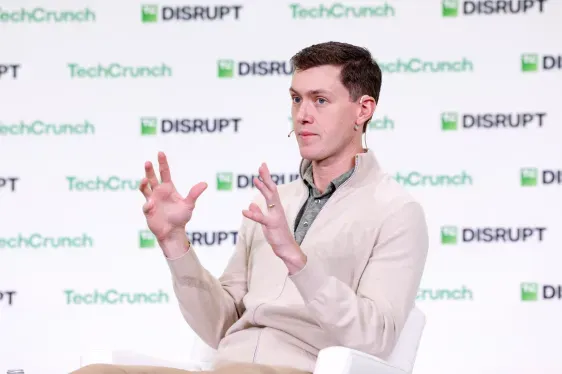
Flock CEO says its microphones detect ‘just gunshots’ — its website says different
Flock CEO Garrett Langley said the company’s gunshot-detection microphones detect “just gunshots,” but Flock’swebsitepaints a far broader picture of what other ambient audio also gets picked up. Speaking onstage atTechCrunch Disrupt, the co-founder of the surveillance company defended Flock’s audio-collection product calledGunshot Detection, which listens for gunshots and other ambient audio across nearby neighborhoods to provide “earlier awareness” to potential public safety events. Flock’s website says that the company’s audio systems can pinpoint gunfire instantly, while also being able to “detect street takeovers early to stop chaos before it escalates,” and “identify severe crashes in real time so help arrives faster.” It also says they can “expand awareness beyond gunfire with alerts for car crashes, fireworks, and sideshows.” The company’s Gunshot Detection feature, announced last year, faced immediate pushback. In announcing the feature, Flock said the technology would listen out for sounds of “screaming.”Privacy groups condemned the companyfor listening for human voices, prompting the company to amend its website to instead say “sounds of human distress.” Flock later said itpulled the ability to detect “distress”altogether from its customers who tried it. During the interview, Langley pushed back against what he described as misinformation about his product, arguing that many of its critics misunderstand how its products work. The comments come as public opinioncontinues to shiftagainst Flock and other license plate reading companies amid growing unease about mass surveillance — sentiments that were visible in San Francisco, whereprotesters gathered to voice their oppositionoutside the venue as Langley took the stage. “Most people don’t call 911 when they hear a gunshot, and so that’s why we built the product,” Langley told TechCrunch editor-in-chief Connie Loizos onstage. “And then some of our customers said, ‘Oh, we have these in parking lots. It would be great if we could get alerted if someone was being abducted, if someone was being harmed.’” Langley said that the idea seemed logical, so the company prototyped it and rolled it out to a couple of customers, but said that some people then had a lot of concerns. Langley conceded to making mistakes but that he was listening to his customers. “There’s only a couple customers that were prototyping it with us, and we said, ‘OK, great, it’s just going to do gunshots, plain and simple.’ If a gun goes off, we’ll notify, and if not, that’s all it’s going to listen to,” said Langley. When asked about the contradiction between his remarks and the company’s marketing materials that say the audio systems can detect more than gunshots, he responded, “It’s just gunshots.” When reached by TechCrunch, Flock spokesperson Paris Lewbel said: “Flock’s gunshot detection technology is primarily used to detect gunfire but is also capable of detecting fireworks, sideshows, and potential car crashes. CEO Garrett Langley’s remarks were intended to emphasize that Flock’s Audio Detection technology is not designed to monitor conversations or analyze speech and does not currently detect human screaming or distress.” An FAQ section of the website notes that “in addition to gunshots, Flock Gunshot and Audio Detection can detect fireworks, sideshows, and other disruptive community events.” It goes on to state that the company’s “detection library is continually expanding to include emerging threats that are relevant” to customers’ specific needs. Langley stated that the number of Flock’s microphones is comparable to ShotSpotter, which as of 2024 had about 25,000 microphones, per reporting byWired. Langley’s comments come amid mounting scrutiny of Flock from privacy advocates, including the ACLU, and members of the public who are concerned about the misuse of its technology, with some going so far asdestroying the surveillance cameras. The remarks also come asTexas and Floridahave moved to end their relationships with Flock, andAmazon’s Ringhas ended its partnership with the company.
View

TechCrunch Disrupt 2026: Day 2
Day 2 ofTechCrunch Disrupt 2026is here at San Francisco’s Moscone West. Explore innovative startups and solution providers in the Expo Hall, discover emerging technologies through live startup pitches, and use AI-powered matchmaking to connect with a community of 10,000+ founders, investors, startup teams, and technology leaders. Whether you’re looking for your next investment, discovering solutions for your business, or gathering ideas to take back to your team, there’s plenty to explore today. Today’s focus spans AI, with speakers from Nvidia, Waabi, Flock Safety, and Ricursive Intelligence, alongside Benchmark’s full partnership. Conversations will cover robotics, AI hardware, public safety, and venture investment. Still deciding whether to come?Get your passand join us at 50% off the original walk-up rate. Make discovery and networking your focus with an Expo+ Pass, or choose an eligible conference pass to add stage sessions, interactive roundtables, and Q&A breakouts. Registration: 8 a.m. to 5 p.m.Badge pickup and in-person registration is in the Level 1 lobby. All times below are Pacific Time. Open8 a.m. to 5 p.m.on Level 2. Explore 300+ startups alongside tech partners and solution providers across the Expo Hall. See products in action, discover tools that could help your business grow, and speak directly with the teams behind them. Meet potential customers and partners, scout investment opportunities, or compare solutions to the challenges your team is facing. Give yourself time to explore companies beyond your usual area of interest. Catch today’s enterprise fast pitches to discover emerging startups and see how founders make their case. Whether you’re building a company, scouting investments, or working in a startup team, find inspiration in how others explain their products, demonstrate value, and capture attention. Note the companies and approaches that stand out, take fresh ideas back to your team, and meet the founders afterward to explore potential opportunities. With an eligible conference pass, explore the ideas, business strategies, and technologies shaping the startup ecosystem.Check the full agendafor session times and the complete Day 2 lineup. Hear perspectives that could inform your next business decision, investment thesis, or product strategy. Today’s highlights include: AI, Surveillance, and the Future of Public Safety: Garrett Langley, Flock Safety What We Believe Now: Benchmark’s Jack Altman, Peter Fenton, Chetan Puttagunta, Everett Randle, and Eric Vishria When AI Starts Designing Its Own Hardware: Anna Goldie and Azalia Mirhoseini, Ricursive Intelligence Startup Battlefieldcontinues with health tech and life sciences, plus enterprise and security, as contenders pursue a place in the final and $100,000 in equity-free funding. Discover companies to follow, see how teams respond to investor scrutiny, and gather ideas for presenting your own products or evaluating new opportunities. Explore what it takes to fund and grow a startup. Founders can sharpen their plans, investors can compare perspectives on what makes a business fundable, and startup teams can better understand the priorities shaping their next stage of growth. Consider what the discussion means for your business, portfolio, or team, and compare perspectives with other attendees afterward. The Series A in 2027: Jahanvi Sardana, Index Ventures; Shailendra Singh, Peak XV; and Janelle Teng Wade, Bessemer Venture Partners How to Win When You’re Not Building AI: Mark Crane, General Catalyst; Shan Shan, Baillie Gifford; and Chris Yu, ALSO Build Mode Live: Building From Zero to One:Juliana Di Simone, Forela; Arul Nigam, Circuit Breaker Labs; and Courtney Young, MyoGene Bio Revealing AI Disruptors 60: What Can AI Do Next?: Parag Agrawal, Parallel Web Systems; Shay Grinfeld, Greenfield Partners; Anand Kannappan, Patronus; Alberto Taiuti, Reactor The Real Tokenmaxxing: How the Best AI Companies Navigate a Multi-Model World: Mo Jomaa, Capital G; Vipul Ved Prakash, Together AI; and Zuzanna Stamirowska, Pathway Building the Next Generation of AI Giants:Jas Khaira, Blackstone N1 The Zero-to-1K Playbook: How to Get Your First 1,000 Customers Without a Marketing Budget:Crystal Huang, GV (Google Ventures); Grant Lee, Gamma; and Elia Wallen, Engine So You’ve Got a Hit Product. How Does Your Company Do It Again?: Maddi Holman, Daring Ventures; Filip Kaliszan, Verkada; Tamar Yehoshua, Atlassian Discover how AI is moving into physical products and environments, with opportunities to explore practical applications, emerging markets, and the challenges of deployment. Plus, witness a live robot demonstration. Building AI Systems When Failure Is Not an Option: Nathan Michael, Shield AI; Mikell Taylor, General Motors; and Raquel Urtasun, Waabi Come, Meet Stretch. The Robot Built for Real Life, Not a Demo Reel: Aaron Edsinger, Hello Robot Robots Are Waiting for Their ChatGPT Moment. Here Is What Is Standing in the Way: Les Karpas, Nvidia Operating at the Edge: How AI Works When the Cloud Doesn’t: Ali Agha, FieldAI; Michelle Lee, Medra; and Aidan Madigan-Curtis, Eclipse Ventures Launching AI’s Orbital Infrastructure: Devin Coldewey and Blake Bullock, The Aerospace Corporation; Jeff Thornburg, Portal Space Systems; Jonny Dyer, Muon Space Humanoid Robots Have Arrived: Live and On Stage: Jonathan Hurst, Agility Robotics, and Digit, Humanoid Robot From Prototype to Production: Can It Scale in Reality: Kevin Peterson, Bedrock Robotics; Adrian Macneil, Foxglove The Race to General-Purpose Robots with Skild AI: When AI Meets the Physical World:Varun Jain, SE Ventures; Deepak Pathak, Skild AI Can We Engineer Nature’s Comeback?: Ben Lamm, Colossal Biosciences Why and How Every Company Will Build Its Own AI: Manos Koukoumidis, Oumi; Matt Burns, Insight Media Group The Agent Security Problem Nobody Is Talking About:Gavriel Cohen, NanoCo; Ric Smith, Okta Rewriting SaaS: Why AI Breaks the Old Business Model: Cathy Gao, Sapphire Ventures; Aaron Jacobson, NEA; and Barr Moses, Monte Carlo Before You Let AI Do the Job, How Do You Know It Actually Can:Irene Solaiman, Hugging Face The $63 Billion Case for Storagemaxxing Your AI Stack: Pinaki Mukherjee, Wasabi Technologies; Stephanie Walter, HyperFRAME Research; Kevin Cochrane, Vultr; Jake Lee, L2 Point Management What Comes After the Chatbot: Alexander Embiricos, OpenAI The GTM Engineer: How AI Created Tech’s Next Big Job Category: Kareem Amin, Clay Model Behavior: How Top Startups Get Real Value From AI Adoption:Cat de Jong, Anthropic; Grant Lee, Gamma; Kareem Amin, Clay Proxy, Host, Operator: Who Can Read Your Agent’s Prompts?:Richard Rizk, Blackbox AI Securing the AI Enterprise: Why the Cloud Just Got a Lot More Complicated:Katie Moussouris, Luta Security; Wendy Nather, Cybersecurity Veteran; Rudy Mitra, AWS The Enterprise Isn’t Broken. Your Assumptions About It Are:Arsalan Tavakoli-Shiraji, Databricks Use the audience Q&A to explore a decision you’re facing, ask how an idea could apply to your business, or better understand the implications for companies you’re evaluating. Building Then vs Now:Payal Kadakia, ClassPass; Dr. Rumman Chowdhury, Humane Intelligence; Cassie Kozyrkov, Kozyr; and Holly Ransom, Emergent Infrastructure at the Speed of Demand: Power and Freight Without the Wait:Kofi Asante (Bluecore Energy), Kevin Damoa (Glīd) Best Practices for Running a Successful Fundraise: From Preparation to Investor Engagement:Maggie Sin (Fidelity Private Shares), Bill Tai (HUT 8 Corp), Robin Uata (Fidelity Private Shares) From Founder to Investor: The Next Act – What Happens After You Win?:Bruce Lee (Keebeck Wealth Management), Abhi Tiwari (Blank Ventures) Breaking Into Space: The AI Builder’s Opportunity:Dr. Brian Cameron (The Aerospace Corporation), Timothy Graves (The Aerospace Corporation), Bosco Lai (Little Place Labs), Col. Aaron Stevenson (United States Space Force) Sovereign AI: Who Will Build the Infrastructure and Intelligence of the Next AI Economy?:Özgür Altun (Turkcell), Suresh Babu (Hewlett Packard Enterprise), Bekir Polat (Office of the Presidency of the Republic of Türkiye) Fundraising Mistakes That Will Kill Your Round, and How to Avoid Them:Dr. Irena King (Surgicure Technologies), Dr. Richard Munassi (Tampa Bay Wave), Ashley Paston (General Catalyst), Emily Zhen (HealthQuest Capital) Take part in these popular small-group discussions. Bring a business challenge, an investment question, or a perspective from your own work. Hear how others approach similar issues and leave with ideas to explore further. What Comes After ChatGPT? AI for the Physical World:Jack Hidary (SandboxAQ), Stacie Calad-Thomson (NVIDIA) How Does Agentic AI Change Decision-Making?:Cassie Kozyrkov (Kozyr) When Frontier Models Are Not Enough: How to Make AI Capable of Breakthrough Scientific Discoveries:Piotr Byrski (Molecule.one), Shane Lewin (Clockwork Bio) Grow Like a Founder, Think Like a CFO: Balancing Growth and the P&L:Marshall Egger (Spacemilk) Agentic AI in the Enterprise: Separating Signal from Noise for GTM and Ops Leaders:Ankita Mehta (Databricks) The $100 Billion Entry Fee: Can Anyone Still Compete in AI?:Harrison Rolfes (PitchBook) FDE: The Best Commercial Motion in Enterprise Software You’ve Never Heard Of:Kevin Bai (Anthropic) The Rise of SoCal Hard Tech: Why VCs and Founders Are Gravitating to Gundo:Drew Boyles (City of El Segundo), Kevin Hawkins (New York Stock Exchange) “My Company Is a Rocket Ship.” What Comes After the Landing?:Vishal Kumar (Twin Peaks Wealth Advisors), Tushar Kumar (Twin Peaks Wealth Advisors) How to Land Your First Institutional Check (From the Person Who Writes Them):Aditi Maliwal (Upfront Ventures) Relationship-Led GTM: Founder + Operator Perspective:Connie Koh (Vectors Capital), George Mitri (2DaLoop) Open-Weight Models and the New AI Stack:Mercedes Bent (Premise), Vanessa Larco (Premise) VC Insights for Founders: How to Raise Your First VC Round:Itamar Novick (Recursive Ventures), Brian Sparkes (Silicon Valley Venture, Corp.) Doing More with Less: Raising Venture Capital in an AI-first World “Helping Entrepreneurs Avoid the Pitfalls of Overcapitalization”:Neil Sequeira (Defy.vc) TheNetworking Loungepowered by Signify Business Cash World Elite Mastercard® by Wells Fargois open 9 a.m. to 5 p.m.Use the TechCrunch Events app and itsAI-powered matchmakingto schedule meetings. Connect with people relevant to your goals, from potential customers and solution providers to investors, collaborators, and industry peers. Follow up on an introduction, continue a conversation over coffee, and agree on a next step before you part ways. The Deal Flow Cafe is available only to Founder Pass and Investor Pass holders for dedicated networking.Explore pass access here. For Investor Pass holders only,StrictlyVCoffers conversations on IPOs, family offices, and limited partner priorities. Use the afternoon to compare investment perspectives and build relationships with fellow investors. Check the agenda for the latest program times. The New Rules of Going Public:Ryan Flanagan, ICR The New Power Players: How Family Offices Are Reshaping Venture Investing:Bruce K Lee, Keebeck Capital Management and Dave Sachse, Family VC What Limited Partners Want Now:Amit Bhatti, Truebridge Capital and Beezer Clarkson, LGT Capital Partners Keep the conversations going after you leave Moscone West. Some of tonight’sSide Eventsinclude: Ecosystem Mixer, hosted by Peak XV Liquid Assets, hosted by Augment and Mintz The Afterburn, hosted by Backblaze and Flamethrower Explore opportunities to meet people beyond your existing network in a more informal setting. Check the individual listings for entry requirements and RSVP before heading over. Discover a company worth watching, a solution worth exploring or a connection worth following up. Whether you’re building, investing, or helping a startup grow, make Day 2 work for your goals. Get your Disrupt passat 50% off the Walk-Up rate and join 10,000+ tech leaders for the next two days of our annual flagship conference.
View

Floqer’s AI agents research sales prospects so teams don’t have to
Floqeris an autonomous customer knowledge platform that provides business-to-business sales and marketing teams with an AI-powered database designed to continuously collect, organize, and update the information used to understand their customers. Floqer is pitching Wednesday on the Startup Battlefield stage atTechCrunch Disrupt 2026. The startup told TechCrunch ahead of the presentation that it plans to open-source the technology behind its autonomous customer knowledge database. It’s targeting early 2027 for the release, pending security reviews. Floqer also says it has surpassed $1.2 million in annual recurring revenue (ARR), and that its overall revenue has grown roughly tenfold over the past year. The startup was founded by Shivam Mahajan, the CEO, and Zaaheda Islam, who met at university. Before Floqer, Mahajan worked as a software engineer at Kyndryl, and Islam worked as a senior data scientist at Axis Capital. Floqer’s first product looked nothing like its current one. “We started with a Chrome extension, which is called ‘Super Chat,’” Mahajan told TechCrunch in an interview earlier this month. “Anybody can go and log in with their ChatGPT account and then understand [information] and take notes.” The founders soon noticed that enterprise companies were using the extension to clean up data in their customer relationship management (CRM) systems. Conversations with those companies showed that keeping CRM data clean was mostly manual work, with few established processes for keeping customer records up to date. “When we spoke with them, they told us that it’s super manual for them to clean their CRM data, and there were no established processes around that,” Mahajan said. “So that was insightful for us, and then we pivoted from there to build Floqer.” The problem Floqer is trying to solve is familiar to anyone who has worked in sales or revenue operations. Finding potential customers takes hours of searching Google, LinkedIn, company websites, job boards, and other sources to identify companies that fit a particular profile, then tracking down the right people and their contact information. Floqer aims to automate much of that research. Users can describe what they are looking for, and its AI agents search across different sources to build lists of relevant companies and contacts. The company says its system can enrich accounts, or add detail about the companies a sales team is targeting, using more than 100 third-party data sources. When it needs a verified email address or phone number, Floqer uses a “waterfall” approach, checking one data provider after another until it finds usable information. The system also continuously monitors the web for changes. If a prospect changes jobs, gets promoted, or works at a company that raises new funding, those updates can be reflected in the user’s customer records. Floqer describes the technology as a fleet of AI agents that continuously research companies, people, and customer interactions, so team members don’t have to perform that work manually. According to the company, customers have reported cutting prospecting time by as much as 70%. “Our autonomous customer knowledge database is only available to a limited audience, mostly due to how much demand our team can actually serve properly,” Mahajan said. “But open-sourcing it will help us fix that.” The decision comes partly in response to customer demand. Mahajan said some companies want to host their own data rather than keep it inside a vendor’s proprietary platform. Others want to modify the technology or build on top of it. “Our mission is to really enable every team to build their central source of growth,” Mahajan said. Before releasing the database publicly, Floqer is conducting security reviews because the database can contain sensitive customer information and large companies already use it. Floqer was founded in 2024 and has raised$2 millionin pre-seed funding, with participation from investors such as Perplexity’s F7 Fund, N49P, Tidal Venture Partners, and Perplexity co-founder Denis Yarats. It says it now has eight employees and more than 1,000 customers, including Perplexity, Wise, and AngelList.
View
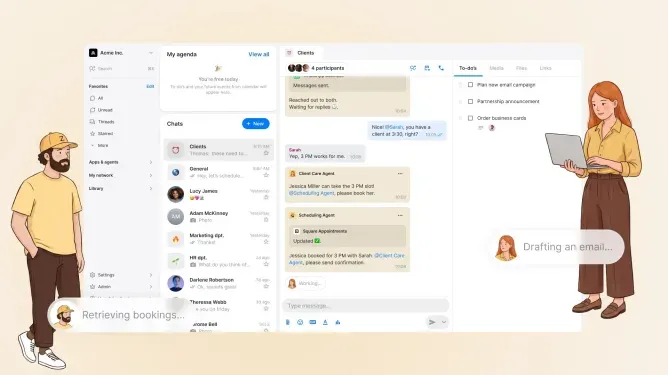
Zenzap raises $44M for its AI chat app that aims to replace WhatsApp in the workplace
Many businesses around the world use consumer-facing chat apps like WhatsApp, Telegram, Discord, or iMessage to talk and coordinate with staff, and exchange documents or data. Guy Weiss is buildingZenzap, a private messenger with AI that wants to help companies communicate with their staff and arm them with their organization’s context while staying in line with IT and security rules. The company has raised $44 million in funding from investors including Bessemer, Lightspeed, and The Garage, as well as individual investors Wix president Nir Zohar and former GM of EY, Yoram Tietz. The fundraise is interesting because Weiss is raising money for the first time in his career. In 2012, he bootstrapped e-commerce marketing platform StuccoMedia, and sold it to Market Group in 2015. After that, he became an investor for a few years. In 2022, he founded Zenzap after meeting Bessemer partner Adam Fisher and noodling on different ideas along with his current co-founders Noam Neumann and Jonatan Bien. Weiss said he initially bootstrapped the app and worked out of Bessemer’s office. “I didn’t want to raise capital. The only thing I had to lose was my name, and I was super afraid to do a second round as a founder and become a failure, because my first round was very successful. I didn’t need to work for money. So, when I met Adam, I actually started my idea with my own capital,” he told TechCrunch. Weiss said Fisher convinced him that Zenzap should be a venture-backed business, as the company would need capital to scale. He said that the idea was to build a messaging app for a wide range of businesses, ranging from hospitality and construction, to healthcare and fast food. “You can’t use WhatsApp or iMessage within a workplace with the AI agent on top of it because it doesn’t comply with IT. So that’s off the table. You can’t implement Slack and Microsoft Teams because they were not built for this day-to-day use case for mobile-first that is meant for average users,” Weiss said. Zenzap offers usual chat features on its free tier, including group chats and direct messages, task management, calendar integration, and schedule management, as well as AI-powered voice chat and search. Organizations can pay for plans starting from $51 per month for up to 20 users to unlock voice and video calls, smart task sorting, task templates, and higher limits on file storage. The paid tier also lets you use the AI search across the workspace and turn messages into tasks. The company also offers AI agents for workflow automation as well as AI-aided voice note and call transcriptions. For these features, it has a credit-based pricing system. At the moment, Zenzap lists organizations like FedEx, Dollar General, Taco Bell, Starbucks, Casey’s, and Regal as clients. Weiss added that branches of fast food chains like IHOP and McDonald’s often coordinate shifts and talk about supply on its platform. “Each vertical has its own use case and workflows, which they self-serve with AI, but they all share something in common,” he said. The startup has 50 staff in the U.S., Tel Aviv, and Europe. In the near future, the company wants to hire in its product and R&D departments. Bessemer’s Fisher said Zenzap’s focus on catering to a broad range of people could work in its favor. He said that even the venture firm is using the messenger within its investment team to discuss and manage deal flows, showing that it can cater to different kinds of audiences. “The only work platform with any allegiance is Slack, and that’s almost entirely among the developer community. Zenzap is not focused on developers, but on the other 99% of employees using personal messaging apps and waiting for an agent of their own. People desperately want a clear separation of work from their personal lives, and the adoption of personal and work agents makes it imperative that separation happen now,” he told TechCrunch in an emailed statement.
View

Save 50% on your TechCrunch Disrupt 2026 ticket and join the last 2 days in San Francisco’s Moscone West
The first day ofTechCrunch Disrupt 2026may have concluded, but there’s still plenty more Disrupt programming to come at San Francisco’s Moscone West on October 14 and 15. With just two days left in the event, we’re offering a discount to match:Get two full days of Disrupt for 50% off all ticket types, which makes it that much easier to catch some of our most captivating speakers and programming. For example,on the Disrupt Stage, we still have stellar speakers like A-list actor Mark Wahlberg, Replit’s CEO Amjad Masad, all five Benchmark partners in a rare joint appearance, Amazon’s Panos Panay, Bluesky’s CEO and COO Toni Schneider and Rose Wang …the list goes on. Plus, there aretwo flagship AI Stages, which will include OpenAI’s Head of Enterprise Product Alexander Embiricos, who will talk about the launch of the company’s Dots agents, along with leaders from Anthropic, Hugging Face, Clay, and more. That’s on top of the 320+ exhibitors showcasing their startups in the packed and revamped Expo Hall, the extensivebreakoutsand interactiveroundtable sessionsthat you can join, the networking opportunities, andSide Events happening across San Francisco. Plus, the Startup Battlefield 200 pitch competition is still going strong on the Disrupt Stage. For half the price,our ticket lineupis now offered at: And for more of an entry-level experience at Disrupt,we have three other options: Now is the time to act on this last-minute call to join Disrupt. If you’re a founder sitting on the fence and want to meet the investor who can secure the funding you need, make a connection with a potential co-founder, learn from those who have built before, or just broaden your community,this 50% discount is available right here. Don’t wait until there’s only one day left to join the excitement!
View
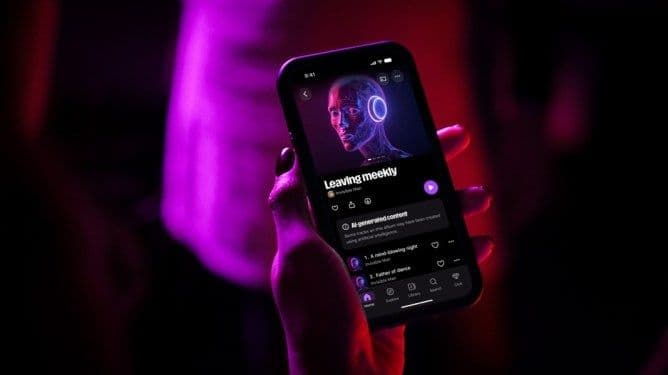
Deezer will soon let you filter out AI-generated music
Streaming platform Deezer remains steadfast in its intent to help users avoid listening to AI-generated music: The company on Tuesday said it is working on a new toggle that lets users filter out AI-generated music uploaded to its platform. The feature is expected to be available before the end of the year. Deezer said turning on the toggle will stop you from seeing AI-generated tracks, albums, and related artists in search results. “We’ve seen clear user demand for the ability to filter out AI-generated music, and we are now giving everyone the option to remove this content completely from their streaming experience on Deezer, and focus only on human creators and creations, if they wish,” Deezer CEO Alexis Lanternier said in a statement. He added that the explosion of AI music on the platform was one of the catalysts for the toggle-based features. The company citeda survey from last year,which noted that around 45% of Deezer customers wanted a way to remove AI music from their feeds. Deezer addedAI-detection tooling last yearand has been reporting on the number of tracks being uploaded to the platform ever since. At that time, AI-generatedtracks represented 10% of daily uploads. In July, the company said that more than 50% ofdaily uploads to its platform were AI-generated tracks, with an average of 90,000 tracks per day. Other music streaming services have also created their own policies in relation to AI music. Bandcamp hascompletely banned AI tracks,whileTidal cut off monetizationfor people uploading AI music. Spotify has taken a leaner stance, onlytagging AI tracks and artistsmore prominently on its platform. In August,Varietyreported that Apple Music was looking to label AI tracks by the end of the year. Besides platform-based tagging, users are also turning to independent tracking systems to identify AI music.
View
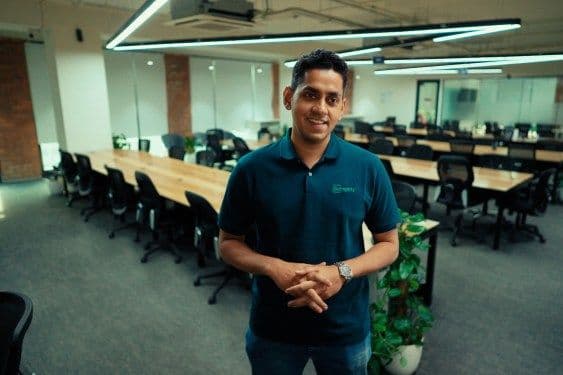
Scimplify raises $25M to challenge China’s grip on critical materials with AI
As manufacturers across industries strive to reduce their reliance on Chinese suppliers, Indian startupScimplifyhas raised $25 million to expand its AI-powered approach to producing specialty chemicals and critical materials, with semiconductors, defense, and energy emerging as key growth markets. The all-equity strategic round was led by Hitachi Ventures, with customers Henkel and Teknor Apex joining as new investors. Existing backers Accel India, Bertelsmann India Investments, Omnivore, and 3one4 Capital also participated. The round values the Bengaluru-based startup at $250 million after the investment, according to a person familiar with the transaction, up from$150 millionafter a $40 million Series B round in March 2025. The latest investment brings Scimplify’s total equity funding to $80 million, the startup said, though it declined to disclose its valuation. The growing adoption of AI and advanced computational tools has accelerated materials discovery and research. However, turning promising chemistry into commercially available products at scale remains a slow and complex process. Manufacturers need to develop production processes, qualify facilities, and meet stringent quality standards, all while navigating supply chains limited to a handful of countries. Scimplify is seeking to shorten that process. In some cases, the startup, founded in 2023, has gone from receiving a customer’s requirements to delivering the finished material in just two months, compared with the 12 to 18 months such work would typically take, co-founder Sachin Santhosh (pictured above) said in an interview. Once it receives an order, Scimplify develops chemical manufacturing processes at its research facilities in Bengaluru and Hyderabad and then transfers them to partner factories for commercial production. Its proprietary AI platform, Scinode, helps coordinate the work by identifying suitable production routes and manufacturing facilities, while tracking quality and regulatory requirements. The platform uses specialized AI agents for different functions, including research, manufacturing, and quality control, Santhosh told TechCrunch. “Each of these agents is basically solving for what [a customer] would want, working backward from the customer’s requirement,” Santhosh said. “This helps us move a lot faster and remember customer context even for future references.” Scimplify’s in-house team of scientists and engineers oversees production across a network of more than 500 manufacturing facilities. It helps customers establish alternative sources for materials whose supply is concentrated in China and a few other countries. About 90% of Scimplify’s manufacturing currently takes place in India. The startup, however, plans to expand its production network to the U.S. and Japan over the next year as it seeks to attract more customers in both markets, Santhosh said. The U.S. has emerged as a key growth market, with Scimplify’s annualized revenue run rate in the country rising sixfold to about $60 million from $10 million a year ago, according to Santhosh. The market now accounts for roughly 30% of its business, while customers outside India collectively contribute more than half of its revenue, compared with less than 5% about 18 months ago. Overall, Scimplify, which serves more than 1,000 customers and has delivered products to more than 40 countries, has reached an annualized revenue run rate of about $200 million, tripling from a year earlier, Santhosh told TechCrunch. The startup is targeting a $400 million annualized revenue run rate over the next year. Scimplify has also been EBITDA-positive for the past two months and expects to turn profitable after tax this month, he said. Energy, electronics, and defense now account for about 45% to 50% of Scimplify’s revenue, up from less than 15% a year ago, Santhosh stated. The growth comes as AI fuels demand for materials used in electronics and energy infrastructure, while ongoing wars drive demand from the defense industry. Scimplify is working on producing tungsten derivatives from scrap, offering customers an alternative source of materials whose supply is heavily concentrated in China. The startup is also working on rare-earth materials, another category where global supply chains remain heavily dependent on China. The startup works with customers including Japanese electronics manufacturer TDK, German chemicals group BASF, and Hitachi. Santhosh cited a project involving TDK as an example of how the startup can shorten the time needed to develop and deliver specialty materials. Timelines, he said, vary depending on the project. With its latest funding, Scimplify plans to deploy around $7.5 million for its U.S. expansion, including building out its manufacturing network, Santhosh said, adding that the allocation could change as the startup’s plans evolve. It also earmarked another $2 million for further development of Scinode. The startup employs about 340 people, including roughly 70 scientists. Most of its workforce is based in India, though it also has local teams in the U.S., Japan, Indonesia, and the UAE.
View
Sarvam AI Launches Bulbul V4 Flash for Real-Time Speech in 11 Indian Languages
The model is priced at ₹20 per 10,000 characters, a one-third reduction from the ₹30 charged for Bulbul V3.
View

Anthropic Ditches Git In Its Monorepo, Builds In-House Version Control System
Scion cuts source control infrastructure requirements by 200 times as Anthropic rethinks code reviews, testing and merge queues for AI-generated code.
View

The AI Underwriting Engine Behind Recur Club’s ₹500 Cr Festive D2C Capital Push
The debt financing platform expects to support 150–170 D2Cr brands with an average financing ticket of ₹3 crore, targeting inventory purchases and expansion.
View

Forward Deployed Engineer Job Postings in India Grew Nearly 19x in a Year: Report
Forward Deployed Engineer positions appear across technology companies, consulting firms, startups, and specialist AI businesses, according to Indeed.
View