
Latest AI News
Anthropic releases Opus 5.5 with lower prices and Fable-level performance
Anthropic’s newest model, Opus 5.5,was released on Tuesday, setting a new state-of-the-art in coding and knowledge work performance, according to the company. Notably, Anthropic says, the release outpaces the larger Fable model in many benchmarks and succeeded in a number of informal tasks that Fable failed to complete. The new model is also significantly cheaper than its predecessor. Output tokens will be charged at $20 per million tokens for Opus 5.5, compared to $25 for the previous model. Other metrics have similar price drops. The model is also faster to run, reflecting an overall drop in the compute required to serve it. The new version also makes significant changes to how Opus communicates, with the Opus 5.5 less likely to use jargon and more likely to put important information at the start of its messages. The launch comes just two months after the release of Opus 5on July 24. According to the announcement, Sonnet 5.5 and Haiku 5.5 will be released “in the coming weeks,” with similar performance improvements. Anthropic says that Opus 5.5 is comparable to Mythos in its biology and cybersecurity capabilities, so its release is subject to the same safeguards as the company’s Fable model. Those safeguards limit how much the models can be used to discover exploits in compiled programs ordeveloping recognizable biological weapons, among other tasks. Opus 5.5 is Anthropic’s first model release since CEO Dario Amodei embraced calls to pace the frontier, deliberately slowing down progress on AI capabilities to match the rate of progress on alignment. “I have become convinced that fully addressing the risks requires even more prudence,” Amodei wrotein a post earlier this month, “not just investing in risk prevention, but pacing the rate of capabilities advancement so that risk prevention has time to keep up.” Opus 5.5’s safety training was broadly similar to its predecessors, with alignment testing and pre-release evaluation by outside organizations like METR and Frontier Design. But Anthropic emphasized that more advanced training and evaluation systems were already being prepared for future models, including improved security and monitoring systems. “As AI becomes more capable, public policy should play a larger role in making sure the systems people rely on are safe. That capacity takes time to build, and we’ve started to put the infrastructure in place to support it,” the blog post reads. “We expect to share more details on these efforts soon.”
View

CoRover.ai Partners With Tech Mahindra to Take India-Built AI to Global Markets
CoRover.ai and Tech Mahindra will combine their AI platforms to develop sovereign, enterprise, and agentic AI solutions for customers in India and global markets.
View

AI Developers are Suddenly Obsessed With Jev—And Swear By Its Low Latency
Jev uses structured decisions, confidence scores, and millisecond-level responses to tackle AI tasks that are often too costly or slow for frontier models.
View
Nscale’s IPO will test Wall Street’s appetite for concentrated AI bets once again
When British neocloud Nscale goes public, it will test public investors’ appetite for a stock whose revenue is tied primarily to two customers. Since it was spun out of Australian cryptocurrency mining company Arkon Energy two years ago, Nscale has amassed over $103 billion worth of contracts, according to itsIPO filing. But there’s a catch: Most of that, about 85%, comes from a deal to supply Microsoft with $43.8 billion worth of compute through 2033, and another supply agreement worth $44.6 billion with Anthropic. Moreover, Anthropic’s agreement is contingent on Nscale obtaining financing, and the AI lab retains the right to walk away from or cancel the deal if Nscale fails to hit milestones that the filing explicitly categorizes as “stringent.” Nscale’s customer concentration is a reminder of just how interconnected the AI industry has become. A recent paper by credit hedge fund Sona Asset Management, featured in theFinancial Times, found that many AI infrastructure providers heavily depend on a limited number of customers. Nscale’s competitor CoreWeave, for example, generates 67% of its revenue from Microsoft, and data center builder Applied Digital derives 67% of its revenue from Oracle, and 30% from CoreWeave. While Sona noted that such interconnectedness is not necessarily a bad thing, it pointed out that a single setback or strategic shift by a major player can easily affect the entire industry. Nscale, which plans to list on the NYSE, expects to be valued at $35 billion, theFinancial Timesreported, and is seeking to raise $3 billion in the offering, according toBloomberg. The company reported revenue of $140.6 million for the six months ended June 30, up significantly compared to $10.4 million a year earlier. Net losses jumped to $1.02 billion from $369 million in the same period. Earlier this month, one of Nscale’s major investors, Nvidia, agreed to provide the company with $1 billion in convertible debt as part of a larger $3.1 billion financing deal. The startup was valued at $14.6 billion when it raised a $2 billion Series C led by Aker ASA and 8090 Industries. Aside from CoreWeave, Nscale’s competitors include Nebius, Lambda and Crusoe — the latter last week said it raised $3.9 billion at a$30.9 billionvaluation. Nscale operates data centers in Norway, Portugal, Texas and West Virginia. Its board of directors includes former Meta executives Sheryl Sandberg and Nick Clegg, as well as former OpenAI executive Fidji Simo.
View

Everyone can find a reason to dislike data center construction
Frontier AI labs are convinced that scaling up computation is the path to improving artificial intelligence, and they’ve put their money where their mouths are, to the tune of trillions of dollars of planned data center projects. The rest of us?Surveysofpublicopinionsay that more than 60% of Americans favor limiting new data centers, particularly in their communities. And the longest-running surveys show that sentiment is growing fast. Data center projects worth $68 billion were disrupted by local opponents in the second quarter of 2026,according tothe trackers at Data Center Watch. AI companies and their investors have a hard time reconciling the growing demand for their products with opposition to the key infrastructure behind it. Some answers from the industry, like the idea that data center opposition is a product of secretive Chinese meddling, don’t really pass the smell test. Today, anew reportfrom the nonprofit Data & Society offers a deeper look at what is activating opposition to data centers. It is the result of 18 months of ethnographic fieldwork by a team of researchers who interviewed 44 Pennsylvanians between 2024 and 2026. The authors, who are critical of the way AI has been pitched, aren’t trying to measure the empirical impact of data centers, but instead want to understand the way people experience the debate over their construction. “One of the strengths of ethnography and doing research on the ground for an extended period of time is piercing the bubble of AI hype,” Livia Garofalo, a Data & Society researcher, told TechCrunch. “People are making sense of the dissonances between AI being the next inevitable industrial revolution, and fears about AI.” When the authors began their work, data centers were being pitched as key to economic development. Governor Josh Shapiro headlined a July 2025 summit celebrating $90 billion in data center and AI infrastructure investment. A year later, Shapiro signed an order imposing new requirements on data center projects and removing them from a regulatory fast-track initiative. Someone read the writing on the wall. The authors say the message from industry that AI is “inevitable” has landed poorly with Pennsylvania residents. They point to the state’s historic waves of industrialization, including coal mining, the early days of the oil industry, steel manufacturing, and fracking, experiences that have left residents suspicious of utopian industrial schemes. “People in Pennsylvania especially have incredible experience with industrial change, have deep lineages of industrial trauma, enough to sniff when things don’t feel right to them,” Maia Woluchem, a program director at Data & Society who co-authored the report, said. Still, trade unions are perhaps the greatest source of support for data center projects, thanks to the potential jobs they represent. Even acknowledging that, once built, these data centers won’t be major sources of employment, unions see the projects as a lifeline to rebuild their ranks. In contrast to the industry’s fears of foreign influence, the researchers describe the work of AI boosters as a kind of propaganda campaign, pointing to the Data Center Coalition, a trade group that hasset up websiteslike “Pennsylvania Connects” to boost projects andspent at least$19,000 lobbying the state government last year. In spite of the boosterism, resistance has grown, and in unlikely ways. The researchers said they were surprised by the diversity of the opposition to these projects, calling it not bipartisan but post-partisan.“We don’t want to romanticize that everyone is having this kumbaya moment, [but AI is] forcing people to be in conversation together about futures that they want and presents that they want … these fights are incredibly organic,” Woluchem said, pointing to a variety of sources of opposition: Sometimes it is simply folks who are against development — classic NIMBYs — but the coalition grows from there. There are people who dislike AI as a technology and the corporate interests behind it, environmental groups concerned about water usage and energy-related emissions, and those with more nebulous concerns about public health. What’s striking, though, is how often material interests are top of mind. People are concerned that data center electrical usage will affect their own power bills, worried that data centers will drive down property values, or are upset bythe playbookthat data center builders use to get their way — tactics such as asking local officials to sign non-disclosure agreements. “There is a significant group of people who are just really clued into their town hall meetings and might notice that wow, a representative from Amazon, Meta, Microsoft, showed up here, or a data center developer showed up at my community meeting …that’s a little odd,” Woluchem notes. “And my council person, who I have previously had a relationship with, now won’t talk to me about this sort of thing.” It’s this patchwork quilt of motivations for anti-data center activism that presents such a challenge for the AI industry: There’s no simple way to alleviate this raft of concerns. The problem is trust, which has alreadydeviled the industry. “It is an intimate and relational trust that is now being inserted in people’s lives by these industries,” Garofalo said. “I’m alone in my house, and I’m talking to a chatbot, and I’m feeling loved and cared for, and yet I know that this is a commodity, and I know I’m being extracted upon.”
View

Matters.AI, Cockroach Labs Launch Data Security Integration for DPDP-Regulated Data
The integration maps sensitive data in CockroachDB to the users, roles and privileges that can access it, while keeping raw data within the customer’s infrastructure.
View
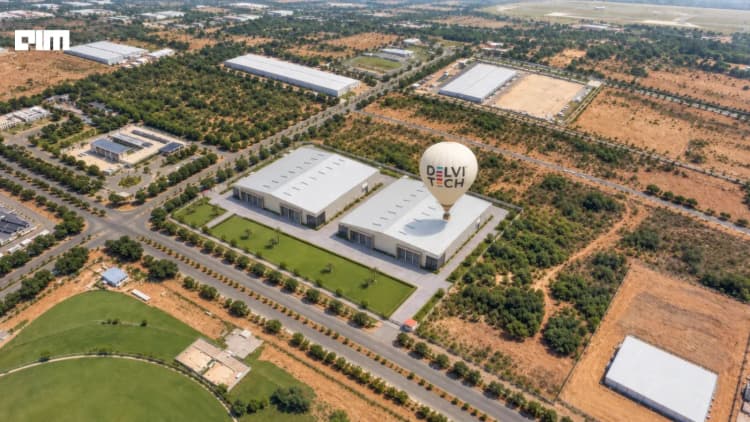
Delvitech to Invest Up to $30 Mn in Bengaluru Manufacturing Facility, Create 800 Jobs
The 65,000-square-foot facility is expected to become operational in Q1 2027 and is projected to create 500–800 jobs over the next five years
View

Delinea Joins Anthropic’s Project Glasswing to Use AI Against Its Own Security Code
The initiative will apply AI-driven defensive cybersecurity techniques to Delinea’s own systems.
View

AMD Joins $1 Trillion Club as Chipmakers Rally on AI-Driven Demand
AMD has crossed a $1 trillion market valuation for the first time as investors bet on its growing role in AI computing and demand for AI chips.
View

How This GCC Uses a $200 AI Cap to Cut Token Costs by Up to 90%
Fidelity International is making AI costs visible to employees before applications are deployed.
View

Meta’s Muse AI App Beats ChatGPT on Early Downloads, Shares Jump 11%
The surge in Muse downloads comes as Meta pushes deeper into AI agents that can act across apps, services, and the web.
View

Microsoft’s Hyderabad Data Centre Comes With a ‘Zero-Water’ Cooling Promise
Microsoft has now formally begun operations for its South Central data centre in Hyderabad, claiming "high-efficiency mechanical cooling.”
View