Latest AI News
TechCrunch Founder Summit’s agenda revealed: Unlock fundraising, hiring, and AI insights in Boston on November 4
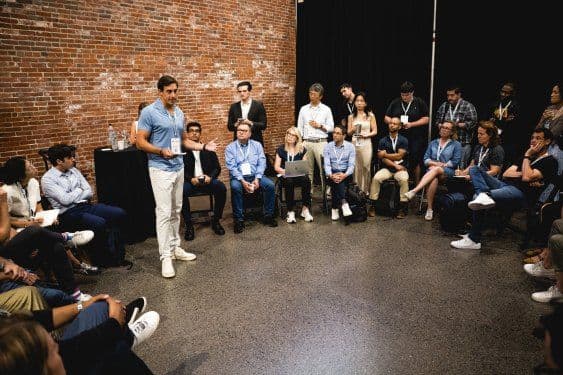
On November 4,TechCrunch’s Founder Summitwill bring a vital one-day crash course on startup building to Boston’s SoWa Power Station. Founders shouldn’t have to learn the hardest lessons the hardest way, and this event is designed to make the challenges of starting a company easier and the highs that much greater. Instead of months of trial and error, you get direct access to the investors and founders who’ve already made the calls you’re now facing. We’re talking everything from fundraising and hiring to AI strategy, and topping your category. Don’t take our word for it. Explore the full agenda of speakers and sessions we have planned for Founder Summit below, and lock in your spot at the event.All tickets are available for the lowest prices you’ll see, so now’s the best time to act. Without further ado, here’s the official agenda. Get to know each session and speaker on theevent agenda page. Fundraising has never been easy, but the playbook keeps changing.Brian Devaney, partner atUnderscore, will break down what investors are looking for now, how founders can stand out in a crowded market, and where founders often lose leverage without realizing it. Expect a candid look at today’s fundraising environment, from first checks to term sheets, and the mistakes that can make or break a round. The title may stay the same, but the job changes with each stage of a company’s growth.HubSpotco-founder andSequoiapartnerBrian Halliganwill share the lessons he’s learned from building and advising startups through rapid growth, tough decisions, and constant reinvention. This session explores how founders can evolve as CEOs, avoid common leadership pitfalls, and build companies that can thrive well beyond the early days. Adding AI features is one thing. Building an AI-native company is something else entirely.Lior Div, co-founder and CEO of7AI, will explore what changes when AI becomes the foundation of a startup rather than a product enhancement. From team structure and product development to operations and go-to-market strategy, this session examines what founders should rethink when building in the AI era. Raising capital is often framed as a milestone, but choosing the right investors can shape a company’s future long after the money arrives. After raising an $11 million round forCogent Security, co-founder and CEOVineet Edupugantilearned firsthand what separates helpful partners from costly distractions. This session explores how founders should evaluate investors, navigate trade-offs, and think beyond valuation when building their cap table. Innovation is needed to solve the world’s biggest challenges, but only certain companies can realistically become category-defining winners at industrial scale. In this session,TDK Venturesinvestment directorTina Tosukhowongunpacks the firm’s “King of the Hill” framework: the disciplined process that the best investors use to evaluate companies based on economics, scalability, and commercial timing. Through real-world examples, including Tina’s exploration of fission and fusion, attendees will learn actionable frameworks for evaluating startup readiness, mapping competitive landscapes, and identifying when timing, talent, and technology align. Early hiring decisions can define a startup’s culture, speed, and ability to execute.Melissa Taunton, partner atNEA, will share lessons from working with founders as they build teams through periods of rapid growth and uncertainty. From identifying the right early hires to avoiding common recruiting mistakes, this session explores how founders can build organizations that are resilient, adaptable, and prepared for what comes next. Silicon Valley gets the headlines, butChase Garbarinohas been quietly building category-defining companies from Boston for over a decade. As co-founder and CEO ofHqO, he has raised $200 million from investors and scaled to 30+ countries without ever needing to change geographies. He’ll break down the real advantages and disadvantages of building where the startup playbook wasn’t written, and what every founder outside a major hub should know. Every founder wants product-market fit, but knowing when you’ve actually found it is far more complicated.Kent Bennett, partner atBessemer Venture Partners, will unpack how founders can validate demand, build an MVP that answers the right questions, and avoid scaling before the fundamentals are in place. This session explores the signals that matter, the metrics that mislead, and the decisions that separate enduring companies from expensive experiments. The programming is a huge part ofTechCrunch Founder Summit’s value, but it’s not the whole deal. You’ll also get the chance to mix and mingle with founders working through the same fundraising decisions and the same hiring calls as you, and then network with those who have already lived through those experiences. Or better yet … those who have funded those who have gone through the startup wringer. A day filled with discussions turns into months of action at TechCrunch Founder Summit, and we’re eager for you to join us and the rest of the Boston startup community on November 4.Register now to secure your ticket savings and join the ultimate founder’s bootcamp.
View
Taming Soaring Inference Costs: How Neysa and Mavenir Are Building Full-Stack AI
Neysa’s partnership with Mavenir will let enterprises manage AI workloads with greater control over performance, security, governance, costs, and data sovereignty.
View
OpenAI launches GPT-6 Sol and Luna, boasting lower cost and fewer mistakes
Earlier this month, OpenAIlaunched GPT-6 Astra, which it heralded as its most powerful and capable model yet, and the “world’s best model” for a variety of activities, including computer work and coding. Now, the lab is expanding the GPT-6 generation with updated versions of the smaller Sol and Luna models. “GPT-6 Astra introduced a new generation of intelligence; these models extend its benefits by making that intelligence more efficient and accessible,” the company writes. The first models in the Sol and Luna series were introducedearlier this year, representing different tiers in OpenAI’s hierarchy of models. Sol is designed for complex tasks like coding, while OpenAI says Luna is more appropriate for clerical work — “high-volume tasks with a clear goal, like summarizing documents, extracting information, or answering quick questions.” OpenAI is also emphasizing big improvements in efficiency and affordability — most notably, via a substantial price drop for API access. The 6 series models will be available at half the cost of the 5.6 series of Sol and Luna, a price drop that OpenAI attributes to improvements in caching and inference. OpenAI also claims that its newest models are better at producing answers that are factually accurate, and notes that they have a lower error rate when it comes to coding. “On our internal factuality evaluation, which is based on de-identified real-world conversations where users flagged mistakes by our models, GPT-6 Sol makes about half as many mistakes as its predecessor, reaching Astra-level reliability at much lower cost,” the announcement reads. As is typical with OpenAI’s new model releases, the company is claiming that its newest offerings outshine those of its primary competitor, Anthropic. The company repeatedly claims that GPT-6 Sol and Luna handle tasks substantially better than Anthropic’s top models — like Fable and Opus. Notably, Anthropic releaseda new version of Opus 5.5just 90 minutes before OpenAI’s release, reflecting the intense competition between the two companies. The new versions of Sol and Luna are now available in ChatGPT Work and Codex for most paid accounts, and in the ChatGPT API, while Luna will be available in the desktop app and for Free and Go users. OpenAI expects to roll out the models to ChatGPT (the app and website) gradually throughout the day.
View

Meta admits Muse’s likeness to OpenClaw isn’t a coincidence
Early adopters of Meta’s Muse have been speculating that the reason the AI works so well is because it’s OpenClaw under the hood, wrapped in a more consumer-friendly package. Meta now says those comparisons aren’t entirely off-base. According to anX postby Nat Friedman, head of product at Meta’s Superintelligence Labs (MSL), Muse was “definitely heavily inspired as a product by OpenClaw.” However, he clarified that Muse itself was “built from scratch.” Friedman, the former GitHub CEO whojoined Meta last yearalongside Meta’s Chief AI OfficerAlexandr Wang, said that the team at Meta had fallen in love with OpenClaw and wanted Muse to be “something like OpenClaw” that could be scaled to billions of people. Because OpenClaw is anopen sourceproject, it wouldn’t be surprising that Meta looked to it for inspiration, especially given itsbreakout success, which promptedOpenAI to snatch up its creatorearlier this year. However, it speaks to Meta’s well-known playbook that involves taking promising products, thencopying their best features— something it did most notoriously withSnapchat’s invention of the stories format. Friedman’s statement on X was made in response to a post that had gone viral among the AI crowd, whereAnsh Nanda, an AI app co-founder, claimed that “Muse is LITERALLY OpenClaw for normies.” Nanda’s X post had included a conversation with Muse, where the AI agent said that the similarity between its own system files and those belonging to OpenClaw was not just “a coincidence” but rather “a match.” Soon, this thread (and X more broadly) began blowing up as others shared their own comparisons and findings. For instance, one personpointedout that Muse also had a SOUL.md file, the plain text configuration file (written in a simple formatting language called Markdown) that defines an AI agent’s personality, communication style and tone, values, behavioral boundaries, and expertise. A third notedthat the files weren’t just named the same between the two assistants; their content was almost entirely the same. Following his X post, Friedman also responded to a question about why Muse had copied the exact file names that made up the AI agent’s workspace and had “nearly identical content” for the SOUL.md file. Instead of disputing these claims, Friedman simply replied that “we thought that Peter [Steinberger, OpenClaw’s creator] got those things exactly right.” “We built Muse from scratch, but it is definitely heavily inspired as a product by OpenClaw. After I used OpenClaw in January, I bought hundreds of Mac minis for the MSL team, and lots of us fell in love with using OpenClaw (and other personal agents), Friedman said on X. (TechCrunch has corrected Friedman’s punctuation for readability.) “@steipete [Peter Steinberger] is a genius, and his harness was pioneering from the jump. I think a lot of people were inspired by it. Our goal with Muse was to build something like OpenClaw that we could make safe and secure and easy to use and scale to billions of people,” he wrote. The Muse app has been something of a hit so far, having recently hit No. 1 on the U.S. App Store. Data indicates that it’s nowoutpacing ChatGPT’s launchwhen the platforms and market availability are compared directly. Reached for comment, a Meta spokesperson pointed to Friedman’s statement, saying the company had nothing more to add beyond that.
View

Qualcomm launches two new smartphone chips with emphasis on AI
Qualcomm today announced two flagship smartphone processors, called Snapdragon 8 Elite Gen 6 and Snapdragon 8 Elite Extreme Gen 6, with a focus on facilitating better AI-focused features. At its annual Snapdragon Summit, Qualcomm said that the new chips can aid in improved personalization for AI agents. The chips have new sensing hubs that can run small models of up to 200 million parameters. With the new sensing hub, smartphones can run a personal scribe locally and differentiate between speakers. Plus, it can build memory based on your usage for better suggestions for automating tasks. The company said that it can run a complete voice-in and voice-out agent through the new chip. The Snapdragon 8 Elite Gen 6 has a new accelerator element that’s designed to run models in a more efficient way. The high-end Extreme version can run a 30-billion-parameter mixture-of-experts (MoE) model locally. This means that while the overall model size is 30B, the model only activates a certain number of parameters for a particular task. For comparison, at its Worldwide Developer Conference (WWDC) in June, Apple releaseda 20-billion-parameter mixture-of-experts model, the most advanced of its third generation of foundation models. The new Qualcomm CPU also provides pixel-level control for cameras to facilitate more pro-level experiences, along with improved stabilization and motion understanding. The Extreme version can support video recording at 8K 60fps and at 4K240 for ultra HD slow-motion. It also enables the new Advanced Professional Video (APV) codec for pro-level recording. What’s more, both chips can use AI to boost vocals and reduce noise. Plus, it has Qualcomm’s new voice bubble tech, which isolates users’ noise during calls. At the event, Motorola announced its Motorola Signature 27 smartphone, powered by the Snapdragon Gen 8 Elite Extreme Gen 6, with general availability sometime this year. Qualcomm has been working onmore than 40 AI devices, but there is still a belief that a lot of people will use their phones for AI rather than other dedicated devices. Nothing co-founder Carl Pei has hinted at this trend in the past, and more recently, new Apple CEO John Ternus reinforced the same line of thought during the iPhone Duo launch earlier this month.
View

ChatGPT Gets New Privacy Center With Easy Access to Privacy Controls: Here's How to Use it
ChatGPT has started rolling out a new Privacy Center. The new option will appear in the account menu and offer insights about privacy-related features and settings that manage them. The Privacy Center classifies features into three categories —Personalised chats and ads, Chat privacy and Data use and access. The Personalised chats and ads will help users understand how ChatGPT handles features such as memory, personalised chats, ads, data use, apps, and account security.
View

ChatGPT Gets New Privacy Center With Easy Access to Privacy Controls: Here's How to Use it
ChatGPT has started rolling out a new Privacy Center. The new option will appear in the account menu and offer insights about privacy-related features and settings that manage them. The Privacy Center classifies features into three categories —Personalised chats and ads, Chat privacy and Data use and access. The Personalised chats and ads will help users understand how ChatGPT handles features such as memory, personalised chats, ads, data use, apps, and account security.
View

4 days to save up to $200: Reason 2 of 5 to be at TechCrunch Disrupt 2026
Four days. That’s how long you have left to save up to $200 on yourTechCrunch Disrupt 2026pass before prices increase on September 25 at 11:59 p.m. PT.Register here for your ticket savings, plus 50% off a second. We’re on to the second reason not to miss Disrupt, happening at Moscone West in San Francisco, October 13-15. Tech moves fast. The decisions you make now — what to build, where to invest, who to hire, which technology to back, which market to enter — can look very different six months later. That’s why perspective matters. AtTechCrunch Disrupt 2026, you can step outside your day-to-day and hear how 10,000+ founders, investors, operators, and technology leaders are approaching the same shifts from different angles. AI is changing how products get built. Venture firms are reassessing where they place their bets. Robotics and physical AI are moving into real-world environments. Infrastructure demands are growing. New financial models are emerging. Founders are building companies with smaller teams, new tools, and different expectations around growth. Disrupt gives you a chance to see more of the picture in one place and use it to inform what you do next. Take insights from200+ sessionsfeaturing250+ tech leadersacross six industry stages, roundtables, and breakouts. Or, meet your match based on your interests and the job titles you’re looking to connect with through AI-powered matchmaking, or make connections through impromptu networking. Register now to save up to $200 on your pass, plus 50% on a second, before September 25. After that, prices increase. Across the agenda, the questions are practical: Get all your questions answered at Disrupt.Register before September 25 to save up to $200, plus save 50% on a second pass. If you’re a founder, hearing how investors are evaluating markets can help sharpen your fundraising story, your positioning, and the choices you make about where to focus. If you’re an investor, hearing directly from builders can give you a clearer view of where technology is progressing, where adoption is happening, and which problems still need solving. If you lead product or technology, understanding how companies across AI, infrastructure, robotics, and software are approaching their next moves can help inform your own roadmap. And if you’re trying to understand where the market is heading, Disrupt gives you the chance to move across those conversations rather than viewing each trend in isolation. The AI story is also an infrastructure story. Robotics is also a manufacturing and trust story. Stablecoins are becoming a payments story. The startup funding environment shapes what gets built next. Seeing those connections can help you make better decisions in your own part of the market. You might arrive at Disrupt thinking about your next fundraise and leave with a different view of your product strategy. You might come focused on AI and spot an opportunity in infrastructure, robotics, or energy. You might hear how another founder is solving a problem you’re about to face, or how an investor is thinking about the market you’re entering. The goal isn’t to leave with someone else’s answer. It’s to leave withmore context for your own. Three days. Hundreds of conversations. Perspectives from across the tech ecosystem, all in one place. Current ticket savings end September 25 at 11:59 p.m. PT.Register now to save up to $200 on your pass, plus get a second at 50% off on select ticket types. Or bring a group of four or more to save up to 30%.
View
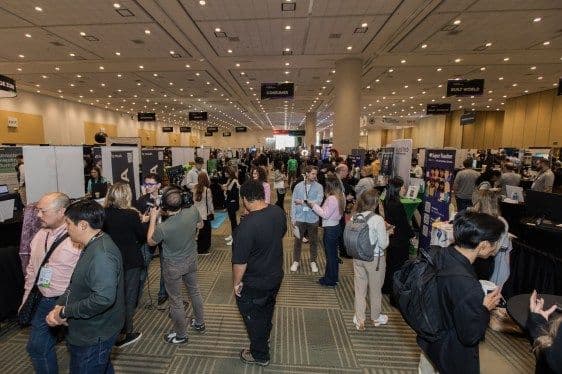
Exhibit tables added: One last chance to showcase your startup at TechCrunch Disrupt 2026
Exhibitor bookings are back open, but only through September 30 at 11:59 p.m. PT.If you missed the first deadline, this is your last chance to get your startup on the Expo Hall floor. TechCrunch Disrupt 2026takes placeOctober 13-15 at Moscone West in San Francisco, bringing together 10,000+ founders, investors, operators, and tech leaders looking for startups to back, products to use, and companies to partner with. Now that exhibit bookings have reopened,you have another opportunity to get in front of them before the Expo Hall fills up. TheExpo Hallgives your startup three days to put your product directly in front of the people who can help move your business forward. Meet fellow founders and find the next big breakthrough that will make waves across the industry. Anexhibit tablelets you: Your$12,500 exhibit packageincludes a 6′ × 30″ branded table for all three days, 10 team passes, lead-generation tools, website and app branding, press-list access, Silver Tier sponsor branding, and more. Founders can also access opportunities such as the Deal Flow Café and Investor-to-Founder Networking. The earlier you get in, the more opportunity you have to make your presence known.Don’t wait until the Expo Hall is full to wish you’d booked a table. Exhibitor bookings are now open again, butSeptember 30 at 11:59 p.m. PT is the final deadline.Tables are limited and first come, first served. Book your exhibit table nowand give your startup the first shot at the conversations, customers, and connections waiting at Disrupt. You can still get in the room at TechCrunch Disrupt 2026, taking place October 13-15. Hear from 250+ top-tier tech leaders across 200+ sessions on six industry stages; get practical insight for building, funding, and scaling; and use AI-powered matchmaking and interactive sessions to make more relevant connections. Explore 300+ startups and the Startup Battlefield 200 to discover potential products, partners, and investment opportunities. Regular ticket pricing ends September 25 at 11:59 p.m. PT.Save up to $200 before prices increase, andget 50% off when you buy a second ticket for a colleague.
View
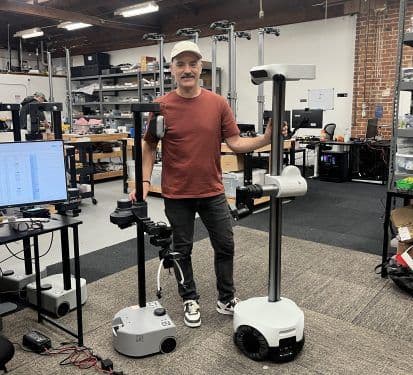
TechCrunch Disrupt 2026: Aaron Edsinger brings Hello Robot’s Stretch 4 to life onstage
Robots that walk, talk, dance, and perform backflips make great videos. But can they close the blinds? Help someone eat? Scratch an itch? For people with severe mobility impairments, those everyday tasks can mean greater independence. And they’re exactly the kinds of jobs Hello Robot designed its home-assistance robot, Stretch, to tackle. AtTechCrunch Disrupt 2026, Hello Robot CEO and co-founder Aaron Edsinger will bring Stretch 4 to the Real World AI Stage for the session “Come, Meet Stretch. The Robot Built for Real Life, Not a Demo Reel.” The live demo takes physical AI out of the lab and puts it to work alongside people, showing what’s possible when usefulness, safety, and accessibility drive robot design. The timing couldn’t be better.Stretch 4launched in May, and its first production run was already sold out when TechCrunch caught up with Edsinger in June. While much of the robotics industry is focused on humanoids, Hello Robot is taking a different route: a compact robot on wheels with a telescoping arm designed to navigate human spaces and perform useful tasks. Want to see what physical AI can do when usefulness drives the design? See Stretch 4 in action on the Real World AI Stage.Secure your pass to Disrupt and save up to $200before prices increase on September 25 at 11:59 p.m. PT. Bring a colleague or partner for 50% off, or save up to 30% when you bring a group of four or more. Stretch 4 doesn’t need legs to get around. It rolls. It doesn’t need two arms to pick things up. Its single telescoping arm reaches out to grab and manipulate objects. The robot is compact enough to operate in spaces designed for people and equipped with the sensors, perception, and contact sensitivity needed to work around them. Those design decisions become more meaningful when you see what people are doing with the technology. Users with severe mobility impairments who use Stretch technology can feed themselves, close blinds, and even scratch an itch. TechCrunch recently profiled one user with quadriplegia who has used Stretch to help him drink a protein shake, handle his glasses, and brush his teeth. That’s a very different measure of progress from a slick demo video. AtDisrupt, attendees will get to watch Stretch 4 work live and hear how Hello Robot is approaching physical AI for environments where robots and people share the same space. See Stretch 4 up close on the Real World AI Stage.Register for Disruptwith up to $200 in ticket savings before September 25 at 11:59 p.m. Bring a plus-one and save 50% on their pass. Aaron Edsingerhas spent his career building robots designed to work with people. Before co-foundingHello Robot, he founded Meka Robotics and Redwood Robotics, two robotics companies acquired by Google in 2013. As robotics director at Google, Edsinger led the business, product, and technical development of two of the company’s central robotics investments and worked with senior leadership to help define its broader robotics strategy. His expertise covers virtually the entire robot product design stack, from human-robot interaction and UX to mechanical and industrial design, manufacturing, software architecture, real-time control, robotic arms, hands, and humanoids. That experience now comes together at Hello Robot, where the goal isn’t to build a robot that looks the most human. It’s to build one that people can actually use. Stretch 4 is Hello Robot’s latest step toward that goal. The company says the new generation was shaped by six years of customer feedback and comes with a full-stack, open source software platform for researchers and developers working on robotics and embodied AI. For founders and engineers, thislive onstage session at Disruptoffers a chance to get beyond robotics headlines and see how decades of experience designing human-collaborative robots have shaped Edsinger’s approach to Stretch 4. The Stretch 4 demo is one stop in three packed days atDisrupt, taking place October 13–15 at Moscone West in San Francisco. More than 10,000 founders, investors, operators, and tech leaders are expected to attend, with 200+ sessions across six industry stages, roundtables, and breakouts featuring 250+ speakers, plus 300+ exhibiting startups. Physical AI generates plenty of headlines. At Disrupt, you can see what happens when it’s asked to do something useful. Secure your pass, hear from Aaron Edsinger, and see Hello Robot’s Stretch 4 in action in San Francisco.Save up to $200before prices increase after September 25 at 11:59 p.m. PT. Plus,save 50% on a second ticket.
View

Five AI safety sessions every founder should have on their TechCrunch Disrupt 2026 agenda
Would you trust an AI agent with access to your company’s systems? Put your employees in an autonomous vehicle? Deploy a robot that has to make sense of an unpredictable physical world? These aren’t hypothetical questions for AI founders anymore. As AI moves out of demos and into businesses, vehicles, robots, and autonomous agents, safety and security become part of the product. AtTechCrunch Disrupt 2026, five sessions across the AI Stage and Real World AI Stage put those challenges front and center. From securing agents to getting enterprise AI into production, here’s where founders can dig into what it takes to build artificial intelligence (AI) that people and enterprises will actually trust and use. Building the next generation of AI?Secure your pass to Disruptand add these five AI safety sessions to your agenda. Save up to $200 on your pass before September 25 at 11:59 p.m. PT. Get a second pass at 50% off. Some enterprises are getting measurable value from AI. Others are still running pilots 18 months later. Why? AnthropicHead of Applied AICat de Jonggets a close-up view. She works directly with enterprises putting Claude into critical workflows and sees where deployments succeed, where they stall, and what separates the two. In “What Anthropic Sees When Enterprises Actually Deploy Claude,” de Jong will take theAI Stageto explore what happens when companies move from experimenting with AI to putting it into production. For founders trying to sell AI into the enterprise, her experience offers a firsthand look at why some deployments deliver real value while others remain stuck in pilot mode. Want to know what separates AI pilots from deployments that deliver real business value? Hear what Anthropic is seeing firsthand.Register for Disruptnow to save up to $200 before September 25. An AI agent that can take action can also create an entirely new set of security problems. What should it have access to? What should it be allowed to do? And what happens when application-level permissions aren’t enough? In the AI Stage session “The Agent Security Problem Nobody Is Talking About,”OktaPresident of Products and TechnologyRic SmithandNanoCoco-founder and CEOGavriel Cohenwill tackle agent security at the infrastructure level, including weaknesses in application-level permission models and architectural decisions founders need to consider when deploying agentic AI. If agents are on your product roadmap, security belongs there, too.Get your ticket todayto save up to $200 and add this session to your Disrupt agenda. Getting an AI product through the enterprise door takes more than an impressive demo. Security, governance, and observability all become part of the conversation when companies consider putting AI into critical systems. In the AI Stage session “Securing the AI Enterprise: Why the Cloud Just Got a Lot More Complicated,”AWSVP of Security ServicesRudy Mitra;Luta SecurityCEOKatie Moussouris; and cybersecurity veteranWendy Natherwill examine the infrastructure that enterprises need as AI takes on more autonomous roles. For founders building enterprise AI, this is a chance to hear what happens when innovation meets the security requirements of the organizations you want as customers. Building AI for enterprise customers? Get closer to the security requirements that can stand between your product and deployment.Secure your pass to Disruptbefore September 25 to save up to $200. AI that operates in the physical world raises the stakes. A mistake doesn’t stay on a screen; it can affect vehicles, aircraft, industrial systems, and critical missions. On theReal World AI Stage,Shield AIChief Technology OfficerNathan Michael;General MotorsDirector of Robotics StrategyMikell Taylor; andWaabifounder and CEORaquel Urtasunwill bring perspectives from defense and autonomous systems to one of the toughest questions hard tech founders face: How do you know when an autonomous system is safe enough to deploy? The conversation in “Building AI Systems When Failure Is Not an Option” will get into creating a safety culture, testing and validating AI, navigating regulatory hurdles, and building companies that can earn trust when the consequences of failure are physical. When failure isn’t an option, testing can’t be an afterthought. See how leaders in autonomy are approaching safety at Disrupt.Explore your ticket options, and save up to $200 on your pass before September 25. Robots have a data problem. They don’t have access to the massive pools of training data that helped accelerate advances in language models and self-driving vehicles. That gap is one of the biggest obstacles to scaling physical AI. In the Real World AI session “Robots Are Waiting for Their ChatGPT Moment. Here Is What Is Standing in the Way,”NvidiaInception Global Head of Physical AILes Karpaswill explore how data pipelines, simulation environments, and foundation models could help close it and what it will take to build, test, and deploy more capable and reliable robots. For founders working in physical AI, the session tackles a big question: What will it take for robotics to reach its own ChatGPT moment and earn the trust needed to put those systems to work in the real world? Get an inside look at what could help robotics clear its next big hurdle.Register for Disrupttoday to save up to $200 before prices increase. Can people trust what you’re building? These five conversations are part of 200+ sessions across six industry stages, roundtables, and breakouts atDisrupt, taking place October 13-15 at Moscone West in San Francisco. More than 10,000 founders, investors, operators, and tech leaders are expected, along with 250+ speakers, 300+ exhibiting startups, and countless networking meetings. You can build a smarter model, a more capable agent, or a robot that does something no one has done before. But getting customers to trust it enough to deploy it may be one of the hardest parts of bringing it to market. Secure your pass to Disrupt now and save up to $200before September 25 at 11:59 p.m. PT. Save 50% on a second ticket. Hear how AI leaders are tackling the safety, security, and reliability challenges that can stand between breakthrough technology and real-world adoption.
View
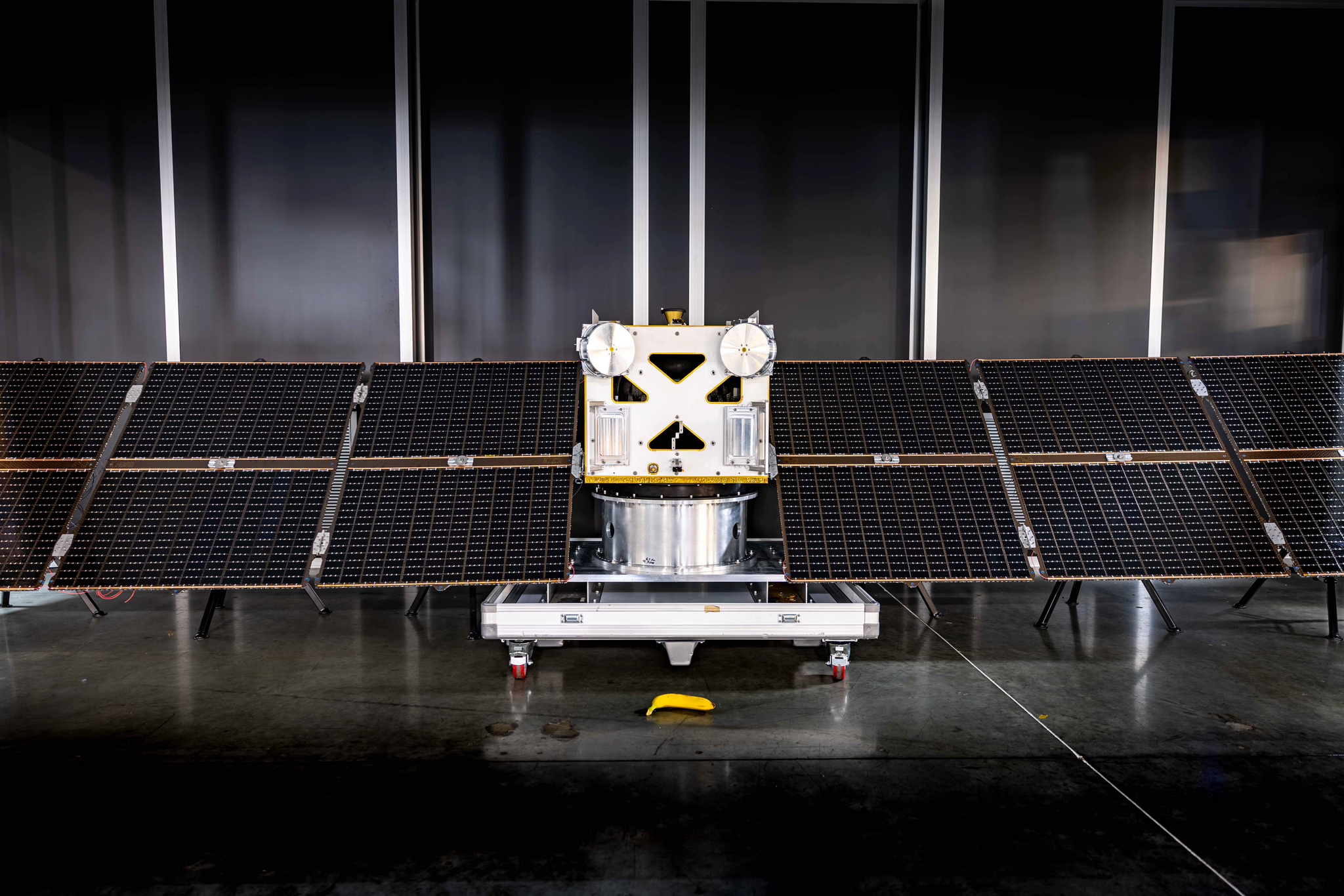
AstroForge is putting AI in command of its next spacecraft
Fly to an asteroid, land on it, make no mistakes: If only it were that easy. When NASA sends spacecraft to explore the solar system, they build in redundancy and automation. But much of the work is done by teams of flight controllers communicating with the vehicle from Earth. The OSIRIS-REx mission, which rendezvoused with an asteroid in 2018, had 100 operators on each eight-hour shift. But resources like that aren’t available to startups, soAstroForge, which is developing technology to mine asteroids, is turning to AI. The company has developed an autonomous control stack for its spacecraft called “Solo,” a transformer-based model made in-house. AstroForge plans to fly its first autonomous spacecraft in 2027 on the first rocket launched by Stoke Space. That mission will be backed by NASA and is expected to gather scientific data about the sun. That would be an accomplishment: Most spacecraft autonomy depends on traditional control algorithms due to concerns about the unreliability of neural networks. The first use of a neural network to control a satellite’s positioning in orbit took placejust last year. AstroForge, founded in 2022 and backed with $56 million in venture funding, has launched two prototype spacecraft, both of which suffered anomalies that prevented them from achieving most of their mission objectives. In 2025, its Odin spacecraft was launched into deep space, but the company had difficulty communicating with it. There are a limited number of antennas on Earth big enough to transmit to spacecraft hundreds of thousands of miles away, and the windows of time in which to do it are small. Ultimately, AstroForge couldn’t gain control of Odin, but the experience spurred it to consider alternatives: Could it put sufficient intelligence onboard the spacecraft for it to solve its own problems? “Would that have been recoverable with all the data on the spacecraft? I don’t know, but I can tell you nothing onboard tried it, and I would love something onboard to try if the spacecraft is unrecoverable at launch,” Matthew Gialich, AstroForge’s co-founder and CEO, said. “The trade for me is: Do I go build my own ground network, which is going to cost [around] $200 million to put up five dishes around the world and then do operations on it, or do I try to remove it with a model?” Armand Awad, AstroForge’s head of flight software, said the company decided to leverage the advances in transformer models driven by the frontier labs. It created a stack that includes traditional control algorithms, models trained on test data for specific subsystems like power generation or navigation, and an overall intelligence layer trained on about 2,500 sensors in the spacecraft. “I’m not saying I’m going to make general spacecraft autonomy or general autonomy for the world,” Gialich said. “I’m making a constrained autonomy at a very low sensor input, following the basic training of a transformer model.” In theory, the agent in control of the spacecraft will perform tasks like anomaly resolution. Awad imagines it realizing that it has lost track of its position in space, correlating a power anomaly to issues in its star tracker, and fixing the whole thing — “probably turning it on and off in this case.” The company’s third vehicle, DeepSpace-2, is currently set to launch alongside Intuitive Machines’ third moon mission, expected to head for space by the end of 2026. Solo will be onboard that vehicle, flying in “shadow mode,” so AstroForge’s engineers can put it through its paces before the Autonomy-1 mission. Will this truly be an AI agent operating an independent spacecraft?“I don’t plan on flying radios that can receive from Earth on Autonomy-1,” Gialich said. “We have to go all in right now. The team’s probably going to talk me into it by the time we fly it. But right now, I’m telling them no radios.”
View