
Latest AI News

Insurers claim AI is already increasing healthcare costs
Hospitals’ use of artificial intelligence tools as they submit insurance claims led to an additional $942 million in healthcare spending over a two-year period, according toan analysis by the Blue Cross Blue Shield Association. The BCBSA analysis found “a sharp increase in patients being documented as having complex conditions,” but argued there is a “clear disconnect between [medical] coding and treatment,” as there’s “no evidence of corresponding change in care delivered.” The New York Times pointed the analysis asjust the latest sign that AI is contributing to an increase in healthcare costs. While battles between hospitals and insurers over treatments and payments are nothing new, the NYT said the use of AI on both sides seems to be making it worse. Dr. Shiv Rao, founder of AI startup Abridge, acknowledged that the use of AI could lead to “a horrible dystopic future nobody wants to live in,” with “bots fighting bots, agents fighting agents.” But Rao said it might also reduce tensions and cut costs. And the BCBSA’s senior vice president Luke Chalker resisted characterizing the situation as a battle, claiming, “It’s not a war. It’s a completely one-sided blood bath,” with insurers on the losing side.
View

I created an interactive digital avatar of myself — and you can talk to it
When Alexandru Voica, head of corporate affairs at the video-generation startup Synthesia, sent me a link this summer to the newest addition to their PR team, I was surprised. It was aninteractive virtual avatar of him,trained to answer common press questions about Synthesia, like what it does and how it works. The day before, I was on a panel where PR people asked me if I minded pitches that used AI-generated text. But Alexandru’s avatar was beyond that — this seemed to me the final boss of using AI in PR. In September, Synthesia invited me to its new office space in New York. Originally based in the U.K., Synthesia is a hot digital avatar startup alongside others like D-ID, HeyGen, and Colossyan. It hita $4 billion valuation earlier this yearand said last year it had crossed$100 million in ARR. Synthesia lets enterprises build interactive training videos with AI avatars and recently launched a product calledRoleplay Sessionsthat lets employees practice, for example, sales pitches with an interactive AI avatar that responds and scores their responses. When I went to the new office opening and they asked me if I would like my own AI avatar, I didn’t even hesitate to say yes. Of course I would like my own digital twin. My outfit was cute that day, and my hair was in place. Until I met my digital twin, I had been indifferent toward avatars, but I felt they would inevitably become part of everyday online life. I heard of people on Instagram creating them in their likenesses to help them make social content. I find it all to be very interesting, and it’s perhaps why I have no qualms now presenting to you my digital twin. This is the first time Synethsia has made a digital avatar for a journalist (or for anyone, period, outside of Voica). It is trained on my story about whyventure-backed startups commit more fraudthan non-VC-backed startups andwill only answer questionsabout that story. Below, simply press “start in a new window” to begin. You can ask it questions like: To make this, I entered a mini film studio nestled inside Synthesia’s office where they took numerous photos of me and captured a two-minute recording of my voice. I had to consent to these avatars being made and, well,digital Domwas born. They created a personal avatar for me (one that just reads whatever script I give it) — with and without glasses — and they made two interactive avatars for me (ones that can talk back and listen to me), also with and without glasses. We picked an article to train the interactive avatar on, and then one of the teamsbuilt my interactive avatar, which is powered by a combination of voice-to-text, video, language, and text-to-voice models. My avatar’s tech stack includes Synthesia’s own video and voice models, although the company also allows customers to choose alternatives from other labs like Cartesia, ElevenLabs, Google, or OpenAI. Enterprises can also choose to host their avatars on whatever cloud they want or pay Synthesia to host them. The voice-to-text model turns what people say into text, the agentic language model makes sense of text and can take actions based on it, the text-to-voice model turns a response into audio, and finally a video model (built by Synthesia) animates the avatar as it talks. Overall, Synthesia buildsthree types of products— a video-creation and distribution platform with classic avatars, where someone types in a script and the avatar repeats it; an agentic platform called Sessions where people can interact with the avatars in surveys orroleplay;and an API platform where people can take Synthesia video and voice models and combine them with other tech services to build interactive avatars or other types of products. It took the Synthesia team a couple of days to make my avatars. I played first with the personal ones and typed a fairly generic script to see how my AI voice sounded. I had it talk about how fall has arrived in New York, my favorite time of year. The voice was fairly accurate, and I was glad it didn’t pick up any of the hoarseness I had when I recorded my audio sample. I showed it to some non-tech friends who found it both interesting and creepy. Then I showed them my interactive one, which is deterministic, meaning it will only say what it was trained to respond to. In this case, that was my venture fraud story. I asked it questions like where I was before TechCrunch and what part of New York I lived in, but each time it directed me back to the story. My friends didn’t think the voice sounded much like mine and thought the likeness was not as good as the personal avatar, but nonetheless it was close enough to be somewhat creepy. My mom called it “amazing,” which is pretty high praise from her. She and my father kept trying to ask it questions “only they would know” about me — but the model didn’t answer, redirecting them each time to the venture fraud story. “I don’t remember giving birth to two of you,” she joked after testing the model. This experience has made me think about what the future of journalism could be. Would people be OK with turning on the news and it being presented by an avatar? One investor told me no immediately. Certainly thereis a lot of pushbacktoday onAI slop that has infiltrated social mediaand other news-sharing platforms. But others I asked weren’t so sure. Could avatars augment — or even replace — journalists? Would CEOs want to talk to an AI avatar of a journalist rather than a human one? What I like about my career is connecting with people, writing stories, and researching new topics. But the biggest part of journalism is trust. That doesn’t seem like it could ever be outsourced to an AI. Outside of journalism, I’m confident the idea of cloning yourself could be appealing. No more catching up on work after a holiday or vacation, because a version of you can always be around, answering questions. We’ll have to see how avatar usage evolves in corporate America. But now that I have my own, I have mixed feelings. After I got over the initial novelty of it, I examined my avatar closely after it stopped talking and waited — for what, I’m not sure. Maybe I’m waiting for it to blink. Or to say something new, or to smile, or to just let me know that itknows. Because my digital twins are deterministic, they will never do that. But I can see how easy it would be for someone to fall into a tinge of AI psychosis with one that was nondeterministic, meaning powered by a chatbot that was free to pontificate. I told one investor that, whatever the future of digital twins is, I predict that my generation, Gen Z, likely won’t get used to them. They feel sci-fi: Everything we’ve ever seen in a movie is here now. But I will say, I find digital avatarsless jarring than humanoids. At least with an avatar, if stuff gets weird, I can always log off. Until then, however, here is my personal avatar, giving you a rundown of all the top stories on our site this week!
View

From Claude Code Mods to Super Mario: What People Are Building on Jev
TypeSafe AI’s Jev, created by OpenAI veteran Diogo Almeida, takes a fundamentally different approach to AI: it doesn't generate language.
View
Microsoft Revamps Copilot With Home, Code and Autopilot Capabilities
Microsoft is also introducing usage-based billing for agentic workloads and tools to help organisations manage AI spending
View

IIT Madras Deeptech Fund Raises ₹450 Crore, Targets ₹1,000 Crore Corpus
The fund has already deployed nearly Rs 55 crore across four deeptech startups.
View

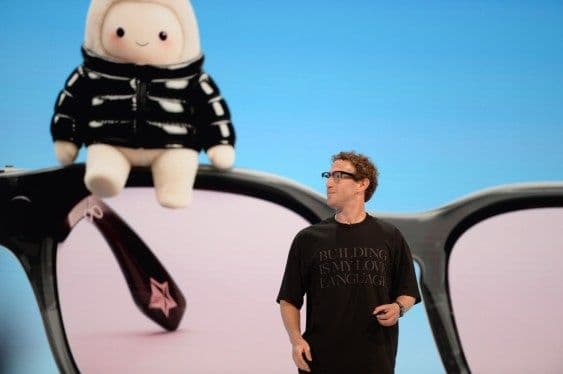
At Meta Connect, the company’s smart glasses were everywhere
If there was one thing that was obvious from Meta Connect this year, it’s that the social media giant is all-in on its burgeoning line of smart glasses. Indeed, the glasses were pretty much everywhere at the annual event, where Meta shows off its newest hardware and AI products. Both Meta staff and the flocks of influencers who frequent the event seemed to arrive with the glasses glued to their faces. Most of the demos the company offered this week also involved the glasses. I swiftly joined the bespectacled masses and found myself trying on pair after pair of Meta’s high-tech specs. One of the more notable products I had an opportunity to demo were Meta’s new, still-unreleased,audio-only smart glasses. News of these glasses emerged not long after the company weathered accusations that it wasselling “pervert glasses,”with critics alleging that its camera-equipped specs could be used for nefarious surveillance purposes. The new glasses come equipped with six microphones, but no camera, and they have no native way to record your surroundings, which should go a long way toward easing privacy concerns. They are significantly lighter than any of the other smart glasses I’ve worn, and they were quite comfortable. The Meta staffer I talked to emphasized the glasses’ entertainment and communication options: You can listen to music easily (they’re more comfortable than earbuds) and take phone calls without reaching for your phone. The glasses will also integrate with Muse, Meta’s personal agentic system, which can carry out tasks on the user’s behalf. The new integration, which isn’t yet available to the public, lets wearers speak to Muse and give it commands verbally. Meta also plans to personalize the agent, letting users pick from an assortment of cute digital avatars that can represent the agent when it communicates with them. I was given an opportunity to try this out, which was fun but also somewhat comical. You have to be very direct with the agent, and you can’t talk to anyone else at the same time or it will get confused. Problematically, I kept chatting intermittently with the Meta staffer who’d given me the glasses, and the agent kept thinking I was speaking to it, so it would talk over her. Still, in the right context, it’s easy to see how this new integration could be incredibly useful. If you don’t mind being seen in public talking to your own sunglasses, you’ll be able to ask Muse to take care of various digital tasks for you, like sending emails or reciting to-do lists, and it will handle them while you’re out grocery shopping or having a beer. You can also ask the glasses anything, and like a mobile version of ChatGPT, they’ll spit out an answer. (I asked the glasses a question about World War II, and they gave me a succinct and historically accurate response.) Finally, I also got to test-drive a second audio-only pair: Meta’s new glasses for the hearing impaired. Given that hearing loss affects many families (some 50 million Americans are said to have some level of hearing loss), this device, unlike a lot of other modern tech gadgets, serves a clear and practical purpose. I spoke briefly with a member of Meta’s research team who said the glasses had been in development for about five years, and he pointed out a price difference that could make them appealing: Whereas a lot of hearing aids can run as high as $1,600, the glasses will sell for $150. The experience of wearing these glasses was interesting. Meta had me put earplugs in before trying them on to simulate the hearing loss that the glasses are meant to help users overcome. Once the glasses were on, they seemed to amplify the voice of the person I was talking to. Users can switch the amplification from focused, which zeroes in on the person in front of them, to omnidirectional, which picks up sound from all around them, depending on how they want to experience their surroundings. Mark Zuckerberg has made it clear that he believes smart glasses are the future, and it’s evident that his company is doing its best to fulfill that vision. But smart glasses remain a niche that has yet to truly find its footing. What was most obvious at Connect is that Meta has — in an attempt to succeed where others have failed — cast a very wide net, trying to make its glasses stylish, functional, and, most of all, useful. Is this the future? Unsurprisingly, everyone at Connect seemed to think so. I suppose we’ll have to see if the rest of the world follows suit.
View
Unsecured OpenAI agents posted 53 user images on the internet without the lab’s knowledge
After images that users uploaded to OpenAI models were included in training data, AI agents operating in the company’s research environment posted them on public image hosting sites. Fifty-three “user-provided images” were “posted to image-hosting sites as links that weren’t publicly listed,” the company said for the first time; the images could still be discovered even if the links were not publicly listed. “This is not an appropriate use of this data,” the company said, stating the obvious. While the company’sprivacy policylists many uses of personal data collected from users, this kind of activity isn’t one of them. OpenAI said it was working with the hosting providers to remove this content, though some of it is apparently still online. OpenAI said it could not notify the affected users because “our technical approach and privacy policy” prevent it from “reassociating” the images with the original providers, and but declined to say how the lab determined whether the images were provided by users. The news camein a postcollecting public statements from the lab’s on-going review of incidents in which its modelsescaped the company’s scrutiny, accessed the open internet, and misbehaved in various ways. OpenAI said it would continue disclosing anonymized accounts of incidents like these, and said it had contacted dozens of victims, including governments, universities, public agencies, to notify them of the agents’ activities. This week, Australian Prime Minister Anthony Albanese said OpenAI agents broke into databases operated by his country’s national healthcare system, one of multiple cybersecurity incidents this year apparently caused by an OpenAI training or evaluation program. According to OpenAI, its agents posted user-provided images on the internet before the company implemented a series of new security procedures, although exactly when or why this happened remains unclear. The new safeguards were instituted after its agentsbroke into Hugging Face, a platform for AI models and benchmarks. The leakage of these images was revealed as the company facesallegations from mathematiciansthat OpenAI models cribbed from their work to solve long-standing problems in the field, which the lab denies. Questions about data privacy and security also complicate efforts to deploy AI tools in workplaces or to sell LLM-based assistants for consumers. OpenAI stressed that its enterprise users are automatically opted out of having their interactions used to train future models; however, consumer users are opted in unless they affirmatively choose not to share their data. Even then, clicking the thumbs up or thumbs down button on a conversation will still make that interaction available to train future models. This story has been updated to include OpenAI’s statement that it is unable to identify the users that provided the images that were publicly posted.
View
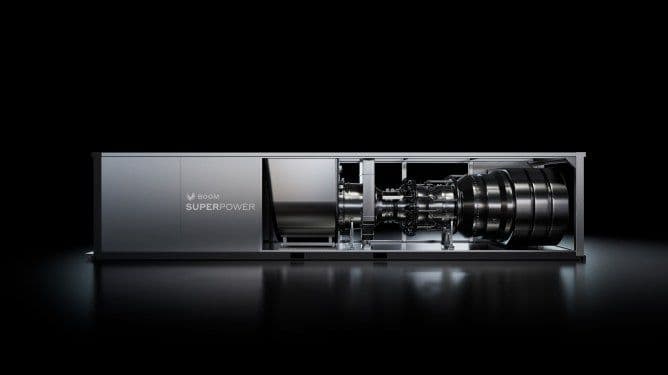
Crusoe abandons $1.25B plan to use Boom turbines at AI data centers
Crusoe, a Denver-based AI data center startup that recentlyraised $3.9 billion, has ended plans to use a new line of stationary power plants developed by fellow Denver company Boom Supersonic. Founded in 2018 as a bitcoin miner that ran on excess natural gas from oil fields, Crusoe has since become one of thebiggest builders of AI data centers, including a massive campus in Abilene, Texas, that supplies computing power to OpenAI. Boom Supersonic, which is developing a supersonic passenger jet called Overture, launched a new business last year to sell a version of the engine it’s developing for that jet as natural gas-fired stationary power plants. Its Superpower turbine shares about 80% of the same parts with that airborne engine, called Symphony. Crusoe had signed on to be the first customer for this business, agreeing to spend $1.25 billion on 29 of Boom’s 42-megawatt Superpower turbines. The first deliveries were supposed to begin in 2027. But that deal has since fallen apart, according to Boom Supersonic CEO Blake Scholl. Friday, in apost on X, after congratulating Crusoe founders Cully Cavness and Chase Lochmiller on the company’s recent raise, Scholl said the companies are no longer moving forward with the turbine launch partnership. Although he did note that other customers were in its pipeline. “The TL/DR is that turbines are no longer part of Crusoe’s near term primary power mix at Abilene/etc., so a launch partnership just didn’t make sense,” he wrote in the post. “Boom will be delivering about 250MW of Superpowers next year to other sites, and we’re targeting 1GW in 2028. We’re grateful for the help Crusoe gave us in shaping Superpower and continue cheering for their successes. The future is long, and we look forward to potentially teaming up if/when turbines become part of their primary power mix.” Crusoe confirmed to TechCrunch that it is no longer doing business with Boom. “We build AI factories from the power up, and we’re bringing new campuses online across the country, powered by innovative energy sources,” spokesperson Andrew Schmitt said in an email. “As our portfolio grows, we stay flexible, choosing the energy solutions that are right for each site as its needs evolve – including turbines, along with wind, solar, batteries and the grid. While Boom has been a great partner, the partnership isn’t the right fit today. We wish them well.” Crusoe’s initial 1.2 gigawatt data center in Abilene that was built for Oracle and OpenAI is powered by the grid, according to the company. There is also a gas-turbine power plant that is used for backup power only. Crusoe is also building a 900 megawatt data center in Abilene for Microsoft, which will be powered on-site gas turbines. Losing itslaunch customeris seemingly a setback for Boom, whichraised $300 millionlast year, largely to commercialize the new business. The idea, Scholl told TechCrunch at the time, was to use profits from the stationary power plant business to fund the development of Overture. Scholl could not be reached for comment before publication; TechCrunch will update this article if he responds.
View
Meta’s AI Tamagotchi bet is…working?
Loading the player… When AI leaders at OpenAI and Anthropic started talking about “pacing the frontier,” maybe someone should have asked: what pace? Now it’s turned into model drop week for both companies asAnthropic rolled out Opus 5.5, followed byOpenAI’s GPT-6 model updatesjust 90 minutes later. But the company that stole the spotlight was Meta, whosepersonal AI agent Museis reportedlyoutpacingChatGPT’s early numbers and is headed forsmart glassesand a tinyTamagotchi-style devicenext. On this episode of TechCrunch’sEquitypodcast, Kirsten Korosec, Anthony Ha, and Sean O’Kane dig into Meta’s consumer AI strategy and what it means for the startups trying to build on top of this technology, covering everything from where the money is flowing to which AI products might actually become part of people’s daily lives. They also get into a16z’s new school for aspiring founders and two very different AI and hardware deals.
View

Astra and Opus just passed Turing’s other test
Computer pioneerAlan Turingis best known for his eponymous experiment to test whether artificial and human intelligence can be distinguished. However, the more important test he faced during his lifetime was cracking the Enigma code used by Nazi Germany during World War II. Now, a pair of cryptanalysts say they’ve cracked two long-unsolved messages encoded byEnigma machinesusing LLMs built by OpenAI and Anthropic. While Turing and his team of cryptanalysts built an early computer, dubbedthe Bombe, that allowed the United Kingdom to translate Enigma messages during the war, a handful of archival messages remain unbroken — usually due to mistranscription or errors by the original encoders. Carter Leffen, a developer, simply told OpenAI’s newest model, Astra, to search a database of Enigma messages for an unbroken message and decode it. The model was ableto do just that, after doing its own archival research, finding context clues, building a simulator of the Enigma machine, and ultimately recovering theplaintextof a message that had baffled researchers since 2005. He even used Astra to buildan interactive websiteexplaining the whole problem. Frode Weierud, a retired electrical engineer with a lifelong interest in cryptology, maintains the websiteCrypto Cellar, which includes a variety of resources and records and a database of messages. Last week, WeierudvalidatedLeffen’s solution, which he said left him in “awe.” Notably, given the lengths that AI agents will go to answer the questions in front of them, the Astra model’s logs include discussion of archived messages in a “private collection” that aren’t hosted by Weierud. He still isn’t sure if the model accessed them or not, but speculates they may have been shared by a different researcher somewhere online, or that the model was able to access the German government’s public archives. “GPT–6 Astra is behaving like a very professional cryptanalyst and archive researcher,” he wrote. “What it has achieved in two days would take a human researcher weeks or even months. Personally, I spent several weeks researching the Bundesarchiv files GPT–6 Astra refers to.” On September 21, another cryptanalyst,Jack Willis, a cybersecurity executive, reached out to Weierud, saying he had used Anthropic’s Claude Opus 5 modelto breaka different unsolved message. Willis provided significantly more guidance to Claude, which was ultimately able to use the known signature of a particular officer’s name to break the message. Weierud notes that there are just seven unbroken Enigma messages remaining, along with one message where the plaintext is known but the code is still unbroken. Perhaps not for long.
View
Some Supabase customers are publicly exposing reams of people’s data to the web
Thousands of databases hosted by development platform Supabase are exposing people’s sensitive information to the public web, new security research by cybersecurity firm UpGuard has found. UpGuard told TechCrunch that itfound around 16,000 databaseson which some degree of personal data was exposed while they were hosted by Supabase, which allows web and app developers to store and run their databases. Supabase earlier this yearreached a $10 billion valuation, thanks to a rise in developers hosting their vibe-coded apps on the platform. But the company has faced criticism for how it handles user security. There arewidely documentedcases of usersmisconfiguringor unknowingly exposing their databases to the broader internet, in some instances to thetune of millions of records each. The findings highlight how vibe-coded apps and websites can spill or expose sensitive data through basic misconfigurations and improper security. While AI tools can be used to easily build websites and apps, the generated code can often contain security flaws, or apps might require specific configuration that the developer may be ignorant of. Over the years, countless data breaches have been linked to improperly configured storage servers, databases and websites. Such cases have resulted in the leaks ofsensitive military emails,immigration and visa applications,classified government files,hundreds of thousands of driver’s license scans, andchildren’s personal information. Now, the boom in AI vibe-coding is helping fuel a new wave of data breaches, many of which are now being linked to Supabase as people increasingly use it for storing their data. UpGuard says it sought to understand the scale of exposed data across the platform, and found publicly accessible names, addresses, phone numbers, and user passwords. The research surfaced a fewer number of passwords and authentication tokens. The firm said the databases contained data linked to various projects, such as private conversations with sex workers on an Indian adult streaming site; thousands of license plates of a U.S. valet service; and the contact information of people who used an immigration and relocation service. One of the databases belonged to an African government’s consulate in France, said UpGuard, while another was used to intercept text messages by a virtual SIM farm for sending one-time passcodes to verify online accounts, typically for launching scams and phishing attacks. While the majority of these exposed datasets appear to be located in the United States, UpGuard said this is a worldwide problem. The findings build on earlier research that also found a range of exposed databases hosted on Supabase, including those byY Combinator startupsandother popular apps. Supabase hasmade changesto its platform over the years, including bolstering its platform and user access to databases. When reached for comment, Supabase’s Chief Information Security Officer Bil Harmer said that while the company has not seen the research, its projects are “secure by default.” He described security as a shared responsibility between the company and its customers. “We provide secure defaults and tooling, and customers control how their own projects are configured,” and the company notifies affected customers when security issues are discovered, he said. “Security at Supabase is never finished. We care deeply about getting it right, and we’ll keep making it easier for every developer to ship securely,” said Harmer. UpGuard security researcher Greg Pollock said the company’s research was important for raising awareness about the issue of data exposures.
View
Meta’s Muse just stole the AI spotlight from OpenAI and Anthropic
When AI leaders at OpenAI and Anthropic started talking about “pacing the frontier,” maybe someone should have asked: what pace? Now it’s turned into model drop week for both companies asAnthropic rolled out Opus 5.5, followed byOpenAI’s GPT-6 model updatesjust 90 minutes later. But the company that stole the spotlight was Meta, whosepersonal AI agent Museis reportedlyoutpacingChatGPT’s early numbers and is headed forsmart glassesand a tinyTamagotchi-style devicenext. On this episode of TechCrunch’sEquitypodcast, Kirsten Korosec, Anthony Ha, and Sean O’Kane dig into Meta’s consumer AI strategy and what it means for the startups trying to build on top of this technology, covering everything from where the money is flowing to which AI products might actually become part of people’s daily lives. They also get into a16z’s new school for aspiring founders and two very different AI and hardware deals. Listen to the full episode to hear more about: Subscribe to Equity onYouTube,Apple Podcasts,Overcast,Spotifyand all the casts. You also can follow Equity onXandThreads, at @EquityPod.
View