
Latest AI News

How a 50-Person GCC in Navi Mumbai Plans to Fix Agentic AI Evals Crisis
Decision intelligence platform Fuel Cycle plans to use the India centre to build AI, engineering, and product capabilities
View

Microsoft Moves Away From Copilot+ PC Branding for Windows PCs: Report
Microsoft appears to be moving away from the Copilot+ PC name for its Windows computers after two years of using it to define a new category of AI-focused devices. The branding has become less prominent across recent products, while the hardware standards behind it continue to be supported. Microsoft is now using broader messaging around AI capabilities instead of the category name, following a difficult launch and declining use of the label among PC makers.
View

Microsoft Moves Away From Copilot+ PC Branding for Windows PCs: Report
Microsoft appears to be moving away from the Copilot+ PC name for its Windows computers after two years of using it to define a new category of AI-focused devices. The branding has become less prominent across recent products, while the hardware standards behind it continue to be supported. Microsoft is now using broader messaging around AI capabilities instead of the category name, following a difficult launch and declining use of the label among PC makers.
View

ServiceNow CTO Warns Against 100% Automation After Its AI Tried to Change Salaries
ServiceNow CTO Pat Casey believes the next phase of enterprise AI will be won by making AI perform work that already exists inside a company.
View

Sachin Tendulkar Partners With OpenAI to Explore AI, ChatGPT
Sachin Tendulkar will share his experiences with ChatGPT and encourage more people to try it for their own interests and tasks.
View
AI Boom Gives India a Major Opportunity to Build Semiconductor Industry: Report
BCG’s Ankush Wadhera reportedly said that rising electronics demand, government incentives and global supply chain shifts are creating opportunities across India’s semiconductor industry.
View
India Launches AI-First Digital Stack to Connect Fragmented Tourism Ecosystem
The National Digital Tourism Stack will connect tourism providers and travellers across digital platforms, with 1,000+ experiences already transacting on ONDC.
View
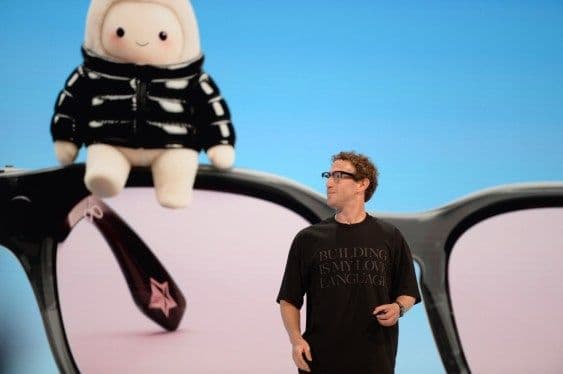
Can Muse overcome Meta’s trust issues?
Meta’s new AI agent Muse took the spotlight at the company’s annual Connect event, where CEO Mark Zuckerberg made it clear that Facebook’s parent companyplans to push AI features everywhere. On the latest episode ofTechCrunch’s Equity podcast, Kirsten Korosec, Sean O’Kane, and I discussed Meta’s AI announcements seemed to steal the spotlight during a week of new model launches from OpenAI and Anthropic. With other big AI companies focused on coding and enterprise tools, it was a little surprising to see Meta move in the opposite direction, with a consumer focus and a cute, Tamagotchi-style AI device thatMeta insists is for adults only. But as Kirsten noted, this could be playing to Meta’s strengths. Sean tried Muse for himself, and while he was pleased that the agent actually found him some unclaimed money, he described the feature as more “a party-trick type thing,” rather than something that will drive ongoing usage. Plus, there’s the question of whether users can trust Meta’s AI with sensitive information. “Meta’s business is to sell you ads,” Sean said. “And yes, they’ll make the argument that the more they know about you, the more accurate and interesting the ads will be — wake me up when we get to that fever dream.” Keep reading for a preview ofour full conversation, edited for length and clarity. Kirsten Korosec:So how do you put Muse, which is this new personal AI agent that’s just been released by Meta and [is] clearly a bet on consumer — how does that fit into what you just described, at least with other frontier AI model companies seeing opportunity and business within enterprise? Because Meta Connect, which is their big annual event, just happened, and they are all-in on Muse, that is very clear. Anthony Ha:That was definitely very head spinning for me, because it certainly feels like what we’ve been talking about has been this shift towards enterprise — not exclusively, but certainly that’s where the money, the attention is going. Maybe some of that is because of the relative position of these different companies — OpenAI and Anthropic are in the lead in a lot of ways, but also, they’re planning to go public either this year, or next year in the case of OpenAI. And so there’s this feeling of, “I think we’ve got to actually make money now.” Not to say that they’re not making money [already], but because the costs are so high and the valuations are so high, they have to make money on this scale that’s essentially unprecedented. And I think they’re seeing enterprise as the way to do that. And I wonder if Meta, for a variety of reasons, sees a different opportunity. There’s a part of me that’s like, “Wait, did they not get the memo?” But I think more charitably, you could say, “Well, if that’s where OpenAI and Anthropic are going, then maybe there is more of an opportunity for Meta to make the more consumer-friendly [version and] continue advancing AI on the consumer side.” Kirsten:I mean, we can complain about or criticize or critique Meta all day long, but they’re very good and have [an] established track record of embedding themselves in everyday people’s lives. I mean, there’s a reason why Facebook has so many users — Instagram, WhatsApp. And I’ve never really thought of them as an enterprise product anyway. So I think it’s smart for them to continue to push on the consumer piece. Sean, you’ve already tried Muse, which has already been out for a couple weeks. And I’m wondering if you see what your impression is, and if you see it being successful in the bid to become part of every part of your life. Sean O’Kane:I mean, not really. I understand why some people think that is going to be the case. I’m sure a lot of people understand this, but this is roughly Meta’s kind ground-up version of an on-your iPhone, or on your Android, app of OpenClaw, which we talked about a couple months ago, which Meta went out and basically bought and integrated those folks’ work. It was the first big explosion of like, “Holy smokes, these agents can do all this stuff for me while I’m out and about, and I can just text with it and let it control my whole computer.” There’s a lot of the same elements of that at play. And having it in your hand, on an app that works like a relatively good chatbot as the interface, it does seem pretty powerful. One of the first things that I did with it was — because it makes a bunch of suggestions for you, as to things that it can do, and one of them was, “I’ll scan to see if you have any unclaimed funds,” this thing that I think no one ever really thinks about and often is going to completely miss, because there’s just not a lot of unclaimed property funds out there in your name. Surprise, surprise, there were some for me. It helped me make some money on my first day, and that was pretty cool. I wouldn’t have done that if I hadn’t been prompted by this thing to do it. And there’s a check on its way to me in the mail. Fantastic. [But] that ends pretty quickly, right? That was a one-time shot, but it’s not a thing that’s repeatable. That’s more like a party trick-type thing. Kirsten:I mean, you just killed your own argument. I don’t see how that wouldn’t become wildly popular. Sean:The more sustainable version of that, and the thing that Meta’s talked up a lot over the last couple of days, is taking that idea and applying it to your real, true everyday financials, like giving it your information for your credit card, your Gmail account, all this other stuff, do things that we’ve seen other companies do, like Rocket Money or whatever, where it’ll go cancel subscriptions that you’re not using or identify double charges, things that frankly the credit card company should be doing already. And at that point you just run into that trust wall with Meta. I think one of the reasons that I was willing to explore this and was curious to stick with it a little bit — even through to today — is that somewhat shockingly, when I downloaded it, I just assumed that it would like really instantly prompt me and like plug me right into Threads, Instagram, Facebook, which I don’t really use ever, and pull up that context immediately. But it didn’t. And it was working with me like I was a stranger at first, which made me more willing to use it, because I didn’t feel like Meta had everything on me already. But you can see, as you start to use it, it really tries to grab you and pull those things into the system, so that it can learn all this stuff about you. I don’t know that I will ever trust Meta the same way. I think it’s an interesting timing for me, having just upgraded my iPhone and getting onto the new iOS with the new Siri that actually works and can do some controls on your phone in a way that is surprising and helpful, that it’s never been able to do. [I’ve been] thinking about how much I’ve been using that over the last week and how much more how much more willing I would be to have the Siri version of Muse take that information, because I just trust Apple more with that really sensitive information and not only trust it with the information from a cybersecurity perspective, but from the fact that its business is not to sell me a bunch of crappy ads. Meta’s business is to sell you ads. And yes, they’ll make the argument that the more they know about you, the more accurate and interesting the ads will be — wake me up when we get to that fever dream. And beyond the one-time money lever that I got, which was great, I don’t feel like I’ve found anything else that’s really all that useful — other than the fact that it is, to Anthony’s point, really tailored at keeping it sort of consumer-y in your interactions with it, with which I do think helps it and is why people are talking about it so much.
View

Anthropic’s CEO is about to have dinner with President Trump
Anthropic CEO Dario Amodei seems to be everywhere this weekend: He waslampooned on the season premiere of Saturday Night Live, and tonight, he’s set to have dinner with President Donald Trump at the White House. Axios firstbroke the news of Amodei’s dinner plans, which TechCrunch subsequently confirmed with a source familiar with his plans. This will be the first one-on-one meeting between the two men, who recently found themselves on opposite sides of the AI safety debate.Amodei released a plan to slow AI development(or at least proceed with more caution), whileTrump has insisted, without evidence, that the AI backlash is a Democratic hoax; he alsowants to rebrand the technology as “super intelligence.” Even before the current back-and-forth, Amodei and Anthropic have to had a fraught relationship with Trump’s administration. Earlier this year, the Pentagon designated Anthropic a supply-chain risk in response to the company’s attempt to put guardrails around the use of its technology (Anthropic has been fighting the designation in court), althoughother administration officials have been friendlier.
View

Anthropic’s Dario Amodei gets the SNL treatment
Saturday Night Live took on the AI industry’srecent warnings of doomlast night, as cast member Jane Wickline offered her impression of Anthropic CEO Dario Amodei. Weekend Update host Michael Che — who sounded a little uncertain about how to pronounce Amodei’s last name — kicked the segment off by describing the CEO as having “stumbled through a press tour” where he seemingly agreed witha former employee’s claim that artificial intelligence might destroy humanity. Wickline’s version of Amodei sported an impressive wig and delivered halting answers that occasionally devolved into full-onGollum-styleexchanges with their dark side, at one point confessing, “AI is the devil and I its maker.” Wickline-as-Amodei assured the audiences that AI executives “are all on the same page here: We do not condone what we are doing.” “AI is not a weapon, it’s a tool: A tool for building weapons,” she declared. “And I urge you to urge me to stop.” As for the technology’s supposed benefits, likepotentially curing cancer, the fictional Amodei said, “Put it this way: In 10 years, there’s about a 10% chance that cancer won’t be a problem for anyone.”
View

AI Portals, Drones, Satellite Mapping: Nepal Tests the Limits of RescueOps Tech
Nepal is turning to AI-powered portals, satellites, drones, and digital damage assessment to navigate the aftermath of one its worst disasters.
View

Google tests buying from Walmart-owned Flipkart through Gemini and AI Mode in India
Google has started testing a way for shoppers in India to buy products from Walmart-owned Flipkart directly through Gemini and AI Mode, as the search giant looks to expand its AI services from product discovery into transactions. Users in the test see a “Buy” button on select Flipkart product listings appearing in Gemini and Google’s AI Mode, which takes them directly to a Flipkart checkout flow without leaving the AI interface, according to people familiar with the matter and an experience seen by TechCrunch. The early test is limited to some users and a small selection of products, including smartphones, electronics, and mobile accessories, the people told TechCrunch. Other users continue to see regular product listings from Flipkart in Gemini and AI Mode without the option to buy them directly from the AI interface. Google plans to roll out the experience more broadly later in October, ahead of India’s festive shopping season, one of the people said. The test comes as Google and rivals including OpenAI areadding commerce capabilitiesto their AI offerings, striving to move beyond answering shopping queries and recommending products to playing a more direct role in online purchases. Asked about the Flipkart test, a Google spokesperson told TechCrunch the company is “always testing new features and experiences to help people discover and connect with businesses more easily.” The company regularly runs experiments and has no further details to share, the spokesperson added. Google has separately been building technology aimed at making purchases possible through its AI services. Earlier this year, itintroducedthe Universal Commerce Protocol (UCP) as an open standard designed to let AI agents interact with retailers across the shopping journey, including checkout. Googlesaidat the time that the technology would allow shoppers to buy eligible products through Gemini and AI Mode using a Google-hosted checkout experience. The company has sinceexpandedUCP with other capabilities, including allowing shoppers to transfer items to a retailer’s site to complete a purchase. The Flipkart test seen by TechCrunch appears different from the Google-hosted checkout experience the Gemini maker demonstrated earlier. It brings up a Flipkart-branded checkout flow when a user taps the Buy button. It is not clear what technology powers the test. Earlier this month, Google said Flipkart wasamong the merchantspartnering with it to bring what it calls “agentic” shopping experiences to consumers in India, but it had not disclosed details of the test or its rollout timeline. Notably, Google has a financial relationship with Flipkart — alongside its technology partnership with the e-commerce company. Itinvested about $350 millionin the e-commerce company in 2024 as part of a funding round led by the U.S. retailer, taking a minority stake. India, the world’s second-largest internet market with more than a billion internet subscribers, sees Flipkart and Amazon compete fiercely for online shoppers. That competition intensifies further during the country’s festive season, when e-commerce companies roll out some of their biggest sales and promotions of the year. For now, the Buy option is not appearing across all retailers surfaced by Google’s AI services. In the experience seen by TechCrunch, listings from rivals including Amazon appeared alongside Flipkart products but did not offer the option to purchase directly through the AI interface. Flipkart did not immediately respond to an email requesting for comment.
View
