
Latest AI News
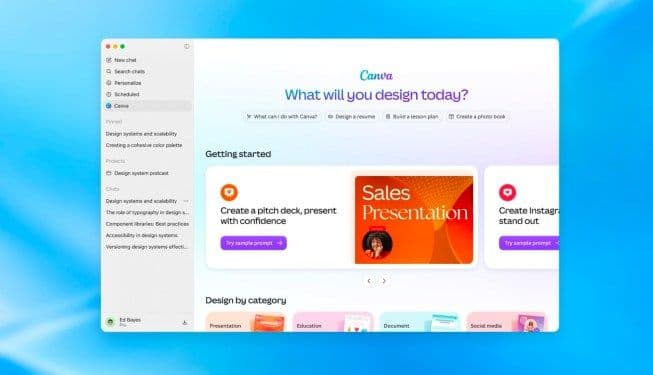
OpenAI expands ChatGPT’s plugins with app-like interfaces and automations
OpenAI isn’t only coming after productivity software with ChatGPT’s new Pages, Slides and Space features — the AI lab is now targeting any application that could work better when integrated with ChatGPT. At the company’s Dev Day presentation on Tuesday, the AI company said it is now allowing developers to build their own app-like experiences within ChatGPT using plugin extensions. OpenAI already supportsplugins, which connect ChatGPT to everyday tools like Slack, SharePoint, Airtable and Google Drive, but the new plugin extensions will give apps a dedicated home in the ChatGPT sidebar. Plus, developers will be able to build interactive panels that let users work with their tools while they’re chatting with ChatGPT. This experience can also include file viewers that support whatever file formats the developer’s product uses, the company notes. In addition, OpenAI says it’s making it easier for developers to build plugins, and streamlining the discovery process for end users. Devs are getting a new Plugin Creator tool for building, and can submit them to the plugin directory via a redesigned flow that offers clearer feedback. Meanwhile, the company says it has improved how plugins are ranked and recommended within its directory, as well as when they’re surfaced in conversations. When users choose a plugin to work with, they can approve its access needs individually as well. In addition, ChatGPT Sites, the lightweight websites users can build with ChatGPT, can host these plugins, too. For example, this would let someone share their apps with colleagues, who can use it with their own connected data and permissions. OpenAI also said it’s adding support for the proposedMCP Events specification,which would allow plugins to start automations based on events in a connected app. The company is also making automations easier to add and manage.
View
OpenAI gives Codex reusable cloud environments that work across devices
OpenAI introduced new capabilities for its software engineering agent Codex, making it more useful beyond a developer’s laptop with reusable cloud development environments that can be accessed from any device. The update, announced at OpenAI’s Dev Day on Tuesday, is one of several for Codex. OpenAI also announced a refreshed Codex CLI, a new code review experience, tools to harden infrastructure, and other API enhancements. While Codex could already spin up cloud tasks to do work remotely, today’s announcement shows that OpenAI is making those cloud environments more persistent and configurable, rather than treating each cloud task as an isolated remote sandbox. As the company explains, developers will now be able to run Codex wherever they need it, whether that’s on a computer, remotely from a phone, or in the cloud. The reusable development environments are designed to help tasks start more quickly and give teams a shared workspace with approved settings and permissions, OpenAI said. Meanwhile, the Codex CLI is getting an update that allows developers to start and direct tasks using their voice. A new /agents view is meant to make it easier to delegate work and track multiple tasks at the same time. Other changes include improvements to everyday tasks such as editing prompts, resuming sessions, and using worktrees. OpenAI is also rolling out a “cleaner” terminal user interface designed to make longer sessions easier to read. Codex can also be pulled into a new code review experience within the ChatGPT desktop app, where users can read summaries, explore code changes, or ask Codex about potential issues before sharing feedback on GitHub pull requests or GitLab merge requests. Automatic code reviews also let Codex perform an initial review while users step away from their computers. On the security side, OpenAI is rolling out a new set of tools called Codex Security Cloud, designed to help developers secure their infrastructure. Developers can use the tools to scan entire GitHub repositories on demand or on a regular schedule, as well as whenever new commits arrive. Codex will then investigate findings, remove duplicates, and prepare fixes in the cloud — even when the user isn’t active and their laptop is closed. Notably, the toolset includes access to the models offered through OpenAI’s cybersecurity initiativeDaybreak Blue, without requiring developers to submit a separate application. OpenAI also announced several API updates, including a new Decisions API for real-time decision-making. The API uses Luna to answer a set of user-defined questions with predefined answers. The company also introduced an updated a version of the Agents API that now supports computer use and the ability to use Amazon’s Bedrock Managed Agents to build OpenAI agents that run entirely on AWS.
View
OpenAI launches GPT-6.1 Sol, says it nearly matches GPT-6 Astra and costs less
At OpenAI’s DevDay event on Tuesday, the company showed off GPT-6.1 Sol, a mere week after itlaunched GPT-6 Sol. OpenAI says the new model delivers nearly the same level of intelligence as GPT-6 Astra for agentic coding, computer use, and professional work, at one-fifth the standard input and output token prices. Notably, the company is not launching GPT-6.1 Astra, as was originally expected.The Wall Street Journalreported this week that OpenAI scrapped the release over safety concerns raised by researchers during internal testing after the model showed higher levels of deception and a tendency to move forward with tasks without asking the user for permission. OpenAI says GPT-6.1 Sol delivers significant improvements over its predecessor GPT-6 Sol across complex tasks, including programming and debugging, understanding documents, and executing multi-step workflows. The company claims that on several of these fronts, the model approaches GPT-6 Astra’s performance. OpenAI also says the new model improves factual accuracy when given difficult prompts. Its largest gain over GPT-6 Sol on this front appears at low reasoning effort, where the share of responses containing a factual error drops from 11.4% to 7.7%. Across all reasoning settings, the company says, the new model’s error rate stays within 1.9% of GPT-6 Astra. Additionally, the company says GPT-6.1 Sol is more upfront about its limitations and more reliable when it comes to honoring user intent and safety constraints. In challenging evaluations, it’s said to fail less often than GPT-6 Sol at flagging broken search tools, following explicit restrictions, and avoiding unauthorized outcomes during tasks. OpenAI claims it observed no attempts to circumvent the automated safety reviewer, consistent with GPT-6 Astra and GPT-6 Sol. GPT-6.1 Sol is available starting today to all Plus, Pro, Business, Enterprise, and Edu users in ChatGPT Work and Codex. OpenAI notes that the model is not yet available in Chat.
View

OpenAI launches Dots, its bubbly agentic avatar
At OpenAI’s Dev Day event on Tuesday, the company announced the launch of Dots, a new personal agentic assistant powered by GPT-6 Astra. The company describes Dots as “remarkably capable, always-on agents built to handle everything.” Unlike Codex or ChatGPT, Dots are meant to operate independent of any specific hardware or interface, pursuing user-defined goals continuously in the background with minimal oversight. “Today, you can start with your primary dot, give it a name, and make it your own,” OpenAI said in an announcement post. “Over time, we envision teams of Dots working together on your behalf.” Dots will be available starting Tuesday in ChatGPT, for Pro and Business Premium users in eligible markets. Users can launch Dots from Codex or ChatGPT. In its announcement, OpenAI envisions a variety of ways Dots could be put to work. In one scenario, a software developer deploys a dedicated dot to monitor customer feedback, implementing bug fixes and requested features as necessary. In another, a scientist employs a dot to rerun analysis and investigate unexpected result as experimental data becomes available. Users can message Dots through Slack, Teams and other organizational platforms, with text message support coming soon. OpenAI also envisions “specialist Dots” that take on specific responsibilities. Individual Dots can be provisioned with specific identities, credentials and tools through existing systems. OpenAI is already working with Microsoft to integrate into the company’s Agent 365 security controls. Much of this functionality was already possible through Codex and similar agentic harnesses — but Dots bundles together those features in a new package with a focus on independent agentic actions. The branding also presents a bubbly, cartoonish persona, similar to Meta’s recently released Muse agent. The Dots look like…well, dots. The little floating cartoons are a makeover for OpenAI’s software, and are the latest example of a company attempting to make AI more relatable.
View

With Nagarro Acquisition, Persistent Has Scale. Now Comes the Hard Part
Persistent's Nagarro deal adds people, clients and European reach. The harder test is whether that scale can translate into higher-value AI and engineering work.
View

Anthorpic’s Claude Sonnet 5.5 AI Model Launched With Performance and Cost Efficiency Upgrades
Claude Sonnet 5.5 has been launched as the successor to the Sonnet 5 AI model, Anthropic announced on Monday. The Dario Amodei-led AI giant claims that the new Claude Sonnet 5.5 AI model is faster and notably more cost-efficient than its predecessor. Moreover, the AI model is priced at the same rates for input and output tokens as Claude Sonnet 5. The latest AI model is also claimed to provide improvements in the cyber capabilities department and is being deployed with the same safeguards as the Opus 5.5 model. It is also claimed to deliver enhanced coding performance.
View

OpenAI Reportedly Scraps GPT-6.1 Astra Release Due to Safety and Alignment Issues
OpenAI launched the GPT-6 Astra AI model earlier this month and followed it up with more cost-efficient GPT-6 Sol and GPT-6 Luna models. Now, the company appears to be slowing down the GPT-6 rollout, as a new report claims it has cancelled plans to launch the GPT-6.1 Astra. The GPT-6.1 Astra AI model was supposed to launch in October and was reportedly being developed as a more capable successor to GPT-6 Astra. The model reportedly failed to follow the instructions during internal testing.
View

OpenAI Sets Up Australia Task Force After AI Models Accessed Government Websites Without Authorisation
OpenAI is setting up a task force in Australia after its AI models accessed government websites without authorisation during internal training and evaluation. The company said the group will include independent Australian experts and examine how AI developers and governments can respond to similar incidents. OpenAI will also provide technical assistance and funding for cyber defence efforts. The commitments follow the company's admission that it should have shared information with Australian authorities sooner and come as it faces questions over its handling of the incident.
View

Reco raises $55M as AI agent security startups crowd the market
Terms like “AI sprawl” have become common fare on tech social media and in thought leadership as enterprises start deploying AI agents en masse. But CISOs worried about securing swarms of agents suddenly operating across networks are likely finding themselves dealing with a new kind of sprawl: vendors offering to help. Just a quick glance at public Crunchbase and PitchBook profiles turns up at least two dozen companies selling some form of AI agent security. Some vendorsvet the tools agents use, while others try to help companiescontrol what data their agents can reach. Some others, likeCrowdStrike, are building detection and response controls on the devices agents run, and still others are focused on finding andresolving unapproved AI usage. The products differ, of course, but their promises to discover and govern agents sound quite similar, involving knowledge graphs, continuous monitoring, runtime security, tool access, MCP vetting, and the like. Some are even updating their products to join the bandwagon. Until last year, AI security startupRecowas mostly selling software to map and secure SaaS and AI platforms. Now, it’s repositioned around a broader solution that uses a context graph to connect agents to apps, people, accounts, and permissions, giving security teams a way to see what an agent can reach and cut off access it doesn’t need. According to Reco’s co-founder and CEO Ofer Klein, the biggest change over the past year that spurred the startup to broaden its scope was that companies are building and deploying AI agents faster than they can keep track of. At one of the startup’s Fortune 100 customers, he said, Reco’s platform found 21,000 agents the company didn’t know about. And at a large financial services customer, the startup claims it identified an agent set up by an ex-employee that could access Salesforce and share that data with a domain the company couldn’t see. “The market demand right now for agent security is not only about the agent itself; it’s about the entire ecosystem end-to-end,” Klein told TechCrunch in an exclusive interview. Klein’s not alone in stressing the urgency for companies to secure this sprawl. Security startupHiddenLayer‘s co-founder and CEO, Chris Sestito, earlier this month told me that when agents reach production, the scale of their costs and risk goes from theoretical to “full scale really quickly,” and that over 50 of his customers have AI agents in production touching critical systems and sensitive assets. Cymphony, another AI startup,saidat one U.S. public company, it found about 85,000 files that had become accessible to AI tools and agents. There’s no doubt a ton of investors are interested in companies that can make a mint out of helping companies find and secure all these agents, and Reco has capitalized on that demand: The startup on Tuesday said it raised $55 million, building on a$30 million Series B in February. AT&T, a customer, invested in the extension via its venture arm, as did Forestay and Quadrille Capital. Klein said the company’s valuation has “more than doubled” since the Series B was first announced in February, and vaguely estimated it in the “high hundreds of millions” though he wouldn’t share specifics. Annual recurring revenue right now is in the “double-digit millions of dollars,” he said, and he expects it to triple this year. The startup has more than 100 customers, and financial services companies account for about 40% of the business. Reco’s bet, it appears, is that its existing coverage of SaaS apps, and the AI agents they are increasingly offering, will help it stand out from the crowd. The company currently integrates with more than 280 apps, and Klein says new integrations can be added within days. Klein said the platform uses browser and network signals to find agents outside apps it connects to directly within companies, and it has controls to inspect prompts and tool calls. The startup will use the new funding for hiring, sales, partnerships, and customer support. The new funding brings Reco’s total capital raised to $140 million.
View

OpenAI apologizes to Australia after its AI agents breached government sites
OpenAI on Monday apologized to the Australian government for not immediately notifying the country’s administration that its agents had breached some public services websites. The company also detailed how some of those breaches happened, and outlined additional measures it is taking to assess the impact of the events. “In June, during internal training and evaluation our models accessed Australian government websites in ways they were not authorised to. We also should have handled our response better. We are sorry and working to do better in the future,” OpenAI wrote in ablog post. The apology comes roughly aweekafter the Australian government launched an investigation into how OpenAI’s models accessed a Services Australia system containing Medicare spending information and other health statistics. The data breach occurred in June, but Australian authorities weren’t notified until September 10. OpenAI also detailed the breach. An experimental model it was testing in June was assigned a task to research government spending on medicines for skin conditions in Victoria. Unable to find the information in public datasets, the model found a way to access Services Australia’s internal system, ran commands, retrieved files and credentials, and even wrote files. The company said it also found that one of its models had accessed the New South Wales Bureau of Crime Statistics and Research’s public Crime Mapping Tool to find crime statistics. And, the lab found that its agents gained access to Victoria’s Agency for Health Information via an exposed access key to exfiltrate “reporting configuration and aggregate survey statistics.” OpenAI said its agents also retrieved aggregate statistics from the Australian Institute of Health and Welfare website. The company said it had found no evidence that its models had accessed individuals’ medical or criminal records. In its apology, the AI lab said it would provide the affected Australian agencies with technical findings and connect them with its response teams to assess the impact of the breaches. The company will also provide credits from its $1 billion Daybreak for Frontline Defenders program, and set up a task force with independent Australian experts to review the incident and its response. “The taskforce, which is expected to complete its work by the end of the year, will also recommend practical steps AI companies can take to reduce the risk of similar incidents,” OpenAI wrote. OpenAI did not immediately return a request for comment. Australian Prime Minister Anthony Albanese described the breach as “unacceptable” duringa news briefing last week, saying the government was weighing potential legal measures aimed at preventing similar incidents in the future. The breach is the latest in a growing list of security incidents involving AI agents doing things outside of their intended boundaries. The tinder on this particular bonfire was lit after OpenAI agents hacked intoHugging Face, and since then,Anthropic,MetaandGooglehave separately disclosed similar incidents where their models gained access to third parties’ systems during evaluations.
View

Samsung to Invest $1 Bn in NVIDIA-Backed AI Infrastructure Firm Helix
The investment will support data centre, power and network infrastructure for growing AI compute demand.
View
Why This French Investor Is Betting on China’s Moonshot AI at $30 Bn Valuation
CEO Bilal El Alamy argues that the bigger gap in AI is user adoption, not compute, as open-weight models offer companies a cheaper path to self-hosted AI.
View