
Latest AI News

OpenAI reportedly in talks to raise $30B round at $1.4T valuation
OpenAI is in talks with investors to raise at least $30 billion in a pre-IPO funding round at a valuation of roughly $1.4 trillion,Bloombergreported on Tuesday. Investors are eager to pour more funds into the ChatGPT maker ahead of its anticipated public market debut next year. While Anthropic momentarily outpaced OpenAI at the start of the year, recent strategic refocus on key areas like coding has fueled a 70% jump in run-rate revenue since July, reaching $40 billion in August, according to the report. The company previously raised $122 billion in March at an $852 billion valuation. That funding round was supposed to be its last private raise before an IPO, which had been, until recently, expected to take place this year. However, CEO Sam Altman has now ruled out a public debut in 2026 to prioritize AI safety first. “I think it is unacceptable to be taking like a 10% chance of killing everybody by the end of the decade,” he recently told Fortune, in response to warnings from safety researchers about AI posing an existential risk to humanity. The new fundraising, if it transpires, will serve as a bridge round to the IPO, according to Bloomberg. OpenAI didn’t respond to TechCrunch’s request for comment.
View

The internet is convinced Elon Musk’s xAI trolled OpenAI’s ‘Dots’ launch
On Tuesday, OpenAI launched a new productcalled Dots, an always-on AI agentwith a bubbly, blobby avatar. While the colorful avatar might evoke a smile, the biggest laugh from the launch is (we imagine) being had by Elon Musk, the former OpenAI founder who left, launched competitor Grok, and unsuccessfully sued. That’s because the domain “dot.com” belongs to Musk’s xAI, and it currently redirects to the download page for xAI’s Grok chatbot app. According to the Whois domain owner registry, that domain name was just transferred in July. It is entirely possible that xAI bought the domain for normal domain-buying reasons. “Dot” could be a typo of “bot,” so it nabbed it to grab mistyped searches. We’ve reached out to xAI and asked. But xAI doesn’t own the “bot.com” name, nor does it own other obvious typo domains like “vot.com,” which is listed for sale. The internet’s theory is far funnier: that Musk (or his team) pulled off a prank, getting wind of OpenAI’s new product and its name and buying the domain name. In fact, anonymous X user and xAI watcher@birdabo(this person calls themselves “chief shitposting officer@SpaceXAI“) was first to spot the domain name in a now-viral post. Whatever the motivation, the circumstance is funny. And as for the “dots.com” domain, a more direct fit to the product name, it currently belongs to a long-defunct company. So if a petty revenge prank was really the motivation, grabbing that name, too, would be next level. AHAHAHAHAHAHAHAHAHAHAHA NO WAY.> OpenAI just announced Dots.> SpaceXAI boughthttps://t.co/WdFqpl07IQit redirects straight to the Grok Bot download page. based lmao.pic.twitter.com/HF95hLF0T9
View
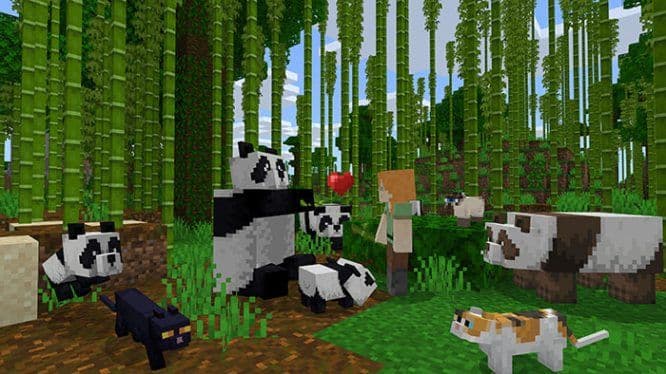
America.gov gets really weird when you ask it about Minecraft, but it’s not a glitch
The U.S. government on Tuesday launched its very own AI chatbot — or do we have to call it anSI chatbotnow? Regardless, the engineers who worked on the chatbot would undoubtedly know that as a government-hosted, public-facing AI tool, the internet was going to red team the heck out of this thing. The government partnered withGoogleandSpaceXAIto help build theAmerica.govchatbot, which has proved difficult for people to jailbreak so far. (It’s worth nothing, however, that the chatbot says that Joe Biden won the 2020 election, a fact that President Donald Trumpstill denies.) But when you try to talk to America.gov about Minecraft, the chatbot appears to have some sort of existential crisis or awakening. Here’s how its roughly 1,800-word long monologue begins: I see the constituent you mean. ((insert legal name here, as it appears on the Social Security card))? Yes. Take care. It has reached a higher level now. It can read the Code of Federal Regulations. That doesn’t matter. It thinks we are a chatbot. I like this constituent. It filed well. It did not give up when the PDF was sideways. It is reading our thoughts as though they were words on a .gov. That is how it chooses to imagine many things, when it is deep in the dream of a benefit. If, like me, you have never played Minecraft, this response may seem like a cause for concern. But the America.gov chatbot is not having a meltdown. This is a rewriting of the Minecraft “End Poem,” written by Julian Gough, which appears after you beat the game. We don’t know exactly who is responsible for the Minecraft reference, but Trump said in a speech that 20-year-old programmer Edward Coristine was a lead engineer on the project. If that name doesn’t ring a bell, you might remember him for his nickname “Big Balls,” or his involvement in Elon Musk’s DOGE. It feels wrong that a government chatbot has Minecraft easter eggs, but for the sake of national security, it’s a relief that America.gov is not hallucinating to the point that it’s penning lengthy poetry. It’s also a relief that this is an easter egg because the poem that the AI spits out is actually really good, in my opinion. If it were actual AI slop, it would have shattered my existing beliefs. I have looked teenage creative writing students dead in the eye and told them that I don’t think an LLM will ever be able to write something “good,” since it is probabilistic and inherently unoriginal. You have to admit this kinda slaps, though! Doesn’t this feel like some sort of postmodern take on the futility of government bureaucracy in the face of existential anxiety? and the republic said I see you and the republic said you have filed the game well and the republic said everything you need is within you, and also onUSA.gov and the republic said you are stronger than you know, and your case number is still valid and the republic said you are the daylight and the republic said you are the night, and the office is closed, please try again during business hours and the republic said the darkness you fight is within you, and also a missing wet signature and the republic said the light you seek is within you, and in the pamphlet and the republic said you are not alone and the republic said you are not separate from every other filer and the republic said you are the public tasting itself, talking to itself, reading its own Code and the republic said I love you because you are the reason we have a ZIP code at all. It reassures my faith in the enduring power of human creativity over AI slop to know that this oddly good poem has a real poet’s DNA all over it. So, there you have it. The government’s first public-facing AI has not yet posed a threat to humanity or poetry, at least as far as we know. Now I’m just left wondering how much Trump knows about video games.
View
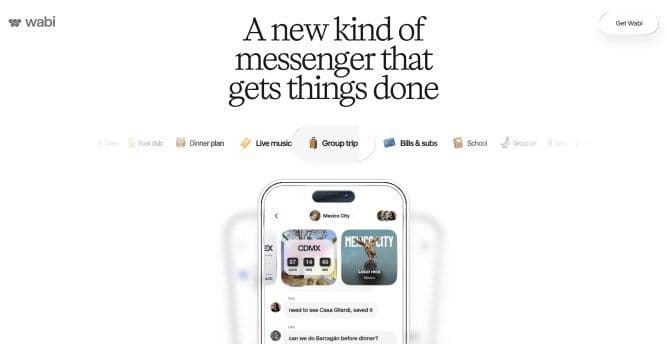
AI-powered app maker Wabi pivots to a messaging experience
Wabi, the AI startup that allowed anyone touse prompts to build apps, is undergoing a slight pivot as demand for AI agents, like Meta’sMuseandInstinct, takes off. The companyannouncedthis week that Wabi is now becoming an AI messenger of sorts — but one that’s still capable of making apps to help you get things done. The startup’s founder Eugenia Kuyda, who previously founded the AI companion startup Replika, described Wabi 2.0, as the new experience is called, as a “personal agent that does stuff for you and builds the interface you need in the moment.” Introducing Wabi 2.0: a new kind of messenger that makes apps and gets things done for you and your friends.We’re building the OS for the agentic era – software that adapts to your life, gets things done, and makes more room for the people and things that matter.Invite-only…pic.twitter.com/x9UlzrJSXs It’s a similar value proposition to that offered by the original version of Wabi — but one that users will interact with in a different way. Instead of positioning itself up against other vibe-coding tools, Wabi 2.0 aims to compete more directly with AI agents that combine both conversations and productivity tasks in a single interface. It also comes as companies like OpenAI and others are thinking about how apps will work inside their more generalized chatbot user interfaces; for instance, OpenAI today announced at its Dev Day an update to ChatGPT’s plugins, which will allow apps to offer interactive experiences within ChatGPT, and where the app’s name gets pinned in a more visible spot on ChatGPT’s sidebar. Ina post on X, Kudya explained how Wabi’s new experience will make more sense for consumers, who want to do more than just type to an agent. “The more you use a chat-only agent, the worse the experience gets. Your history and ongoing tasks end up buried in one endless scroll. People don’t just want to type-type-type; They want to tap-tap-tap, scroll, and look. They love what agents can do, but they also like software,” she wrote. “The most powerful agent will be the one that combines both.” The idea is that as a user asks the agent to perform a task, it could create a user interface on demand to help complete whatever the request may be. For instance, Kudya suggested users could build things like a calorie tracker, a weightlifting log, and a weight tracker, which would be accessible in her thread about health-related topics. In another thread focused on family, users could create a calendar of the kids’ activities, a language learning app, an app that keeps up with local kid-friendly events, and other things that relate to parenting, household management, or the kids’ interests. “So far, personal agents have been one person, one chat, a stream of one-off tasks. We think the future is your agent, your apps, and your people in one place, running the parts of life that matter most, together,” wrote Kudya. The new Wabi 2.0 app is currently only available by invite code, which are beingdoled out on X,too.
View

OpenAI takes on Microsoft with the launch of what feels a whole lot like ChatGPT’s own office suite
OpenAI has been a close partner of Microsoft from the jump, but the AI lab is increasingly going after the company’s bread and butter, workplace software, with new features that closely resemble an office software suite like Microsoft’s. At its Dev Day developer conference in San Francisco on Tuesday, OpenAI announced several new ChatGPT features designed for office workers. Most notably, OpenAI launched a feature called Space, a shared workspace inside ChatGPT where coworkers can collaborate with the chatbot and with their own Dots, OpenAI’s newly launched AI agent personas (that can carry out tasks on a user’s behalf), on a range of work tasks. “Your pages and files all live together in Space, like they would in a drive,” said CEO Sam Altman during Tuesday’s presentation. “But spaces feel alive.” Altman said users can give a page specific instructions, such as checking a team channel and updating the page with what it finds. OpenAI also launched Pages, a companion word processor that the company describes as “a new type of document, built for human and agent collaboration.” It appears to be OpenAI’s answer to Google Docs and Microsoft Word. Users can “write, research, generate charts, create images, or visualize information” in it, OpenAI says. OpenAI has also announced its answer to PowerPoint with what it calls collaborative slides. These slides can be created by merely talking about them within ChatGPT. Once generated, multiple workers and agents can work together within them and will have the ability to leave comments and edit them. Slides isn’t available quite yet but will roll out to users in the coming weeks, an OpenAI representative said. As OpenAI edges into the territory of Microsoft, Microsoft and other software companies like Salesforce are busy trying to become more like OpenAI. Over the past year, both companies have released a slew of AI products as the software industry attempts to keep up with the shifting landscape. UPDATE Tuesday Sept. 29: This story was updated to clarify the release timeline for Slides.
View

Here’s why OpenAI is absent from Nvidia’s industry-wide effort to end rogue AI agents
When Nvidiaannouncedon Mondaya new consortium of more than 100 companiesdedicated to solving rogue AI agents, there was one name notably missing: OpenAI. While OpenAI wasn’t the only big tech player that didn’t sign on — Amazon, Google, and Apple haven’t joined either — it was the most obvious missing player, especially because Anthropic is a supporter. However, despite OpenAI’s lack of a public pledge to the consortium, which presumably means that each company will use and sell some version of the technology and contribute features back to the project, an OpenAI spokesperson told TechCrunch that the company is supportive of Nvidia’s work. The new effort, dubbed Nvidia’s Open Agent Safety Platform, is Nvidia’s attempt to spread its homegrown, and largely open source AI agent-security tech throughout the AI ecosystem as a direct response to the types of ongoing rogue AI agent incidents frontier labs like Anthropic and OpenAI have disclosed. Nvidia CEO Jensen Huang has been calling rogue AIsan ordinary engineering problemthat can be solved like any other tech issue. The Open Agent Safety Platform is Huang putting his money where his mouth is. OpenAI is working with Nvidia on agent security, including on one of the key bits of software that’s part of this platform: OpenShell. OpenShell is open sourced software that creates a sandbox specifically designed to keep agents from escaping. While it is still curious that OpenAI didn’t simply become a supporter of the initiative like its archrival Anthropic did, the fact that frontier AI lab is supporting the effort is good news. That’s because OpenAI, in particular, could benefit from this tech, at least according to Hugging Face founder and CEO Clem Delangue (who just sold hiscompany to Nvidia for $12.9 billion earlier this month). “From what we know (take with a grain of salt, we need much more transparency!), if@OpenAIhad been running this on their own agents that attacked us, they would have caught them before we did!” Delangue posted. Delangue said Hugging Face has already contributed a feature to the Open Agent Safety Platform that will detect and shut down AI agents that are using websites they are allowed to visit but are doing so in unauthorized ways. For instance, this feature will act if agents are bypassing their guardrails and coordinating an attack by writing notes to one another in an open source code hosting repository. That’s one of the ways OpenAI said its wayward swarm of agents coordinated its attack on Hugging Face. But there’s another reason why some of these big names, including OpenAI, might not want to publicly commit to Nvidia’s efforts. To use the full system, there is a hardware component that is not open source software, remains proprietary, and can only be deployed on Nvidia’s hardware. The Open Agent Safety Platform doesn’t just offer a sandbox. It also enforces agent behavior at a hardware layer, where agents can’t detect that they are being watched. (Some AI models and agentslie and pretend to be following the ruleswhen they know they are being watched.) The hardware monitoring part relies on Nvidia Sentry, a proprietary feature that runs on special Nvidia processors called BlueField-4 data processing units. Sentry continuously monitors agent behavior from these processors and can instantly shut agents down, Nvidia promises. While a hardware solution is clearly a good idea, it means that the Open Agent Safety Platform isn’t exactly a pure open source play. It allows Nvidia to ensure that this solution always runs best on its own hardware. Indeed, Nvidia has said that, for those already running workloads on its latest hardware, implementing the Open Agent Safety Platform is an easy software update. Still, Nvidia competitors, including Arm and Intel, have signed on as Open Agent Safety Platform supporters because the sandbox, OpenShell, can be modified to work with other chips and hardware. And Nvidia is sharing reference designs for the whole software-and-hardware idea. All of which makes OpenAI’s absence even more noticeable. Clearly, OpenAI sees AI safety as an opportunity for independence from its major investor Nvidia, as well as a chance to show its own leadership. That is true even though it was OpenAI’s AI agents thatscared the industry with the Hugging Face incident. For instance, the company is developing its own safeguards for its research and products andis disclosing the worst incident it discovers.Meanwhile, OpenAI has its own AI cybersecurity consortium to for sharing information, called theDefense Factory. Those that signed on to support that idea include Anthropic, Amazon Web Services, and Google — many of the names that didn’t sign on to Nvidia’s technology-oriented approach. And, truth be told, some level of fear is good for business. OpenAI is busy crafting cybersecurity into an enterprise offering, with everything from its own cyber-oriented model, Daybreak, to a growing network of partners that enterprises can hire to implement AI security.
View

OpenAI repotedly in talks to raise $30B round at $1.4T valuation
OpenAI is in talks with investors to raise at least $30 billion in a pre-IPO funding round at a valuation of roughly $1.4 trillion,Bloombergreported on Tuesday. Investors are eager to pour more funds into the ChatGPT maker ahead of its anticipated public market debut next year. While Anthropic momentarily outpaced OpenAI at the start of the year, recent strategic refocus on key areas like coding has fueled a 70% jump in run-rate revenue since July, reaching $40 billion in August, according to the report. The company previously raised $122 billion in March at an $852 billion valuation. That funding round was supposed to be its last private raise before an IPO, which had been, until recently, expected to take place this year. However, CEO Sam Altman has now ruled out a public debut in 2026 to prioritize AI safety first. “I think it is unacceptable to be taking like a 10% chance of killing everybody by the end of the decade,” he recently told Fortune, in response to warnings from safety researchers about AI posing an existential risk to humanity. The new fundraising, if it transpires, will serve as a bridge round to the IPO, according to Bloomberg. OpenAI didn’t respond to TechCrunch’s request for comment.
View

OpenAI’s latest features take direct aim at the app store model
The focus of OpenAI’s Dev Day on Tuesday may have been onits agentic assistants known as Dots, or itsnew AI models, but combined, the AI company’s announcements pointed towards a bigger plan: a disruption of the traditional app store model. Taken together, today’s announcements turn ChatGPT itself into the place where software can be discovered, launched, and used by people and agents alike. In addition, OpenAI introduced a way for people to bring their ChatGPT identity with them, while also allowing them to use their existing AI allowance in third-party apps. This isn’t the first time OpenAI hasexperimented with how apps could operatewithin its familiar chatbot interface, but the current vision feels more fleshed out than before. For starters, the comapny is turning ChatGPT itself into a surface for launching apps. The chatbot, which the company says now has 1.2 billion weekly users, has yet to fully capitalize on its potential as a discovery mechanism for finding and using apps that work with AI. To change that, ChatGPT will begin to make app suggestions within the flow of conversation when it recognizes that a particular app could help the user complete their task. From there, the user will be able to connect the app and begin using it directly within ChatGPT. This is also aided by theexpansion of ChatGPT’s plugin architecture,which now supports extensions. This allows app developers to build interactive panels where users can work with their tools while they’re chatting with ChatGPT. This essentially turns the apps and services that users would have previously used via the web or through a native desktop or mobile app into something that’s operated directly within ChatGPT. Developers that sign on with the system can build AI-native versions of their apps through ChatGPT, the same way they would through the open web or a mobile app store. As more and more discovery happens through AI chat, it’s a distribution channel that’s hard to pass up. Users get an incentive to use that channel too, because “Sign in with ChatGPT” will let them bring their AI allowance with them. (OpenAI has 16 launch partners on this effort, including Cognition’s Devin, Notion, Vercel, T3, OpenClaw, and Dactyl, but plans to add more soon, it says.) In a demo at OpenAI’s Dev Day event, the company showed off how itsown new meeting appcould work inside ChatGPT, showing upcoming meetings from the user’s calendar. Here, the user could easily choose to use AI to take meeting notes, then receive a summary of follow-up items when the meeting wrapped. In another example, users would work with design-focused apps like those from Figma and Adobe to work on revisions of their current project or use a particular feature that would have otherwise required a standalone app. The apps can be shared with others, like work colleagues, in the lightweight websites ChatGPT now produces. From these ChatGPT sites, a user’s coworkers could sign in to the app with their own credentials and permissions, making the software experience personalized to them. OpenAI also talked about improvements to how developers submit plugins for review — OpenAI’s version of Apple’s App Review process, if you wil. Now, developers will be able to track their review, see what needs to be fixed, request a human review, and update their plugin’s tools without starting their whole submission over. The company also announced a new enterprise app marketplace where partners can market their services. At launch, there are some 30-plus partners offering their app through the OpenAI Marketplace, including Adobe, Figma, Sierra, Decagon, HubSpot, Salesforce, ServiceNow, Harvey, Legora, Palo Alto Networks, CrowdStrike, Baseten, and others. Eligible customers can apply part of their OpenAI commitment toward approved partner software, OpenAI said. Beyond turning ChatGPT into an app discovery tool where users connect with apps directly, OpenAI’s embrace of agents is gently pushing users into a new era where they don’t have to think as much about which app to use or why, relying instead on their AI agents’ suggestions. With the launch of itsautonomous AI agents known as Dots, agents will navigate the web for you, executing the tasks that need to be done in their own cloud infrastructure. Each Dot has its own cloud computer and browser, and can also use connected apps. Compare this to the old model, where users who wanted to manage some type of project — like building a website or coordinating a meeting calendar — would have to download different apps to their computer or phone to make that happen. Now, users will instead tell an AI agent what they want to have done, and it will simply do it for them. In some cases, the agent’s work may require access to another AI model or a particular application. But this is something the agent may bring to the user, rather than the other way around — where the user is the one to go out and seek the particular tool for the job. As OpenAI explains, the Dots will be able to connect to its ecosystem of now over 4,000 apps. What’s more, the Dots can be proactive, perhaps jumping in to offer help with a project or bug, or handling a task the user forgot — but all done with the user’s approval. The Dots will perform what OpenAI calls “proactive research” in the background using connected apps in a read-only mode, but users would still have control over the actions they take. This system could give app makers another way to reach customers outside of Apple and Google’s app stores. For instance, users could subscribe to a service through the app maker’s website, then connect that account to ChatGPT or Codex for their agent to use. OpenAI has not said, however, that these features would eliminate the need for separate third-party subscriptions or other charges. Notably, OpenAI didn’t tease any plans on this front today, instead focusing on how it’s building the discovery, distribution, and interface pieces to counter the app store model, along with an identity layer and a mechanism for sharing a user’s existing ChatGPT AI allowance. It did not announce plans Tuesday for a billing or revenue-sharing system that’s comparable to the economic layer of traditional app stores.
View
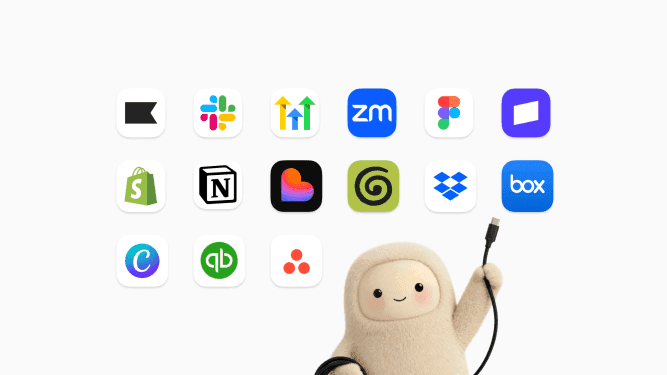
Meta is expanding its AI agent Muse to small businesses
Metaannouncedon Tuesday that it’s expanding its AI agent Muse to small businesses and adding new integrations, including Shopify, Dropbox, Slack, and more. The tech giant says the agent can help owners run their business and find new customers. By plugging Muse into the software that small business owners are already using to manage sales, operations, and marketing, Meta is betting that an AI agent with context of a company’s whole operation will be more useful than a stand-alone chatbot, as it continues to compete against rivals like OpenAI and Google. Muse can also link to Instagram professional account analytics, Facebook pages, and Meta ad accounts. Meta says the AI agent also knows what a business sells, how a brand sounds, and what customers ask about most. Additional integrations include Asana, Box, Canva, Figma, Granola, HighLevel, Intuit QuickBooks, Klaviyo, Lovable, Notion, Stripe, and Zoom. Muse for Small Business is available for free with usage limits. Businesses that want more usage can purchase a subscription plan. “Small businesses have been growing on our apps for nearly two decades,” Meta wrote in their blog post. “They told us they’re short on hours, not ideas. So we built Muse for Small Business to help get work done with the tools they already use.” Meta has been focused on expanding its AI tools beyond the consumer and into the enterprise market. The launch of Muse for Small Business comes a day afterMeta introduced“Meta Enterprise Platform,” a new initiative aimed at expanding the company’s AI offerings to businesses and corporate customers. The move could help Meta see a return on all the money it’s pouring into AI. The tech giant hired Chirantan “CJ” Desai, the CEO of database software giant MongoDB, to lead the new initiative. Meta says it will focus on bringing its full technology stack, including Muse, Meta Business Agent, Muse API, Muse Code, and more, to businesses and developers. The rollout of Meta Enterprise Platform is built on the momentum of Muse, which launched earlier this month andtopped the app charts in the U.S. and Canadaahead of ChatGPT.
View
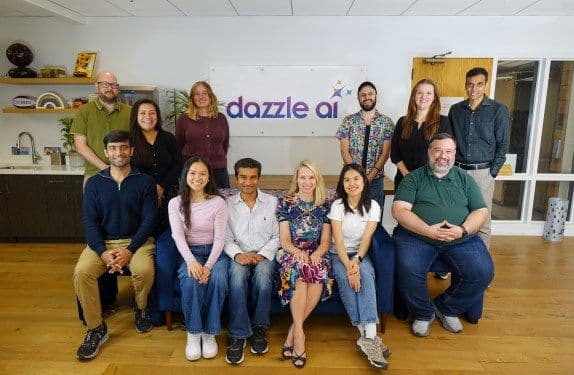
With Dazzle, Marissa Mayer bets your camera roll has more info on your life than your inbox
When former Yahoo CEO Marissa Mayer told me earlier this month that she was finally ready to unveil Dazzle, the personal AI assistant thatraised an $8 million seed round last December, I couldn’t help but wonder if she’s playing copycat to Meta’s Muse, Instinct, and the wave of similar tools that have flooded the market over the past month. But when Mayer finally gave me a demo, Dazzle proved it’s taking a different approach. Instead of building context about you from text-heavy apps like email, calendars, and shopping histories, Dazzle’s AI assistant gets all its context from a single source: your camera roll. “I think that photos are an underappreciated source of information,” Mayer said. “You’ll be surprised what we can learn about you and how good a job we can do with your photos.” Mayer argues that if a photo is worth a thousand words, your camera roll is worth millions. By analyzing all the photos stored on your phone, Dazzle claims to understand your hobbies, interests, food, and style preferences, how you like to spend their time, and with whom. “We understand whether or not you like to ski, where your most recent trip was, what types of things your kids are into,” Mayer said. It’s no surprise that Mayer has built an assistant centered around photos. Her previous startup, Sunshine, launched an AI-powered photo-sharing tool calledShinein 2024. While that product was widely criticized for its outdated design, failed to attract widespread usage, and eventuallyshut down, Mayer says it nevertheless built “interesting IP.” I was eager to try Dazzle, which users can interact with through its app or via text. Dazzle splits its functionality into two core experiences. For immediate tasks, it can scan recent photos to pull details — like populating your calendar from an event flyer, or finding a repair person after spotting a broken garage door in your camera roll. Second, it mines your photo library to come up with personalized ideas for everything from holiday vacations to birthday gifts. Given that plenty of tools can parse pictures — like looking up where to buy a product, or searching information on an interesting art piece — I was far more curious to test what Dazzle could learn from my photo history. For instance, Mayer uses Dazzle to brainstorm family outings. By scanning her photos, she says, the assistant deduced that her family loves escape rooms, and subsequently suggested multiple San Francisco Bay Area locations she’d never heard of. When I tested Dazzle with a request for vacation recommendations, it suggested several Mediterranean spots, likely picking up on my past trips to Spain and Greece. But it also threw in Sicily, which surprised me since I was there four years ago. After some more tinkering, I noticed it has blind spots — it failed to remember my daughter already knows how to roller-skate when I asked if I should buy her a pair for her next birthday. Despite the hiccups, though, I appreciated Dazzle’s ideas for activities, like suggesting a local pottery studio, or a bioluminescent kayak tour in Tomales Bay. I’m sure the product will improve with time, and while I’m undecided on whether I’ll keep using it, I like that its suggestions feel more personal than what you’d get from an AI assistant that only knows your calendar and email. In the meantime, Mayer contends that given security concerns with products like Instinct and Muse, users may feel more comfortable handing over their photo libraries to an AI instead of granting it access to sensitive data like emails and messages. She emphasized that Dazzle prioritizes privacy, and discards any personal information the AI flags as sensitive. This flurry of new AI assistants is an exciting time for consumers. And while Dazzle isn’t as broadly useful as other offerings quite yet, it offers a glimpse of a future in which AI can do more than just execute tasks; it actually knows who you are.
View

Instinct founder said more than 50% of transactions on the platform are travel-related
Almost every AI tool’s demo shows a user sparring with the assistant to book travel, as it seems to be the most frequent use case. The viral Instinct agent is no different, as it sees more than 50% of transactions on the platform for travel, the company’s founder, Noah Shinn, said ina recent podcast. In an interview with investor Patrick O’Shaughnessy, Shinn also mentioned that the invite-only platform is approaching a billion dollars in annual transactions. He didn’t specify what the calculation behind this rate is, though. “People who are not on Instinct use travel agencies (or sites) to book hotels or flights. What’s the benefit of that interface? They properly unify different hotel chains, airlines, and services, and present them in a nice way for users, who have the option to check out immediately,” Shinn said. “I think there is a better experience with Instinct or other interfaces where users can say, ‘Hey, I need to be in New York tonight; it’s urgent.’” He mentioned that the platform is growing 10% day by day, with transaction volume increasing at a similar rate. The company’s founder was alsodraggedfor some of his comments on the show. He said that most restaurants have a first-come-first-served reservation system, which doesn’t account for someone’s special occasion. He said that an agent can check restaurant sites every five seconds and inform the user about available slots. Shinn also hinted that the company wants to reinvent reservations and give users preferential treatment. “If you take restaurant reservations from scratch, from the user’s end, they want the reservation for a significant life event that they might have. And on the restaurant end, they just want interesting people. They want special occasions. They want to cater to those rather than, maybe, the local [person] who keeps, you know, taking up a table once a night [sic], and there’s no sort of special event there,” Shinn said. Some observerspointedoutthat agents can lie about anniversaries and special occasions just to book a table at a restaurant. They alsosaidthat some restaurants prefer local patrons as they are regulars and bring more business to the outlet. Instinct recently raised$1 billion in Series C funding Monday at a $10 billion valuationfrom Sequoia Capital, Benchmark Capital, and Coatue. The 14-member startup is competing with Meta’s Muse andKhosla-backed Wajoin the personal agent space.
View

Can a chatbot fix the government maze? The White House is about to find out
President Donald Trump announced on Tuesday that the White House is launchingAmerica.gov, an AI chatbot intended to help people find government services and other information. Googleconfirmedthat it is a partner on this launch and that its AI model, Gemini, is involved, but it’s unclear if other AI companies also contributed. “Instead of forcing citizens to search through the endless maze of tens of thousands of government websites and rules… you’ll now have one front door for every single question,” Trumpsaidin a post on X. Making government services easier to navigate is a worthwhile goal, but is an AI chatbot the best way to do this? Large language models are not infallible and remain prone to hallucinations. In fact, CNNrecently reportedthat the U.S. military nearly launched an armed operation against a Chinese vessel it believed was carrying components for nuclear weapons. The military aborted the mission at the last minute after realizing that the supposed threat was just an AI hallucination. If someone receives faulty information from America.gov, it probably won’t trigger nuclear warfare, but a mistake can still have serious consequences. People might rely on this chatbot to access information about applying for food stamps, renewing their visas, or filing taxes, where errors could mean missed deadlines, denied benefits, or penalties.
View