
Latest AI News

ElevenLabs Doubles Valuation to $22 Bn as Enterprise AI Agent Demand Grows
The company said its agents now handle more than 15 million conversations each week, up threefold since February.
View

Coforge Scales Poland Centre as AI Engineering Demand Grows
Coforge is expanding its Kraków engineering centre to over 660 engineers by 2027 as it shifts to a multi-client delivery model.
View
IBM Partners With IIT Bombay, IISc on Agentic AI, Sovereign AI, Quantum Computing
The research will cover Indic language models, multimodal systems, enterprise knowledge retrieval, and quantum-HPC workflows.
View
The Industrialisation of Enterprise Intelligence
As AI makes intelligence more abundant, leaders must decide where it creates value, how it works across the enterprise and who remains accountable.
View
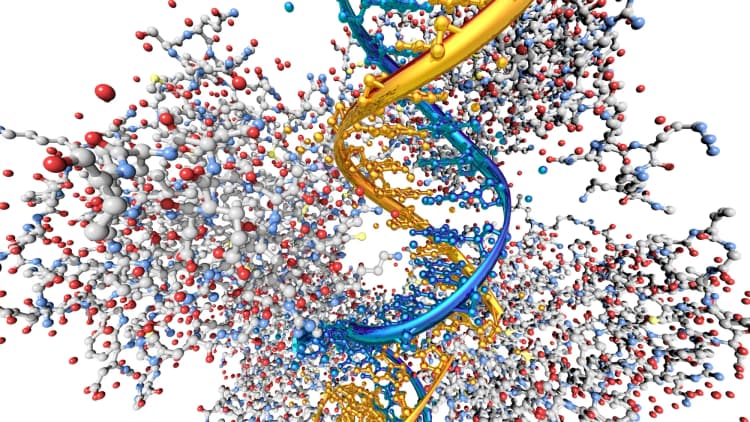
Google DeepMind Builds Watermarking System to Identify AI-Generated Protein Designs
Google DeepMind's approach attempts embeds provenance information at the point where the AI model generates the biological design.
View

Indian Space Startups are Putting New Eyes in Space With SpaceX
SatLeo Labs and EON Space Labs will test thermal and multispectral imaging as TakeMe2Space and Google send computing technology on the same mission.
View

From Wrong-Way Driving to Mobile Phones: How AI Will Now Catch Traffic Violations in Delhi
The Union Cabinet approved the Intelligent Traffic Management System (ITMS) project on Wednesday. The new ITMS project was proposed by the Delhi Police to deploy AI-powered systems on the roads of the Union Territory. The authorities will deploy the new real-time traffic management system on 42 traffic corridors to make traffic movement more efficient. The new traffic management system will also help in creating green corridors for emergency vehicles, prioritising their movement. As part of the project, the Delhi Police will also set up adaptive sign boards to inform and alert commuters in real time.
View

OpenAI, Synopsys Announce GPT-Synopsys for AI Chip Design
The model is said to run on OpenAI’s infrastructure and will directly operate Synopsys EDA tools.
View
Google Gemini 4 Struggles With Coding Despite Strong Benchmark Numbers: Report
According to benchmark results, the model outperforms OpenAI’s GPT-6 Astra, Claude Fable 5.1, and Opus 5.5—but apparently, they don’t translate to real-world performance.
View

The AI race won’t wait, and neither will this TechCrunch Disrupt 25% discount
Every founder building in AI right now is asking the same question: Are we moving fast enough, and effectively enough?TechCrunch Disrupt 2026puts you in the same room as the people wrestling with that existential question at the highest levels. From October 13-15 in San Francisco, leaders from OpenAI, Nvidia, Anthropic, Microsoft, and more will share their insights as thousands of startup community members network. For a limited time,get 25% off your pass with code DISRUPT25 at checkout. Prices go up as the event gets closer, so this is the moment to lock in your registration. The AI race isn’t slowing down, but the founders often winning it aren’t the loudest — they’re the ones building something that holds up past the initial ideas and demos. Disrupt is where you find those breakthroughs before everyone else does, and where you figure out what building sustainably actually looks like when the underlying technology is changing every quarter. For founders, this means incredible learning and networking opportunities. For Investors, it’s a chance to get in ahead in the tech ecosystem. And for startup operators and nascent entrepreneurs, the connections that can create your next opportunity await. Programming runs across six industry stages, roundtables, and breakout sessions, with250+ of our headlining Disrupt speakers— including Replit CEO Amjad Masad, Rivian CEO RJ Scaringe, Amazon SVP of Devices and Services Panos Panay, and Mark Wahlberg — providing insights and reveals you can only find at Disrupt this year. The AI Stageis where many of the more utility-focused conversations will take place. Anthropic’s Head of Applied AI Cat de Jong will take a deep dive into AI in the enterprise, Okta and NanoCo will lead a session on AI security, and more. That’s on top of theReal World AIandSmart Systems Stagesfor additional AI expertise. Across three days, you get more than 200 sessions and 250 speakers spanning AI, fintech, biotech, robotics, climate tech, and cybersecurity — curated by TechCrunch’s editorial team, so the focus stays on substance over hype. Disrupt’s capstone is thecrowning of the Startup Battlefield 200 winner, after a live competition in which the most promising early-stage companies pitch live for a $100,000 equity-free prize, investor attention, and real exposure. Dropbox, Trello, Cloudflare, and Discord are all Startup Battlefield alumni, and you can see the newest alumni awarded live. If you’re building or investing in AI, or looking to get ahead of your startup’s competition, this is the event to be at.Use code DISRUPT25 for 25% off and get your ticket before prices increase October 12.
View
Google releases Gemini 4 Argon, called its most powerful model yet
Google parent company Alphabet haslaunchedGemini 4 Argon, a new AI model built to handle a variety of tasks such as coding, research, and writing. But it’s cybersecurity that Gemini 4 Argon is supposed to have a particular knack for, according to Google. Argon is only being rolled out to a select group of the company’s cyber partners through its Fairwind Program, Google’s security initiative. The model was trained specifically for defensive cyber work, and the company says it can “autonomously find, validate, and patch critical software vulnerabilities.” Argon is also said to be good at coding and engineering, with the company noting that its own staff have already been using the model for their daily work, including debugging and codebase migrations. Google also touts Argon’s ability to parse visuals — whether that’s analyzing the contents of long videos or charts. “Built to sustain deep reasoning across complex, long-horizon workflows, Argon is fundamentally changing the way we work and build at Google,” the company saidin a blog postWednesday. Top AI labs have rushed to release increasingly powerful models, attempting to outdo each other even as those very same firms warn that AI could spin out of control. Not long ago, OpenAIreleased Astra— which it hailed as its best model yet. Earlier this year,Anthropic’s Fablewas also released with similar rhetoric from the company. Firms have done their best to market their services as superior to their competitors. In its blog, Google claims that Argon scored significantly higher than OpenAI’s GPT-6 Astra and Anthropic’s Fable and Opus models across a variety of AI benchmarks. It cites Vals — an increasingly popularAI benchmarking startup— to show that Argon is currently the leading model on the company’s AI model index. Once considered “behind” in the AI race, Google has recently enjoyed success with Gemini. The company announced in August that its apphad over a billion users per month, a metric that makes it competitive with OpenAI, which also recentlyannouncedthat ChatGPT had reached a billion monthly users.
View

The ugly economics of consumer AI
After this week, you could argue that consumer AI is making a comeback. Meta’s personal AI assistant, Muse, and its plush-like mascot Jolly, has beena surprise hit.OpenAI’s Dots, released just yesterday, appears to be chasing the same cartoony personal assistant idea. And the up-and-coming Instinct assistantreached a $10 billion valuationon the strength of its agentic errand-running, focused on booking travel, making restaurant reservations, or cancelling subscriptions. The bull case is easy to make. Agentic AI has finally gotten reliable enough to handle everyday tasks. Companies are increasingly pitching that service to everyday people, who are getting genuine value out of it. If you’re an investor, that looks an awful lot like the ChatGPT launch in 2022 — the raw power of AI opening up a product category that was never possible before. Who wouldn’t want a piece of the action? But there’s a reason frontier labs have gotten gun-shy about consumer AI — and it’s not because the tech isn’t good enough. Even staggeringly popular tech products are starting to hit a ceiling on how much money consumers are willing to pay, and it’s not clear that better models are actually leading to a more profitable consumer business. The result has been an industry-wide shift toward the Anthropic model, focusing on enterprise contracts and vertical-by-vertical expansion. If products like Muse and Instinct are bucking that trend, it’s because they’re less concerned with monetization. But the underlying economics of consumer AI are not getting any better, and anyone getting into the business will have to grapple with them eventually. We got a reminder of those economics in Andreessen Horowitz’ssemiannual State of Markets report, which pulled its figures froma PNC research reportfrom this summer. In two charts, they track the slowly growing percentage of consumers paying for AI services, alongside the slowly growing amount they’re paying. As of May, 2.2% of consumers were paying for AI, at an average spend of $31 a month. Andreessen puts a positive spin on this, saying, “it’s still so early when it comes to mature AI adoption and utilization.” There’s a lot of room to grow! But in both charts, the pace of growth seems awfully linear. Even as models make huge improvements, there isn’t a ton of movement in the number of customers willing to pay for AI or how much they’re willing to pay for it. The enormous performance jump from GPT-5.2 to Astra, for instance, is barely visible on the chart. The per-consumer numbers are less striking, but still far below the standard break-even point. If you take Netflix as the standard for market-saturated online services (at 325 million subscribers), then $34 per customer only gets you to $11 billion in annual revenue, less than a third ofOpenAI’s operating costs. If you think PNC is underselling adoption, you can get similar numbersfrom Bank of America. In March, the firm found that roughly 3% of U.S. consumers paid for AI, up 40% from the previous year.A Menlo survey from Septembergives a slightly sunnier view, finding that a quarter of adults use AI daily and half of those users are paying for it. The problem with the consumer approach has less to do with revenue than with cost. AI is an unusually expensive technology to operate, particularly compared to lightweight predecessors like social networking or cloud computing. Even hundreds of millions of paying customers doesn’t guarantee you’ll break even. To its credit, OpenAI seems to have adapted well to these facts. The company’swidely reportedpivot to enterprise has been largely successful, with enterprise bookingsreportedly doublingsince July. Even the Dots launch had a strong enterprise angle, showing how the new personal agent could be useful for software engineers and agency creatives. One long-standing way to make money from popular-but-cheap consumer services is to sell them to businesses at a markup, and OpenAI seems to be following the playbook. It’s harder to say what this means for Muse and Instinct. Muse has the juggernaut of Meta’s personalized ad targeting behind it, which gives it more options for monetization and more time before it becomes an urgent question. Notably, Meta is alreadyexploring the enterprise angle. Instinct has a separate plan that involvestaking a cut of purchasesmade through the agent, which might raise the ceiling. Presumably it’ll also be able to avoid the cost of training a frontier model, which will help a lot. But the ugly economics of consumer AI put a hard cap on how large the company can plausibly grow without tapping into enterprise revenue. It’s a lesson the major labs have already learned, and it’s one of the few things about the industry that doesn’t seem to be changing.
View