
最新 AI 资讯
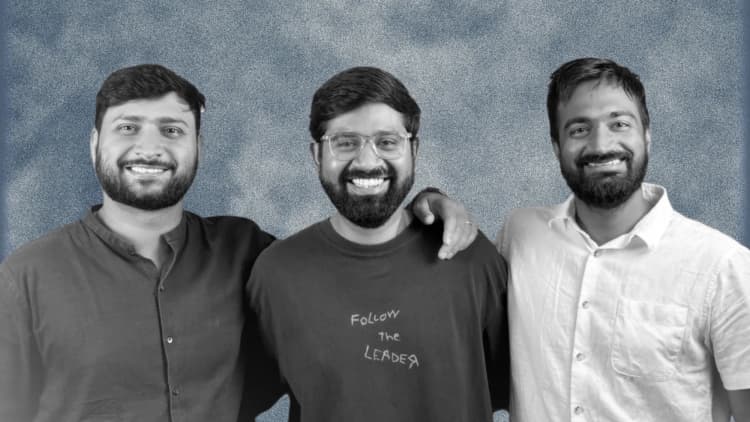
RevRag AI Raises $2.5 Mn to Build AI Relationship Managers for Banks
RevRag’s AI agents integrate into financial institutions’ mobile and web applications, guiding users through processes such as KYC verification, document uploads and account activation.
View
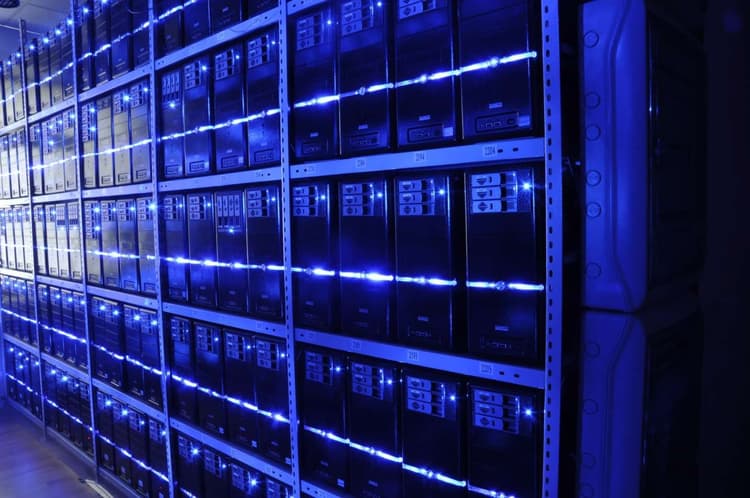
CtrlS Announces ₹10,000 Crore Investment in Bihar for AI Data Centre
Its plans also include establishing more than 20 edge data centres across tier-2 and tier-3 cities in India over the coming years.
View

Saudi OpenAI Engineer Arrested Over Hidden Recording Device in Conference Room
OpenAI employees discovered the device on September 30, concealed in toilet paper and connected to a USB port behind a television. Its contents were encrypted.
View
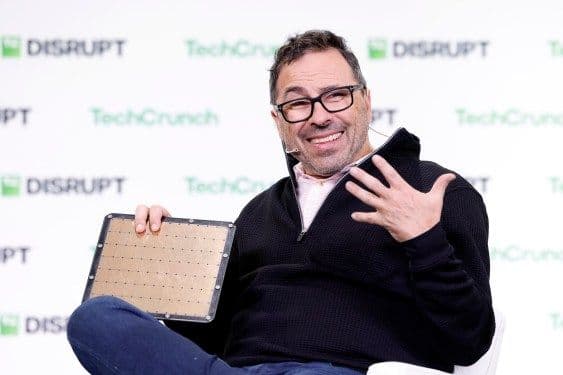
Cerebras CEO pushes back on AI doomsday warnings
Cerebras SystemsCEO and co-founderAndrew Feldmanthinks the AI doomer narrative isn’t doing the industry any favors. AtTechCrunch Disrupt 2026, the AI chipmaker exec quipped that “some of the leaders in the AI world maybe shouldn’t be allowed to talk in public.” He’s referencing the negativity now spreading around the dangers of AI, from models breaking containment to AI insiders debating thepercentage chancethat AI may kill all of humanity by the end of the decade. The argument has become so mainstream that Anthropic CEO Dario Amodei wasrecently parodied in a skit on “Saturday Night Live,”where the fictional character summed up the discourse, saying, “We do not condone what we are doing.” Feldman, however, thinks the promise and potential that go hand in hand with AI developments are getting overlooked. He thinks AI leaders should spend more time telling people that AI could lead to a world where your grandkids will “never meet anybody who dies of cancer,” for instance, even if they have concerns about AI risks. Clearly, Feldman has a vested interest in AI being successful, as the company’s customers include big names working with the technology, like OpenAI, Block, Figma, pharmaceutical giant GSK, and Lovable. However, he’s pragmatic about weighing the trade-offs between risk and reward. “I don’t think there are powerful technologies that don’t come with the challenge of ‘what happens when powerful technologies are in the hands of bad people?’ I think you can’t make one and not have the other,” Feldman said during his interview at Disrupt. “I think what we have to say is that this technology is powerful,” he added. “We have to be thoughtful about it. We have to regulate it reasonably,” he added. The chipmaker CEO also suggested that some of the negativity around AI has to do with how the data center industry has approached the new buildouts created by AI demand. “As an industry, we weren’t super good for the past few years at working with local communities, particularly in the U.S. We — the industry — didn’t do what others have done in the power industry in oil and gas. They didn’t work with the community. They didn’t engage the community as they should have, and that was a problem,” Feldman said. He compared the NIMBY-ism — “not in my backyard!” — of what’s going on in the U.S. with other countries, naming Brazil, Canada, Finland, Iceland, Norway, Mexico, and Sweden as markets where they’re encouraging companies to build data centers. Feldman also wasn’t concerned that efficiency improvements would create less demand for his chips, or those from other companies competing with Nvidia, as Cerebras is. “We can do our job as hardware vendors to make our compute more efficient, and then the model makers can do improved work in making their models more efficient to achieve the same goals. All of this has to come together to make meaningful strides forward,” he noted.
View
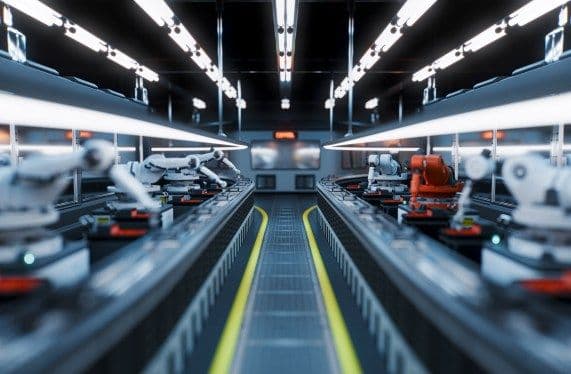
Industrial Next wants factory robots to switch tasks in minutes, not weeks
In most factories, automation is fixed: robots and machines are programmed for one specific task and product. Changing a line means reprogramming and physical retooling, or swapping out equipment, which can take weeks or months. San Francisco-basedIndustrial Nextsays it’s changing that. The startup, which presented today on the Startup Battlefield stage at TechCrunch Disrupt 2026, builds AI-driven, self-contained robotic stations powered by proprietary foundation models that connect vision, task context and motion. The company says this lets a production line be retooled in minutes rather than weeks without traditional programming. The goal is to let manufacturers automate complex and delicate tasks that traditionally require human labor. The company announced on stage that it’s partnering with BMW Group Technology Office to evaluate Industrial Next’s AI-powered dexterous manipulation for manufacturing. Industrial Next was founded in 2021 by Lukas Pankau and Allen Pan, both of whom previously worked at Tesla. Pankau served as a lead electrical architect at Tesla before moving on to Waymo. Pan led Tesla’s autonomous factory efforts and later became a chief architect at autonomous driving company Neolix. The pair came up with the idea for Industrial Next while working together at Tesla. Pankau’s first encounter with Pan was literally tripping over him as Pan was asleep on a factory catwalk after pulling an all-nighter. Although the two didn’t get along at first, they soon realized they shared an obsession with getting things done and had complementary skills. After years of watching cutting-edge vehicle and self-driving technology get held back by decades-old factory equipment, the founders realized that manufacturing needed to be rebuilt. “We had all these fancy things that we could do on cars. I could run machine learning algorithms to design a car for me. But I couldn’t figure out how to program a robot, and this was pretty common for engineers at Tesla,” Pankau said. “You had this massive divide, right? You had people who are really good at what they’re doing–designing cars and designing self-driving systems–and then you had them effectively stumped at the factory looking at this equipment from the 1980s. And so we started rethinking what this should look like using the technology that we have today and using everything that we know today.” The two kept thinking about their frustrations with industrial equipment even after moving on to their next jobs. They stayed in touch, often reminiscing about the machines that never functioned the way they wanted, and eventually decided they could do better. “I was at Waymo at the time, kind of bored out of my mind because I was missing that pace of Tesla,” Pankau said. Pan, he added, was in a similar position at Momenta, a developer of self-driving systems in China. Pan recalled their conclusion: “We’re like, we’re not getting any younger, and we’re still obviously passionate about it. We still keep complaining about industrial technology. Like, this is three years later, we should start the company.” Pankau notes that traditional industrial robots are typically programmed to perform highly specific, repeatable tasks. As a result, even a small change in the process or product can cause the robot to fail or trigger costly downtime, which forces manufacturers to simplify their products for repeatability. Making robots truly flexible presents a different challenge. They need enormous amounts of training data and, unlike AI models trained on the internet, robotics lacks the vast datasets needed to teach machines how to perform complex physical tasks. “We can make robots do all these cool things like dance around, because there’s data for that, but we can’t make them assemble high-precision things,” Pankau explained. “This is where we’ve made a lot of progress on using simulated environments to do these high-precision and high-dexterity tasks. The secret sauce for the robots that we have is that we have given them an understanding of the process in general, but we build that understanding using an extremely high-fidelity simulation engine that is close to the real dynamics to where we can let the robot do these kinds of high precision tasks almost without seeing the parts at all.” In other words, the robots practice in a highly detailed virtual world that closely mimics real-world physics. Industrial Next’s robotic stations can be reconfigured, combined, and redeployed across product lines. New tasks are taught through simulation and demonstration, rather than hard-coded scripts. Pankau explained that some of the startup’s workstations are already used in making one of the world’s most popular smartphones. They handle tasks that manufacturers had tried and failed to automate for years, such as threading a delicate flex cable and snapping a tiny connector cap into place. (He wasn’t at liberty to disclose the customer.) He also described a “film peeling” station, where their AI-powered robots strip protective film off camera modules and buttons at or above human speed with 100% accuracy, even when moved to a new phone model and production line they have never seen. “We started this company because that is the kind of performance that we wish we had at Tesla, where we were bypassing robot stations because we couldn’t program them effectively enough using traditional technologies,” Pankau said. “Now we want to take this to more complicated tasks than just building a phone. We ultimately want to take this to building a full car end-to-end without any human touching ever.” To check out more of the Startup Battlefield — along with a slate of established founders and VCs whose takes on the industry you won’t want to miss —join us at Disrupt, happening this week in downtown San Francisco.
View
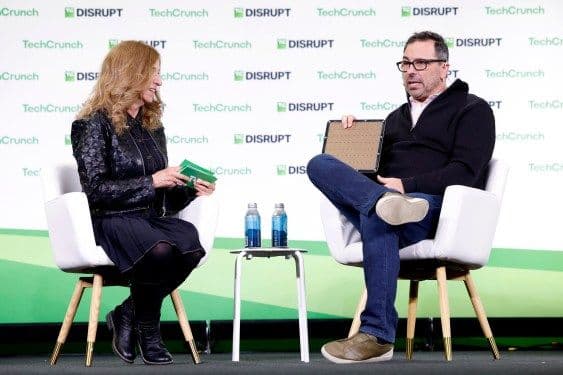
Cerebras CEO says we’re nearing a future where everyone has a personal AI assistant at home
Cerebras Systems CEO and co-founder Andrew Feldman believes we’re nearing a future where everyone will have an AI appliance in their own home. Speaking on stage atTechCrunch Disrupt 2026on Tuesday, the chipmaker executive answered a question about what would need to happen for AI to become a home appliance, saying, “Actually, I don’t think that’s very far away.” He pointed to the advances in consumer AI agents, like Meta’s Muse and Instinct, the startup now valued at $10 billion, as examples of how AI is finding its footing with everyday users. As for home AI? He predicts that we’ll have personal AI assistants that run locally. “Just like your cell phone, they’ll do some work on device and some work going back to the cloud,” Feldman explained. “But I think they will get to know you very well, and you will have a security perimeter around them. And they will certainly have access to credit cards and be able to buy things for you,” he continued. “I think they will make a meaningful impact in making our lives better.” Of course, for an AI chipmaker, the vision of a home AI appliance, or at least widespread consumer adoption of agentic technology, is certainly appealing. But Feldman isn’t just working on the hardware infrastructure; he’s a personal AI user himself, saying that he now uses “a collection of agents” to sweep his calendar, pull up information about the people he’s going to have a call with, and more. While AI is already doing many of the things we used to do manually, Feldman is most excited about the new possibilities — things that weren’t possible before. He’s leaving it up to other founders to figure out what those might be, though. “One of the reasons I love being in infrastructure is because I don’t need the consumer-facing idea … I like building the platforms that other people’s ideas take flight on,” he said.
View
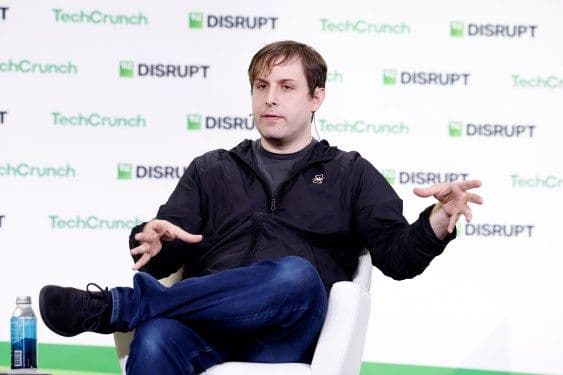
Science Corporation implants its vision-restoring chip in its first Stargardt disease patient
Science CorporationCEO Max Hodak announced that the company has implanted itsvision-restoring chip, PRIMA, into its first patient with Stargardt disease, an inherited eye disease that gradually destroys central vision. Hodak, the former president and co-founder of Neuralink, the brain implant company, explained on stage at TechCrunch Disrupt how the company’s work with PRIMA fits into its broader pursuit of a novel brain-computer interface (BCI). “The retina is part of the central nervous system,” Hodak said on stage. “We consider cochlear implants, retinal prostheses, motor prostheses, these are all different types of BCIs.” Hodak outlined a vision in which BCIs expand into a wide range of medical technology applications, rather than simply being a way to control computers. While PRIMA is commercially available in Europe for patients who’ve lost their sight to geographic atrophy, an advanced form of age-related macular degeneration, the company believes its approach can be applied to multiple diseases, including Stargardt disease, which is currently considered incurable. Stargardt disease affects the outer retina, causing the gradual death of the eye’s light-sensing cells while potentially sparing the inner retina, the part that passes visual signals onto the brain. It causes a central blind spot that gradually enlarges over time. Approximately 150,000 people worldwide have lost vision due to the disease. “One of the nice things about this device approach, when I was saying the brain’s a computer, vision is electrical potential, like electrical activity down the optic nerve,” Hodak said. “That’s all vision is to the brain, and so if you can get the optic nerve to signal the the rest of the brain correctly, then you can provide vision to it.” The company says its first patient with Stargardt disease received the PRIMA implant in May as part of its ongoing trial at the Sydney Eye Hospital in Australia. During the patient’s first rehabilitation session, he saw a letter, and during the second, he was able to read a word. To use the device, patients undergo an hour-long procedure that plants a small chip in the back of their eye, where the photoreceptors have degenerated. Then they wear camera-equipped glasses that transmit a view of the world to the chip. The implant essentially works like artificial photoreceptors. “The device that this patient has is a two millimeter by two millimeter implant placed under the in the back of the eye, and so it’s like looking through a straw,” Hodak said. “It is not a big field of view color vision. It’s a patch in their central vision where . . .it’s black and white, but it is sharp. It’s high-contrast sharp, and so they can see a couple letters at a time. The next step is to make the field of view bigger. So to make a bigger implant, you have to deal with the curvature of the eye, and we need to make the electrodes smaller so that we get closer to native levels of detail.” He continued, “I think we have a clear path. There’s a there’s a next ‘next generation’ that’s being worked on that’ll be in humans in the next year, and over the next five years, I think we’ll be able to get pretty close to native acuity.” When Hodak founded Science Corporation in 2021 after leaving Neuralink, the company outlined plans to develop advanced neural engineering and brain-computer interface technology. But first, the company wants to prove its methods work and develop a sustainable business, which is why it’s working to restore vision with the visually impaired. As for Science Corporation’s brain-computer interface technology, it haspreviously saidthat its sensor will be implanted inside the skull and rest on top of the brain, unlike a Neuralink device, which is inserted directly into brain tissue. The company has said it believes the device could help address neurological conditions, such as possibly monitoring neurological activity in patients with brain tumors. “In the near term, we’re going to be applying our first clinical indication, which hasn’t been announced publicly, is a neurodegenerative disease that everybody’s heard of,” Hodak said. “We’re also looking at stroke. For example, if you’ve lost part of your brain because it’s been dead due to stroke, if you can get connections into the deep brain in two different areas, you can imagine adding new cortical areas, just like adding new brain areas entirely — something simply not possible with conventional electrodes. But, I’d say longer term, the long-term mission of the company is to understand how the brain creates the mind and to learn to build engineered brains.” Hodak went on to note that Science Corporation’s belief is that many people will eventually use some kind of BCI. While the company isn’t designing for “healthy 40-year-olds,” he said, it believes people will eventually need some kind of BCI by the age of 60 or 70. “We want to figure out how do we extend not just lifespan but health span,” Hodak said.
View
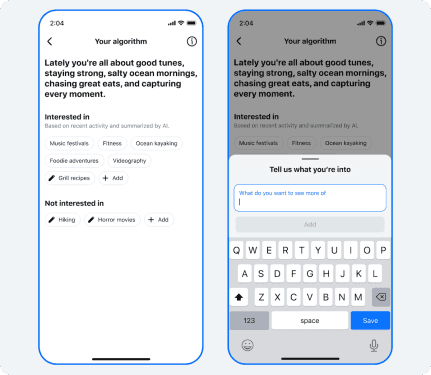
Facebook is giving users more control over their algorithm
Facebook is the latest social media platform to give usersgreater control over the algorithmthat determines what appears in their feeds. Metaannouncedthe launch of its new AI-powered feature, “Your Algorithm,” on Tuesday, a feature it first launched on Instagram. The new tool allows Facebook users to influence the content they see in Feed and Reels by describing their preferences in their own words using natural language. Rather than relying entirely on automated recommendations, users can now communicate directly with the platform about the topics and content they want to see more or less frequently. According to Meta, the feature is designed to make content recommendations more relevant. Users can adjust their preferences and interact with the algorithms responsible for ranking and recommending posts, with changes reflected in their recommendations in real time. The company has also updated Facebook’s three-dot menu, making it easier for users to manage their content preferences directly from individual posts. By opening the menu, users can access “Your Algorithm” or select the “Interested” and “Not interested” options to indicate whether particular content aligns with their preferences. Meta says the platform may ask follow-up questions to better understand what users liked or disliked, allowing them to provide more detailed feedback. Users can explain what they want to see more or less of, helping Facebook refine its recommendations based on their responses. The introduction of “Your Algorithm” reflects Meta’s broader effort to give people more influence over their social media experiences as AI increasingly shapes content discovery. The move signals a shift away from the traditional recommendation systems that have shaped social media experiences for years, bringing the platform closer to streaming services that allow users to personalize recommendations based on their interests and preferences. The launch also builds on Meta’s existing personalization efforts across its other platforms.Instagramintroduced Your Algorithm in June, extending customization options across Feed and Explore after first launching the feature for Reels in December 2025. Threadsalso introduced its own related feature, called “Dear Algo,” which allows users to influence the content recommended to them.
View

Flox Intelligence is building AI to keep wildlife away from trains, airports, and roads
When I was eight, I remember our train to Mumbai ground to a halt with a great noise. When we started moving again, a good eight hours later, someone pointed out a mangled tail, of all things, hanging from a branch close to the tracks. The train, you see, had apparently hit a wild bison at full speed, and the impact damaged the engine so badly that it had to be towed away for repairs. For a long time, I thought such things only happened in places like rural India, but I learned a few years ago that wildlife and infrastructure do not mix anywhere on the planet. The FAAestimatesthat wildlife strikes have cost U.S. civil aviation about $272 million a year on average between 1990 and 2025. In France, the rail operator SNCFsayswandering animals affect more than 8,000 trains across the country each year and are among its five leading causes of delays. In Brittany, 120 trains hit animals in 2023 alone, disrupting 660 services and causing more than 15,000 minutes of delays. Reading about all that damage, to both infrastructure and animals, inspired Sara Nozkova (pictured above on the left) to develop a wildlife-deterrent system that works differently from the sirens, lights, fences, falcons, and culling traditionally used to keep animals away from roads, train tracks, airports, and other infrastructure. “I was convinced the answer was not a louder deterrent,” she told TechCrunch. After spending 13 years working in transportation and autonomous vehicles, Nozkova had learned how quickly the systems we build to navigate roads and other controlled environments fail once nature enters the equation. “We have taught machines to be brilliant, but only inside the environments we engineered for them,” she said. “Cities, factory lines, warehouses. Fixed geometry, known objects. Stepping outside into nature, I saw firsthand how the same machines quickly go blind. Because nature is complex and always alive.” So instead she joined the AI lab at KTH Royal Institute of Technology in Stockholm and started working on a system that could change its deterrent responses based on what an animal nearby is doing, and even what kind of animal it is. That work turned intoFlox Intelligence, which spun out of KTH in 2020 and is one of the finalists at this year’s Startup Battlefield 200 pitch competition atTechCrunch Disrupt, taking place this year at Moscone West in San Francisco October 13-15. Flox makes edge devices that process data on-site rather than in the cloud. Like autonomous vehicles, they use perception systems to sense their surroundings, but theirs are trained on wildlife behavior. A motion sensor wakes the device when it detects movement, triggering a camera that uses on-device models to identify nearby animals. The device then emits a species-appropriate sound to scare them away. Nozkova says the system learns from experience, too, and varies its responses so animals don’t get habituated to repeated signals. The company currently sells battery-operated devices that can be mounted on poles, trees, and other structures. It also offers a software platform that shows clients where the devices are deployed and what’s happening on the ground. The platform can also generate reports for regulatory compliance and for uses like biodiversity monitoring. The longer-term goal is to make the software portable enough to run on machines that work outside, including trains, cars, and drones. Nozkova says about 150 Flox devices are live in North America, Europe, and Australia at airfields and airport perimeters, road and rail corridors (especially fence ends and crossings along wildlife corridors), national parks, agricultural land, urban areas, mining sites, and critical infrastructure such as electrical substations. The company sells edge units up front, then charges an annual software and AI subscription after the first year. Flox also has OEM partnerships with companies that pay an annual fee to deploy its software on vehicles, like trains. Train manufacturer Alstom is one such partner. The company expects to end 2026 with revenue of about $1.5 million, Nozkova said. As unique as Flox’s product and approach are, the startup is not without competition. Robin Radar’sScarecrowalso uses species-specific distress calls to disperse birds and it records the activity, whileiCHASEsells a system that detects birds with computer vision and targets them with a moving laser, adjusting its response as needed. Nozkova says her moat is the breadth of the system and the data Flox has collected in the field, which she calls “ground truth on what actually makes a moose or a grizzly bear move safely.” “Physical AI is walking out of the factory and into the messy, alive outdoors,” Nozkova says. “Every machine that operates outside — trains, trucks, drones, tractors, robots — will need to understand nature, and nature intelligence is the next layer of the perception stack. Almost nobody is building it.” The company has raised about $5 million across pre-seed and seed rounds so far, with the seed round led by Unconventional Ventures and Tilia Impact Ventures. Co-investors across the rounds include GENIUS NY, Norrsken, Satgana, and angel investors, Nozkova said. The company is now opening a $10 million Series A, which would mostly go toward growing from about 150 devices to several thousand deployed units and extending the underlying system beyond its current wildlife use cases.
View

Judge orders OpenAI to turn over hiring records in Apple trade secrets case
A judge has ruled that Apple will gain expedited access to OpenAI’s hiring materials in the trade secrets-focusedlawsuit the iPhone maker filedagainst OpenAI in July. Specifically, the court will allow Apple to view documents associated with OpenAI’s interviews with former Apple employees who applied for roles within its consumer hardware and robotics groups ahead of the rumored launch of OpenAI’s first hardware device. These documents could include interview checklists, guides, instructions, manuals, and scripts, as well as technical presentations and records showing that interview discussions had included references to Apple technology or components. The court gave OpenAI five days to turn over materials it has already collected and 14 days for any other materials related to this request, agreeing with Apple that these documents should be expedited. The case comes as OpenAI develops a consumer hardware device that could one day potentially rival the iPhone — or smartphones more generally — if the AI device becomes a central part of consumers’ lives and how they engage with software and services. In its lawsuit, AppleaccusedOpenAI of a pattern of theft, which includes direct complaints about former employees using Apple laptops to download confidential material and files that contained information about unannounced technologies, features, and products, including technical specifications, engineering presentations, and proprietary project data. Apple also said that former Apple employees at OpenAI coached others considering leaving Apple for OpenAI on what information to bring to their interviews, among other allegations. U.S. District Judge Edward Davila didn’t greenlight all of Apple’s requests for expedited access to OpenAI documents and messages relevant to the case. Buthe did rulethat Apple could access the interview materials, alongside private LINE messages (from a messaging app) between individuals named in the case, including OpenAI employees Chang Liu and Alyssa Peng. The judge also approved depositions for Liu and Peng, along with a third individual, OpenAI’s chief hardware officer, Tang Yew Tan. All three are former Apple employees. However, the judge denied Apple’s request to expedite its access to OpenAI’s research and development in specific areas, like metal finishes and power management. He also denied several of Apple’s broader discovery requests, like access to OpenAI’s hardware research or information about what its former employees created while working at OpenAI. That denial isn’t final, though; the judge left the door open for Apple to narrow its requests and try again.
View

Google Gemini 4 Argon Launched Globally for Developers and Enterprises
Google announced the rollout of Gemini 4 Argon to developers and enterprises globally on Tuesday. The latest artificial intelligence (AI) model is designed to handle coding, research, writing and other complex tasks across domains. Google claims that Gemini 4 Argon outperforms other frontier AI models on benchmarks. It secured the top spot on Vals Index, which evaluates model performance across economically significant sectors. The new AI model is made available through the Gemini application programming interface (API). Google AI subscribers can also access it.
View

Google Gemini 4 Argon Launched Globally for Developers and Enterprises
Google announced the rollout of Gemini 4 Argon to developers and enterprises globally on Tuesday. The latest artificial intelligence (AI) model is designed to handle coding, research, writing and other complex tasks across domains. Google claims that Gemini 4 Argon outperforms other frontier AI models on benchmarks. It secured the top spot on Vals Index, which evaluates model performance across economically significant sectors. The new AI model is made available through the Gemini application programming interface (API). Google AI subscribers can also access it.
View