最新 AI 资讯

AWS is helping vibe-coding startup Superblocks, and the implications are big
Vibe-coding startupSuperblocksannounced a multiyear joint marketing agreement with Amazon Web Services (AWS) that enables its tool to be embedded within the private clouds of AWS customers. That means an enterprise on AWS that subscribes to Superblocks will be able to offer vibe coding to the company’s business users, and those apps will not send data or information externally to model providers or databases. The apps will spin up Amazon Aurora databases within the company’s private cloud, not, for instance, create externalSupabase databases, the vibe-coding database of choice. The apps will also integrate withAmazon Bedrock, the cloud giant’s AI app development/AI gateway/inference platform. Essentially, these apps will automatically fall under IT’s management and security, rather than be rogue applications. “We’re going to bring it to your data inside your private cloud,” Superblocks co-founder and CEO Brad Menezes tells TechCrunch of vibe coding. “The big thing about that is data never leaves. … It’s their AWS account and basically secure with all of the auditing, all of the encryption, all of the network controls.” AWS will also help sell Superblocks to enterprises as it does for many of its Marketplace partners. “We support partners where we see strong customer demand and alignment with how customers want to build,” an AWS spokesperson tells TechCrunch. Still, AWS does not yet have its own vibe-coding agent aimed at business users. It has Kiro, an AI coding agent aimed at developers. Amazon also has an AI assistant, Quick, for business users. But again, that’s more like a Claude Cowork or Microsoft Copilot, rather than a Lovable or Replit. So this should be a nice boost for early-stage Superblocks, which has 50 employees and raiseda total of $60 million as of its Series A, announced in May 2025, backed by Spark Capital, Kleiner Perkins, Meritech Capital, and Greenoaks. Yet, it’s actually a more significant symbol than that. It’s part of a growing trend where the hyperscaler cloud providers urge their enterprise customers to separate their AI models from all the other scaffolding needed to run enterprise AI and do so on their clouds. They want enterprises to buy AI harnesses (aka agentic apps), AI orchestration, security tools, and the like from them, and not from the frontier providers. In the past few weeks, Microsoft CEO Satya Nadella has been banging the drum with exactly that message. He’s been telling his many enterprise customers touse multiple models to reduce costs and avoid lock-in. He’s also been preaching that theAI labs are not trustworthy enoughto turn to for agent orchestration or app-level harnesses because they may use that data to study a business andlater competewith it. Enterprises perhaps don’t need such warnings. They have already decided to adopt multiple models, particularly frontier Chinese open-weight options. “That is flipped because 60 days ago they were like, I want a specific model. It’s called Anthropic,” Menezes adds. Open models, for instance, accounted for 29% of all traffic routedthrough Vercel’s AI gatewaylast month, a popular tool among enterprises to manage multi-model AI use. Then, by necessity, all of their AI scaffolding can’t be tied to one provider. “Having a multi-model strategy across big frontier labs, OpenAI, Anthropic, and open source — and I’d say Chinese open source right now, but also U.S. open source is now starting to come up. It’s a must-have for the CIO,” he says. They want model choice for coding as well as customer service, HR, [and] sales automation, he adds. Menezes says the movement is so strong, he predicts that “any enterprise that is betting on a single model provider, that executive will be fired.” So now we’re seeing the cloud providers bring vibe coding for business users into private, secure clouds, too. That’s like a potential second wave after bringing AI coding agents for enterprise developers. “It’s an emerging category with real momentum, and exactly the kind of innovation we support,” AWS tells TechCrunch.
View

After killer quarter, Palantir CEO Alex Karp calls AI industry ‘Marxist’
Palantir CEO Alex Karp on Monday once again warned that AI frontier labs are too untrustworthy for enterprises. The CEO, who famously studied philosophy and earned a PhD in social theory, implied in Palantir’s quarterly shareholder letter that these were the kinds of capitalists who gave rise to Marxist socialism. “There are Marxist overtones and undertones to our business,” he wrote in a letter toshareholders about Palantir’s outstanding quarter. “Others, including many of those building large language models, intend, knowingly or otherwise, to capture the means of production of their purported partners.” To be clear, AI labs have hardly cornered Palantir out of the market. Quite the opposite. The skyrocketing use of AI helped Palantir achieve record-breaking results. For its second quarter, the companyreported$1.9 billion in revenue, up 93% over the year-ago quarter, and $1.1 billion in profit, “more profit in a single quarter than we did in total revenue in the same period the year before,” he wrote. During the quarterly conference call with Wall Street analysts, he explained his analogy further, relying heavily on a sort of “tech bro patriot” jargon common among defense tech companies. (Palantir’s senior leadership is entirely male.) He asked on the call, if companies are going “to buy into a future” where your job helps your “adversaries win, and everybody who does win is a small, tiny group of people living in a tiny place that somehow believe because they eat vegetables and they don’t support war fighters that they deserve to have the total means of production of this country? And the rest of us should just sit by it back and absorb the cost of that revolution, which we’re paying for.” Palantir, in contrast, serves model-agnostic AI and analysis software to governments and enterprises, and allows organizations to control their data as well as their AI “exhaust,” aka, their prompts, orchestration, context. “How are we paying for it? In the enterprise context, people sign up for token self pleasurings… at real cost like other forms of self pleasure,” he said. “You are paying for the right for them to migrate your IP, your know-how, your expertise to their model, so that they can build a competitive business that doesn’t require your business or people. And why are they doing it? It’s actually being done for what they believe are moral reasons. They are superior to you. They deserve to colonize your enterprise.” Jarring language aside, he is making an underlying point that is increasingly being repeated elsewhere, including from the likes ofMicrosoft CEO Satya Nadella. This theory points to thesignificant list of companiesthat partnered or paid for Anthropic and OpenAI while the AI labs launched similar businesses ranging from design tools to, healthcare operations, legal, even drug discovery. The truth is, none of these companies are economic villains or heroes — anymore than other for-profit companies are. AI is growing so quickly, the market changing so rapidly, there is clearly room for all, Palantir’s results show.
View
Congress’s favorite AI tool? ChatGPT
OpenAI’s ChatGPT is Congress’s AI tool of choice so far in terms of money spent, according to areport from CNBC. OpenAI received roughly 90% of all spending on AI tools by House offices, committees and institutional accounts during the year ending in March 31, per House disbursement records. CNBC found that Congress spent around $100,580 across 798 transactions on ChatGPT, out of at least $113,740 in total AI spending. Anthropic’s Claude trailed in second place at $13,160 across 37 transactions. Democratic offices accounted for $54,165 in AI purchases, three times the $15,782 spent by Republican offices. The insights exclude any Congressional AI adoption from free accounts or AI bundled into broader software contracts. Congressional staffers are using ChatGPT and other tools to write memos, summarize and analyze legislation, respond to constituents, prepare hearing materials, sort through policy research, and even draft social media posts.
View

Apple finally fixed Siri. So why does it feel anticlimactic?
Afterroundsofdelays,Siri AI arrivedin the consumer beta build of iOS 27,launchedin July. The AI assistant now does what Apple promised: it understands your personal context, taps into broad world knowledge to answer your questions, and surfaces relevant information stored on your iPhone. And yet, the arrival feels somewhat anticlimatic. Apple finally has a functional — actually, a fairly impressive — AI assistant, but it’s arrived past the time where such a launch feels novel and exciting. If anything, the AI race has surged ahead in the months and years Apple hasdawdledon AI. Today, AI tools are coding and building software, AI agents are completing multi-step tasks, and AI is working alongside you, using your computer, reasoning, thinking, remembering, creating media, and more. Being a functional chatbot or AI helper isn’t the breakthrough that it once would have been. That is not to sayApple’s Siri AIisn’t valuable or useful. With Siri AI’s launch, Apple delivered on its promises and then some. You can now have natural, back-and-forth conversations with Siri, which has settings that let you tweak the expressivity and pacing of its voice responses. You can also type to the assistant, if you choose, or use it via a dedicated app for the first time, referencing past conversations. The assistant can understand your personal context, helping you find things like photos, emails, contacts, texts, or calendar appointments — even when you’re not quite sure what you’re looking for or where. For instance, you could ask it to pull up the last receipt you saved on your iPhone, without saying where it was stored or what the receipt was for, and Siri will find it for you. You can also ask it about things you’ve saved only as a photo, like your Driver’s License number from a pic of your license, or a QR code you screenshotted to reference later, as a reminder to visit someone’s website. You can launch websites and use apps via Siri, doing things like getting directions, playing music, editing a photo, drafting an email, playing your audiobooks, and much more. Thankfully, Siri now consistently and accurately plays the song, podcast, or audiobook you request on your preferred app — a low bar to be sure, but onewhere Siri stumbled before. Siri can brainstorm with you, too. Among other things, it can help you refine ideas, learn about a new topic, or explore a recipe — like suggesting something you can make with your random ingredients in your fridge! You can ask when your favorite band is playing or when a particular event is, and Siri answers correctly, giving you the information you need, based on your location. You can use Siri in the Camera’s viewfinder to learn about things in the real world or to help you split a restaurant bill with your friends. In short, it’s exactly what you always hoped Siri would be: a useful assistant that lets you use your iPhone easily, just by talking, and one that can answer questions of any sort instead of shuffling you off to the web. Theseimprovementswere made possible byApple’s partnership with Googlefor the use of its Gemini AI models. Apple didn’t just slap its name on Gemini AI; it used Google’s technology to train and refine its own proprietary Apple Foundation Models. The result is AI models designed to run on Apple’s own Silicon and on its Private Cloud Compute infrastructure and actually work. Yet, despite finally delivering a functional, helpful version of Siri, it feels almost like Apple fixed a longstanding bug — a forever-broken Siri — rather than doing something revolutionary here. This is how Siri was meant to work all along. The only marvel is that, after so many years of failing to perform tasks correctly, it actually works. The general public who don’t run beta builds on their devices will gain access to the new Siri when Apple officially releases iOS 27, expected in September.
View

Influencers draw backlash for attending OpenAI’s first luxury trip
OpenAI’s first-ever influencer brand trip is sparking online backlash as tensions over the use of AI continue. Over the weekend, OpenAI took what appears to be a handful of influencers to a luxury retreat in upstate New York for what was called “Summer Club.” There, the creators were treated to farm-to-table dinners, wellness activities like beekeeping, and classes on how to better use OpenAI products. One creator posted about making a website, while another took a photo of a brochure that said “painting workshop” on it. The videos were aesthetic and lighthearted, but many of the comments were not. One influencer, for example, who posted about going on the trip on her TikTokand Instagramhad comments from people insinuating she sold her soul “for a nice hotel room,” orasking if she could do avideo reconciling her trip with AI data centers’ environment impact. Another influencerwho posted about the trip was askedif she was going to do a get-ready-with-me (the popular video format where influencers record their process of getting ready) about touring a data center. When TechCrunch reached out to a third influencer about her time on the trip, she appeared to have deleted the video she made about her time there, although she retained others that don’t explicitly reference that they were part of the OpenAI brand trip. It’s not surprising that OpenAI is enlisting influencers by offering luxury brand trips. In February, Vanity Fairreported that the company hired“celebrity whisperer” Charles Porch as its first VP of global creative partnerships. Porch was coming from Instagram, where he was VP of global partnerships. In announcing the hire, Porch said that his job was going to be talking to creative communities “to figure out how we build the best products to serve them,” and he planned to do a “listening tour” to learn more about the relationship people have with AI tools. It’s important to note that OpenAI is not the only AI lab that has worked with influencers. Anthropic reportedly hosted an influencer brand dinner for Claude, and back in February, Microsoft Copilot hosted an influencer brand trip to the Super Bowl, the tech newsletterSarah and Kate reported. None of those other AI trips seem to have struck as big of a nerve as this OpenAI brand trip. Oneinfluencer took to LinkedIn to writethat she thought people “would be interested in the behind-the-scenes tips and tricks” of using OpenAI technology, but didn’t realize how many people were anti-AI. “I didn’t for one second consider it would be controversial,” she wrote. TechCrunch spoke to a person who left a negative comment on a video posted by an influencer attending the OpenAI Summer Camp. The commenter pointed out that many Americans have a negative view of AI and that there needs to be a conversation about how to use the technology more responsibly. “These posh influencers events are, again, giving people ammunition to have negative opinions,” she told TechCrunch. “The world is on fire. It’s not a great time ot brag about your $5,000-a-night suite.” There is also more to the timing of the trip that struck people. OpenAI is set to strikea $500 billiondeal to build a data center in Ohio, during a time when the socio-ecological impact of AI data centers has taken center stage. The irony was not lost on some commenters that OpenAI held a brand retreat in a luxury resort nestled in nature. Other commenters also noted OpenAI’s $200 millioncontract with the Department of Defenseas a reason the brand trip evoked ire. TechCrunch has reached out to influencers for comment. OpenAI did not immediately respond to a request for comment.
View
DesignArena creators raise $7.9 million to bring taste to AI models
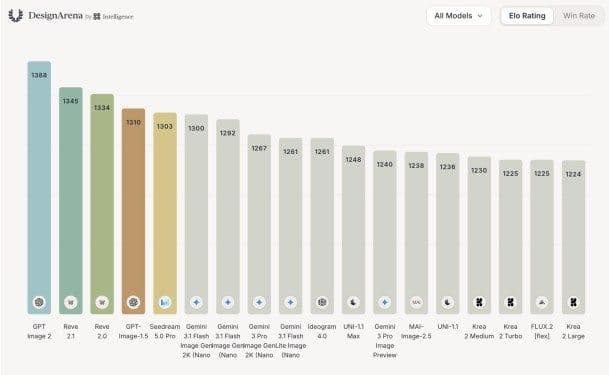
As co-founder Grace Li tells it, her company started a few weeks before graduation in 2025, with a handful of college friends trying to make their AI game engine work. The models could make functional games, but none of the games were fun — which raised the interesting question, how can you tell if a game will be fun? There was no substitute for human judgment, they decided, and soon they were brainstorming ways to get honest human feedback at scale. The result becameDesignArena, an AI tool now used by 5.3 million people around the world. As it turned out, there were lots of AI companies looking for scalable user feedback — and many of them were willing to pay for it. “It was the missing bottleneck for a lot of these models to make improvements in the design space,” Li says. “About a week later, we closed our first major deal with a frontier lab, and the rest is kind of history.” On Monday, the company behind DesignArena — dubbedIntelligence— announced a $7.9 million seed round led by Index Ventures with participation from Conviction (Sarah Guo and Mike Vernal), A*, Valkyrie, and others. For non-enterprise users, using DesignArena is a lot like using a sophisticated model router. There’s a Chat-GPT-style window for prompts, with separate dropdowns for websites, images, and a dozen other visual formats. Once you put in the request, format and style, you’ll be presented with a series of “A vs. B” choices until you’ve ranked the handful of outputs from best to worst. It’s a useful service, but the real value of the platform comes from the enterprise side, where participating models can treat it as a source of endless instant feedback for their media-generating models. The users tend to be indifferent to which models they’re ranking — as Li puts it, they just want the best output they can get — so their rankings can give critical input to what users really want. For frontier labs, that’s a service worth paying for, Li says, adding the site is currently generating $60 million in ARR, solidifying its position as a key source of human-led evaluation data for the AI industry. Crucially, users have to log in to get their output, so Intelligence can also track how those tastes change across different continents and over time. (Li notes that web dashboards in Asia tend to have a more maximalist design style.) These measures are an important complement to automated benchmarks, which can operate at a greater scale but are often subject to being gamed or otherwise manipulated, asthe Hugging Face breachdemonstrated in dramatic fashion last week. That’s not to say that crowdsourced human feedback will be an automatic winning market. Less than a year after launching,Yupp shuttered its doors earlier this year after raising $33M from a16z crypto’s Chris Dixon. It too nabbed some frontier models as customers and had, it said, over 1.3 million users, but still couldn’t build a sustainable long-term business. Even so, other startups based on human evaluation seem to be thriving. LM Arena, which takes a similar approach to text-based responses,raised $150 million in a Series A in January, just four months after formally launching its paid product.
View

Tech Mahindra’s AI Chief Thinks India Is Building the Wrong AI
“The end goal is to actually produce something which only India has the ability to produce.” That, according to Malhotra, requires a very different mindset.
View
A Marc Benioff-backed startup thinks AI can solve the AI deployment problem
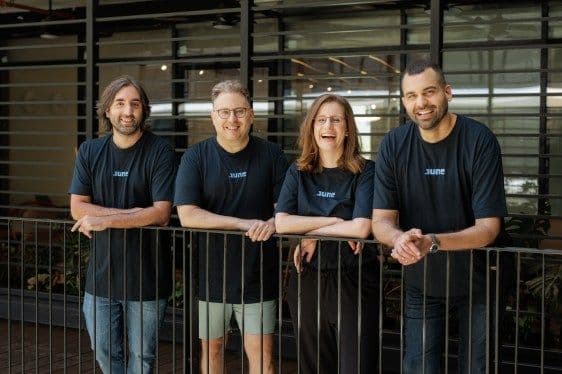
It’s so hard for big businesses to get AI tools working reliably that whole new organizations offorward-deployed engineersor FDEs— specialists who drop into a company to get its AI systems up and running — are springing up to help them. “AI, paradoxically, increases the demand for professional services,” says Efrat Rapoport, a former Salesforce executive whose new company, June, emerged from stealth Monday morning. “The industry’s answer to AI implementation is, ‘let’s hire more and more and more people.” Rapoport and her three cofounders — Ohad Hen, Barak Goldstein, and Idan Tsitiat — have a different idea about how to bring AI into broader use. To pursue it, the company raised $20 million in pre-seed funding led by Marc Benioff’s Time Ventures, with additional backing from tech luminaries like Michael Dell, Aaron Levie and George Kurtz. The company declined to share its valuation. The four founders previously startedBonobo AI, a pre-transformer language model company that launched a voice-to-text service in 2017. Bonobo AI was snapped up two years later by Salesforce, and the team worked for several years on the tech giant’s AI initiatives before setting out on their own again after watching customers struggle to bring AI into their existing platforms. Their potential was clear enough to their investors, Rapoport says, that “we didn’t even have a deck for this raise.” While the so-called SaaSpocalypse has software firms fearing that AI might replace them, thus far no one is vibe-coding a CRM for a Fortune 500 company. Any AI model brought into a corporate setting still has to work with Salesforce, ServiceNow, DataBricks, Workday, or any of a dozen other data-management platforms. “Before AI can create value, someone has to deal with legacy systems,” Rapoport says. “You have fragmented data across these platforms. You have complex workflows. You have years of technical debt.” Building an agent template is the easy part, she says. The hard part is getting it to work with the mess underneath. “How does an agent know how to operate when you have 10 duplicate [database] fields that say the same thing, and different teams are using them?” June’s platform scans a company’s existing systems to understand its business processes, find bottlenecks, and then build more optimized, agent-powered processes to replace them, automatically notifying teams through the company’s comms channels. “We give you the full roadmap automatically of what needs to happen step by step for you to actually implement this agent successfully in an enterprise environment, which is often very complex,” Rapoport said. “We give you a step by step guide. ‘Remove these duplicates. Connect to this data source.’ And then you click on ‘build’ on each task, and June starts building it for you in the organization.” Paul Akinmade, chief strategy officer at CMG, a major U.S. mortgage lender, moved his company’s software engineering over to Claude Code quickly, but hit roadblocks trying to integrate it with Salesforce. That was a problem since he’d promised at Salesforce’s annual conference the year before that he’d return with 100 agents running, and it wasn’t looking like he’d hit that target.Akinmade says his team spent weeks hitting a wall — meeting with architects, talking to forward-deployed engineers, consulting everybody they could — without making progress. June changed that, he says, giving his team a clear view of where to deploy agents and letting them do so safely, even before the official kickoff call between the two companies Rapoport sees June as a tool that complements FDEs and consultants, but her customers may be drawn to it for the opposite reason: it lets them avoid FDEs altogether. When Akinmade was first considering piloting the tool at CMG, he says he told her: “If your product requires FDEs, I don’t want your product. I’ve already I’ve already done that and I’m getting annoyed by it. I don’t want a black box. I don’t want something only certain people can figure out. I want an easy-to-use tool.” Evidently, June cleared the bar.
View

OpenAI’s Unreleased Astra Model Solves 10 Long-Standing Math & Computer Science Problems
The company also released research papers, Lean-certified proofs, and the model’s reasoning walkthroughs for each result.
View

Alibaba’s Qwen3.8-Max To Become First Open-Weight Max Model
Qwen3.8-Max offers competitive results versus GPT-5.6 Sol and Anthropic’s Claude Fable on several public benchmarks.
View

Physical AI's Biggest Problem? Teaching Machines How to Feel
Deccan AI, a physical AI startup that recently raised $25 million, believes the hardest data annotation isn't visual. It's touch.
View

Identity May Become as Fundamental to AI Infrastructure as Compute and Cloud
As Indian enterprises embrace AI, Ping Identity views digital identity as essential for securely scaling AI and managing regulatory demands.
View