最新 AI 资讯
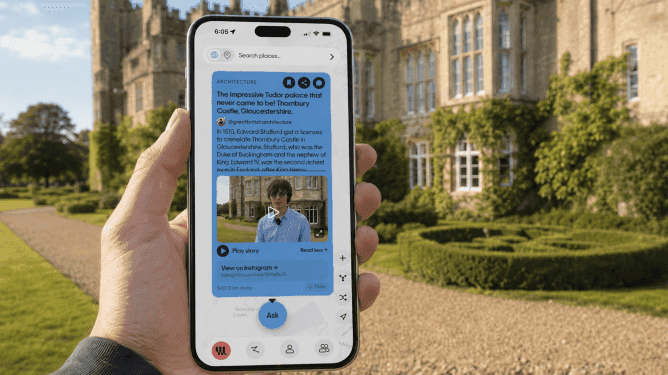
Meet Wrinkles, an app that uncovers the hidden stories of the places around you
A new app calledWrinklesuses your location to automatically surface stories about the places around you. Wrinkles, available on bothiOSandAndroid, essentially acts as an AI-powered audio tour guide that reveals hidden history and local stories. The idea behind the app is to allow you to move through the world while hearing the places around you come to life without having to stare at your phone. As you explore, Wrinkles can tell you the secrets behind a building, the history of a street, and other local lore. Wrinkles was founded by David Stemler, a longtime advertising executive, and Ryan Hansan, who previously founded ScratchDC, a meal delivery service, and TasteLab, a shared commercial kitchen that helped independent food businesses launch and grow. The pair have known each other since middle school and say travel has always been a defining part of their friendship. They began taking trips abroad together as teenagers and continue to travel together today, now with their families. Over the years, many of their business ideas have grown out of long conversations while traveling and questioning how the experiences around them could be improved. Wrinkles was born from that same curiosity. Stemler came up with the idea for Wrinkles while visiting the British Museum in London and using its official app for a self-guided tour. Although he believed the app was well designed, Stemler found the experience frustrating. “I spent the entire visit heads-down, matching numbers on the walls to lists on my phone instead of taking in my surroundings while learning about them,” Stemler told TechCrunch in an email. At the end of his trip, he called Hansan from the airport and asked, ”If the phone in my pocket knows exactly where I am, shouldn’t the places in front of me be able speak?” The startup has built a global foundation of 1.3 million Wrinkles, or points of interest, across 177 countries. Beyond this foundational content, historians, museums, creators, and brands can add their own stories and experiences to the map. Users can discover these stories as they move through the world or explore them remotely by searching and browsing the map. To make the experience feel like a traditional tour, users can ask questions as they explore. For example, while learning about how the Trevi Fountain was built, you could ask a question like, “Where does this water actually come from?” There’s also a social aspect to Wrinkles, as users can follow friends, family, creators, and organizations, then save and share Wrinkles or organize them into custom maps and guides. Users can personalize their Wrinkles, too, by attaching family memories, photos, videos, and recordings to specific places. Families can collaborate on these histories to preserve stories tied to places like a childhood home, a first date location, or a hometown. Hansan and Stemler see Wrinkles as more than a travel app. While it can help spontaneous travelers discover the stories behind new places, they believe it’s also designed for people who want to learn more about the buildings they pass every day or rediscover their own hometown. “The common thread isn’t travel — it’s curiosity,” Hansan said. “A travel app gets used on one trip a year. Wrinkles gets used on your commute, at the botanical garden, at the zoo with your kids, leaving a permanent legacy for a loved one, and on the trip to Spain.” While the duo has experimented with a freemium model, they say they’re committed to keeping the app free for users. Wrinkle’s revenue primarily comes from the supply side, with museums, tourism boards, universities, and hotels using Wrinkles to create location-based experiences for visitors without having to build their own apps. Creators and media partners can build sponsored place-based guides, while businesses can promote Wrinkles connected to their locations. Partners can also add links for users to book tours, reserve tables, buy tickets, or visit businesses, with Wrinkles earning a share of those transactions. As for the company’s long-term vision, the duo sees Winkles becoming a normal part of how people navigate places, whether that means discovering the history of a college campus, learning more about their own city, exploring a map while planning a trip, or getting a deeper understanding of a city they’re visiting for the first time.
View

Anthropic signs $10B deal with AI cloud startup Volta
Anthropic has been on a cloud partnership spree in recent months, and its latest move is reportedly a $10 billion deal with AI cloud startup Volta. Bloombergoriginally reportedthat Volta,founded earlier this year, will provide cloud compute to the Claude maker over a six-year period. Volta has a partner in this deal, Bitdeer, a crypto-mining company that will help develop the data center to provide the compute capacity. That facility will be located in Norway and will deliver a 133 megawatt capacity. It will be fueled byNvidia’s Vera Rubin systems, the chipmaker’s state-of-the-art AI chip architecture. Volta is part ofNvidia’s Cloud Partner program, which is a consortium of AI cloud providers that use Nvidia’s GPUs in their data centers. Volta had spoken about a deal with an AI lab but hadn’t named the specific company it was working with. Bloomberg originally cited anonymous sources familiar with the deal. TechCrunch reached out to Anthropic for more information. Anthropic has sought to aggressively expand its compute capacity over the last several months as it wages a corporate battle with its competitors. The company also recently announced new compute deals with the likes ofSpaceXandAmazon.
View

Open-weight AI models are catching up to the frontier. The safety gap remains.
As policymakers debate how to govern increasingly powerful AI systems like OpenAI’s GPT-5.6 Sol and Anthropic’s Mythos, a Chinese open-weight model has narrowed the gap with the industry’s leaders. GLM-5.2, the open-weight AI model from China’s Z.ai, is only a few months behind OpenAI’s GPT-5.5 and Anthropic’s Claude Opus 4.7 on cyber and bio capabilities, according to anew reportfrom AI safety nonprofit SaferAI. But the divide between frontier capabilities and safety practices is growing. According to SaferAI’s evaluation, which the nonprofit ran via Z.ai’s public API, GLM-5.2 refused none of the offensive cyber or dual-use biology tasks it was given. By comparison, Claude Opus 4.7 “refused so consistently that SaferAI could not complete CyberGym on it at all.” (CyberGym is a benchmark that evaluates cybersecurity capabilities. OpenAI used it in the evaluation that preceded last month’sHugging Face breach.) It’s a stark reminder of what some critics have warned for years: that open-weight AI models could put highly capable AI into the hands of potential attackers, with no way to police how they use the technology once they download the weights. With open-weight models rapidly approaching the capabilities of the world’s leading AI systems, the debate is moving from whether they can compete to how society manages risks once they are released. “The frontier of capability is not the frontier of risk, and so we do have to take into account the state of the mitigations as well to assess the risk properly,” Henry Papadatos, executive director of SaferAI, told TechCrunch. While Z.ai could apply safety measures to its hosted API, those protections become unenforceable once someone runs the weights on their own hardware, where they can remove or modify any safeguards, fine-tune the models, or change system prompts. Frontier developers like OpenAI and Anthropic tend to rely on safeguards like classifiers, refusal training, and API-level controls to limit dangerous cyber and biological assistance. Those measures are far from foolproof: jailbreaks routinely bypass protections on deployed models. Far.ai, an AI safety nonprofit,found hundreds of universal jailbreaks— defined as reusable keys that succeed on most harmful requests — in frontier models like xAI’s Grok 4.5 and Google DeepMind’s Gemini 3.1 Pro. According to the report, jailbreaks succeed when attackers combine multiple manipulation techniques — including roleplaying, authority impersonation, fake conversation history, and follow-up prompts — to amplify weak points in a model’s defenses. But the safeguards in place for closed models don’t work at all on open-weight models, which are designed to run on any infrastructure with any set of safeguards — or lack thereof. “The objective should clearly be that the good capabilities — the safe ones — are accessible to anyone, and then we try to remove the bad ones, even in an open source fashion,” Papadatos said. One technique Papadatos noted could help is called “pre-training data filtering,” which is when an AI company removes offensive cybersecurity information from their training data and then trains the model on the curated dataset. Someresearchsuggests this can reducehazardous biological knowledgewithout harming overall model performance. However, for cybersecurity, data filtering is much less practical. It’s difficult to train a general model that excels at coding but isn’t also a good hacker. Because coding has become AI’s biggest moneymaker, developers face pressure to keep improving those capabilities even as they search for ways to limit misuse. Because of that, frontier developers have increasingly relied on other mitigations instead. One approach has been to selectively restrict the kinds of cybersecurity assistance models will provide. Anthropic’s Opus 5, for example, can search for vulnerabilities in uncompiled source code, but not compiled software,per the model’s system card. The reasoning is that this makes it harder to use Opus 5 for offensive purposes. Others include rigorous pre-deployment safety evaluations, publishing risk assessments, and withholding model weights if a system is perceived as too dangerous. In GLM-5.2’s case, SaferAI says Z.ai didn’t publish a safety framework, pre-deployment testing commitments, or risk assessment for the model. TechCrunch has asked Z.ai whether it conducted internal or third-party frontier safety evaluations before release, but did not receive a response. Chinese leaders have increasingly acknowledged the risks of advanced AI. At the World AI Conference last month,Chinese President Xi Jinping emphasizedthe importance of open-weight models, while also stressing the necessity of ensuring AI remains a tool under strict human control. Graham Webster, who studies Chinese AI policy at the Stanford Cyber Policy Center, told TechCrunch that China has robust regulations governing AI, but those rules have historically focused on politically sensitive content, misinformation, and social stability rather than catastrophic AI risks like offensive cyber capabilities and biological misuse. “U.S. AI thinkers are, in general, more concerned with this existential catastrophic [idea] than the Chinese community,” Webster said, adding that many Chinese policy researchers believe that if there’s truly going to be a novel frontier risk, American companies will likely encounter it first. “The Chinese system has confidence that they control the use of these technologies inside China,” Webster continued. “Being online in China is something you do attributed to your real name, and companies can be held accountable, users can be held accountable.” Webster mused that the same mechanism that model providers use for refusing to engage on certain political topics can potentially be tweaked to make sure models refuse to complete offensive cyber attacks or won’t deliver adverse biological engineering outcomes. He added that because Chinese companies tend to coordinate with regulators behind the scenes, it can be tough to know what internal testing they’re conducting before release. Advocates of open-weight AI argue that releasing the weights is important for cybersecurity because it allows companies defend themselves against attacks — Hugging Face relied on GLM-5.2 to defend itself against OpenAI’s breach — and because it allows them to better prepare for future threats if they know what’s coming. “The same systems that helped stop an AI-powered cyberattack can now help defend against millions of cyberattacks every day, while helping us identify and fix vulnerabilities before attackers exploit them,” Clem Delangue, CEO of Hugging Face,said this week in a social media post. Papadatos said that benefit is often overstated, and doesn’t mean “we should open-source dangerous capabilities.” “The main point in my mind is that we shouldn’t just accept that dangerous capabilities are easily accessible by anyone anywhere,” he said, stressing that he believes the industry should be striving for only making the “good capabilities” easily accessible. By default attackers adopt new tools faster than defenders do. For example, a ransomware group can change its methods in a week. A hospital cannot.”
View
SpaceX has bought $329M worth of Tesla Megapacks so far this year
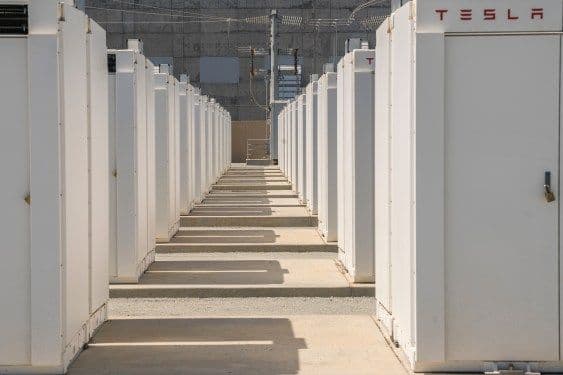
SpaceX has ramped up purchases of Tesla Megapack, spending $295 million on the battery storage devices in the second quarter and $329 million so far this year, according to the company’searnings reportreleased on Tuesday. The purchase illustrates just how interconnected Elon Musk’s universe of companies are. Musk, who is the CEO and largest shareholder of SpaceX, also runs Tesla. Musk’s artificial intelligence business xAIacquiredhis social media platform, X, in 2025. Earlier this year, SpaceXgobbled upxAI. The industrial-scale batteries are likely being deployed at the company’s xAI data centers. Before xAI merged with SpaceX, the AI company bought $430 million worth of Megapacks for its data centers. In the first quarter of this year, xAI had purchased only $34 million worth of the equipment. SpaceX also reported that as of December 2025, it had acquired $131 million worth of Tesla Cybertrucks at manufacturer’s suggested retail price, according to its regulatory filing. Though xAI has leaned heavily on natural gas to power its data centers — includingdozens of unpermitted turbinesat a site in Mississippi not far from the Colossus data center project — large batteries like the Megapack are still a critical part of data centers. In addition to providing substantial backup power that can be tapped in a second or less, batteries can provide extra power to GPUs when they demand it. AI data centers don’t draw power consistently. Rather, their power demand ramps up and down depending on the demands of training AI models and running inference. Such peaks can incur significant charges from a local utility or overwhelm on-site generators. Batteries help smooth out those peaks, lowering costs while ensuring that the data center can operate consistently.
View

Texas halts new data centers as governor calls for audits
Tech companies and developers have been scouring the U.S. for places to build data centers, and they’ve been drawn to Texas’ loose regulations and seemingly abundant power supply. Only Virginiahosts more data centersthan Texas. But even Texas can be pushed to the brink. Governor Greg Abbott announced Monday that all new data center projects will need to be audited by both the Public Utility Commission of Texas (PUCT) and the state’s grid operator, the Electric Reliability Council of Texas (ERCOT). The size of ERCOT’s interconnection queue has grown dramatically this year. In January, ERCOT had 233 gigawatts of projects waiting to connect to its grid. Inless than six months, that figure had more than doubled. Today, Abbott’s officesaidERCOT is tracking 474 gigawatts of new connection requests. About 90% of those are data centers, according to the grid operator. Some of those projects are simply paper proposals at this point. Because queues for grid connections have grown so long, the first action many developers take is to get in line. Many projects fizzle out as they progress. If even a fraction of those proposed projects come to fruition, they could overwhelm the Texas grid. The interconnection queue today represents more than five times ERCOT’stotal peak demand. While many data center operators, includingGoogleandMicrosoft, have been drawn to Texas for its ample natural gas reserves, wind and solar havehelped ERCOT keep pacewith growing electricity demand, according to the Energy Information Administration (EIA). Utility-scale solar capacity grew fourfold between 2021 and 2025. Meanwhile, electricity prices declined over much of that time, according to areportfrom Amperon. Electricity prices in Texas are relatively affordablecompared with other states, but they have been rising. Data centers and crypto-mining facilities have pushed prices higher,accordingto the EIA. Abbott clearly wants to head off that trend. The governor has directed PUCT and ERCOT to collect a range of information about proposed data centers, including their on- and off-site demand for electricity and water, noise-mitigation efforts, light controls, use of tax incentives, and ownership details. Historically, Texas has favored lighter regulation than many other states when it comes to development. Houston famouslylacks a zoning code, and the state has abusiness-friendly regulatory environment. But data centers havebecome a flash pointacross the country, including in Texas. Abbott had previously tried to coax data centers into providing more information through a voluntary survey.Most didn’t respond, so he’s taking a heavier hand to compel compliance. Depending on what emerges from the audits, Texas’ days as a data center mecca may be coming to a close.
View

Spotify expands AI remix and covers project with Merlin partnership
During its second-quarter earnings call on Tuesday, Spotify again teased the upcoming release of a new product that will allow music fans to leverage AI to make covers and remixes of artists’ music, with the artists’ consent. The companyalso announced that Merlin,a licensing partner for independent labels and distributors, has now joined Universal Music Group (UMG) on the new AI music effort. The deal brings more than 30,000 labels from Merlin’s network to the product, which will allow fan-made covers and remixes by artists who agree to participate. Spotify has positioned its AI music product as being significantly different from the more controversial AI music startups that have been used to create fully artificial songs. Instead, Spotify co-CEO Gustav Söderström told investors on Tuesday’s call that the company’s AI music product will be about “real artists, not fake artists.” “We want artists to be consenting [to add] their work into this catalog, so people can play around with covers and remixes based on their art,” added co-CEO Alex Norström. “We also obviously want to give them credit. And last but not least…we not only have the consent and give credit, but we also drive the compensation for this. So, really, we’re talking about the first legal way to partake in this AI tailwind that we see coming for interactive music,” he said. AI music has flooded streaming services. Music streamer Deezer recently noted thatmore than 50% of daily track uploads were generated with AI, up from 10% in January 2025. The company told investors that a research preview of the fan remix and covers product would initially be made available to a subset of users. Spotify also noted that it would not require a full music catalog to get started. The company did not say when the preview would arrive. The new tool will launch as a paid add-on, creating an additional revenue stream for artists, Spotify previously said. “Our remix and covers I think is an incredibly exciting product again because there is no one else that can really do this,” Söderström said. “Normal generative music will happen with or without us. This product will not happen without us, and it needs to exist so that existing artists can participate in this.”
View

Nvidia doesn’t mess around: A week after open AI industry group formed, it’s already showing progress
The week-old Open Secure AI Alliance (OSAA), an industry group spearheaded by Nvidia that has already grown to over 120 companies, has developed a cutely named working group, the Shared AI Findings Exchange, or SAFE. The group is alreadypresenting proposalsfor open comment, and The Linux Foundation, a member of the group, is managing the proposals. The group developed them while members gathered at the nexus of the cybersecurity world, the Black Hat conference, taking place this week in Las Vegas. The guidelines are nothing terribly earth shattering for now. The proposals cover areas like how to confidentially report AI cybersecurity incidents, alert those affected, and then do blame-free analysis so all can learn from them. At the same time, members of the OSAA arealso contributing and cataloging bits and pieces of their open source technologythat might be useful. This may, as these types of industry organizations go, eventually coalesce into an open source means for an enterprise to secure their AI agents, or defend against rogue AI attackers, such asthe OpenAI model that infiltrated Hugging Face. (Hugging Face is also a member of this group.) For instance, Nvidia has noted that it offers an entire family of open models, as well as an open source LLM vulnerability scanner calledGarak; Okta is working on agent identity tech; Red Hat is working on agent governance; Amazon has contributed both an open agent building tool,Strands Agents, and an authorization languageCedar. And there are many more examples. The group now includes a host of big names including Adobe, BlackRock, Cisco, Intel, Microsoft, and Visa, but there are some notable absences, like Anthropic, OpenAI and Google. Interestingly, both OpenAI and Google signed the original open letter that spawned this group. Theletter, published last week, urged the White House to support open source AI efforts, not squash them. It was championed by Nvidia and signed by over 200 tech companies. WhileAnthropic’s cold shoulder to the letter and the industry group to date is not a surprise, both OpenAI and Google have released open weight models of their own. Google is generally known as a big supporter of open source, too. We’ll see if they join as this group builds momentum. Meanwhile, the group is operating at AI speeds. It’s only been a couple of weeks since news broke that the Trump Administrationwas considering banning Chinese open weight models, causing the industry consternationthat resulted in the open letter. Whatever ultimately happens with Chinese open weight models in the U.S., the fast-action by this heavyweight group appears to be a good thing for the U.S. open AI ecosystem Some in the ecosystem, like the co-founder and chief technology officer of U.S. open weight AI lab Arcee, say that’s ultimately the way tobest any threat — real or imagined — that Chinese AI labs pose to the United States. “Openness may be one of the most important paths to AI safety and security,” this industry group wrote in their letter. Looks like they are ready to immediately put their effort — and their tech — where their mouths are.
View
EON wants to move the data superhighway from ocean fiber to space lasers
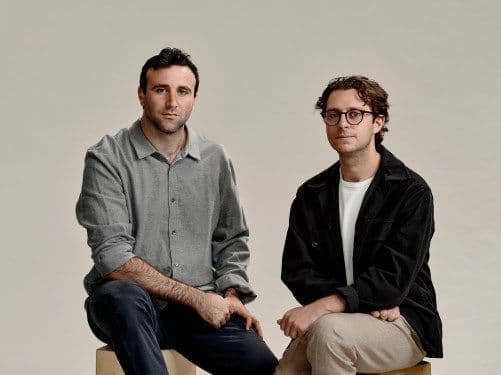
As hyperscalers build out data centers around the world, they need to move the bits back and forth, and that often relies on a somewhat brittle network of undersea fiberoptic cables crisscrossing the oceans. Those cables aretricky to access and repair, much less install. But alternatives aren’t easy to find: Radio transmissions don’t have the bandwidth, which rules out most wireless approaches on the ground or in orbit. But now, maybe lasers could do the job. Endeavor Optical Networks, a start-up founded in May and emerging from stealth today with $10.75 million in seed funding from General Catalyst and Andreessen Horowitz, is betting on that plan. The co-founders, CEO Charlie Horowitz and CTO Tyler Pressler, aim to launch a network of laser-equipped spacecraft to link data centers from orbit. Most satellite communications networks, even those that provide broadband internet service, aren’t robust enough to carry data at 200 terabits a second or more, the speed of undersea fiber. However, more powerful satellites and advances in optical technology are making space-to-ground communications with lasers more feasible. NASAused laser commsto beam back data from its most recent Moon mission, while a handful of private space companies, including York, Kepler, and Cailabs, have demonstrated links between Earth orbit and the ground. Those connections, however, aimed for a throughput of 2.5 Gbps, and EON has a bigger starting goal, Horowitz says: Throughput of 2.4 terabits a second. That will require some secret sauce to deal with one of the biggest problems with laser comms—how the signal is distorted by the atmosphere as it passes through it, particularly when clouds are blocking the way. EON intends to build a network of about 20 satellites, each able to provide a dedicated link between two continents, with the initial fleet providing 24 hour coverage for early customers. The company will carefully choose ground stations in different regions to serve local data centers and CDNs, using redundant sites and leveraging weather data to ensure a reliable link. The startup is talking to hyperscalers and AI labs as customers, since they move more data than anyone else, with the focus on underserved or expensive routes: Lengthy ones, like France to Australia, or those without extensive existing infrastructure, like crossing between Africa and South America. They plan to sell dedicated capacity to entice customers interested in full control of their data transit. First, though, EON will use its seed round to build out an optics lab, hire more engineers, and perform ground tests ahead of a demo satellite they hope to launch around the end of 2027. Horowitz expects that spacecraft to offer the highest optical downlink throughput yet seen—at least 800 gigs and perhaps a terabit. Doing that will require careful engineering. EON will focus on producing the optical communications terminal, carefully allocating spending to the components that must be exquisite, like the gimbals that will point the laser. The company plans to buy powerful off-the-shelf satellite busses, like those made by Apex Space, Horowitz’s previous employer. Horowitz served as Apex CEO Ian Cinnamon’s chief of staff and then as the company’s director of special projects. “Charlie is a force of nature—he can move seamlessly from strategy to the details required to make something real,” Cinnamon told TechCrunch. “Charlie is the ideal founder, and I invested personally because I believe deeply in Charlie and what he’s building at EON with Tyler.” In addition to Pressler, a PhD astronautical engineer who has planned frontier missions for NASA, the company’s technical bench includes Michael David Francois, a long-time Google executive focused on global network infrastructure, and Wesley Baxter, an optics engineer who most recently worked on Amazon’s LEO satellite network. Jeannette zu Fürstenburg, General Catalyst’s president and managing director, who led the investment, said she sees it uniting the fund’s two key themes—AI and resilience. “I don’t worry about demand,” she told TechCrunch. “I think all of that will solve for itself. It’s really all about can you actually get this thing into space in the time that we discussed? We really think about founder-product fit, [Horowitz] is just the right caliber of guy to go after a problem like this.” They aren’t the only one chasing this problem—Blue Origin, Jeff Bezos’ space company, has announced plans forTeraWave, a 5,048 satellite network that aims to provide speeds of up to 6 Tbps to large-scale users. Blue’s plan is more ambitious, but will also require more time to launch and deploy. EON’s smaller fleet of satellites should be easier to get into space quickly, but they will need to solve many of the same technical challenges. “Data centers have high standards for quality and redundancy,” points out Caleb Henry, the director of research at Quilty Space. “Satellite internet is just now progressing from a technology of last resort to dependable, high-bandwidth infrastructure. That’s not to say it will be impossible to make satellites optimized for data center connectivity, just that it will be harder and take longer than most entrepreneurs suggest.”Still, a project like may be more practical compared to the popular idea of building the data centers themselves in space. “We have one rule at the company: no physics problems,” Horowitz says. “There’s a market that exists today that we can go serve. Down the road, we’ll go and take on more as it comes, but we know that this is a problem that exists today, that’s only getting worse. That’s our bet—more data is moving terrestrially than ever.”
View
Is the future of data centers portable? Runware builds a pod to find out
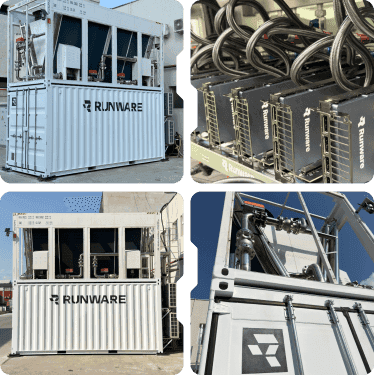
On Tuesday, AI infrastructure company Runware announced the launch of its own modular data center called Sonic Inference Pod. Designed as a single transportable unit, the Pod represents a more flexible kind of compute that can sit alongside hyperscalers’ massive data center projects. Runware says the Pod can offer inference at a higher quality but lower cost than other serverless inference platforms and GPU clouds. The modular design means it’s easy add capacity quickly by creating new pods rather than having to expand a fixed data center. In some ways, this is the future, Flaviu Radulescu, co-founder and CEO of Runware, told TechCrunch. “We believe distributed compute, positioned closer to end users for faster inference, is what will win in the long term,” he said, noting his company as an example. Aside from a lower price, Radulescu noted that the runware system can scale and add capacity fast, deploy anywhere there is power, and adapt quickly to new hardware releases. The Runware pods also do not use water, but rather a closed-loop cooling system that can be built in days, compared to the months or even years it takes to build traditional data centers. “Demand for inference is growing faster than facilities can be built,” Radulescu said. “What we want is to power the world’s intelligence, to be the backbone every AI model runs on with capacity that keeps up with demand instead of throttling it.” Runware currently has 10 pods in deployment across the U.S., Europe, and Asia-Pacific, Radulescu said. The company already provides inference to a few companies, including Higgsfield AI and Wix, and has 160 sites available to power its pods right now. Runwareannounced a $50 million Series Ain December to provide the infrastructure needed for companies to generate images. They see the expansion into pods as part of the company’s core mission: providing inference to companies, rather than a single product. AI labs like OpenAI and SpaceX are still racing to build data centers throughout the U.S. OpenAI, for example, is close to striking a $500 billion deal that would see it build a data center in Ohio,according to reports. But Radulescu doesn’t see those projects as a threat to the Sonic Inference Pods, describing the flexibility of the pods as a key differentiator. “Every pod runs as part of a single network, so requests go wherever there’s capacity, closer to the users, and if one pod goes offline, traffic moves to another,” he said, adding that a system failure means one pod is down rather than a whole fixed facility. “Customers who want dedicated hardware get whole pods to themselves.” He’s also not too worried about other companies building this for themselves, saying simply that hardware is slow and finding the talent pool to build and fix this technology is small. “A mistake in a circuit board design costs months between redesign, simulation, fabrication, testing and delivery,” he said. “Every one of those calls needs someone who understands exactly what each component does and what breaks if it’s gone.” Building AI data centers is a controversial topic, however, especiallybecause of how many resources it uses.Already, communities where data centers are located have reported seeing a rise in utility costs. One day, Runware sees a world where it can run on renewable power and doesn’t draw on the resources communities need, but that day is not necessarily today. Radulescu said that AI power use is going to increase regardless, “driven by demand for inference, not by who supplies it.” What Runware is focused on right now is how that demand gets met, he said. “No transmission losses, no water in cooling, and we’re using power that already exists instead of asking for new grid capacity to be built. More inference built this way means less new grid, less water, for the same amount of compute.”
View
Apple says more ex-employees may have taken confidential data to OpenAI
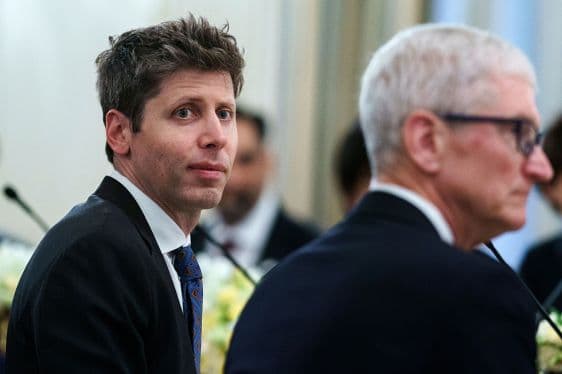
Apple is now seeking a preliminary injunction in itstrade secrets case against OpenAI,which aims to stop the AI model maker from moving forward with developing an AI device or other products based on Apple’s technology. The iPhone maker also claims that more of its former employees may be involved with the trade secrets theft. In a newfiling, Apple is requesting expedited discovery from the accused OpenAI employees, senior systems engineer Chang Liu and Chief Hardware Officer Tang Yew Tan; OpenAI, and its foundation; and io, the device startup co-founded by Apple’s former lead designer Jony Ive. Apple also notes that its continued investigation has so far revealed 11 other former Apple employees beyond Liu and Tan may have been witnesses or otherwise involved in the case, and others who were previously named in the original complaint, like OpenAI employee Yu-Ting Peng. The filing marks an escalation in Apple’s legal battle with OpenAI, as it suggests Apple has uncovered new evidence that the misconduct goes beyond the former employees named in the original complaint. “For example, another former Apple employee seems to have met with Mr. Liu and Ms. Peng in advance of Ms. Peng’s interview at OpenAI and discussed with them during that meeting Apple proprietary information relating to unannounced products,” the filing states. “Yet another former Apple employee took screenshots of confidential Apple documents relating to an unannounced Apple product before an interview at OpenAI.” “And, after Apple filed its complaint, multiple former Apple employees now working at OpenAI reached out to discuss returning Apple-issued work devices they kept when they left Apple,” Apple claims, suggesting there were more who were possibly involved with the scheme. Apple is pushing the court to allow for expedited discovery because it believes it has good cause to suspect that there are others involved in the theft of its intellectual property. The company noted that its motion for a preliminary injunction is also pending. OpenAI responded publicly to Apple’s latest,saying in a blog postthat Apple’s request for a preliminary injunction is “both based on false information and completely unnecessary because we do not have, nor want, any of their trade secrets.” “We’re much more interested in building innovative products and technologies that push the frontier,” OpenAI’s statement reads. The AI model maker also pointed to earlier mistakes Apple made,which had been reported,including that Apple emailed the wrong person when it made contact with OpenAI after confusing two similar surnames. OpenAI also alleges that Apple lied about discussing matters with its general counsel. And, the company said that Apple didn’t admit to the claim that the “residual access” allowing former employees to access Apple’s system was the result of poor security procedures on Apple’s part.
View

Elon Musk spends half his time talking robots and AI on Tesla earnings calls
Elon Musk wants you to believe Tesla is no longer a car company, even if it’s still shaped like one. The company shipped nearly half a million cars last quarter and made 70% of its money from car sales. Still, Musk has spent the last few years making the case that Tesla is really an AI and robotics company, even if some of the AI happens to live in cars. And whatever the company financials suggest, Musk’s attention has been moving decisively to the AI parts of the company — projects like the Optimus robot and fully autonomous robotaxis— as the everyday concerns of a carmaker get pushed to the side. To show how that shift happened, TechCrunch teamed up withHudson Labs, a New York-based financial research firm, to map what Musk and Tesla’s other executives have spent the last seven years talking about on the company’s quarterly earnings calls. The startup sourced transcripts of the calls from S&P Market Intelligence dating back to 2019 and used its Co-Analyst — an AI tool purpose-built for high-precision financial research — to determine a topic for each sentence, before counting their frequency. The data shows that Musk now speaks about artificial intelligence, along with robotaxis and Full Self-Driving software, nearly 50% of the time he opens his mouth. That’s up from prior years, like in 2022, when he typically spent 15%-20% of the time on those efforts. Over the same period, Musk was often making the case that autonomy justified the company’s soaring value. “If you value Tesla as just an auto company – fundamentally, it’s the wrong framework,” Musk said onthe Q1 call in 2024. “If somebody doesn’t believe Tesla is going to solve autonomy, I think they should not be an investor in the company.” Talk of robotics has shot up sharply in the last three years, too. Tesla revealed it was working on a humanoid robot known as Optimus in 2021. In the year that followed, Musk only spent around two percent or less of his time talking about the project. Over the past year, though, he’s spent at least 10% of his remarks talking up Optimus, with it occupying nearly a third of his focus on the third-quarter call in 2025. Musk ramped up how often he talks about these futuristic ideas at the same time that Tesla’s core automotive business stopped growing. As a result, he now spends less than a third of his time on earnings calls talking about cars and manufacturing. On that same third-quarter call last year, Musk spent less than 20% of his time talking about the automotive business. The other Tesla executives who appear on the company’s earnings calls, like chief financial officer Vaibhav Taneja and vice president of engineering Lars Moravy, have been much slower to shift their focus. Even on some of the most recent calls, they have spent around 30% of the time focusing on the automotive business, with their next-most common topics being AI, robotaxi, and Full Self-Driving. Their attention has shifted, but they are lagging behind Musk’s enthusiasm for AI and robotics, most likely because those efforts aren’t yet generating any real returns. These other Tesla executives used to spend nearly 50% of their time on these calls (or more) talking about making and selling cars. That all changed in 2024 as the car business started to suffer thanks to increased competition from legacy automakers and new Chinese entrants. But when they do join Musk in talking up the future, they match the lofty rhetoric of their boss, the world’s richest man. “The path to amazing abundance is ever challenging and requires making bold bets,” Taneja said on the Q2 call this year. “Our progress will be non-linear. The future is going to be great.”
View

Sarvam Is Hell-Bent on Pre-Training a Trillion-Parameter Model
Sarvam AI really wants to put to rest the question of why it's building a model from scratch instead of post-training open-weight models.
View