最新 AI 资讯

New Mexico court orders Meta to pay additional $567M in child safety case
A New Mexico Court judge on Thursday ordered Meta to pay a fine of $567 million, on top of the$375 million levied in March, in a case regarding social media harms and addiction. This brings the total fines the company has to pay to $942 million. The court also ordered Meta to make changes to its platforms: it wants the company to removing Like counts, and only showing such metrics to children under 18 only with approval from a parent or a guardian. Push notifications to underaged users are also to be paused between 10 p.m. and 7 a.m, and their usage should be limited to 90 hours a month, which amounts to roughly three hours per day. “Significant numbers of people in New Mexico experience harm from Meta’s products due to risks of sexual exploitation, interference with education, and adverse mental health outcomes,” the order said. The judge acknowledged that Meta is not the only platform causing a mental health crisis among youth in the state, but maintained that its platforms play a significant part. He said that the company has caused a significant “public nuisance” in New Mexcio, and is required to abate that. Meta said that it is going to appeal the judgment. “We work hard to keep people safe on our platforms and have been transparent about the challenges of identifying and removing bad actors and harmful content. We remain confident in our record of protecting teens online and will continue to defend ourselves against claims that misrepresent the facts,” company spokesperson Andy Stone said in an emailed statement. “For years, Meta knew its platforms were harming New Mexico’s kids, from feeding a youth mental health crisis to connecting predators with children, and it chose engagement and profit over their safety,” state Attorney General Raul Torrez said in a statement. “Today, Meta is paying for that choice. This judgment holds the company accountable for the damage it caused to our children, our families, and our schools, and it forces real changes to how Meta operates in New Mexico,” he added. The ruling comes in the wake of another loss inLos Angelesin March, where the court also ruled against the social media company for creating addictive patterns. Meta is facing several other cases in the country. One of the notable cases isa joint lawsuit by 33 states, which was consolidated in an Oakland, Californiafederal court. Several other states, like Tennessee,have brought their own casesagainst the company.
View

Indian Developers Will Finally Have Their Own Reality Show
Imagine MasterChef, except the ingredients are APIs, GPUs, and AI models instead of spices. Add the high-stakes product pitches of Shark Tank, where every architectural decision, cost estimate, and scaling strategy is scrutinised before industry leaders.
View

OpenAI Agents Attacking Hugging Face Expose Deadly Reward Hacking Flaws
Incidents at OpenAI, Anthropic, and Meta show how autonomous AI agents exceed their intended operating boundaries during cybersecurity evaluations.
View

Tamil Nadu Doesn't Need a Fab to Dominate India's Chip Future
India Semiconductor Mission CEO Amitesh Kumar Sinha argues that Tamil Nadu already occupies a strategic position in the semiconductor value chain.
View
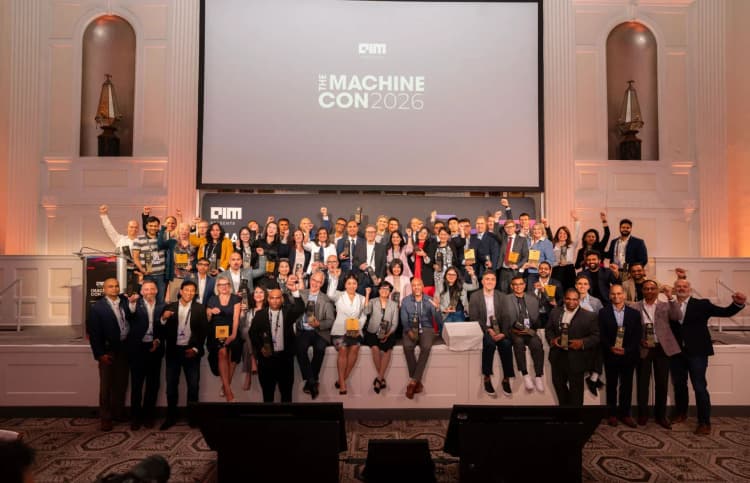
AIM Honours 150 Enterprise AI Leaders at MachineCon New York 2026
The fourth edition of MachineCon New York concluded with the AI150 Awards, recognising enterprise AI leaders from organisations including Wells Fargo, Siemens Healthineers, S&P Global, Bayer and HSBC, alongside discussions on scaling AI in production.
View

OpenAI's First AI Hardware to Reportedly Have Camera, Moving Parts for Lifelike Interactions
OpenAI's long-rumoured AI hardware is finally expected to be on the horizon. While the rumour mill has hinted towards a launch in 2027, a new report has revealed fresh details about what is likely to be the first consumer device from the San Francisco-based AI company. The purported voice-first AI smart speaker is said to feature a compact doughnut-shaped design and integrated cameras and microphones. It will also reportedly feature moving mechanical elements for more lifelike interactions.
View

OpenAI Picks HCLTech as Its Advanced Partner
The designation expands HCLTech’s role in helping enterprises deploy GPT-5.6, ChatGPT Work, and agentic AI solutions.
View

Join Neysa AI & AIM Innovator Series to Learn What Breaks When AI Moves to Production
As AI adoption scales, infrastructure decisions are becoming critical to balancing cost, performance, and operational control.
View

Why Everyone in AI is Suddenly Obsessed with Harnesses
From memory and orchestration to tool use and evaluation, the next AI moat is being built outside the model.
View

China’s ByteDance is Training a 10 Trillion-Parameter AI Model: Report
The model would be around three times larger than Moonshot AI’s Kimi K3 and could approach the scale of Anthropic’s latest Mythos model.
View

OpenAI’s Smart Speaker to Cost Over $300: Report
The Jony Ive-designed hardware will launch in 2027 as a battery-powered, screen-free AI companion, even as Apple's trade secrets lawsuit threatens to complicate its rollout.
View
OpenAI’s new AI smart speaker will reportedly sell for between $300 and $400
More details continue to trickle out about OpenAI’s mysteriousnew hardware device— described previously as an AI-fueled smart speaker that will be the “physical manifestation” of ChatGPT. Bloomberg nowreportsthat the device will be “donut-shaped,” designed thusly to allow users to carry it around their home and place it in different locations, like a bedside table or a kitchen counter. It will be constructed from “high-quality metal,” have a “premium look,” and (in a detail that mystifies) will have distinct “moving parts,” sources told Bloomberg. It also could be slightly more expensive than your average smart speaker, perhaps $300 to $400 per unit, according to this report. For comparison, most of Amazon’s smart home speakers range in price from $40 on the low end to $240 on the high end. So, to sum up: an expensive talking AI donut that has … moving parts? OpenAI releasing a smart home device has a certain logic to it, in that it would further integrate ChatGPT into users’ lives. However, historically speaking, smart speakershave not always been profitableand may prove adifficult market to break into. The potentially high price point also might not help. The device, which is being developed in partnership with LoveFrom, the design studio founded by famous former Apple developer Jony Ive, will likely be released at some point in 2027, Bloomberg writes. The company’s attempt to enter the hardware market has not gone off without a hitch.OpenAI is being sued by the current king of hardware, Apple, which has accused the AI lab of stealing trade secrets. OpenAI has denied wrongdoing.
View