最新 AI 资讯

Mark Zuckerberg’s AI manifesto is exactly why people don’t like AI
On Monday, Mark Zuckerberg publisheda 6,500-word manifestoabout personal AI, largely about the possibilities for the “personal superintelligence” systems Meta AI is building. The ideas in the post aren’t totally new. A version of the essay ranin the Wall Street Journaltwo weeks ago, and he’s talked about them on Meta earnings calls before. But this is probably the most detailed version he’s shared. I’ve seen it described as an anti-doomer essay, but that’s not quite right. It’s more of a description of why Mark Zuckerberg is personally excited about the ways AI is going to change society. Yet, even as Zuckerberg tries to paint a picture of the wonderful future abundant superintelligence will bring, he keeps reminding us of all the ways it’s likely to go wrong. I find AI exciting too — that’s why I keep writing about it — but a lot of the public sees AI as creepy and unpleasant. So it’s worth pinning down exactly what’s happening here, and why Zuckerberg isn’t doing the industry any favors with essays like this. Social media is still a sensitive topic in the tech industry, and we don’t have the space here to litigate the relative merits of every single complaint people have about Facebook. Suffice it to say, Facebook as a product and Zuckerberg as a person are both unpopular with the U.S. public.A recent surveyfound that 64% of Americans believe social media has been harmful to democracy anda similar percentagebelieve it should be more heavily regulated, numbers that cut evenly across partisan lines. Just this weekend, a court fined the company$567 million for being harmful to children. The vibes are bad. I don’t bring this up to imply that Zuckerberg should withdraw to the wilderness in shame — but the fallout from social media is one of the central reasons we’re now seeing so much anxiety about the social impact of AI. Whether it’s fair or not, the public does not trust tech executives to make sure new technologies like this have a positive impact on society. Instead of acknowledging that and trying to win back their trust, this essay demonstrates over and over again how the trust was lost in the first place. A large part of the essay is devoted to hazy generalities about intelligence — very similar to the hazy generalities Zuckerberg and Dorsey used to give about free speech. Here is one for instance: As everyone gains more powerful tools, each person will become more capable of shaping the future, not less. … People and institutions with competing interests naturally check and balance each other to lead towards positive outcomes. The best and most realistic path to building a positive AI future is by delivering superintelligence to everyone. I guess? I can think of a few examples of conflicting interests leading to bad outcomes, but let’s put that aside. The weirder thing is that this is being presented as an earnest philosophical conclusion, instead of a specific product called “personal intelligence” that Meta is bringing to market. If you’re already inclined to distrust this person, you might worry that they’re writing all this to convince themselves that nothing bad can happen. That feeling got more intense for me when Zuckerberg got to the specific examples, many of which are alarmingly out of touch with the reality of how AI tools are being used. For instance, this is Zuckerberg’s take on AI in education: Everyone will have a personalized tutor and coach with a PhD in every subject and unlimited patience to help you learn anything you want. Students will have extra help in areas they need it that is currently only available to those whose parents can pay. Adults will have a superintelligent learning assistant that knows exactly how to teach you new job skills, new languages, new hobbies, or anything else you’re interested in. Of course, the product Zuckerberg is describing already exists: This is a consumer chatbot like ChatGPT, Claude, and Gemini. These tools really are helpful if you want to learn about a certain topic, but the main way they’re used in education is toavoidlearning, since your personalized tutor can do your homework and write your assigned essay — and because there’s no robust watermarking system in place, there’s no way for teachers to be sure which essays were generated with AI. This is a pretty low-stakes example of AI harms, but it’sa real thing that is happening right now. Sometimes you design a technology to do good things and it has unintended consequences that make things worse. And the fact that one of the most powerful people in the world refuses to acknowledge this can make people understandably nervous! Zuckerberg also gives an example of how AI will change the legal system for the better: As a thought experiment, imagine only one person had a superintelligent lawyer. They would have an unfair advantage in court — even if they were wrong on the merits. That would lead to a worse society. But now imagine everyone has a superintelligent lawyer. In this case, justice would be carried out much more fairly and efficiently than it is today when there is often an imbalance in skills and resources in litigation. Again, that’s a loaded example. Sure, access to legal AI might lead to a more just society, but it also might add more complexity to the bureaucratic hellscape that already exists. Or it might unleash a new wave of vexatious litigants that just clog up the works with the legal equivalent of spam. It’s hard to feel calm about any of this stuff, and the fact that Zuckerbergisn’tworried makes memoreworried. In other places, even descriptions of Meta’s existing business practices start to take on an oddly abstract character. For instance, this is how Zuckerberg describes Meta’s commitment to a freemium model: Everyone will have free or affordable access to these tools. … We will offer free versions that will be accessible to billions of people. For those who want to pay to use more compute, there will be a dynamic auction mechanism that will guarantee that everyone gets the lowest price possible for the intelligence and compute they’re using while also ensuring the capacity is used for whatever people collectively find most valuable. This will ensure the benefits of superintelligence are distributed widely. In broad strokes, I agree with everything he’s saying here. Zuckerberg is right that access is an issue, and he’s right that a freemium model allows for more access than requiring everyone to pay for compute up front. Dynamic markets for spot compute already exist, so it’s not like he’s imagining something completely outside the norm. But there’s a reason every consumer AI product insulates end users from the spot price of the compute they’re using. Surge pricing is a terrible user experience, particularly when it’s deployed on a tool you actually rely on for your work. Again, I have to assume that Zuckerberg knows this, and he’s not actually planning to set token prices through dynamic auctions. But I’m actually less sure of that now than I was before I read this piece. There are better ways to talk about this stuff. For all their faults, Sam Altman and Dario Amodei do a pretty good job when they’re directly communicating with the public. They do exactly what Zuckerberg resists here: acknowledging the dangers of AI, emphasizing their own precautions, and trying to convince listeners that they can be trusted. That communication can only do so much. Sometimes (especially recently), the safeguards fail and the inherent danger of the whole enterprise is made clear. But without some kind of trust-building, the industry may not always be able to survive those failures.
View

Meta’s new Glimmer AI model offers a hint at Zuckerberg’s personal intelligence vision
Meta on Monday releasedMuse Glimmer, an open-weight model designed to power AI agents locally on consumer hardware, providing the clearest picture yet of what CEO Mark Zuckerberg’s vision of “personal superintelligence” could look like in practice. The 30-billion parameter model is essentially an open version of Meta’s most powerful closed model, Muse Spark, whichthe company debuted in April. Glimmer’s weights are available under the permissive Apache 2.0 license, so developers can download them and modify as necessary. Glimmer is designed to run AI agents that can perform multi-step tasks — like call tools, write and debug code, work with files and screenshots, and execute on a task over an extended workflow — locally on a Mac or PC with a single consumer GPU. It supports text and images, and was trained across more than 100 languages, the company said. Meta imagines Glimmer being used for things like managing schedules, drafting messages, and organizing files — tasks that would require large amounts of access to personal data. By processing the information on a user’s device instead of sending it to the cloud, Meta is laying the groundwork for a more privacy-sensitive personal agent. Glimmer is also designed to be “always-on” and able to operate “anywhere, anytime, with or without an internet connection.” That vision mirrors the future Mark Zuckerberg has previously laid out for Meta. Last year,he arguedthat advanced AI should empower individuals rather than stay concentrated in the hands of a few companies, while also warning that Meta would have to be careful about which of its increasingly powerful models it released openly due to safety concerns. In a new letter Monday, Zuckerberg reiterated that vision, arguing that distributing superintelligence widely “has the potential to begin a new era of personal empowerment where individuals can use this powerful new capability to reach their full potential, pursue their interests, and improve their lives and the world more than ever before.” Zuckerberg went on to list the ways Meta’s superintelligence can improve a person’s life, from providing a capable personal agent that “will work 24/7 on your behalf to improve your relationships, health, career, finances, home management, hobbies, and more” to giving people access to tools needed to create a new business or advance scientific progress. The biggest promise of all is that “everyone will have free or affordable access to these tools.” But access isn’t the same as ownership. Zuckerberg’s promise to distribute superintelligence widely comes as Meta is increasingly distinguishing between models it will release openly and those it will keep under its control. Muse Spark, its more powerful mode, remains closed-weight, while the smaller Glimmer can be downloaded, fine-tuned, and run on a user’s hardware. As a result, Glimmer offers an early indication of where Meta may draw the line between the AI it wants people to own themselves and the more powerful intelligence that remains under the company’s control.
View
Discovered Materials is playing AI whack-a-mole to hunt cooler chips
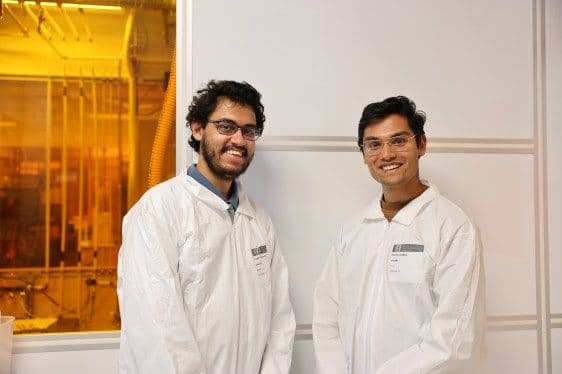
Chips running AI workloads are too hot: That’s one reason why data centers consume so much electricity and require cooling systems. And, inevitably, entrepreneurs are turning to AI to solve the problem it created. Discovered Materials is the latest, with plans to use swarms of AI agents to find new materials that can be used to build more efficient integrated circuits. The startup said it recently closed a $9 million seed round from Lightspeed India Partners after emerging from from Y Combinator, with investment from Peak XV Partners and angel investors Paul Graham, Gokul Rajaram, and Thariq Shihipar. Founders Advaith Sridhar and Akash Ramdas teamed up to launch the company, drawing on Ramdas’ experience earning a doctorate in materials science from Stanford, and Sridhar’s work on agents at Persona AI and Luma Labs. The two have created a software pipeline that uses Anthropic models in a custom harness to generate material leads, and then turns to foundational physics models they’ve trained to run simulations that verify if the candidate materials are actually of interest. “[Ramdas] was doing maybe 20 guesses a day during his PhD,” Sridhar told TechCrunch. “We’re able to do thousands of guesses a day now by having these agents run 24/7 on the cloud, exploring research directions that he gives them.” Discovered Materials released examples of hundreds of new materials today, as well as their “Material Discovery Bench” today, which is designed to track how frontier models take on this challenge. Companies like MatNex, SandboxAQ, and CuspAI have all launched similar efforts, but Discovered Materials is betting that a laser-focus on the thermal problems of semiconductor materials is the path to success. The startup says it has already discovered several materials that match the properties of existing materials used by major chipmakers, but can’t share more details about them. One challenge is the engineering trade-space: If they find a material that might reduce heat generation or improve dissipation, it might be too difficult to actually manufacture a chip out of it, or its electrical properties are compromised. “It’s a bit of playing whack-a-mole with atomic structures,” Hemant Mohapatra, the Lightspeed partner who led this round, told TechCrunch. “A material is only useful in the real world if all of them converge at once, which is what makes this a really interesting search problem.” Mohapatra expects that the business of predicting novel substances will be commoditized as models continue to improve. The difference with Discovered Materials is Ramdas’ deep experience in the field, and the ability to run a lab that can rapidly experiment and validate the candidates — something he says the two founders have already done with several new materials. When they find valuable candidates, Sridhar says the company will attempt to patent the use of the materials in GPUs, or the process by which chips can be made out of the substance, licensing them out to chipmakers. He hopes that they will have new materials worth patenting in the next year. However, for all the excitement, we still haven’t seen any drugs or materials discovered by AI actually make a commercial impact. The closest is perhaps Insilico Medicine’s Renterosib, the first drug discovered with generative AI to make it into a Phase II clinical trial. On the materials side, promising candidates have been found, like MatNex’s rare-earth free permanent magnets or new semiconductor materials worked out by Panasonic and Citrine Informatics. But these haven’t been commercially deployed at scale yet. These techniques may be coming into their own now as AI continues to improve, but it’s one reason why Mohapatra says that he doesn’t believe finding more candidates is the hold-up for AI materials science; instead, “filtering them correctly and synthesizing them is the bottleneck.” While Sridhar believes that Discovered Materials’ unique data and expertise will help the startup compete with deep-pocketed frontier labs, he acknowledged that the reality is that “a lot of this will involve actually going into wet labs and like making things as well. And this is the process that cannot be sped up.”
View
AI Models Aren’t Medicine: Why Connected Care Wins in Healthcare
Hospitals are racing to adopt AI, but the real challenge lies in decades of fragmented systems, siloed data, and clinical workflows.
View

Vertiv to Train 1,500 Engineering Students Across Maharashtra in Data Centre Skills
The programme will focus not only on classroom learning but also on giving students exposure to industry practices.
View

GalaxEye Acquires StarOps to Strengthen Satellite Engineering Capabilities
The acquisition adds spacecraft platforms, engineering expertise, and indigenous technologies to support GalaxEye’s end-to-end space missions.
View
Workato Opens Hyderabad AI Collaboration Hub for Enterprise AI Development
The new facility will bring customers, partners, and engineers together to build and deploy AI solutions.
View

The Digital Engineering Fix That Slashed Sarla Aviation’s Build Time From 10 Days to 3
Beyond Sarla Aviation, Siemens has also worked with Skyroot Aerospace, helping the startup build its engineering stack
View
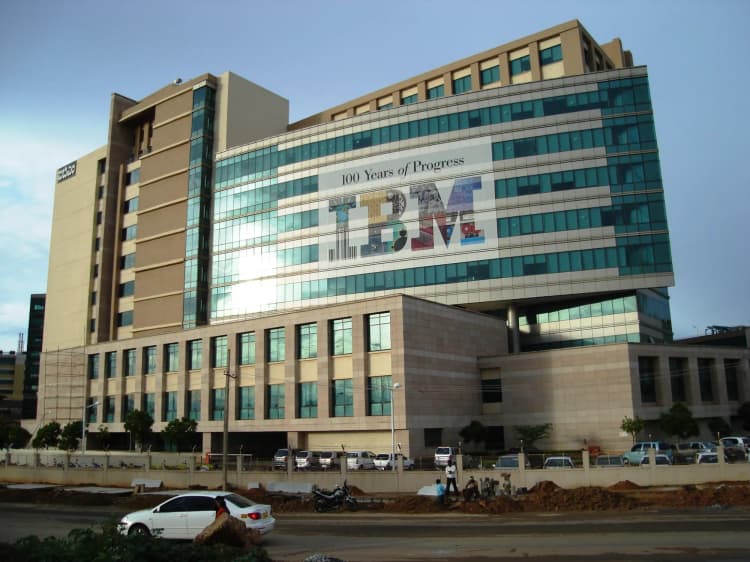
IBM, MAHE Open AI Lab in Bengaluru as Demand for Compute, AI Talent Grows
The facility will support up to 30 high-performance computing workloads simultaneously and will be used for AI research, industry projects, and skilling programmes
View

Meta Returns to Open Weights With Muse Spark 1.2 & Muse Glimmer
The company is releasing its 30B Muse Glimmer model for local agentic workloads and will release an open-weight version of Muse Spark 1.2 in the coming weeks.
View

Claude Code Auto Mode to Become Default for Pro, Max, and Team Plans; Anthropic Says It Is Safer
Anthropic has announced that it is making Claude Code more autonomous, with the auto mode soon becoming the default. The feature allows Claude to execute coding tasks without repeatedly asking users for permission, while a classifier evaluates tool calls and blocks actions that are considered irreversible. Anthropic says auto mode has performed better than manual permission reviews in its testing. The company has also introduced additional safeguards covering prompt injection, data exfiltration, destructive Git commands, and sensitive data access.
View
DePuy Synthes to Set Up 500-Employee GCC in Bengaluru
The centre will house capabilities including software development, data and AI.
View