最新 AI 资讯

Karnataka Biotech Economy Crosses $39 Bn Fuelled by Biomanufacturing
Bioindustrial biotechnology emerged as the fastest-growing segment, reaching $11.46 billion in 2025.
View

All the important news from the ongoing India AI Impact Summit
With an eye toward luring more AI investment to the country, India is hosting a four-day AI Impact Summit this week that will be attended by executives from major AI labs and Big Tech, including OpenAI, Anthropic, Nvidia, Microsoft, Google, and Cloudflare, as well as heads of state. The event, which expects 250,000 visitors, will see Alphabet CEO Sundar Pichai, OpenAI CEO Sam Altman, Anthropic CEO Dario Amodei, Reliance Chairman Mukesh Ambani, and Google DeepMind CEO Demis Hassabis in attendance. India’s prime minister, Narendra Modi, is scheduled to deliver a speech with French President Emmanuel Macron on Thursday. Here are all the key updates from the event: Drop 12/14: Models, products, impact – today something different, very different. Launching Sarvam Kaze, our foray into getting our models into the your hands with our devices – designed and built here in India!pic.twitter.com/8RnqO16Idg “But it also takes a lot of energy to train a human,” Altman said. “It takes like 20 years of life and all of the food you eat during that time before you get smart.”
View
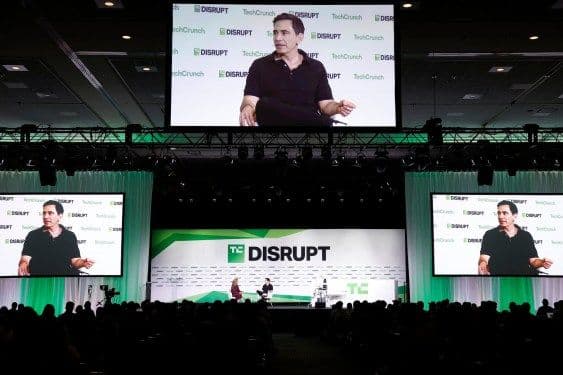
6 days left to lock in the lowest TechCrunch Disrupt 2026 rates
Super Early Bird pricing forTechCrunch Disrupt 2026ends February 27 at 11:59 p.m. PT. That means you have just 6 days left to secure the lowest ticket prices of the year. If Disrupt has been on your must-attend list, this is your moment. Save up to $680 on your individual pass or secure up to 30% off with community passes before prices increase.Register here. From October 13-15 at San Francisco’s Moscone West, TechCrunch will bring together 10,000 founders, investors, operators, and innovators for three focused days built around launching, scaling, and shaping what’s next in tech. Disrupt is where you get: You’ll see300+ exhibiting startupsdebut tomorrow’s breakthroughs, experience the high-stakesStartup Battlefield 200pitch competition — where one standout company wins a $100,000 equity-free prize — and take part in curated networking designed to drive real outcomes. You’ll also hear insights from some of the most influential voices in tech, including WordPress co-founderMatt Mullenweg, General Motors CEOMary Barra, and legendary VCVinod Khosla. Keep an eye on theevent pagefor the agenda drop. Six days remain to secure the lowest rate of the year. Lock it in before February 27 at 11:59 p.m. PT.Register here.
View

Indian Developers Will Review Code For a Living
For freshers, the bar rises. Knowing a language is not enough. One must understand how systems behave.
View

Sam Altman would like remind you that humans use a lot of energy, too
OpenAI CEO Sam Altman addressed concerns about AI’s environmental impact this week whilespeaking at an event hosted by The Indian Express. For one thing, Altman — who wasin India for a major AI summit— said concerns about AI’s water usage are “totally fake,” though he acknowledged it was a real issue when “we used to do evaporative cooling in data centers.” “Now that we don’t do that, you see these things on the internet where, ‘Don’t use ChatGPT, it’s 17 gallons of water for each query’ or whatever,” Altman said. “This is completely untrue, totally insane, no connection to reality.” He added that it’s “fair” to be concerned about “the energy consumption — not per query, but in total, because the world is now using so much AI.” In his view, this means the world needs to “move towards nuclear or wind and solar very quickly.” There’s no legal requirement for tech companies to disclose how much energy and water they use, so scientists have beentrying to study it independently. Data centers have also been connected torising electricity prices. Citing a previous conversation with Bill Gates, the interviewer asked whether it’s accurate to say a single ChatGPT query currently uses the equivalent of 1.5 iPhone battery charges, to which Altman replied, “There’s no way it’s anything close to that much.” Altman also complained that many discussions about ChatGPT’s energy usage are “unfair,” especially when they focus on “how much energy it takes to train an AI model, relative to how much it costs a human to do one inference query.” “But it also takes a lot of energy to train a human,” Altman said. “It takes like 20 years of life and all of the food you eat during that time before you get smart. And not only that, it took the very widespread evolution of the 100 billion people that have ever lived and learned not to get eaten by predators and learned how to figure out science and whatever, to produce you.” So in his view, the fair comparison is, “If you ask ChatGPT a question, how much energy does it take once its model is trained to answer that question versus a human? And probably, AI has already caught up on an energy efficiency basis, measured that way.” You can watch the full interview below. The conversation about water and energy usage begins at around 26:35.
View
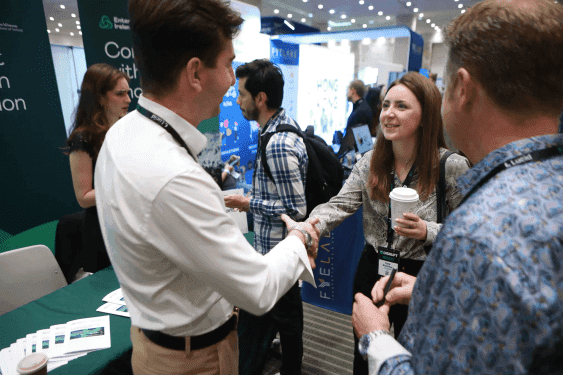
7 days until ticket prices rise for TechCrunch Disrupt 2026
Super Early Bird pricing forTechCrunch Disrupt 2026ends February 27 at 11:59 p.m. PT. That gives you one week to secure the biggest savings of the year — up to $680 off individual passes and up to 30% off community passes.Register now to lock in at the lowest rate. From October 13-15 at Moscone West in San Francisco, Disrupt will bring together 10,000 founders, investors, and operators for three days engineered for results. Explore300+ exhibiting startups. ExperienceStartup Battlefield 200, where one standout company wins a $100,000 equity-free prize. Meet the leaders who can change your company’s trajectory. Disrupt has a long track record of bringing together the most influential voices in tech. Previous speakers have included WordPress co-founderMatt Mullenweg,Phia co-foundersPhoebe Gates and Sophia Kianni, and renowned investorElad Gil, alongside leaders from Google Cloud, Netflix, Waymo, and more — all sharing actionable insights for building and scaling what’s next. Stay tuned to theevent siteto see when the 2026 agenda drops. Seven days remain to secure the lowest rate of the year. Whether you’re scaling a company or sourcing your next investment, there’s a pass built for you.Lock in your savings before February 27 at 11:59 p.m. PT.
View

OpenAI debated calling police about suspected Canadian shooter’s chats
An 18-year-old who allegedly killed eight people in a mass shooting in Tumbler Ridge, Canada, reportedly used OpenAI’s ChatGPT in ways that alarmed the company’s staff. Jesse Van Rootselaar’s chats describing gun violence were flagged by tools that monitor the company’s LLM for misuse and banned in June 2025. Staff at the company debated whether or not to reach out to Canadian law enforcement over the behavior but ultimately did not, accordingto the Wall Street Journal. An OpenAI spokesperson said Van Rootselaar’s activity did not meet the criteria for reporting to law enforcement; the company reached out to Canadian authorities after the incident. “Our thoughts are with everyone affected by the Tumbler Ridge tragedy,” an OpenAI spokesperson said in a statement. “We proactively reached out to the Royal Canadian Mounted Police with information on the individual and their use of ChatGPT, and we’ll continue to support their investigation.” ChatGPT transcripts weren’t the only concerning part of Van Rootselaar’s digital footprint. She apparently created a game on Roblox, the world simulation platform frequented by children, which simulated a mass shooting at a mall. She also posted about guns on Reddit. Van Rootselaar’s instability was also known to local police, who had been called to her family’s home after she started a fire while under the influence of unspecified drugs. LLM chatbots built by OpenAI and its competitors have been accused of triggering mental breakdowns in users who lose grip on reality while conversing with digital models.Multiplelawsuitshavebeen filed that cite chat transcripts that encourage people to commit suicide or offer assistance in doing so. If you are in a crisis or having thoughts of suicide, call or text 988 to reach the 988 Suicide and Crisis Lifeline. This post has been updated with comment from OpenAI.
View

Google VP warns that two types of AI startups may not survive
Loading the player… The generative AI boom minted a startup a minute. But as the dust starts to settle, two once-hot business models are looking more like cautionary tales: LLM wrappers and AI aggregators. Darren Mowry, who leads Google’s global startup organization across Cloud, DeepMind, and Alphabet, says startups with these hooks have their “check engine light” on. LLM wrappers are essentially startups that wrap existing large language models, like Claude, GPT, or Gemini, with a product or UX layer to solve a specific problem. An example would be a startup thatuses AI to helps students study. “If you’re really just counting on the back end model to do all the work and you’re almost white-labeling that model, the industry doesn’t have a lot of patience for that anymore,” Mowry said on thisweek’s episode of Equity. Wrapping “very thin intellectual property wrapped around Gemini or GPT-5” signals you’re not differentiating yourself, Mowry says. “You’ve got to have deep, wide moats that are either horizontally differentiated or something really specific to a vertical market” for a startup to “progress and grow,” he said. Examples of the deep moat LLM wrapper type include Cursor, a GPT-powered coding assistant, or Harvey AI, a legal AI assistant. In other words, startups can no longer expect to slap a UI on top of a GPT and get traction on their product, like they could, perhaps, in mid-2024 when OpenAIlaunched its ChatGPT store. The challenge now is to build sustainable product value. AI aggregators are a subset of wrappers — they’re startups that aggregate multiple LLMs into one interface or API layer to route queries across models and give users access to multiple models. These companies typically provide an orchestration layer that includes monitoring, governance, or eval tooling. Think: AI search startup Perplexity or developer platform OpenRouter, which provides access to multiple AI models via a single API. While many of these platforms have gained ground, Mowry’s words are clear to incoming startups: “Stay out of the aggregator business.” Generally speaking, aggregators aren’t seeing much growth or progression these days because, he says, users want “some intellectual property built in” to ensure they’re routed to the right model at the right time based on their needs — not because of behind-the-scenes compute or access constraints. Mowry has been in the cloud game for decades, cutting his teeth at AWS and Microsoft before setting up shop at Google Cloud, and he’s seen how this plays out. He said the situation today mirrors the early days of cloud computing in the late 2000s/early 2010s as Amazon’s cloud business started taking off. At that time, a crop of startups sprang up to resell AWS infrastructure, marketing themselves as easier entry points that provided tooling, billing consolidation, and support. But when Amazon built its own enterprise tools and customers learned to manage cloud services directly, most of those startups were squeezed out. The only survivors were the ones who added real services, like security, migration, or DevOps consulting. AI aggregators today face similar margin pressure as model providers expand into enterprise features themselves, potentially sidelining middlemen. For his part, Mowry is bullish on vibe coding and developer platforms, which had a record-breaking year in 2025 with startups like Replit, Lovable, and Cursor (all Google Cloud customers, per Mowry) attracting major investment and customer traction. Mowry also expects strong growth in direct-to-consumer tech, in companies that put some of these powerful AI tools into the hands of customers. He pointed to the opportunity for film and TV students to use Google’s AI video generator Veo to bring stories to life. Beyond AI, Mowry also thinks biotech and climate tech are having a moment — both in terms of venture investment going into the two industries and the “incredible amounts of data” startups can access to create real value “in ways we would never have been able to before.”
View

Microsoft’s new gaming CEO vows not to flood the ecosystem with ‘endless AI slop’
Microsoft announced a major gaming shakeup on Friday, with Microsoft Gaming CEO Phil Spencer departing the company, along with Xbox President Sarah Bond. Spencer will be replaced by former Instacart and Meta executive Asha Sharma. With Sharma’s most recent role as the president of Microsoft’s CoreAI product, these moves suggest that Microsoft might be doubling down on bringing AI into video games. The company had already been experimenting with ways to combine AI and gaming, for exampledeveloping an AI gaming companionandreleasing a buggy, AI-generated level from “Quake II.” Indeed, in an internal memopublished by The Verge, Sharma wrote that Microsoft “will invent new business models and new ways to play” and said that “monetization and AI” will both “evolve and influence this future.” At the same time, she said that the company “will not chase short-term efficiency or flood our ecosystem with soulless AI slop.” “Games are and always will be art, crafted by humans, and created with the most innovative technology provided by us,” Sharma added. That’s just one of three “commitments” Sharma made in her memo. The others involve building “great games beloved by players” and prioritizing Xbox.
View

NeuroDx Unveils MANAS-1, India’s Native AI Brain Model at India AI Summit
In parallel, the company is working on a larger 20 billion parameter foundation model focused on EEG signal analysis.
View

Queues, Quadrupeds & Quoted Pledges: IndiaAI Ends with Big Money and Bigger Intent
After five frenetic days of ambition and uproar, the IndiaAI Impact Summit closed amid spectacle, scrutiny and sovereign dreams.
View
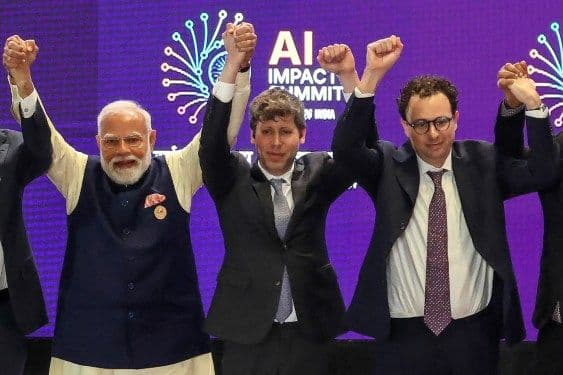
The creator economy’s ad revenue problem and India’s AI ambitions
Loading the player… The creator economy is evolving fast, and ad revenue alone isn’t cutting it anymore.YouTubers are launching product lines, acquiring startups, and building actual business empires. In fact, MrBeast’s companybought fintech startup Step, and his chocolate business is outearning his media arm. This isn’t just one creator’s strategy. For many, it’s the new playbook. On this episode of TechCrunch’sEquitypodcast, hosts Kirsten Korosec, Anthony Ha, and Rebecca Bellan unpack how creators are diversifying beyond ads, whether their model can scale beyond the top 1%, everything happing atIndia’s AI Impact Summit, and more of the week’s headlines.
View
