
最新 AI 资讯

CapitaLand to Invest ₹1,940 Cr in Chennai Data Centre With 53 MW Capacity
The facility, CapitaLand Data Centre Chennai 01, is located in Ambattur and is expected to be completed by the end of 2026.
View

Accenture Caps Employee Spending on Claude at $29 Per Month: Report
Some Accenture employees reportedly spent between $500 and $1,000 a month on Claude.
View

NVIDIA Expands Nemotron AI Models for Data Centres and Desktop Devices
The new open models target enterprise workflows and local AI agents, with one model claiming five times the speed of its closest competitor.
View

NeuroDx Previews Sphota, a Language Model Architecture Designed to Reduce Memory Needs
NeuroDx says its Sphota architecture can match models of similar size while using substantially less memory. The company plans to release the model later this year.
View

Why FDEs Are Emerging as a Critical GCC Role
The growing demand for FDEs also reflects a persistent problem in enterprise AI, which is that a successful pilot does not necessarily translate into a reliable production system
View

Meta Releases Muse Spark, an 816B-Parameter Open-Weight Model With 1M Context Window
The model has 42 billion active parameters and a context window of one million tokens.
View

When it came to Cal AI’s viral success, a small army of influencers paid off
Zach Yadegari has enjoyed an immense amount of success for someone who only recently graduated from high school. Founder of the AI-fueled calorie tracking app Cal AI, Yadegari is only 19 but his company has rocketed to viral fame over the past two years. AtTechCrunch Disrupton Thursday, Yadegari shared details of that surprising rise to prominence. Cal AI, which was founded in 2024, exploded onto the internet thanks largely to Yadegari’s strategy of deploying a small army of influencers to promote the brand. The company generated over $30 million in revenue in two years and wasacquired by MyFitnessPalfor an undisclosed amount of money in March. Discussing his social strategy onstage, Yadegari noted that an early sign of success came when an influencer’s post about them led to approximately a thousand new users over the course of two days. “From there, we figured out, okay, this can actually work for us, and so we started recruiting influencers as fast as we could — paying as many people as possible to start posting for us,” he said. “What we saw was that it was a clear formula. It was pretty linear, but it was extremely fast. I guess linear in the sense that every post they did would get a certain number of viewers that would convert.” The Forbes 30 Under 30 alumnus told the audience that part of his company’s strategy was to negotiate rates with influencers, promising them certain payouts for a certain scale of reach. A lot of influencers are “broke college kids” who “just want cash,” Yadegari added. “You just ask them, okay, we’ll pay you this, but we need to get us at least this amount of use and keep posting until you get there.” Another important component of success was finding the right influencers whose reach can be quantified. “The biggest thing for us was finding influencers that had very tight communities,” the founder said. Yadegari, whose father was in the audience, also credited his family with giving him the freedom to go after his ambitions. Does he also credit higher education for his success? Not so much. “I think the only real reason to go to college is if you want to have a fun social time as a kid and be with other people,” he said, to audience laughter. Earlier this month, Yadegari also launched Persona, a new AI agent startup thathas already raised $10 million. Yadegari said the “overarching mission” with Persona is to “make computing seamless with human life.” The company’s personal AI assistant will “live anyplace with internet connection,” he said, including “iMessage, app, email, phone call.” He added that part of what distinguishes the company’s plans for this AI assistant is to build a “hardware ecosystem around” the app.
View
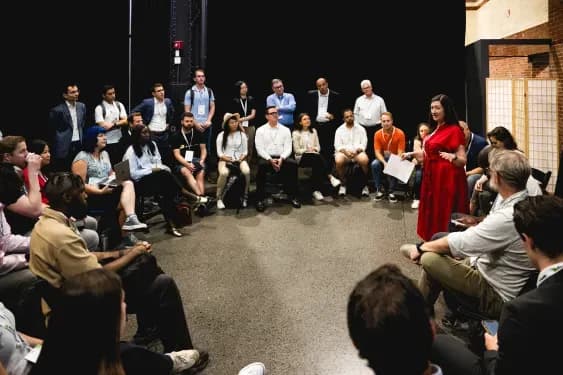
Last chance to save up to $200 on your TechCrunch Founder Summit pass: Early booking ends October 16
Your next funding round. Your next hire. Your next big product decision. Building a startup means making choices that can shape the business for years. Taking time to question your approach could be one of the most valuable investments you make. Savings of up to $200 end October 16 forTechCrunch Founder Summit. These savings for Founder and Investor Passes vanish after Friday. Join 1,000 founders and investors onNovember 4 at Boston’s SoWa Power Station. Bring your toughest questions and make the day count for your business. Where should you focus before raising capital? How do you know you’re ready to scale? Which hire would make the biggest difference? TheFounder Summit agendacovers fundraising, hiring, product-market fit, and building an AI native company, with practical guidance to inform your next move. Speakers includeKent Bennettof Bessemer Venture Partners,Lior Divof 7AI, andVineet Edupugantiof Cogent Security. Come with a decision you’re working through. Consider which assumptions you need to test, where your plans need strengthening, and what you want to do differently when you return to work. Founder Summit brings together founders across different stages with investors and experienced entrepreneurs. It’s an opportunity to broaden the circle of people you can learn from. Use that time purposefully. Compare challenges with another founder. Ask for a perspective you haven’t considered. Start a conversation you can continue after Boston. Founder Passes are currently $199, and Investor Passes are $399. Both include deep-dive roundtables, breakout sessions, and 1:1 and small-group networking. If Founder Summit is on your calendar,now is the time to secure your pass. Book byFriday,October 16, before these savings disappear. Get your TechCrunch Founder Summit pass
View

Bluesky expands its AI-powered Attie app to let anyone build websites, games, and more
Open social network Bluesky is once again expanding beyond its flagship app. AtTechCrunch Disrupt 2026on Thursday, the company announced the launch of a new tool that allows creators to make websites, quizzes, games, polls, and other interactive experiences. The tool is an expansion ofAttie, Bluesky’s more experimental platform, which initially offered AI-powered technology for building custom social feeds. With its new creation capabilities, the idea is to allow everyday users to create the kind of experiences that previously only software developers could build. These user-created games, sites, and other experiences will also live on the same AT Protocol (ATProto) that powers Bluesky and other decentralized social apps that make up the decentralized social web known as the Atmosphere. Bluesky CEO Toni Schneider shared the news of Attie’s new capabilities during an interview at Disrupt, saying, “We’re adding a feature to our Attie product that allows you to build sites and social experiences again for a group of people. So think of it as … social vibe coding or vibe coding for your community.” The exec, a former CEO of Automattic and a partner at True Ventures, had previously been leading the company on an interim basis after former CEO Jay Graberstepped downin March to become Bluesky’s chief innovation officer. Now he’s taking charge of the company as it enters the AI era. Attie offers Bluesky a playground where it can try out AI-powered ideas like this. “Vibe coding today is kind of a single-user, solo experience,” Schneider explained. “And what I want to be able to do is build together or build for a group of people, and that’s what this product does.” When creators build with Attie, they’re connected to their ATProto identity. Plus, Attie will suggest things users might want to make based on their public Bluesky profiles. To build with Attie, users can bring their own AI model or use open-weight options, and the resulting sites and games can then tap into Bluesky’s wider audience, noted Bluesky COO Rose Wang. “Everybody is building … But the big question is: Who’s using the thing you’re building, because we haven’t solved that problem with distribution,” she said. “What makes Attie so interesting is that it comes with the Bluesky distribution, so it doesn’t stand alone.” That network today has47 million registered users, though it’s seena decline in engagement, as some users who tested it out later returned to X. Beyond being a testing ground for new ideas, Attie ties into Bluesky’s larger plans to reinvigorate activity on its network by focusing on both developers and communities in the months ahead. Those areas will also be supercharged by the protocol’s forthcoming support for private data, which Schneider said has been the biggest request from developers. Private data is now in alpha testing, with plans for a rollout by the end of the year, he said. “There should be lots and lots of these fun, small social experiences for your friends,” said Schneider, referencing the types of projects Attie will enable. “We don’t all have to go communicate with the entire world all the time.”
View
Anthropic is letting METR researchers look under the hood with employee-level access
Anthropic is giving employee-level access to six researchers fromMETR, a nonprofit that tests frontier AI models, to independently assess Anthropic’s models, safety practices, and risk management, the company said in ablog poston Thursday. The arrangement comes at a time where incidents of AI agents acting outside their instructions have beendisclosedeveryweekortwosince late August. The incidents have sharpened calls for independent checks on AI companies. “We want to be publicly accountable for the decisions we’re making,” Anthropic said in the blog post. “We aim to close the gap between what evaluators understand about a frontier AI company’s systems and what the company itself understands.” Under the new arrangement, the METR team has Anthropic-issued company laptops, office space, and access to internal tools roughly on par with what Anthropic’s own risk assessment teams use. “Anthropic employees are encouraged to share information with them just as they would with a fellow employee working on alignment risk” the company said. Anthropic compared the arrangement to banking, similar to how regulators place resident examiners inside the largest banks. METR will publish its own assessments of Anthropic’s risks, incidents, and practices, and the company has given up the right to block them. “Anthropic can’t veto publication, but we can require them to redact information if it falls into narrow, pre-defined categories,” the company said, such as customer data, anything attorney-client privileged, or relating to information about its model architectures. “METR is free to characterize our redactions publicly, and say whether it believes the redactions were justified, as long as it does so without revealing the redacted information” Anthropic added. METR is the only evaluator so far at the top of a three-tier system Anthropic is building. Evaluators in the bottom tier, like biosecurity nonprofit SecureBio, run narrow reviews and require Anthropic’s approval to publish. The middle tier gets more information and can publish without approval, while the top tier adds METR’s employee-level access. Thursday’s announcement makes good on a promise Anthropic CEO Dario Amodei madein a September essay, where he proposed embedding outside evaluators inside AI labs as a first step toward slowing the technology’s development.OpenAI quickly pledged the same, and both companies, along with Google, Meta, Nvidia, and xAI, have since signed a White House accord committing to independent review.
View
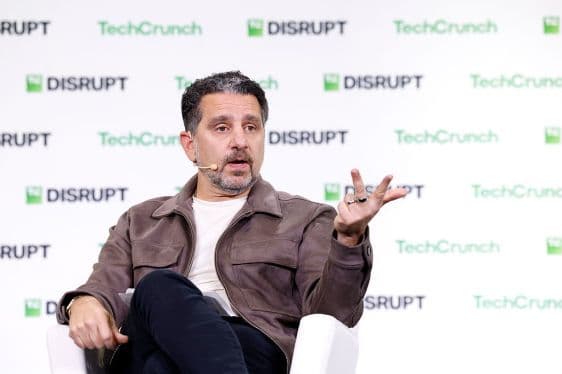
Amazon devices chief Panos Panay sees a future where AI devices replace the need to use apps
Amazon is placing its bets on ambient computing, not apps, as the future of personal AI. Alongside thelaunch of the company’s new AI wearables from Bee, Panos Panay, who serves as Amazon’s SVP of Devices, Alexa & Leo, took the stage atTechCrunch Disrupton Thursday to talk more in depth about where he sees personal computing headed. “A lot of times, what you’re doing right now — what we all do right now — is we have to remember what we’re asking our tool to do for us,” Panay began, explaining that this is how we engage with our modern smartphones. “It’s like point, shoot, return,” Panay continued. “I think where we’re headed is a world [that] starts with ambient devices.” By “ambient devices,” he means those that work quietly in the background, using sensors and AI to help you figure out what needs to be done, instead of the other way around, where you’re telling the device what you need to do. “As it works in the background, you’re able to stay more present. You’re able to get more done. You’re about to spend more time with people … you’re not afraid if you miss something. It’s incredibly powerful,” Panay said. Amazon’s biggest entry into this space is the set of new Bee devices it introduced on Thursday, which include a band you can wear on your wrist or detach to wear as a pendant, as well as a new credit-card-sized device that attaches magnetically to the back of your smartphone. These gadgets passively record audio and take notes about your day, finding the to-dos, reminders, and insights you may later need to refer back to. To balance the need to be useful with user privacy, Bee’s devices don’t actually store the raw audio from your conversations; they process the audio in real time and then delete it when done. Transcripts of conversations are encrypted using keys that your device creates and controls. That means no one else, including Amazon employees, can access those files unless you intentionally share them. Panay said that privacy was a key consideration for how these new ambient devices should work. “You have to give customers that control,” he said. “Every product is different, but for Bee specifically, as an example in the ambient space like that, you have to design with privacy in mind. And that’s what we do. That’s critical.” The executive, who came to Amazon after 19 years at Microsoft where he oversaw the development of Surface devices, has spent a lot of his life thinking about how personal computing will evolve. With Bee — and ambient computing more generally — Panay also envisioned a future where the idea of interacting with apps becomes less important, as more tasks are handled via AI. “Do I think we have a future where there’s a bit of a balance — a whole generation that doesn’t say ‘give me the app’ for that, but says it should just understand what I need? Yeah, I do. I think that transformation is coming. I think that is the next generation,” he said. That doesn’t necessarily mean the smartphone itself won’t continue to be an important personal computing device (as much as Amazon would like it to be an Alexa tablet or Echo smart speaker), Panay pointed out. Rather, he believes a new crop of devices will emerge that use sensors to understand users better, and to bring intelligence to the world around you. “I’m not a proponent that says one form factor is going to replace another. I don’t think that’s the case,” he clarified. “I think there’s an intelligence layer that connects it all … and it has to be useful.”
View
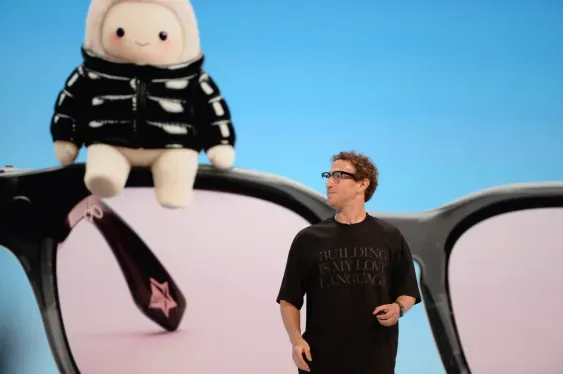
Meta launches an open-weight AI model that runs on Macs
Meta haslaunchedwhat it calls the “most capable” open-weight model in the United States. Dubbed Muse Spark Open, the model also has the distinction of having been designed to work with Macs. The new model, which leverages 816 billion parameters and a 1 million token context window, claims to offer superior performance to other popular open-weight models, according to evaluation results released by Meta on Thursday. Muse Spark Open is natively multimodal and built for complex coding tasks and agentic labor. It has also been designed to run locally on Apple’s computers. However, you will still need a lot of power to run the model locally, with a requirement of at least 1 terabyte of RAM,per Engadget. The model will run best via the Mac Studio that comes equipped with the M5 Ultra chip. Still, if you can muster the memory, Muse Spark Open may prove a significant work horse for coding and other desktop tasks. Meta says that it paired the model with Muse Code, its AI coding terminal, and deployed it to various agentic workflows, including coding fixes for a Mastodon client that included “bug fixes, new features, [and] full build.” The company says it also deployed it in the service of running DaVinci Resolve, the high-end video editing software, revealing that the model was capable of reviewing and cropping footage. Open-weight models provide a number of distinct industry advantages that aren’t afforded by closed and proprietary models. Open-weight models can be significantly more cost-efficient and can also offer transparency and flexibility that closed source models don’t allow. Meta is making the new model available now through a number of different API platforms.
View