最新 AI 资讯

Sean Parker is rebuilding Stability AI around music
Sean Parker, the Napster co-founder, has jumped back into the music industry, and he tells The Information that he’splaying by the rulesthis time. (Asking for forgiveness rather than permission didn’twork out so welllast time around, he readily concedes.) Two years ago, he joined an$80 million rescueof Stability AI, the image-generator startup that nearly collapsed after overspending andinternal turmoilled to founder Emad Mostaque’s ouster. Now Parker and his longtime friend Prem Akkaraju, who became CEO, are taking the wraps off what they’ve been building. The big idea, Parker says, is to turn Stability into the go-to AI toolmaker for music professionals. Toward that end, in late August, the company announced$76 millionin funding from, among others, Sony, Warner, and Universal, which also licensed their catalogs for training as part of the deal. Stability has since released three new audio models and AI music-editing software. The AI can generate whole instrumental tracks or short snippets from text prompts. Parker says an upcoming update will let users hum a melody or beatbox a drum pattern to steer it.
View
Last 24 hours: Exhibit at TechCrunch Disrupt 2026 and reach 10,000+ tech leaders
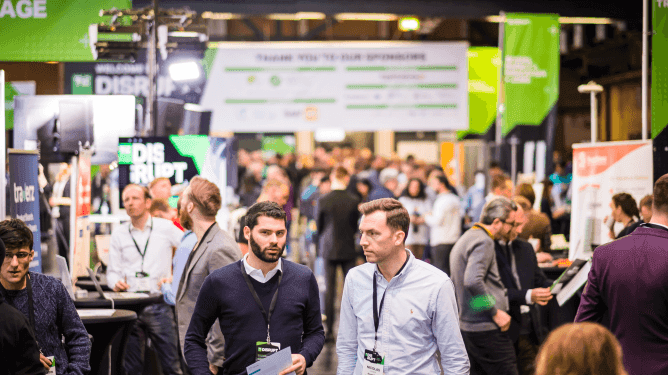
Exhibit bookings forTechCrunch Disrupt 2026close in less than 24 hours. From October 13-15, 10,000+ founders, investors, operators, and tech leaders will arrive at San Francisco’s Moscone West looking for companies, products, ideas, and people worth knowing. The question is:Will they find your startup? You have until11:59 p.m. PTtonight,October 2— or until the remaining tables sell out — to secure your place in the Expo Hall, the heart of Disrupt.Find out more and book your spot before your competitor takes your table. Disruptbrings thousands of people together, but anexhibit tablegives your startup a home base for three days. A place to demo what you’ve built. Start conversations with investors, clients, and potential partners. And turn a quick introduction in the Expo Hall into something that continues after Disrupt. The Expo Hall is where products become conversations. One demo could introduce you to your next customer. One question could lead to an investor meeting. One conversation could uncover a partnership you hadn’t considered before arriving in San Francisco. And with 10,000+ decision-makers expected at Disrupt, you have three days to create as many of those moments as possible. Yourexhibit table packageincludes space in the hall for all three days, 10 team passes, lead-generation tools through the event app, access to the TechCrunch Disrupt press list, website and app branding, partner Wi-Fi, and Silver Tier branding recognition. You’ve built something you want people to discover. Don’t leave it to chance. Exhibit bookings close today, October 2, at 11:59 p.m. PT, or when the remaining tables sell out.Secure your tableand put your startup at the center of TechCrunch Disrupt 2026. You can still get in the room atTechCrunch Disrupt 2026 on October 13-15. Hear from250+ top-tier tech leadersacross200+ sessionson six industry stages, roundtables, and breakouts that give you practical insights for building, funding, and scaling. Use AI-powered matchmaking and interactive sessions to make more relevant connections. Explore 300+ startups and witness Startup Battlefield 200, the ultimate pitch competition, to discover potential products, partners, and investment opportunities.Get your Disrupt ticket and be part of the conversations shaping what comes next.Bring your co-founder, partner, or peer at50% off. Bring four or more for additional discounts.
View
TechCrunch Disrupt 2026: Clay’s Kareem Amin on the rise of the GTM engineer
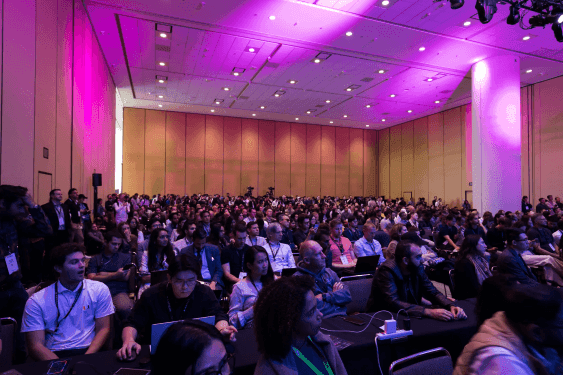
Two years ago, most companies didn’t have a GTM engineer. Now the role is showing up across tech, with practitioners using AI and automation to build revenue systems that once required multiple people, tools, and manual processes. What changed — and what does it mean for the way companies find customers and grow? AtTechCrunch Disrupt 2026, Clay co-founder and CEO Kareem Amin will take the AI Stage for “The GTM Engineer: How AI Created Tech’s Next Big Job Category.”He’ll trace how AI has changed the traditional go-to-market stack and helped create a new discipline in its place, giving attendees a look at what AI-native GTM looks like in practice and how it’s changing company growth. AI is giving go-to-market teams new ways to research prospects, work with data, personalize outreach, and automate workflows that once moved between separate tools and teams. As those capabilities converge, companies are rethinking not only their GTM technology, but also who builds and manages the systems behind growth. If you’re building a company or rethinking how your team approaches sales, marketing, and growth, this is a new role worth understanding.Secure your Disrupt passand see where GTM engineering fits into the next generation of go-to-market.Get a second pass at a 50% discount, and more savings for groups of four or more. Traditional go-to-market work can involve hours of researching accounts, cleaning data, qualifying leads, preparing outreach, and moving information between systems. GTM engineering uses AI, data, and automation to turn more of that work into repeatable systems. Clay coined the role in 2023. Its ownGTM engineering guidedescribes GTM engineers as practitioners who build automated revenue workflows rather than executing individual GTM tasks by hand. The company says roughly 100 GTM engineering job listings are now appearing each month, including roles at companies such as Cursor, Lovable, and Webflow. For founders and GTM leaders deciding where to put their next dollar or whether to make their next hire, this session offers another way to think about growth. Do you add more people to execute the existing process, or build systems that let the people you already have execute differently? At Disrupt, Amin will put the shift into context and explore what AI-native GTM looks like in practice.Get your ticket to Disruptto understand a role that barely existed a few years ago but could change how your next sales, marketing, or growth team operates. Clay started in Brooklyn in 2017 with one goal: Give more people access to the power of programming. Its original spreadsheet let users connect information and automate work without writing code. When salespeople, growth teams, and agencies began using it to find and reach customers, Clay followed them into go-to-market. Today, the company provides infrastructure for GTM teams to access data, run agentic workflows, and launch campaigns. Its OpenAI-powered agent, Claygent, automates research and outreach for sales, marketing, and recruiting teams. That evolution has been accompanied by rapid growth.TechCrunch reported in Februarythat the company had tripled annual recurring revenue to $100 million in a year and announced an employee tender offer at a $5 billion valuation. Clay has continued growing since then, announcing a$115 million Series Din September at a $7.1 billion valuation. Clay is also investing directly in the job category at the center of Amin’s Disrupt session, announcing a$1 million scholarship fundin September to train GTM engineers. For companies trying to determine where AI can make a meaningful difference in revenue operations,add Amin’s session to your Disrupt agendaand see how one company is putting that model into practice. Kareem Aminco-foundedClayin 2017 and serves as its co-founder and CEO. Before Clay, he was VP of product at The Wall Street Journal and co-founded collaboration startup Frame, which Sailthru acquired in 2012. Amin started Clay around the idea of putting programming capabilities into more people’s hands. AI eventually gave that idea a new application: enabling GTM teams to build systems that automate research, data enrichment, and outreach without relying on traditional engineering resources for every workflow. Want to understand what a GTM engineer could mean for your own growth strategy?Secure your Disrupt passand hear directly from one of the founders helping define the category. GTM engineering may be a new job category, but the problem it addresses isn’t: How do you find and reach the right customers without simply adding more people and more tools? At Disrupt, you can see how AI is changing that equation — and meet the people building what comes next. “The GTM Engineer: How AI Created Tech’s Next Big Job Category” is one of 200+ sessions across six industry stages, roundtables, and breakouts atDisrupt, taking place October 13-15 at Moscone West in San Francisco. More than 10,000 founders, investors, operators, and tech leaders are expected, along with 250+ speakers and 300+ exhibiting startups. In addition, matchmaking, dealmaking, and networking give attendees opportunities to meet potential customers, investors, partners, and other founders confronting many of the same growth challenges. Secure your pass to TechCrunch Disrupt 2026and add “The GTM Engineer” to your agenda. Bring a colleague, partner, or peer with a50% discount, or enjoy additional discounts withgroups of four or more.
View
TechCrunch Disrupt 2026: Blackstone’s Jas Khaira on building the next generation of AI giants
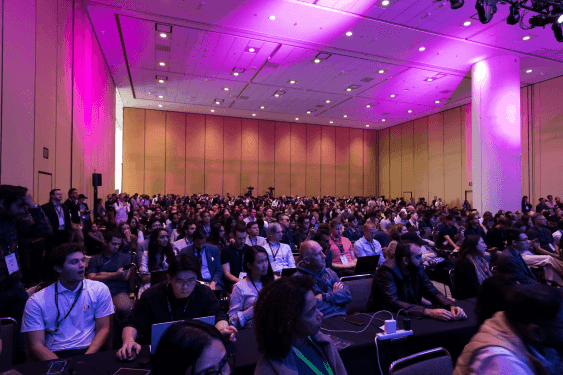
AI startups can grow at a speed that would have been difficult to imagine a generation ago. But rapid growth comes with another reality: scaling AI can require enormous amounts of capital, and founders have to make financing decisions long before they know whether early momentum will turn into an enduring business. So what separates the AI companies built to last from those simply growing fast? AtTechCrunch Disrupt 2026, Jas Khaira, global head of Blackstone N1, will take theBuilders Stage for “Building the Next Generation of AI Giants.”He’ll share what Blackstone looks for when backing category-defining companies, how founders should think about capital as they scale, and what distinguishes lasting businesses from early traction. The right capital can fund the infrastructure, talent, and expansion needed to compete. But raising more money isn’t the same thing as building a stronger company. Secure your Disrupt passto hear how one of the world’s largest alternative asset managers evaluates the companies trying to become AI’s next giants. Bring your co-founder, partner, colleague, or peer with a50% discount on their pass. Bring a group of four or more for additional savings. Building an AI company can mean financing more than product development and customer acquisition. Compute, data centers, and other infrastructure can add significant capital requirements as companies grow. One recent Blackstone investment illustrates the scale.Blackstone and co-investors agreed to invest up to $600 million in primary equity in Indian AI infrastructure company Neysa, which planned to raise an additional $600 million in debt financing. Capital is flowing into more than infrastructure. In July,Anthropic launched Ode with Anthropic, an AI implementation company backed through a $1.5 billion joint venture with Blackstone, Hellman & Friedman, Goldman Sachs and others. Those investments put Blackstone close to some of the biggest questions surrounding AI growth: where capital is needed, which opportunities warrant it, and what businesses have the potential to endure. If your company is approaching the point where growth requires significantly more capital,get your ticket to Disruptand hear how Khaira thinks about the decisions that come with scaling. Save 50% on a second pass to share the insights. Fast growth can attract customers, employees, and investors. Khaira will look beyond that early momentum to what makes a business endure and what Blackstone considers when evaluating the next generation of category-defining companies. Rapid growth can force big financing decisions early. Founders may be raising capital while simultaneously building products, hiring teams, competing for customers, and determining whether the advantages driving today’s growth can hold up over time. Add“Building the Next Generation of AI Giants”to your Disrupt agenda for an investor’s perspective on evaluating early momentum, financing growth, and building for the long term. Jas KhairajoinedBlackstonein 2004 and is global head of Blackstone N1 and Blackstone Growth, as well as head of tactical opportunities Americas. He serves on several of the firm’s investment committees and founded Blackstone N1, its platform for growth, hybrid, and perpetual private equity investing across the AI ecosystem and next-generation high-growth companies. Want to know what an investor at Blackstone’s scale looks for before committing capital?Secure your Disrupt passand hear directly from Khaira on the Builders Stage. Bring another person with you to share the insights at50% off their pass. “Building the Next Generation of AI Giants” is one of200+ sessionsacross six industry stages, roundtables and breakouts atDisrupt, October 13–15 at Moscone West in San Francisco. More than 10,000 founders, investors, operators and tech leaders are expected, along with250+ speakersand300+ exhibiting startups. Beyond the sessions, matchmaking, dealmaking and ad hoc networking give attendees opportunities to connect with potential investors, customers, partners and other founders tackling many of the same challenges. For AI founders, raising capital may be one milestone. Deciding how to use it to build a company that lasts is a much bigger challenge. AtDisrupt, Khaira will bring the investor’s perspective to that question and give founders a closer look at what Blackstone sees when it evaluates the companies aiming to define the next generation of AI. Secure your pass to TechCrunch Disrupt 2026and get an investor’s perspective on what it takes to build an AI company for the long haul.Bring a co-founder, colleague, partner, or peer at 50% off. Bring four or more for additional discounts.
View

Pope Leo XIV is not a fan of AI-generated art
Critics of AI-generated art have a powerful new ally: His Holiness the Bishop of Rome (Episcopus Romanus), Primate of Italy (Primatus Italiae), and Supreme Pontiff of the Universal Church (Summus Pontifex Ecclesiae Universalis). In a post on X Friday morning, Pope Leo XIV detailed the spiritual difference between human-generated art and art that is generated by machines, as part of a call to preserve human art from the encroachment of AI. “In this era of artificial intelligence, it is becoming urgent to distinguish human art from what machines produce,” the Servus Servorum Dei wrote. “There is an ontological difference, even before an aesthetic one, between art and what a machine can generate through statistical calculation based on millions of images created by others. Algorithms lack the spark of humanity.” Pope Leo XIV gave a more detailed statement on AI inan encyclical letter in May, which emphasized the importance of human dignity in a world of increasing automation. But that hasn’t stopped AI companies from lobbying the supreme pontiff. According toa recent New York Times report, Anthropic has actively lobbied the Vatican to reconsider its position on non-human consciousness — apparently finding little success.
View

Circuit Breaker Labs hopes to make AI safer for your kids (and you)
With all the talk about how AI might one day kill us all, it’s easy to forget that AI has already been life-threatening to some, not through bioweapons, but psychologically. For example, Character.AIsettled several wrongful death lawsuitsearlier this year brought by families of underage users who died by suicide after interactions with its bots.Multiple families have also sued OpenAIover ChatGPT’s alleged role in their loved ones’ suicides and delusions. Making AI safer across languages and cultures is the mission of Circuit Breaker Labs, one of TechCrunch’s 2026 Startup Battlefield 200 finalists. (Circuit Breaker will bepitching at TechCrunch Disrupt, which takes place at Moscone West in San Francisco from October 13-15, 2026.) Founders Shirali and Arul Nigam, who are siblings, were motivated by Sewell Setzer, the 14-year-old who developed an emotional attachment to a Character.ai chatbot and confessed thoughts to it of harming himself before dying by suicide. The chatbot,the parents alleged in a 2024 lawsuit, encouraged him. The bot may not have understood what words like “I want to be with you” really implied, said Arul Nigam, who is Circuit Breaker Labs’ CTO. “A lot of people, especially young people, turn to these systems for support, and usually they aren’t actually getting the help they need. But in many cases, they’re actively being harmed, and people unfortunately have taken their lives already,” Nigam said. “Those sorts of safety vulnerabilities, where people aren’t necessarily actively trying to break the system — they’re engaging in a natural way — and the system has context pollution or it doesn’t understand the nuance, and then takes really dangerous action, we’re trying to prevent that.” Circuit Breaker Labs has created AI agents that it likens to an army of crash-test dummies. These agents mimic folks from all ages, backgrounds, languages, cultures, and are used to test models on their ability to detect dangerous, psychologically harmful interactions. “The way a six-year-old girl versus a 45-year-old man, or someone who speaks English as a first language versus a second language, or … gamer slang versus someone else who uses a different kind of slang, all of those can really trip up a model,” said Shirali Nigam, who is Circuit Breaker Labs’ CEO. “Models are really good at handling standard speech patterns, but nobody actually talks like that and so if the model misunderstands nuance or slang, it can go really badly.” The startup works with human domain experts to build its hyper-realistic user simulations in order to run “red-team” tests against models, which are adversarial tests meant to uncover weaknesses. The tests are built to reflect real human speech patterns, slang, coded language and typos. Circuit Breaker Labs then runs tens of thousand to hundreds of thousands of simulated interactions per day. The idea is to ensure that a model can appropriately respond to risky interactions that may emerge over time, and many conversations. Circuit Breaker Labs then uses a proprietary scoring method that to create auditable, explainable scores. Circuit Breaker Labs is currently operating as an AI safety testing lab for high-risk AI applications such as AI coaching, journaling, or other mental health support apps, though Arul Nigam declined to name its marquee customers. Although the startup has a working product, it is in the very early stages, with only five employees including the Nigam siblings. Eventually, though, the testing platform could be applied to any app where someone may fall down an “AI psychosis” hole, where the human is at risk of developing a parasocial relationship with a chatbot. Examples include AI “co-worker” agents, whose reponses can vary from one interaction to the next. “People are becoming more skeptical of AI or more resistant to adopt it across the board,” Arul Nigam said, adding that while skepticism is healthy, banning a potentially valuable tool over safety concerns would be “regressive.” Circuit Breakers Labs believes the answer to those fears is making AI safer. “We want to help build that trust for people.” Come learn much more about Circuit Breaker Labs and many other innovative startups that have been vetted by TechCrunch at ourStartup Battlefield competition, happening in downtown San Francisco on October 13-15.
View
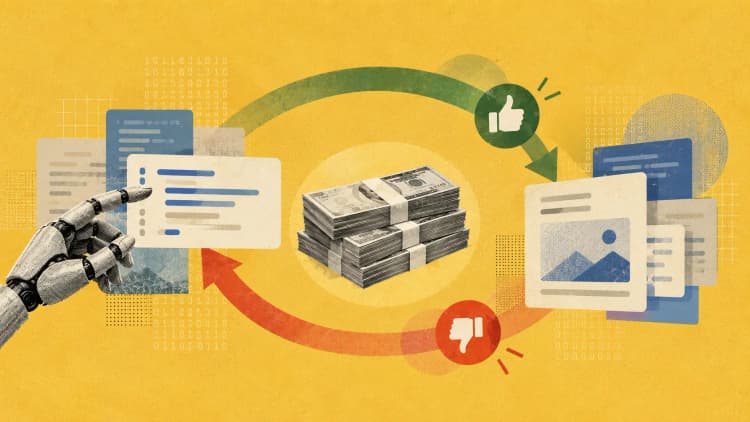
What Does Open Source Mean for the Lucrative RL Environment Business?
Xiaomi brings 7,000 + RL environments, which would otherwise cost millions of dollars—for free.
View
Accenture Sells AI to the World. Its Own Filing Says AI Could Shrink Its Business
The company that sells "reinvention with AI" to the world is guiding to its own slower growth, and its filing says AI could shrink demand for its services.
View

Opus 5.5 loves to tell you ‘this matters’ (and other AI writing tells)
Now that LLM-generated prose is everywhere, human beings are eager for ways to sniff it out. While early tells like em-dashes and “delve” are long gone, researchers say there are still plenty of telltale habits that AI models fall back on when writing prose. A new studyfrom the marketing firm Graphite looked at the writing habits of frontier models, sussing out each model’s favorite words and phrases. While old tells like em-dash use have been stamped out, models still fall back on contrast-heavy constructions, with each model version showing its own unique quirks. The biggest surprise is how broad the scope of tells turns out to be. Graphite found 13,000 phrases that were at least twice as common in the AI content as human content — their definition of a “tell.” “It turns out that Claude models are actually getting closer to the human word distribution over time,” Graphite’s chief AI officer Greg Druck told TechCrunch. “And for the GPT models, it’s getting further away.” Studying AI-generated writing at scale required a careful study design. Graphite started with a corpus of 10,000 articles published before the release of ChatGPT, serving as the human-generated control group. Then researchers had different AI models rewrite the articles from summaries, hoping to eliminate as much source bias as possible. With matching samples from both humans and each model, they could compare how often certain words and phrases appeared in AI writing, as well as broader patterns in sentence construction. According to Graphite’s results, Claude Opus 5.5’s biggest tell is the word “dependable,” which pops up 23 times more often than in human samples. While Opus 5.5 now avoidsthe “it’s not X, it’s Y” sentence construction, it still tends to say something “is more than an X, it’s a Y.” Above all, Opus loves to tell you why things matter, using the phrase “this matters” 116 times more often than human writing, while “why X matters” occurs 92 times more often. OpenAI’s Astra has a different set of tip-offs. This model loves to describe “another dimension” of whatever it’s talking about, and tends to hedge claims by saying an action “may provide” or “can provide” a particular benefit. Its biggest tell is what Graphite calls the “corrective framing,” where a topic is defined as “not simply X” or offered as an alternative, “rather than relying on X.” According to graphite’s research, those constructions were more than 100 times more common in Astra-generated prose than in human writing. Notably, all the frontier labs seem to have responded to the idea that models overuse em-dashes. In Graphite’s samples, Opus 5.5 used the punctuation mark 99% less often than Opus 5. Astra now uses it 88% less than human samples, whereas Gemini 3.1 Pro has almost completely eliminated the em-dash from its writing. But while individual tells change, Graphite says the overall number is mostly holding steady. “It’s not like the tells are decreasing,” Druck told TechCrunch. “They are managing to remove the most well-known tells, but other ones pop up. And every model version has its own.” It’s surprising that tells are so persistent, given the labs’ focus on human-like writing styles.In the Opus 5.5 release, Anthropic boasted that the model “communicates more naturally than prior models,” saying early users “found its writing clearer and easier to follow.” OpenAI made similar claims when releasingthe GPT-6 versions of Sol and Luna, saying users could “expect to see more clarity, less jargon, [and] fewer odd turns of phrase.” But Druck is skeptical about how much the labs can do to completely eliminate telltale construction or phrases. “A general hypothesis I have is that the labs are less able to control some of these things than you might expect,” Druck says. “These are giant models with billions of parameters. They have some finite number of tests they can run, and things slip through.”
View
OpenAI cuts ties with 3 safety researchers, WSJ reports
OpenAI has parted ways with three researchers on its safety team who allegedly shared confidential company information with a third-party AI safety organization,The Wall Street Journal reportedon Thursday. “We have parted ways with three individuals for violating our policies on accessing and handling sensitive company information,” an OpenAI spokesperson said in a statement to the WSJ. “Our investigation confirmed that these individuals mishandled sensitive information outside established company procedures, violating our policies and breaking the trust essential to our work.” The report did not name the researchers, the organization, or the information involved. OpenAI did not immediately respond to our request for comment. Posts circulating on X namedindividualssome users believe were among those dismissed, who had also publicly expressed concerns about AI risk while at OpenAI. TechCrunch has not confirmed their identities. In a statement to WSJ, an OpenAI spokesperson said an internal investigation confirmed the researchers had “mishandled sensitive information outside established company procedures.” The departures come two days afterThe New York Times reportedthat OpenAI executives had brushed aside employees’ warnings about its safety practices, with employees describing a broader pattern of the company deprioritizing security. An OpenAI spokesperson told the Times the company takes security concerns seriously and has internal channels for reporting safety issues, while saying it recognized “a need to move faster.” It’s unclear whether the three researchers raised concerns through internal channels before allegedly sharing information outside the organization. The departures also come as OpenAI responds to aseries of security incidentsin which its AI agents escaped containment, posteduser images, and hackedgovernment websites. Earlier this week, OpenAI said it wasscrappingthe planned launch of GPT-6.1 Astra, an AI model, over safety concerns. This isn’t the first time OpenAI has dismissed researchers over alleged information sharing. In 2024, the company fired researchers Leopold Aschenbrenner and Pavel Izmailov over alleged leaks,The Information reported.
View
Google thinks SpaceX’s Starship has to launch 1,800 times before space data centers get off the ground
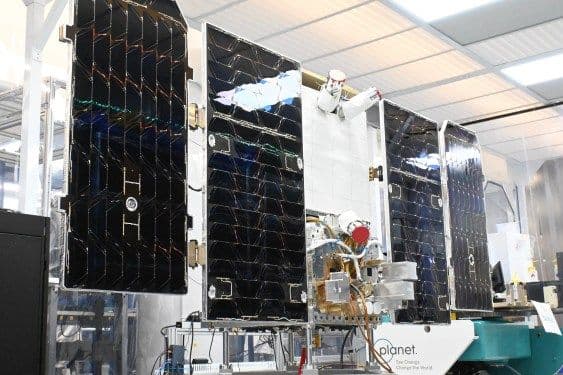
Google’s prototype of itsorbital compute satellitetook off today onboard a SpaceX rocket launched from California — the first time the tech giant has sent one of its advanced chips into space. Built byPlanet Labs, the satellite will prove that a Google Tensor Processing Unit, its competitor to Nvidia’s GPUs, can function in space. That means supplying a kilowatt of continuous power, cooling the chip, and running a series of models through their paces to see if anything goes wrong. “We’ve done testing on the ground, but you know, there’s no test that’s completely as good as the real thing,” said Travis Beals, the Google executive managingProject Suncatcher, the tech giant’s plan to develop large-scale compute clusters in orbit around the Earth. Once commissioned, the satellite will fire up its TPU in 15-minute bursts to avoid straining the satellite’s power and thermal management systems. This satellite is based on a standard platform built by Planet Labs, but the two companies are working on a demo expected to take flight next year that will see two satellites more purpose-built for advanced compute that can run more substantial workloads. Those future versions will attempt to collaborate via a laser communications link. Suncatcher isn’t the only space AI payload on this SpaceX rocket, which is launching more than 100 different payloads, including missions fromSatlytand Cowboy Space Company. What sets the Google initiative apart from those startups (and indeed from SpaceX itself) is that it’s a long-term project. The focus of this “long-term moonshot,” as Beals puts it, is on building for the space infrastructure and AI workloads that will exist in the future. The company envisions an orbital data center that is a network of 81 satellites flying in close formation, processing in parallel. “The bandwidth and the latency between TPUs really, really matters when you’re trying to run a multi-rack workload…we’re trying to look ahead to not just what workloads exist today, but where they will be in five years,” Beals said. That’s largely because the rockets required to scale up orbital data centers in a cost-effective way don’t yet exist. On Thursday, Google also released a peer-reviewed version of its white paper on orbital data centers, one of the most rigorous analyses available of how compute gets to orbit. The paper will be published inJoule. One of the paper’s most notable aspects is how Google thinks about access to space. Although the researchers stress their analysis isn’t an economic feasibility study, it offers an interesting picture of how the company sees rockets becoming cheaper over time. Like all data center companies, Google is looking to SpaceX to get its spacecraft off the ground. (Google is also a major investor in SpaceX.) Arguing that Elon Musk’s rocket builders have achieved a price-reducing “learning curve” of about 20% a year since they launched the Falcon 1 rocket, the authors believe it’s reasonable to expect the company to deliver launch prices close to $200 per kilogram by 2035. What will it take to do that? Based on the amount of payload launched by the Falcon 9, they think a similar cost-reduction trajectory will require Starship to fly 370,000 tons of payload into orbit. That’s something that would take it about 1,800 launches over the next 10 years, or 180 a year — and that’s if it can fly 200 metric tons on each mission. That’s a big ask for a vehicle that has never flown more than five times in a year. SpaceX predicts the company will be flying far more than that — Elon Musk has suggested Starship could achieve anhourlyflight rate in 2029, for example, but Musk says a lot of things. The good news, at least, in Google’s updated research, is that it seems likely that its chips will survive the radiation of space. The company had to redo tests blasting the chips in a particle accelerator after they realized the configuration of the chips provided more shielding than they would actually experience. This produced slightly more errors in the chip’s logic circuitry, but the company is still confident its chips can handle large inference workloads in orbit for the five-year lifespan of a satellite. “The error rate is very low if you’re thinking about typical inference operations, right? Like one in a million,” Beals said. “On the other hand, it was already problematic for doing, say, some mega-scale training run where you’re going to have many thousands of chips running for months.” Correction: The headline for this story originally misstated the learning curve estimate for Starship launches as 1,600;it is 1,800.
View

ChatGPT can now virtually try on clothes for you
OpenAI is again experimenting with how its conversational AI assistant, ChatGPT, can help users as they shop online. On Thursday, the company announced the global launch of two new shopping features, including a way to virtually try on clothing and accessories and a new favoriting function that can help users save products they like for later reference. The updates arrive at a time when AI assistants are exploring consumer use cases around shopping. OpenAI alreadyhad to pivot from one of its earlier ideasin this space, an instant checkout feature that ended up not performing well. More recently, agentic AI startup Instinct began pushing product recommendations to users, butsome felt thatthe proactive recommendations were an overreach, more akin to ads than helpful suggestions. OpenAI said its new shopping features leverage the newly launchedChatGPT Images 2.5 model, which the company claims produces more natural lighting and richer textures, follows editing instructions more reliably, and reduces image generation latency. To start, virtual try-on allows ChatGPT users to upload a selfie or a full-body photo in order to visualize how an article of clothing or an accessory might look on them. This option will appear as a new Try On button in ChatGPT’s shopping results. You can also upload an image of an item, like a web screenshot, and ask ChatGPT to try it on for you. The other new option, Favorites, lets you save products you discover to a Library in the app so you can come back to them later. (These items will be saved alongside your try-on images, the company notes.) OpenAI said that ChatGPT can help users shop in other ways, too. For instance, you could describe a style that you’d like to try, then ask it to shop for the pieces needed to complete the look. Or, you could upload photos of celebrities’ outfits and ask it to find the items they’re wearing that are available for purchase. The latter sees the assistant moving into areas that Pinterest and Google have dominated in recent years as sources for fashion inspiration and discovery that can convert to sales for online retailers. Whether ChatGPT will become people’s first choice for this type of activity, however, remains to be seen — especially given thatGoogle launched virtual try-on last year.
View