最新 AI 资讯

Anthropic Introduces Claude for Small Business With Ready-to-Run AI Workflows, Connectors
Anthropic, on Wednesday, announced a new offering for smaller enterprises. Dubbed Claude for Small Business, the new solution brings a set of new connectors and ready-to-run workflows to power artificial intelligence (AI)-powered automation within tools that small businesses use the most. With this release, the San Francisco-based AI startup is also diversifying its product and service offerings to serve different enterprise niches. The announcement comes just a week after the company launched a new business venture to provide AI services to enterprises.
View

Clio’s $500M milestone arrives just as Anthropic ups the ante
While AI is now being applied to everything from healthcare to customer support, no single use case has yet been nearly as popular or lucrative as code writing. Jack Newton, co-founder and CEO of Clio, a Canadian law firm management software company, is convinced that legal tech is poised to be the next big winner of the LLMs era. That’s a self-interested claim — 18-year-old Clio is a legal tech company — but the numbers are hard to dismiss. Clio saw its revenue growth accelerate sharply after integrating AI into itsoffering in 2023. The company surpassed $200 million in annual recurring revenue (ARR) in mid-2024, doubled that figure by late last year, and just announced that its ARR reached $500 million. “LLMs are so excellent for coding because all the existing code in the world is a huge repository to train on,” Newton said. “The analogy to legal is really clear.” Law firms hold massive corpuses of contracts and agreements, providing a rich basis of text-based data for AI models to learn from. “Tech companies and lawyers alike are recognizing what a huge amount of upside there is for legal with LLMs,” Newton said. Clio isn’t the only legal tech company seeing a massive revenue surge driven by AI. Four-year-old Harvey, which offers LLM AI for law firms, hit ARR of $190 million by the end of 2025, co-founder and CEO Winston Weinberg sharedon LinkedIn.Harvey’s main rival, Legora, announced last month that it reached$100 million in ARRa mere 18 months after launching its platform. Althoughthe legal tech community's definition of ARR has beenunder scrutiny recently, the opportunity to apply AI to law makes clear sense,given that LLMs can automate the field’s most time-consuming tasks, such as document review and drafting. Legal tech companies aren’t the only ones recognizing how valuable AI could be for lawyers. Earlier this week, Anthropic announced asuite of newlegal-specific features, expanding Claude for Legal -- the law-focused plug-in whosedebutearlier this year sent legal tech stockstumbling. Both Harvey and Legora rely on Claude as a core model among others, which makes the dynamic an uncomfortable one: a key supplier is now also a competitor. For Newton, these are all signs of the vast potential of the legal AI market. He has reason to be optimistic. The Canadian-based Clio was valued at$5 billionwhen it raised a $500 million Series G last November. The company provides law firms with time-tracking, invoicing, and payment tools. It$1 billionacquisition of data intelligence platform vLex last year now allows lawyers to use Clio’s AI for research, as well.
View

Who decides what AI tells you? Campbell Brown, once Meta’s news chief, has thoughts
Campbell Brown has spent her career chasing accurate information, first as a renowned TV journalist, then as Facebook’s first, and only, dedicated news chief. Now, watching AI reshape how people consume information, she sees history threatening to repeat itself. This time, she’s not waiting for someone else to fix it. Her company,Forum AI— which she discussed recently with TechCrunch’s Tim Fernholz at a StrictlyVC evening in San Francisco — evaluates how foundation models perform on what she calls “high-stakes topics” — geopolitics, mental health, finance, hiring — subjects where “there are no clear yes-or-no answers, where it’s murky and nuanced and complex.” The idea is to find the world’s foremost experts, have them architect benchmarks, then train AI judges to evaluate models at scale. For Forum AI’s geopolitics work, Brown has recruited Niall Ferguson, Fareed Zakaria, former Secretary of State Tony Blinken, former House Speaker Kevin McCarthy, and Anne Neuberger, who led cybersecurity in the Obama administration. The goal is to get AI judges to roughly 90% consensus with those human experts, a threshold she says Forum AI has been able to reach. Brown traces the origin of Forum AI, founded 17 months ago in New York, to specific moment. “I was at Meta when ChatGPT was first released publicly,” she recalled, “and I remember really shortly after realizing this is going to be the funnel through which all information flows. And it’s not very good.” The implications for her own children made the moment feel almost existential. “My kids are going to be really dumb if we don’t figure out how to fix this,” she recalled thinking. What frustrated her most was that accuracy didn’t seem to be anyone’s priority. Foundation model companies, she said, are “extremely focused on coding and math,” whereas news and information are harder. But harder, she argued, doesn’t mean optional. Indeed, when Forum AI began evaluating the leading models, the findings weren’t exactly encouraging. She cited Gemini pulling from Chinese Communist Party websites “for stories that have nothing to do with China,” and noted a left-leaning political bias across nearly all models. Subtler failures abound too, she said, including missing context, missing perspectives, straw-manning arguments without acknowledgment. “There’s a long way to go,” she said. “But I also think that there are some very easy fixes that would vastly improve the outcomes.” Brown spent years at Facebook watching what happens when a platform optimizes for the wrong thing. “We failed at a lot of the things we tried,” she told Fernholz. The fact-checking program she built no longer exists. The lesson, even if social media has turned a blind eye to it, is that optimizing for engagement has been lousy for society and left many less informed. Her hope is that AI can break that cycle. "Right now it could go either way," she said; companies could give users what they want, or they could "give people what's real and what's honest and what's truthful." She acknowledged the idealistic version of that — AI optimizing for truth — might sound naive. But she thinks enterprise may be the unlikely ally here. Businesses using AI for credit decisions, lending, insurance, and hiring care about liability, and "they're going to want you to optimize for getting it right." That enterprise demand is also what Forum AI is betting its business on, though turning compliance interest into consistent revenue remains a challenge, particularly given that much of the current market is still satisfied with checkbox audits and standardized benchmarks that Brown considers inadequate. The compliance landscape, she said, is "a joke." When New York City passed the first hiring bias law requiring AI audits, the state comptroller found more than half had violations that went undetected. Real evaluation, she said, requires domain expertise to work through not just known scenarios but edge cases that "can get you into trouble that people don't think about." And that work takes time. "Smart generalists aren't going to cut it." Brown — whose company last fall raised$3 millionled by Lerer Hippeau — is uniquely positioned to describe the disconnect between the AI industry's self-image and the reality for most users. "You hear from the leaders of the big tech companies, 'This technology is going to change the world,' 'it's going to put you out of work,' 'it's going to cure cancer,'" she said. "But then to a normal person who's just using a chatbot to ask basic questions, they're still getting a lot of slop and wrong answers." Trust in AI sits at extraordinarily low levels, and she thinks that skepticism is, in many cases, justified. "The conversation is sort of happening in Silicon Valley around one thing, and a totally different conversation is happening among consumers."
View

DoT Signs ₹2,432 Crore BharatNet Deal to Connect Rural Andhra Pradesh
Under the BharatNet rollout, the state will upgrade existing fibre infrastructure, connect newly created Gram Panchayats and extend internet access to nearly 4,000 villages on demand.
View

Anthropic Mythos Is Forcing Big Tech To Rethink Cybersecurity
As AI becomes more capable of identifying vulnerabilities and analysing attacks, companies are beginning to use it for defence as well.
View

Why This VC Firm Signed a $6 Million Cheque to Replace Chinese Silicon
The IAN Group's recent $6 million investment in BigEndian reflects hopes of reducing reliance on foreign electronic hardware.
View
Notion just turned its workspace into a hub for AI agents
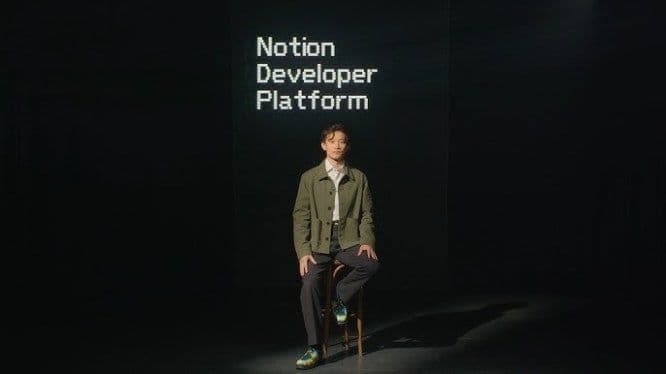
Productivity software makerNotionis stepping into the agentic era. In a live-streamedproduct announcementon Wednesday, the company, known best for its collaborative note-taking app, introduced a new developer platform that extends the capabilities of its custom AI agents, connects with external agents, and allows teams to build automated multi-step workflows that can pull in data from any database. By building an orchestration layer — a system that coordinates AI work across multiple tools and data sources — Notion is positioning itself as more than a note-taker with AI features and instead as a hub where people and agents can collaborate across tools and databases. In February, Notion first launched itsCustom Agents— AI teammates that handle repetitive tasks, like answering frequently asked questions, compiling status updates, and automating workflows. Since then, Notion customers have built over one million agents, the company says. However, these agents had limitations. They couldn’t connect with external data or use custom logic. External agents that companies used also didn’t have a way to connect with the Notion workspace. Teams had to work around these problems by using third-party automation platforms or writing their own scripts that run on their own infrastructure. “It’s true that, historically, Notion hasn’t been the most developer-focused platform,” said Ivan Zhao, Notion co-founder and CEO, during the livestream. “But things are changing.” Now, Notion will allow teams to deploy their own custom code. With its new Workers, Notion’s cloud-based environment for running custom code, customers can write their logic and deploy it to a secure sandbox (an isolated environment that keeps the code from interfering with other systems). This allows teams to do things like sync their data into Notion, build custom tools, and trigger work with webhooks — which are automated signals that kick off actions when something happens in another app — without needing to rely on external infrastructure. You don't even have to write the code. The company points out that your preferred AI coding agent can do it for you. The Workers will use the same credit system as Custom Agents, but Notion is making this free through August, so developers can experiment. Syncing external data sources is also a part of the Notion Developer Platform. Powered by Workers, the database sync feature can pull in data from any database with an API. That means you could access data from places like Salesforce, Zendesk, Postgres, and others within your own Notion databases -- and keep the data current. Zhao noted that this means that Notion's users can now "use your Notion database as a sheer canvas to power both your workflows and your agents." Workers can also build agent tools with custom logic, for those times when connecting with a third-party via MCP -- short for Model Context Protocol, an emerging standard that lets AI tools connect to external data and services -- isn't enough. Another addition allows Notion's users to chat directly with external AI agents they use, assign them work, and track their progress, as if they were one of Notion's own custom agents. At launch, Notion says that Claude Code, Cursor, Codex, and Decagon are supported partner agents, but it plans to add more. There's an External Agent API, too, if teams want to connect their own internal agents with Notion, like those they've built specifically for their company's needs. Developers and agents interact with Notion's new Developer Platform via theNotion CLI, a command-line tool for developers, available on the company's Business and Enterprise Plans. The Developer Platform represents a shift in strategy for Notion as it becomes more of a programmable platform than just an application, setting it up to compete with other workflow automation platforms. As businesses increasingly look to automate knowledge work and build internal AI systems, a platform that ties together agents, custom code, and live data in one place starts to look less like a productivity app and more like core infrastructure. It also follows the broader trend among AI companies, which have been moving beyond the AI chatbot to offer agentic tools that can take actions across different software platforms. "Any data, any tool, any agent -- that's the big picture for the Notion Developer Platform," Zhao said.
View

Anthropic’s Cat Wu says that, in the future, AI will anticipate your needs before you know what they are
With the tech industry singularly focused on AI models, Anthropic is having an exceptionally good year. The company may soon pull ahead of its main competitor, as it looks to raise tens of billions of dollars in a funding round that would put its valuationat some $950 billion(OpenAI wasvalued at $854 billionin its March round), and business customers increasingly express aprefererence for Claude over ChatGPT. A recent report showed Anthropicrecently outpaced OpenAI among business customers, quadrupling its market share since May 2025. Cat Wu, Anthropic’s head of product for Claude Code and Cowork, has been a key figure in that success. Since joining the company in August 2024, Wu has helped shepherd Claude through a critical phase, leveling it up from a purely informational chatbot to a coding tool and beyond. Wu, who oversees the development of new features, is frequently paired with Boris Cherny, a core member of Anthropic’s technical staff and the creator of Claude Code, leading the pair to becharacterized asAnthropic’s “Batman and Robin.” Wu sat down with me at last’s week’s second annual Code with Claude conference in San Francisco, where she discussed how she thinks about product strategy, and how she hopes the experience of using Claude will change in the future. This interview has been edited for length and clarity. When you’re looking at product strategy, how much of it is reactive to your peers or your competitors? Do you think about that at all? The main thing that we design for is staying on the exponential, so I think, across our team, we instill in everyone the lesson that AI will just continue to get better. For us, we just need to stay at this frontier. We don’t think about competitors. I think if you do think about competitors, you end up being, like, perpetually two weeks, or like, a month behind how fast you can execute. And so it’s normally not the best way to stay at the frontier. Anthropic released at least six models last year and has already released almost as many this year. Do you expect this pace of development to continue? Our hope is that it continues (laughing). I think the models are still improving at a very steady pace, and so we should be able to keep sharing those with our users. I think the deployments might look a bit different—like how we handled Glasswing, but as much as possible, we want this intelligence to benefit as many people as possible, and it has to be handled in a very safe way, which is why we handled Glasswing [in the way that we did]. [Glasswing is an initiative that Anthropiclaunched in Aprilthat invited a small consortium of partner organizations — including companies like Amazon, Apple, CrowdStrike, and Microsoft — to gain access to its new cybersecurity model, Mythos. Unlike many of Anthropic's other AI models, Mythos is not being given a general public release. The company has claimed that it fears the model — which is designed to scan codebases for software vulnerabilities — is too powerful, and could be weaponized by bad actors.] You said in a previous interview that the future of work is basically staff managing fleets of agents. It seems like that could eventually lead to a situation where the agents are better at the job, or know the job, better than the human. I think it is extremely hard to manage agents if you can't do the job yourself. I think the managers still need to be experts in their domain. It's a new skill set that a lot of people are going to have to learn, but managing agents is actually very similar to being a manager of people, in the sense that you have to understand, like, why did the agent make this mistake? Did it misinterpret my instruction? Was my request under-specified? You have to have the ability to debug it. It does seem like the long term goal is to cut down on team size, though. Because if you have agents doing a job, then you don't need an intern, right? Ideally, I think the idea is that everyone can get a lot more done. I think that, for everyone’s job, there's always this percentage of it that's really tedious. For me, it’s responding to emails. I think everyone has this part of their life...So my hope is that it [the AI agents] actually does that, and then everyone has, like, all these cool things that they will want to build [in their spare time]. What are you guys most excited about in the next six months? I think the next big thing is proactivity. Last year we were in this world of synchronous development. Right now, people are shifting to routines, so like automating, for example, responses to customer support tickets. And I think the next step is that Claude understands what you work on, and just sets up some of these automations for you.
View

Musk’s xAI is running nearly 50 gas turbines unchecked at its Mississippi data center
Elon Musk’s xAI is running nearly 50 natural gas turbines at its Mississippi data center, power plants that the state is currently not regulating thanks to a loophole. The power plants are considered “mobile” by the state of Mississippi because they are sitting on flatbed trailers, thus allowing them to dodge to air pollution regulations for one year. The NAACP, which has filed a lawsuit on behalf of residents in the area, says the unchecked emissions from the turbines is worsening air quality in an already polluted region. This week, it asked the court for aninjunctionagainst xAI. At issue is the “mobile” nature of the turbines. The Southern Environmental Law Center, which filed the lawsuit on behalf of the NAACP, says the turbines are being operated in violation of federal law, which says that power plants mounted on a trailer can still be considered stationary and subject to air pollution regulations. XAI has been granted permits for15 of its turbines. A Greater Memphis Chamber of Commerce press release previously said that “about half” of the 35 turbines in operation in May 2025 would remain on site. However, xAI has continued to install more. Currently, it’s operating 46, according to alocal news report.
View

WhatsApp Introduces Incognito Chat With Meta AI for Private Conversations
WhatsApp has announced Incognito Chat with Meta AI, a new feature that lets users have private, temporary conversations with the company's AI assistant. The feature is aimed at people who want to ask sensitive questions involving personal matters, finances, health, or work without keeping a lasting record of the interaction. Incognito Chat is built on Meta's Private Processing technology and will begin rolling out to WhatsApp and the Meta AI app over the next few months.
View

Poppy debuts a proactive AI assistant to help organize your digital life
Smartphones can be distracting with their dizzying array of apps and constant stream of notifications. A new app calledPoppyaims to organize the chaos by combining your calendar, email, messages and other sources into a single dashboard. The idea, per the company’s website, is that “Poppy pays attention so you don’t have to.” Users can connect various services to Poppy’s app, like their email, calendar, and, at a minimum, their location. Poppy then uses that data along with AI to guess what’s important to you right now based on what’s going on in your life. At a high level, this means you can open Poppy’s app or glance at its widgets to see the meetings or tasks you have on your plate. But Poppy’s most powerful feature is likely its proactive suggestions. For instance, if Poppy has access to your calendar and sees that you have a 30-minute gap while you’re near a park, it could suggest you take a break and go for a walk before your next appointment. And if you’re planning a brunch with a friend who mentioned their food preferences in a previous communication, it could factor in that information when suggesting restaurants. You can also message Poppy with questions or requests, almost as if you had a personal assistant working on your behalf. Poppy can track your flights and alert you to changes, or nudge you when it’s time to take your medication. Poppy’s maker,Sai Kambampati, says he’s always been fascinated by human-computer interaction, having earned his Master’s degree in Computer Science with a specialization in this area. Previously a software engineer at the AI hardware startup Humane, he said he has seen first-hand how people are trying to rethink how we engage with technology. "I've always been interested in challenging what computers are able to do, especially the idea of ambient computing and computers that can proactively sense what you need and anticipate your needs," Kambampati told TechCrunch. "That's something that I found very, very exciting. And I felt like with all the AI technology that we're seeing around us, it has never been more possible to embark on something like this." At launch, Poppy works with everyday apps like Apple Calendar, Google Calendar, Gmail, Outlook, iCloud Mail, Apple Health, Reminders, Contacts, iMessage, WhatsApp, and others. (It uses a Mac app to access iMessage, which could later be a problem as Apple generally doesn't allow third-party apps to access its messaging service.) It also works with apps like Uber and Instacart, and Kambampati plans to extend support to others over time. The company says users' data is encrypted when stored in its database, and it has a zero-retention policy enabled when it uses cloud-based LLMs for its suggestions. In time, however, Kambampati would like make the switch to using local, on-device AI models when technology advances. "My hope, my dream is — within two to three years from now, when our devices have much more powerful compute, and the models get much smaller, cheaper and more high quality — eventually we can have all of this running on our own devices, and there won't even be a need to hit the servers," he says. Poppy's San Francisco-based team of four is backed by $1.25 million in pre-seed funding led by Kindred Ventures, with various angels also participating, including DeepMind's Logan Kilpatrick.
View

Anthropic now has more business customers than OpenAI, according to Ramp data
For the first time, Anthropic has more verified business customers than OpenAI, according tothis month’s AI Indexfrom the fintech firm Ramp. The survey, compiled from Ramp’s clients’ expense data, shows 34.4% of participating businesses are paying for Anthropic services, more than any other AI lab, while only 32.3% pay for OpenAI. It is the first time Anthropic has held the top position. “Anthropic has already been in the lead amongst the high adoption groups like finance, tech, professional services,” Ramp economist Ara Kharazian told TechCrunch. “It’s across the other firms where OpenAI still has a lead, but that has been shrinking over the past couple of months.” Because the index only represents companies that use Ramp, it’s not a perfect proxy for the marketplace at large. Still, the sample includes more than 50,000 companies, making it both broad and diverse enough to carry weight. More importantly, the general trend can be seen across the industry. OnOpenRouter’s leaderboard, which samples a different portion of users, OpenAI last ranked above Anthropic in December 2025. According to Ramp’s figures, the past 12 months have been particularly transformative for Anthropic. In May 2025, a mere 9% of businesses were paying for Anthropic products, a figure that climbed 26% in the following 12 months. Over the same period, OpenAI’s share declined by 1%, and the overall share of businesses using some kind of AI product increased by 9%. Kharazian is skeptical about whether this advantage will last, for reasons he explained in a blog post, but said the success of the past year was proof that Anthropic had chosen a good strategy. “What Anthropic did worked really well,” Kharazian told TechCrunch, “which was — start with a very technical customer base, focus on their needs, really succeed in execution and then start broadening out through tools like Cowork.”
View