最新 AI 资讯

How long is Anthropic’s lease with SpaceX? Opinions vary.
Earlier this month, xAI signeda major compute deal with Anthropic, pledging billions of dollars a month for exclusive use of the company’s Colossus cluster. It was a coup for both companies, giving xAI some much-needed revenue and helping Anthropic catch up in the never-ending race for compute. Butthis morning on X, Elon Musk downplayed exactly how much SpaceX had committed to the deal. “SpaceX has not committed to leasing Colossus for years, although it’s possible that may be what happens,” he said, replying to a user. “This is a 180 day lease with 90 day notice mutual cancellation thereafter. The short term was our request, not Anthropic’s. We won’t leave them hanging and will provide a reasonable off-ramp, but if compute gets super tight I said we might need it back at some point.” Musk’s statement directly contradicts SpaceX’srecent S-1 filing, which confirms the standard 90-day cancellation but presents the deal as a three-year agreement. Page F-62 of the filing reads: On May 3, 2026, the Company entered into a cloud services agreement with Anthropic PBC, an AI research and development public benefit corporation, with respect to access to compute capacity. Pursuant to this agreement, the customer has agreed to pay a monthly fee through May 2029, with capacity ramping in May 2026 at a reduced fee. The agreement may be terminated by either party upon 90 days’ notice. The customer will retain ownership and intellectual property rights in its content, AI models, and related data. The key point here is that Anthropic “has agreed to pay a monthly fee through May 2029” — a pretty straightforward description of a three-year lease. The same language is repeated on F-96 and in slightly varied form (“the customer has agreed to pay us $1.25 billion per month through May 2029”) on pages 13 and 146, so it’s not as if there was a typo. xAI did not respond to a request for clarification. Maybe we can quibble about whether Anthropic agreeing to pay for a service means the same thing as SpaceX agreeing to provide that service, but that’s not usually what “lease” means. And why have a one-way lock-in if either party can terminate the deal with three months’ notice anyway? I don’t have the deal in front of me, so I don’t know what it says — and neitherSpaceXnorAnthropicis saying anything about the duration of the deal in their announcements. Still, there should be a pretty straightforward fact of the matter here, and it’s not the sort of thing you want to make false statements about during a company’s quiet period. As always, we should note that the SEC probably will not do anything — and even if they did, Elon probably wouldn’t care. But this sort of does seem likea material misrepresentation made while marketing a security, which is bad karma at the very least. Sean O’Kane contributed reporting to this article.
View
Anthropic releases Opus 4.8 with new ‘dynamic workflow’ tool
On Thursday, Anthropicreleased Opus 4.8, the newest version of its most advanced publicly available model. The model is available everywhere, with standard pricing at the same level as the previous Opus release. The new model comes just 41 days after Opus 4.7 was released, a much faster upgrade cycle than normal for Anthropic. (The most recent Sonnet and Haiku models are three and seven months old, respectively.) The fast turnaround may have something to do with the chilly reception to Opus 4.7, which some usersfounddisappointing. That interval has also seen significant new releases forOpenAI’s Codexand Google’sGemini Flash model, increasing the pressure on Anthropic to keep pace. Opus 4.8 comes with the expected best-in-class benchmark results, but there’s also particular attention to how the model manages bad or uncertain data. In the launch post, Anthropic’s early testers found that the new model is “more likely to flag uncertainties about its work and less likely to make unsupported claims.” Echoing this point, a testimonial from Bridgewater associates said the biggest difference in the upgrade was “Opus 4.8’s tendency to proactively flag issues with the inputs and outputs of an analysis, something other models routinely missed and left to the users to catch.” Together with the new model, Anthropic launched a feature calledDynamic Workflows, which will be available in research preview. The system is designed to help larger models like Opus manage complex tasks across hundreds of parallel subagents. “Claude Code alongside Opus 4.8 can now carry out codebase-scale migrations across hundreds of thousands of lines of code from kickoff to merge, with the existing test suite as its bar,” the post explains. Anthropic is still holding back its most advanced Mythos model aftera tentative preview last monthraised cybersecurity concerns. However, the company hinted in today’s Opus release that the Mythos preview period might soon end, once necessary safeguards are complete. “We’re making swift progress on developing these safeguards and expect to be able to bring Mythos-class models to all our customers in the coming weeks,” the company wrote.
View
In just 3 weeks, StrictlyVC is coming to Los Angeles
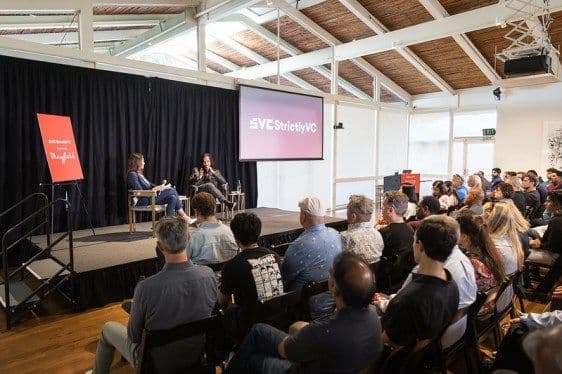
Join us forStrictlyVC Los Angeles 2026, an intimate evening bringing together leading investors and entrepreneurs for high-signal conversations from the front lines of venture capital and frontier technology. Taking place Thursday, June 18, at The Aerospace Corporation Campus in El Segundo, this edition continues StrictlyVC’s focus on direct access to the ideas and leaders shaping where technology and capital are headed next.Secure your spot here. For executives, investors, and founders navigating an increasingly complex market, this is an opportunity to step inside conversations that rarely happen in public and hear directly from the people driving change across defense, AI, and advanced industry. We will begin the evening withEthan Thornton, founder ofMach Industries. In his session called “Built for a New Era of Defense Technology,” Thornton will discuss what it means to build a hardtech company at speed and why defense innovation is undergoing a structural shift as autonomy, manufacturing, and national security become increasingly interconnected. His perspective reflects a new generation of founders choosing to operate in industries once considered slow-moving, now rapidly reshaped by technological acceleration. Next the conversation turns to backing the next frontier of physical AI, featuringDelian AsparouhovofFounders FundalongsideSaif KhawajaofShinkei Systems. Together, they will explore how advances in AI, robotics, and automation are beginning to reshape not just software systems but the physical world itself and what it takes to move breakthrough technologies from concept to real-world deployment at scale. Additional speakers and conversations will be announced in the weeks ahead as the StrictlyVC Los Angeles agenda continues to take shape.Stay updated on new speaker announcements and event developments. As the evening unfolds, the room becomes the real value of the event. Conversations continue beyond the stage in a setting defined by access, focus, and proximity to the people actively shaping the next generation of companies. It is an environment where introductions turn into insight, and insight often turns into opportunity.Secure your spot here.
View
Devin Maker Cognition Raises $1 Bn at $26 Bn Valuation as Adoption Grows
The company said its annualised revenue run rate has reached $492 million.
View
Has the hunt for AI compute uncovered the next Cerebras?
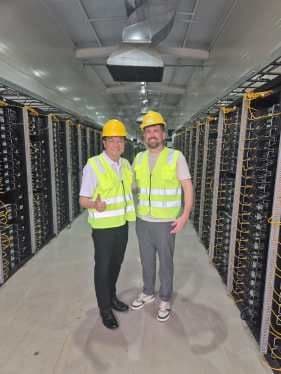
The raging demand for computers to run AI models has only accelerated, but there are two major obstacles that anyone in the business needs to overcome: getting the right chips, and getting them into data centers where they can start generating revenue. General Compute, a new inference neocloud — a company that rents out AI processing power, specializing in the phase when models are running and responding to users rather than being trained — has answers to those questions that illuminate where the AI ecosystem is headed. Those answers helped it raise a $15 million seed round at a $60 million post-money valuation, led by FUSE VC with participation from Carya Venture Partners and Village Global Ventures. First, what is the right chip? The demand for GPUs has gone through the roof, but it’s becoming conventional wisdom that they aren’t the best-suited chips for running AI models once they have been trained. The phase of AI where a model is actively generating responses has different computational requirements than training, and a new class of chips is being designed specifically for it. Nvidia’s $20 billion Groq transaction in December and Cerebras’ $57 billion IPO last week point the way. With capacity strained at both those companies, the co-founders of General Compute, CEO Finn Puklowski and CTO Jason Goodison, found another option. They’re turning to specialized chips built by SambaNova, an Intel-backed chipmaker focused on inference that has fallen a bit out of the Silicon Valley conversation. That may change when SambaNova releases its new chips this year. The architecture is more flexible and uses more memory to store context during inference calculations, and SambaNova claims that it outperforms not just GPUs but also other specialized chips built by the likes of Groq or Cerebras. Puklowski says the new chips will generate 600 to 700 tokens per second, versus about 250 tokens per second for GPUs. General Compute has $300 million of the company’s SN50 chips on order and says it will be the first neocloud deploying them. These chips also help solve the second big problem—where to put them—for General Compute: They are air-cooled, not water-cooled, and consume less power, so they can be installed in existing data center facilities without new infrastructure investments. Puklowski is pursuing colocation deals — arrangements where General Compute installs its hardware in someone else’s facility — not just with data center providers, but also with crypto miners looking to repurpose their infrastructure as the cost of producing a bitcoin has often exceeded its price. General Compute launched its cloud offering last week, claiming it is already the fastest at running MiniMax 2.7, a powerful open-source LLM. Joe Hasselmann is a venture investor who got in on the ground floor of the inference boom when he invested in Groq in 2021. This year, he launched a new fund, Evercrest Capital Partners, focused on the AI space, and made General Compute his first investment. Hassleman sees in SambaNova’s partnership with General Compute parallels to Coreweave’s relationship with Nvidia — and to the pairing of Groq’s chip-making with its former cloud offering. “They do need a healthy mix of customers that are going to put their chips in environments that are going to have high growth to them,” Hassleman said. “As much as General Compute is making a bet on SambaNova, SambaNova is making a bet on General Compute.” The question is what kind of computer architecture will capture the most value in the AI future. Inference clouds are implicit bets on a world of multiple models and agents, one where no single provider dominates and speed and cost of inference become the key competitive variables. Consider the$113 million Series Braised for OpenRouter this week, reflecting the company’s ability to offer customers access to multiple models in order to optimize their token spend. Speed matters in that calculation, for price, and for capability. Puklowski wants to turn hour-long workloads for coding agents into five- or ten-minute tasks, and make audio agents for customer service, which require faster inference to converse effectively, more economical.“If you use ChatGPT and it gives you 50 tokens per second, that’s still a heck of a lot faster than we can read,” Puklowski told TechCrunch, “Now that things have moved to agent-to-agent, where agents are out there reading on our behalf or pinging databases, they need to go faster.”
View

Confluent Launches Dedicated GCC Strategy in India as AI Adoption Accelerates
the GCC ecosystem is undergoing a structural shift, with centres functioning as captive support units
View
Wipro Expands ServiceNow Partnership to Scale Agentic AI Workflows Across Enterprises
Wipro Intelligence suite will be integrated with ServiceNow’s AI platform to automate workflows across functions such as IT, HR, procurement and cybersecurity.
View

Google Partners with Polaris School of Technology to Launch AI and Cloud-Focused Degree Programme
Google collaborates with Bengaluru's Polaris School of Technology to integrate certified pathways, AI tools, and multi-million-rupee credits into a new degree.
View

TCS Partners Mistral to Build Custom Enterprise AI Models at Scale
TCS has partnered French AI startup Mistral to help enterprises build custom AI models using proprietary data.
View

Why India Inc Struggles to Retain Gen Z in the AI Economy
India’s employers are facing a new workforce reality as Gen Z workers, armed with AI-era skills, are moving faster than traditional career ladders can keep up with.
View

Is Claude Mythos Overwhelming Security Teams?
Organisations can find more vulnerabilities than ever before, but the sheer volume forces them to fix their fundamentals first.
View
Vertu wants CEOs to run companies from an AI foldable starting at $6,880
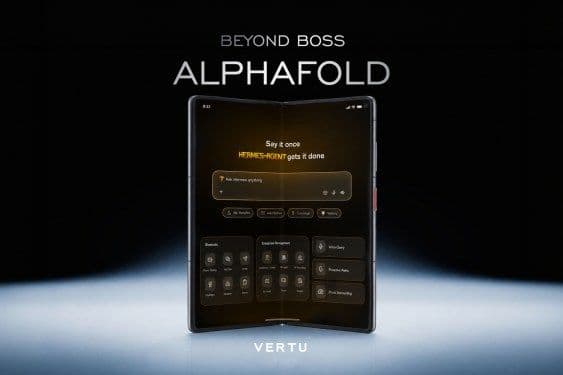
Luxury smartphone brand Vertu on Thursday unveiled a foldable phone powered by an AI agent that connects with enterprise software and coordinates workflows. The company is targeting executives who manage business operations and communications on the move. Called the Alphafold, the foldable smartphone starts at $6,880 for the calfskin version. Higher-end models feature bespoke finishes including alligator leather, 18K gold, and natural diamond accents, along with customized detailing. This continues Vertu’s long-standing strategy of positioning its phones as luxury status symbols aimed at affluent buyers. The company told TechCrunch that its highest-end standard model is currently priced at $46,800, with further customization options available. The launch marks Vertu’s latest attempt to reinvent itself for the AI era after struggling to remain relevant in the modern smartphone market. The Hong Kong-headquartered company, onceknown for luxury handsetsand concierge services popular among wealthy buyers before the rise of the iPhone, haschanged ownership multiple timesover the years as mainstream smartphone makers came to dominate the industry. Nonetheless, Vertu is betting the Alphafold can help reinvent the brand for the AI era by combining luxury hardware with enterprise-focused AI capabilities. Vertu’s Alphafold comes with Hermes Agent, built on top of the open-source Hermes project by Nous Research. The agent can connect to enterprise systems like ERP and CRM, and coordinate tasks such as approvals, scheduling, sales tracking, travel planning, and operational reporting through natural-language prompts. However, the company said that its Phone-to-ERP and VPS deployments would be customized for each customer depending on their existing enterprise systems, with pricing varying accordingly. The Alphafold, Vertu said, can route requests across multiple AI models including OpenAI’s GPT, Anthropic’s Claude, Google’s Gemini, and selected open-source models, while also integrating with more than 80 apps and dozens of native phone functions for cross-platform workflows. Existing AI features on smartphones from major manufacturers remain focused largely on consumer tools such as image editing and voice assistance, Vertu CEO Molly Ma said. This leaves room for more advanced AI-agent workflows tied to enterprise systems. She also pointed to earlier AI-agent smartphone experiments in China thatgained popularitybefore facingchallenges over data privacyand cloud-based data collection. The Alphafold, Ma said, aims to address those concerns through a privacy-focused architecture featuring a proprietary A5 security chip. This silicon is designed to isolate authentication keys, biometric credentials, and sensitive enterprise information from the main operating system, the company said. It added that commercially sensitive data can be processed locally on the device, while prompts sent to external AI models are redacted or tokenized before leaving the phone. While Vertu has emphasized the device’s privacy and security architecture, including on-device processing and data redaction features, the company said the system has not yet undergone third-party security audits or independent certification. However, Vertu told TechCrunch that independent audits and certification remain on its security roadmap “as an explicit next-stage commitment,” adding that it would “communicate the progress and the results publicly” once the product matures further. The Alphafold is powered by Qualcomm’s Snapdragon 8 Gen 4 processor and features an 8.05-inch foldable display alongside a 6.53-inch outer screen, a 6,500mAh battery, and satellite communication capabilities. The device also includes a triple rear camera setup with 50-megapixel primary and ultrawide cameras, as well as a 5-megapixel telephoto lens. Vertu said the phone’s hinge uses metal, titanium, and carbon-fiber components and is rated for up to 650,000 folds. The Alphafold is not Vertu’s first attempt to combine AI with foldable devices. The company last yearintroduced Agent Q, a clamshell-style foldable smartphone focused on AI-driven automation and productivity features. However, Ma told TechCrunch that Alphafold represents a significant step forward from Agent Q, arguing that AI-agent technology has matured rapidly over the past year, with improvements in memory, automation and app integration. Foldable smartphones remain a niche segment globally despite years of investment by major manufacturers including Samsung and Huawei. As many as 20 million foldable smartphones were shipped globally in 2025, accounting for less than 2% of total smartphone shipments, according to IDC data shared with TechCrunch. The research firm said foldables sold at an average price of about $1,300 last year — roughly three times the price of non-foldable smartphones. Kiranjeet Kaur, associate research director for mobile phones research at IDC, said foldables could eventually benefit from AI-agent workflows because their larger displays are better suited for multitasking and productivity-oriented experiences. She, however, added that enterprise AI adoption on smartphones still lags behind computers, and that most enterprise smartphone decisions continue to be driven by ecosystem integration and device management support rather than AI capabilities. The first 115-unit batch of Vertu’s Alphafold begins shipping this week across major markets including the U.S.
View