Opal 2.0 by Google Labs
Description
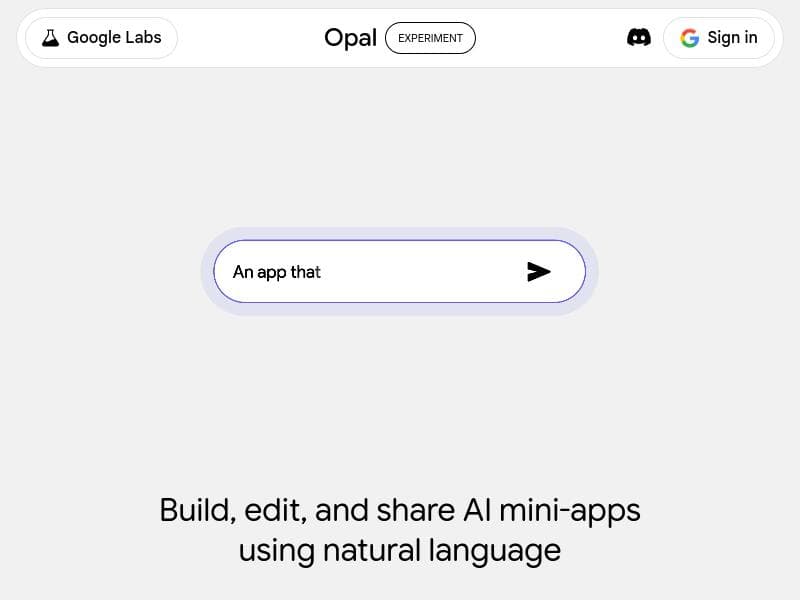
Opal 2.0 by Google Labs is a no-code visual builder that intelligently automates AI workflows by analyzing goals and selecting the best tools to complete tasks. Ideal for professionals and teams seeking seamless AI integration without coding, it combines powerful features like Memory, Dynamic Routing, and Google service integrations—all offered for free.
Opal 2.0 by Google Labs is an advanced no-code visual builder designed to streamline the creation and management of AI-driven workflows. Its core purpose is to empower users—regardless of technical background—to design complex AI processes through an intuitive drag-and-drop interface without writing any code. The latest major upgrade introduces a powerful new agent step that intelligently analyzes the user's goal, determines the optimal approach, and automatically invokes the most appropriate tools to complete the task. For example, it can seamlessly integrate with Veo for video processing or utilize web search capabilities for research tasks, thereby automating multi-step workflows that previously required manual coordination. This enhancement significantly boosts productivity and reduces the learning curve for building AI workflows. Key features of Opal 2.0 include clipboard read and write access, enabling smooth data transfer between the workflow and the user's system. It supports microphone and camera permissions, allowing workflows to incorporate real-time audio and video inputs, which is essential for interactive applications. Security is a priority, with workflows running inside a sandboxed iframe environment to isolate processes and protect user data. Deep integration with Google Drive and other Google services facilitates easy access to files and cloud resources, making it ideal for users already embedded in the Google ecosystem. The platform also supports popups and modals, enhancing user interaction within workflows, and allows downloads and top navigation for a seamless user experience. Additionally, new tools such as Memory, Dynamic Routing, and Interactive Chat expand Opal’s capabilities by enabling stateful interactions, conditional workflow branching, and real-time conversational interfaces. Opal 2.0 is best suited for professionals, teams, and organizations looking to automate complex AI workflows without investing in custom software development. It is particularly valuable for content creators, researchers, marketers, and product managers who need to orchestrate multiple AI tools and data sources efficiently. For instance, a marketing team can build a workflow that automatically gathers market research via web search, analyzes video content with Veo, and compiles insights into a Google Drive report—all without coding. Its user-friendly interface and powerful integrations make it accessible for non-technical users while still offering advanced capabilities for power users. Pricing for Opal 2.0 is straightforward: it is offered free of charge, making it an attractive option for individuals and organizations seeking cost-effective AI workflow automation. This free access lowers barriers to entry and encourages experimentation and adoption. Compared to alternatives, Opal 2.0 stands out due to its combination of no-code visual workflow building, intelligent agent-driven automation, and deep integration with Google services. While other platforms may offer AI workflow automation, few provide the same level of automatic tool selection based on goal analysis or the breadth of interactive features like Memory and Dynamic Routing. Its sandboxed environment also provides a higher security standard than many competitors. However, unlike some enterprise-grade platforms, Opal may have limitations in handling extremely large-scale or highly customized workflows requiring extensive coding. Notable considerations include the reliance on Google ecosystem integrations, which may limit flexibility for users heavily invested in other cloud providers. Additionally, while the no-code approach is powerful, users with very specialized or niche AI needs might find some constraints compared to fully programmable platforms. Finally, as a relatively new tool, ongoing updates and community support will be important to watch for evolving capabilities and stability. In summary, Opal 2.0 by Google Labs is a cutting-edge no-code AI workflow builder that leverages intelligent automation and robust Google integrations to simplify complex AI task orchestration. Its free pricing, user-friendly design, and innovative features make it an excellent choice for professionals and teams aiming to harness AI without coding expertise.

Description
Opal 2.0 by Google Labs is a no-code visual builder that intelligently automates AI workflows by analyzing goals and selecting the best tools to complete tasks. Ideal for professionals and teams seeking seamless AI integration without coding, it combines powerful features like Memory, Dynamic Routing, and Google service integrations—all offered for free.
Opal 2.0 by Google Labs is an advanced no-code visual builder designed to streamline the creation and management of AI-driven workflows. Its core purpose is to empower users—regardless of technical background—to design complex AI processes through an intuitive drag-and-drop interface without writing any code. The latest major upgrade introduces a powerful new agent step that intelligently analyzes the user's goal, determines the optimal approach, and automatically invokes the most appropriate tools to complete the task. For example, it can seamlessly integrate with Veo for video processing or utilize web search capabilities for research tasks, thereby automating multi-step workflows that previously required manual coordination. This enhancement significantly boosts productivity and reduces the learning curve for building AI workflows. Key features of Opal 2.0 include clipboard read and write access, enabling smooth data transfer between the workflow and the user's system. It supports microphone and camera permissions, allowing workflows to incorporate real-time audio and video inputs, which is essential for interactive applications. Security is a priority, with workflows running inside a sandboxed iframe environment to isolate processes and protect user data. Deep integration with Google Drive and other Google services facilitates easy access to files and cloud resources, making it ideal for users already embedded in the Google ecosystem. The platform also supports popups and modals, enhancing user interaction within workflows, and allows downloads and top navigation for a seamless user experience. Additionally, new tools such as Memory, Dynamic Routing, and Interactive Chat expand Opal’s capabilities by enabling stateful interactions, conditional workflow branching, and real-time conversational interfaces. Opal 2.0 is best suited for professionals, teams, and organizations looking to automate complex AI workflows without investing in custom software development. It is particularly valuable for content creators, researchers, marketers, and product managers who need to orchestrate multiple AI tools and data sources efficiently. For instance, a marketing team can build a workflow that automatically gathers market research via web search, analyzes video content with Veo, and compiles insights into a Google Drive report—all without coding. Its user-friendly interface and powerful integrations make it accessible for non-technical users while still offering advanced capabilities for power users. Pricing for Opal 2.0 is straightforward: it is offered free of charge, making it an attractive option for individuals and organizations seeking cost-effective AI workflow automation. This free access lowers barriers to entry and encourages experimentation and adoption. Compared to alternatives, Opal 2.0 stands out due to its combination of no-code visual workflow building, intelligent agent-driven automation, and deep integration with Google services. While other platforms may offer AI workflow automation, few provide the same level of automatic tool selection based on goal analysis or the breadth of interactive features like Memory and Dynamic Routing. Its sandboxed environment also provides a higher security standard than many competitors. However, unlike some enterprise-grade platforms, Opal may have limitations in handling extremely large-scale or highly customized workflows requiring extensive coding. Notable considerations include the reliance on Google ecosystem integrations, which may limit flexibility for users heavily invested in other cloud providers. Additionally, while the no-code approach is powerful, users with very specialized or niche AI needs might find some constraints compared to fully programmable platforms. Finally, as a relatively new tool, ongoing updates and community support will be important to watch for evolving capabilities and stability. In summary, Opal 2.0 by Google Labs is a cutting-edge no-code AI workflow builder that leverages intelligent automation and robust Google integrations to simplify complex AI task orchestration. Its free pricing, user-friendly design, and innovative features make it an excellent choice for professionals and teams aiming to harness AI without coding expertise.
Tool Features
- Clipboard read and write access
- Microphone and camera permissions
- Sandboxed iframe environment for security
- Integration with Google Drive and Google services
- Supports popups and modals
- Allows downloads and top navigation
- User-friendly interface for task management
Frequently Asked Questions
What is Opal 2.0 by Google Labs ?
Opal 2.0 by Google Labs is a no-code visual builder designed to create and automate AI workflows. It features an intelligent agent step that analyzes user goals and automatically selects the best tools to complete tasks, enabling users to build complex AI-driven processes without coding.
How much does Opal 2.0 by Google Labs cost?
Opal 2.0 by Google Labs is available for free, allowing users to access its full suite of features without any cost.
Who is Opal 2.0 by Google Labs best for?
Opal 2.0 is best suited for professionals, teams, and organizations who want to automate AI workflows without coding. It is particularly useful for content creators, marketers, researchers, and product managers who need to integrate multiple AI tools and Google services efficiently.
What are the main features of Opal 2.0 by Google Labs ?
Key features include clipboard read/write access, microphone and camera permissions, a sandboxed iframe environment for security, integration with Google Drive and other Google services, support for popups and modals, downloads and top navigation, and advanced tools like Memory, Dynamic Routing, and Interactive Chat.
Does Opal 2.0 by Google Labs offer a free trial?
Opal 2.0 is offered completely free, so there is no need for a separate free trial.
What integrations does Opal 2.0 by Google Labs support?
Opal 2.0 integrates deeply with Google Drive and other Google services, and can automatically call external tools such as Veo for video processing and web search engines for research tasks.
How does Opal 2.0 by Google Labs work?
Users build AI workflows visually using a no-code interface. The new agent step analyzes the user's goal, determines the best approach, and automatically invokes the appropriate tools to complete the task. Workflows run securely in a sandboxed iframe and can interact with system features like clipboard, microphone, and camera.
Socials
Use ToolSponsored Tools





























Reviews
No reviews yet. Be the first to share your experience.