MiniCPM-V 4.6
Description
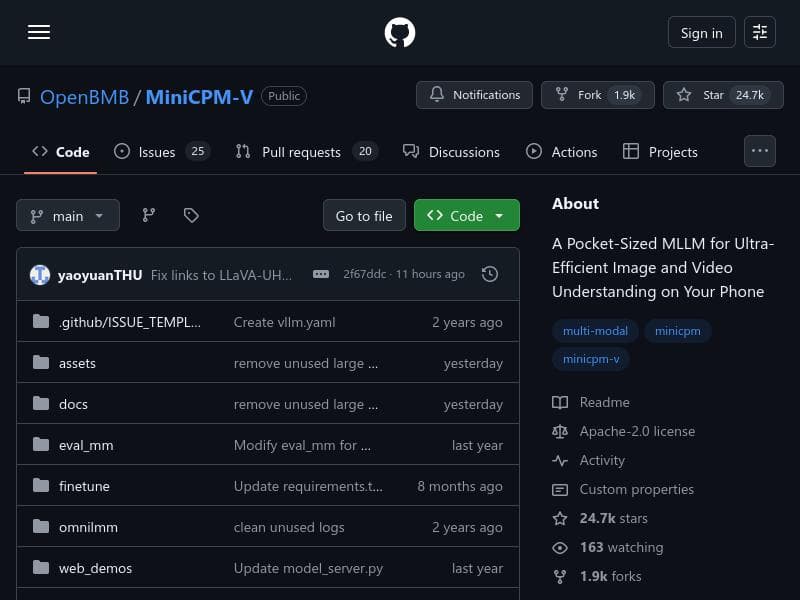
MiniCPM-V 4.6 is a cutting-edge open-source multimodal large language model optimized for ultra-efficient image and video understanding on mobile devices. Its unique mixed visual token compression and broad OS support make it ideal for developers seeking powerful on-device AI for real-time visual content analysis without cloud dependency.
MiniCPM-V 4.6 is an advanced open-source multimodal large language model (MLLM) designed specifically for image and video understanding on mobile and consumer hardware platforms. Its core purpose is to enable efficient and accurate interpretation of visual content directly on devices such as smartphones and tablets, without relying heavily on cloud computing resources. This makes it particularly valuable for applications requiring real-time processing, privacy preservation, and low latency. MiniCPM-V 4.6 achieves this through innovative mixed visual token compression techniques, combining 4x and 16x compression to reduce computational load while maintaining high accuracy in visual token representation. The model supports multiple mobile operating systems, including iOS, Android, and HarmonyOS, providing broad accessibility and ease of deployment across popular consumer devices. Additionally, it integrates seamlessly with various inference frameworks and toolkits such as vLLM, SGLang, llama.cpp, and Ollama, enhancing its versatility and developer friendliness. The key features of MiniCPM-V 4.6 center around its ultra-efficient image understanding capabilities and robust video comprehension. Unlike many large language models that focus solely on text or static images, MiniCPM-V 4.6 extends its multimodal understanding to dynamic video inputs, enabling applications like video content analysis, scene recognition, and event detection on mobile devices. Its pocket-sized architecture is optimized for constrained hardware environments, balancing model complexity and performance to deliver fast inference times without sacrificing accuracy. The mixed 4x/16x visual token compression is a standout innovation, significantly reducing the size and computational demands of visual data processing. This compression approach allows the model to handle high-resolution images and videos efficiently, making it suitable for real-world mobile applications where resources are limited. The availability of demos for iOS, Android, and HarmonyOS further demonstrates the model's practical usability and cross-platform support. MiniCPM-V 4.6 is ideally suited for developers, researchers, and companies focused on mobile AI applications that require sophisticated image and video understanding. Use cases include augmented reality (AR) experiences, mobile content moderation, real-time video analytics, and intelligent camera applications. Its open-source nature encourages customization and integration into bespoke workflows, making it a valuable tool for AI practitioners looking to embed multimodal understanding capabilities directly into consumer hardware. The model's compatibility with popular inference engines like llama.cpp and Ollama also facilitates experimentation and deployment in diverse environments, from academic research to commercial product development. In terms of pricing, MiniCPM-V 4.6 is offered completely free of charge, reflecting its open-source status. This makes it accessible to a wide range of users without financial barriers, encouraging adoption and community-driven improvements. Users can freely download, modify, and deploy the model, fostering innovation and collaboration within the AI community. Compared to alternative multimodal models, MiniCPM-V 4.6 stands out for its mobile-first optimization and mixed visual token compression strategy. While many large language models require powerful GPUs and cloud infrastructure, MiniCPM-V 4.6 is tailored to run efficiently on consumer-grade hardware, enabling on-device AI that preserves user privacy and reduces dependency on internet connectivity. Its support for both image and video inputs in a single unified model is also a differentiator, as many competing models focus on only one modality. However, as a relatively compact model optimized for mobile use, it may not match the raw performance or accuracy of larger, cloud-based multimodal models in highly complex tasks. Notable limitations include potential constraints in handling extremely high-resolution or very long video sequences due to hardware limitations on mobile devices. Additionally, while the model supports multiple inference frameworks, integrating it into existing systems may require technical expertise. Users should also consider that, as an open-source project, ongoing updates and community support may vary over time. Despite these considerations, MiniCPM-V 4.6 offers a powerful and accessible solution for embedding advanced image and video understanding capabilities directly on consumer devices, opening new possibilities for mobile AI applications.

Description
MiniCPM-V 4.6 is a cutting-edge open-source multimodal large language model optimized for ultra-efficient image and video understanding on mobile devices. Its unique mixed visual token compression and broad OS support make it ideal for developers seeking powerful on-device AI for real-time visual content analysis without cloud dependency.
MiniCPM-V 4.6 is an advanced open-source multimodal large language model (MLLM) designed specifically for image and video understanding on mobile and consumer hardware platforms. Its core purpose is to enable efficient and accurate interpretation of visual content directly on devices such as smartphones and tablets, without relying heavily on cloud computing resources. This makes it particularly valuable for applications requiring real-time processing, privacy preservation, and low latency. MiniCPM-V 4.6 achieves this through innovative mixed visual token compression techniques, combining 4x and 16x compression to reduce computational load while maintaining high accuracy in visual token representation. The model supports multiple mobile operating systems, including iOS, Android, and HarmonyOS, providing broad accessibility and ease of deployment across popular consumer devices. Additionally, it integrates seamlessly with various inference frameworks and toolkits such as vLLM, SGLang, llama.cpp, and Ollama, enhancing its versatility and developer friendliness. The key features of MiniCPM-V 4.6 center around its ultra-efficient image understanding capabilities and robust video comprehension. Unlike many large language models that focus solely on text or static images, MiniCPM-V 4.6 extends its multimodal understanding to dynamic video inputs, enabling applications like video content analysis, scene recognition, and event detection on mobile devices. Its pocket-sized architecture is optimized for constrained hardware environments, balancing model complexity and performance to deliver fast inference times without sacrificing accuracy. The mixed 4x/16x visual token compression is a standout innovation, significantly reducing the size and computational demands of visual data processing. This compression approach allows the model to handle high-resolution images and videos efficiently, making it suitable for real-world mobile applications where resources are limited. The availability of demos for iOS, Android, and HarmonyOS further demonstrates the model's practical usability and cross-platform support. MiniCPM-V 4.6 is ideally suited for developers, researchers, and companies focused on mobile AI applications that require sophisticated image and video understanding. Use cases include augmented reality (AR) experiences, mobile content moderation, real-time video analytics, and intelligent camera applications. Its open-source nature encourages customization and integration into bespoke workflows, making it a valuable tool for AI practitioners looking to embed multimodal understanding capabilities directly into consumer hardware. The model's compatibility with popular inference engines like llama.cpp and Ollama also facilitates experimentation and deployment in diverse environments, from academic research to commercial product development. In terms of pricing, MiniCPM-V 4.6 is offered completely free of charge, reflecting its open-source status. This makes it accessible to a wide range of users without financial barriers, encouraging adoption and community-driven improvements. Users can freely download, modify, and deploy the model, fostering innovation and collaboration within the AI community. Compared to alternative multimodal models, MiniCPM-V 4.6 stands out for its mobile-first optimization and mixed visual token compression strategy. While many large language models require powerful GPUs and cloud infrastructure, MiniCPM-V 4.6 is tailored to run efficiently on consumer-grade hardware, enabling on-device AI that preserves user privacy and reduces dependency on internet connectivity. Its support for both image and video inputs in a single unified model is also a differentiator, as many competing models focus on only one modality. However, as a relatively compact model optimized for mobile use, it may not match the raw performance or accuracy of larger, cloud-based multimodal models in highly complex tasks. Notable limitations include potential constraints in handling extremely high-resolution or very long video sequences due to hardware limitations on mobile devices. Additionally, while the model supports multiple inference frameworks, integrating it into existing systems may require technical expertise. Users should also consider that, as an open-source project, ongoing updates and community support may vary over time. Despite these considerations, MiniCPM-V 4.6 offers a powerful and accessible solution for embedding advanced image and video understanding capabilities directly on consumer devices, opening new possibilities for mobile AI applications.
Tool Features
- Ultra-efficient image understanding
- Video understanding capabilities
- Optimized for mobile devices
- Pocket-sized multimodal large language model
- Supports both image and video inputs
Frequently Asked Questions
What is MiniCPM-V 4.6?
MiniCPM-V 4.6 is an open-source multimodal large language model designed for efficient image and video understanding on mobile and consumer hardware. It uses advanced visual token compression to enable real-time, on-device processing across iOS, Android, and HarmonyOS platforms.
How much does MiniCPM-V 4.6 cost?
MiniCPM-V 4.6 is completely free to use as it is an open-source project, allowing users to download, modify, and deploy the model without any licensing fees.
Who is MiniCPM-V 4.6 best for?
It is best suited for developers, researchers, and companies focused on mobile AI applications requiring sophisticated image and video understanding, such as augmented reality, real-time video analytics, and intelligent camera systems.
What are the main features of MiniCPM-V 4.6?
Key features include ultra-efficient image understanding, video comprehension capabilities, optimization for mobile devices, a compact multimodal architecture, mixed 4x/16x visual token compression, and support for both image and video inputs.
Does MiniCPM-V 4.6 offer a free trial?
Since MiniCPM-V 4.6 is open-source and free to use, there is no need for a trial period; users can immediately access and utilize the model without restrictions.
What integrations does MiniCPM-V 4.6 support?
MiniCPM-V 4.6 supports integration with multiple inference frameworks and toolkits including vLLM, SGLang, llama.cpp, and Ollama, facilitating flexible deployment across various environments.
How does MiniCPM-V 4.6 work?
MiniCPM-V 4.6 processes visual data using a mixed 4x/16x token compression technique to reduce computational load, enabling efficient interpretation of images and videos on mobile devices. It leverages a multimodal large language model architecture to understand and analyze visual content in real time.
Socials
Use ToolSponsored Tools






























Reviews
No reviews yet. Be the first to share your experience.