Fei Design Mode
Description
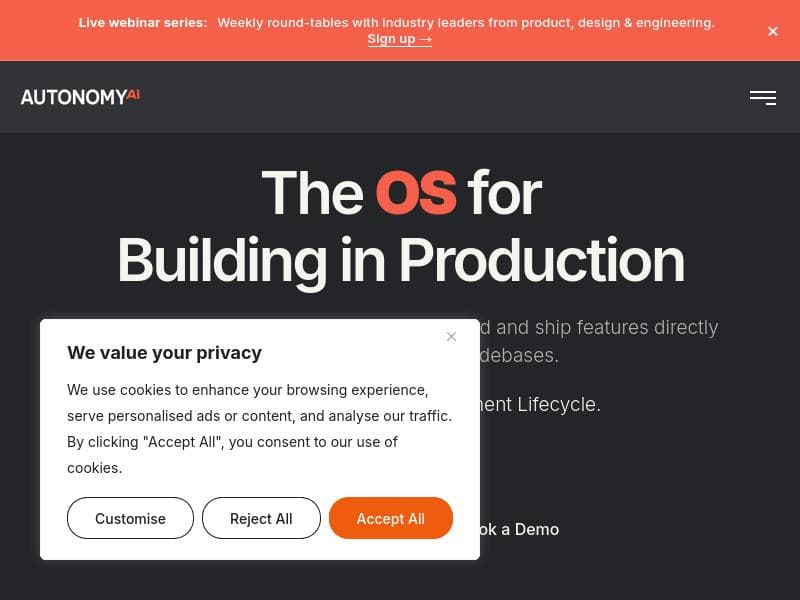
Fei Design Mode empowers designers with direct control over live product code by enabling visual style tweaks and seamless pushes from design tools like Figma and Claude Design straight to the codebase. Ideal for product teams seeking to eliminate handoff bottlenecks, it fosters real-time collaboration and boosts productivity across design, engineering, and product disciplines.
Fei Design Mode is an innovative AI-powered design tool that fundamentally transforms the way designers, engineers, and product teams collaborate to bring digital products to life. Its core purpose is to eliminate the traditional barriers and inefficiencies in the design-to-development handoff process by giving designers direct ownership and control over what ultimately ships in the product. Unlike conventional workflows where designs are passed off to developers for translation into code, Fei Design Mode enables designers to point to any element in a live preview, tweak styles visually, and push those changes straight into the codebase. This seamless integration with design platforms like Figma and Claude Design removes the need for any handoff or translation layer, ensuring that what designers create is exactly what users experience in the final product. This direct pipeline from design to production empowers designers with unprecedented superpowers, streamlining the product development lifecycle and enhancing overall team productivity. At the heart of Fei Design Mode are several key features that set it apart. It provides a shared, production-safe environment where engineering, design, and product teams can collaborate in real time without the risk of breaking the codebase. This environment ensures that all changes are safe to deploy, maintaining product stability while allowing rapid iteration. The tool is built with AI-native workflow integration, leveraging artificial intelligence to optimize and automate parts of the design and development process. This integration reduces manual effort, speeds up style adjustments, and helps maintain consistency across the product. Seamless collaboration is another cornerstone, as Fei Design Mode bridges the gap between disciplines, allowing designers to work directly with engineers and product managers within the same platform. This cross-functional collaboration fosters better communication, reduces misunderstandings, and accelerates decision-making. Additionally, by enabling direct style tweaks and immediate code updates, the tool significantly enhances productivity in product development, reducing time-to-market and enabling teams to focus on innovation rather than tedious handoffs. Fei Design Mode is best suited for product teams that prioritize agility, precision, and collaboration in their design and development workflows. It is ideal for companies that rely heavily on UI/UX design and want to ensure pixel-perfect implementation without the overhead of traditional handoff processes. Design teams working within fast-paced environments, such as startups or agile enterprises, will find great value in the tool’s ability to speed up iteration cycles and reduce friction between design and engineering. Product managers and engineers also benefit from the transparency and shared environment, which helps align all stakeholders on the product vision and execution. Use cases include rapid prototyping, continuous design updates during development sprints, and maintaining design consistency across large-scale applications. Regarding pricing, Fei Design Mode is a paid tool, reflecting its enterprise-grade capabilities and the value it delivers in streamlining complex workflows. While specific pricing tiers and plans are not detailed publicly, interested users are encouraged to visit the official website for tailored pricing information based on team size and feature requirements. The investment in Fei Design Mode can be justified by the significant time savings and quality improvements it brings to product development cycles. Compared to alternatives, Fei Design Mode stands out by eliminating the traditional design-to-code translation layer, a common bottleneck in many design tools. While other platforms may offer design collaboration or code export features, few provide a direct, production-safe pipeline that integrates seamlessly with popular design tools and supports real-time code updates. This unique approach reduces errors, accelerates delivery, and empowers designers with more control. However, some alternatives might offer broader integrations or more extensive prototyping features, so teams should evaluate based on their specific needs. Notable limitations include the fact that Fei Design Mode is a paid service, which may be a barrier for very small teams or individual designers. Additionally, since it integrates deeply with codebases, it requires teams to have some level of development infrastructure and familiarity with version control and deployment processes. The tool may also have a learning curve for teams transitioning from traditional handoff workflows. Lastly, while it supports Figma and Claude Design, users relying on other design platforms might find integration options limited at this time. In summary, Fei Design Mode is a powerful AI-driven design tool that revolutionizes product development by giving designers direct control over live code, fostering seamless collaboration, and enhancing productivity. It is particularly valuable for teams seeking to reduce friction between design and engineering and accelerate their time-to-market with high-fidelity, production-ready designs.

Description
Fei Design Mode empowers designers with direct control over live product code by enabling visual style tweaks and seamless pushes from design tools like Figma and Claude Design straight to the codebase. Ideal for product teams seeking to eliminate handoff bottlenecks, it fosters real-time collaboration and boosts productivity across design, engineering, and product disciplines.
Fei Design Mode is an innovative AI-powered design tool that fundamentally transforms the way designers, engineers, and product teams collaborate to bring digital products to life. Its core purpose is to eliminate the traditional barriers and inefficiencies in the design-to-development handoff process by giving designers direct ownership and control over what ultimately ships in the product. Unlike conventional workflows where designs are passed off to developers for translation into code, Fei Design Mode enables designers to point to any element in a live preview, tweak styles visually, and push those changes straight into the codebase. This seamless integration with design platforms like Figma and Claude Design removes the need for any handoff or translation layer, ensuring that what designers create is exactly what users experience in the final product. This direct pipeline from design to production empowers designers with unprecedented superpowers, streamlining the product development lifecycle and enhancing overall team productivity. At the heart of Fei Design Mode are several key features that set it apart. It provides a shared, production-safe environment where engineering, design, and product teams can collaborate in real time without the risk of breaking the codebase. This environment ensures that all changes are safe to deploy, maintaining product stability while allowing rapid iteration. The tool is built with AI-native workflow integration, leveraging artificial intelligence to optimize and automate parts of the design and development process. This integration reduces manual effort, speeds up style adjustments, and helps maintain consistency across the product. Seamless collaboration is another cornerstone, as Fei Design Mode bridges the gap between disciplines, allowing designers to work directly with engineers and product managers within the same platform. This cross-functional collaboration fosters better communication, reduces misunderstandings, and accelerates decision-making. Additionally, by enabling direct style tweaks and immediate code updates, the tool significantly enhances productivity in product development, reducing time-to-market and enabling teams to focus on innovation rather than tedious handoffs. Fei Design Mode is best suited for product teams that prioritize agility, precision, and collaboration in their design and development workflows. It is ideal for companies that rely heavily on UI/UX design and want to ensure pixel-perfect implementation without the overhead of traditional handoff processes. Design teams working within fast-paced environments, such as startups or agile enterprises, will find great value in the tool’s ability to speed up iteration cycles and reduce friction between design and engineering. Product managers and engineers also benefit from the transparency and shared environment, which helps align all stakeholders on the product vision and execution. Use cases include rapid prototyping, continuous design updates during development sprints, and maintaining design consistency across large-scale applications. Regarding pricing, Fei Design Mode is a paid tool, reflecting its enterprise-grade capabilities and the value it delivers in streamlining complex workflows. While specific pricing tiers and plans are not detailed publicly, interested users are encouraged to visit the official website for tailored pricing information based on team size and feature requirements. The investment in Fei Design Mode can be justified by the significant time savings and quality improvements it brings to product development cycles. Compared to alternatives, Fei Design Mode stands out by eliminating the traditional design-to-code translation layer, a common bottleneck in many design tools. While other platforms may offer design collaboration or code export features, few provide a direct, production-safe pipeline that integrates seamlessly with popular design tools and supports real-time code updates. This unique approach reduces errors, accelerates delivery, and empowers designers with more control. However, some alternatives might offer broader integrations or more extensive prototyping features, so teams should evaluate based on their specific needs. Notable limitations include the fact that Fei Design Mode is a paid service, which may be a barrier for very small teams or individual designers. Additionally, since it integrates deeply with codebases, it requires teams to have some level of development infrastructure and familiarity with version control and deployment processes. The tool may also have a learning curve for teams transitioning from traditional handoff workflows. Lastly, while it supports Figma and Claude Design, users relying on other design platforms might find integration options limited at this time. In summary, Fei Design Mode is a powerful AI-driven design tool that revolutionizes product development by giving designers direct control over live code, fostering seamless collaboration, and enhancing productivity. It is particularly valuable for teams seeking to reduce friction between design and engineering and accelerate their time-to-market with high-fidelity, production-ready designs.
Tool Features
- Shared production-safe environment for engineering, design, and product teams
- AI native workflow integration
- Seamless collaboration across disciplines
- Enhances productivity in product development
Frequently Asked Questions
What is Fei Design Mode ?
Fei Design Mode is an AI-powered design tool that allows designers to directly modify and push style changes from design platforms like Figma or Claude Design straight into the live codebase, eliminating the traditional handoff process and ensuring what is designed is exactly what ships.
How much does Fei Design Mode cost?
Fei Design Mode is a paid tool. Specific pricing details are not publicly listed, so interested users should visit the official website or contact the vendor directly for customized pricing based on team size and feature needs.
Who is Fei Design Mode best for?
It is best suited for product teams, including designers, engineers, and product managers, who want to streamline collaboration, reduce handoff friction, and accelerate product development with direct design-to-code workflows.
What are the main features of Fei Design Mode ?
Key features include a shared production-safe environment for cross-disciplinary collaboration, AI-native workflow integration, seamless real-time collaboration between design and engineering, and enhanced productivity through direct visual style tweaking and immediate code pushes.
Does Fei Design Mode offer a free trial?
There is no publicly available information about a free trial. Prospective users should check the official website or contact the vendor to inquire about trial options.
What integrations does Fei Design Mode support?
Fei Design Mode integrates primarily with design platforms such as Figma and Claude Design, enabling direct visual editing and pushing of styles into the codebase from these tools.
How does Fei Design Mode work?
Designers point to any element in a live preview, visually tweak styles, and push those changes directly into the production codebase from supported design tools. This eliminates the need for handoff or translation layers, ensuring the final shipped product matches the design exactly.
Sponsored Tools































Reviews
No reviews yet. Be the first to share your experience.