Description
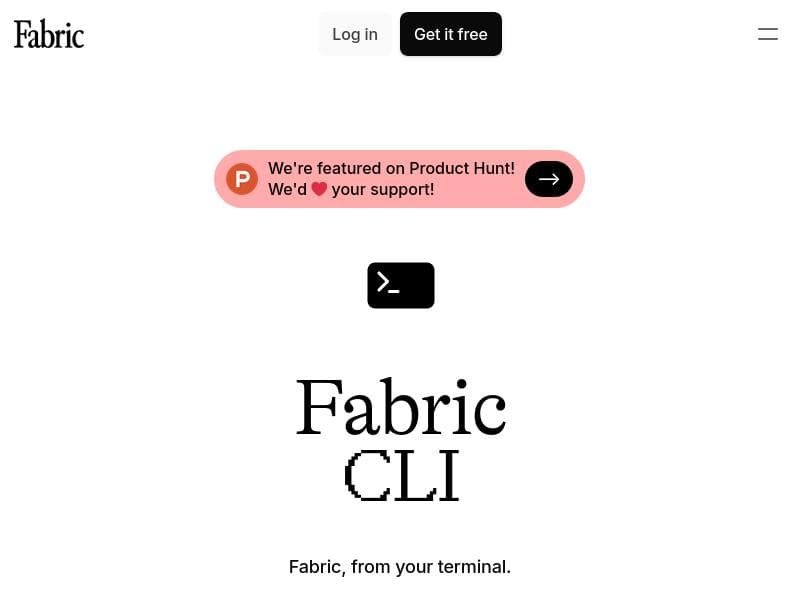
Fabric CLI uniquely integrates a personal AI assistant into your terminal, providing a smart memory layer that understands your projects, files, and ideas. Ideal for thinkers, researchers, designers, and teams who prefer command-line workflows, it streamlines writing, collaboration, and publishing with intelligent, context-aware support.
Fabric CLI is a powerful AI-driven tool designed to enhance productivity by integrating a personal AI assistant directly into your terminal environment. Its core purpose is to provide users with an intelligent memory layer that understands their projects, files, and ideas, enabling seamless writing, making, collaborating, and publishing workflows. By embedding AI capabilities into the command line interface, Fabric CLI offers a unique blend of familiarity and advanced assistance, making it an indispensable tool for professionals who prefer working in terminal-based environments but still want the benefits of modern AI support. At the heart of Fabric CLI is its personal AI, which learns and remembers the context of your projects, documents, and creative ideas. This AI assistant helps streamline complex workflows by providing contextual suggestions, automating repetitive tasks, and facilitating collaboration across teams. Users can write content, manage files, and publish outputs without leaving the terminal, making the process more efficient and less fragmented. The tool supports a wide range of activities, from drafting documents and coding to brainstorming and project management, all powered by AI that adapts to your unique working style. Fabric CLI is specifically designed for thinkers, researchers, designers, and teams who require a robust, intelligent assistant that integrates deeply with their existing workflows. Researchers can benefit from its ability to organize and recall vast amounts of information, designers can use it to manage creative assets and collaborate seamlessly, while teams can leverage its collaborative features to maintain alignment and productivity. Its terminal-based interface appeals to developers and technical users who prefer command-line tools but want to augment their capabilities with AI-driven insights and automation. The pricing model for Fabric CLI follows a freemium approach, allowing users to access core features at no cost while offering premium plans for advanced functionalities and extended usage. This model makes it accessible to individual users and small teams who want to explore its capabilities without upfront investment, while larger organizations can opt for paid tiers to unlock enhanced collaboration, storage, and AI capabilities. The freemium plan provides a solid foundation for users to experience the benefits of a personal AI assistant integrated into their terminal workflows. Compared to alternative AI productivity tools, Fabric CLI stands out due to its unique focus on terminal integration and personal memory. While many AI assistants operate through web or desktop applications, Fabric CLI brings AI directly to the command line, which is a preferred environment for many developers and technical professionals. This integration reduces context switching and increases efficiency. Additionally, its emphasis on understanding and remembering user projects and ideas offers a more personalized and context-aware experience than generic AI tools. However, unlike some AI platforms that offer extensive third-party integrations or graphical interfaces, Fabric CLI is optimized for terminal use, which may not suit all users. Despite its strengths, Fabric CLI has some limitations to consider. Its terminal-based interface might present a learning curve for users unfamiliar with command-line tools. Additionally, while the AI personal memory is powerful, it relies on the quality and quantity of data provided by the user, meaning its effectiveness grows with consistent use and input. Users looking for extensive graphical user interfaces or integrations with a wide range of third-party apps might find Fabric CLI’s scope narrower. Nonetheless, for those who prioritize a terminal-centric, AI-enhanced workflow, Fabric CLI offers a compelling and innovative solution. In summary, Fabric CLI is a cutting-edge AI tool that transforms the terminal into a smart workspace, combining personal AI memory with collaborative and creative capabilities. Its design caters to technical professionals and teams seeking to boost productivity through intelligent automation and contextual assistance. With a freemium pricing model and a focus on terminal integration, Fabric CLI fills a unique niche in the AI productivity landscape, offering a personalized and efficient way to write, make, collaborate, and publish directly from the command line.

Description
Fabric CLI uniquely integrates a personal AI assistant into your terminal, providing a smart memory layer that understands your projects, files, and ideas. Ideal for thinkers, researchers, designers, and teams who prefer command-line workflows, it streamlines writing, collaboration, and publishing with intelligent, context-aware support.
Fabric CLI is a powerful AI-driven tool designed to enhance productivity by integrating a personal AI assistant directly into your terminal environment. Its core purpose is to provide users with an intelligent memory layer that understands their projects, files, and ideas, enabling seamless writing, making, collaborating, and publishing workflows. By embedding AI capabilities into the command line interface, Fabric CLI offers a unique blend of familiarity and advanced assistance, making it an indispensable tool for professionals who prefer working in terminal-based environments but still want the benefits of modern AI support. At the heart of Fabric CLI is its personal AI, which learns and remembers the context of your projects, documents, and creative ideas. This AI assistant helps streamline complex workflows by providing contextual suggestions, automating repetitive tasks, and facilitating collaboration across teams. Users can write content, manage files, and publish outputs without leaving the terminal, making the process more efficient and less fragmented. The tool supports a wide range of activities, from drafting documents and coding to brainstorming and project management, all powered by AI that adapts to your unique working style. Fabric CLI is specifically designed for thinkers, researchers, designers, and teams who require a robust, intelligent assistant that integrates deeply with their existing workflows. Researchers can benefit from its ability to organize and recall vast amounts of information, designers can use it to manage creative assets and collaborate seamlessly, while teams can leverage its collaborative features to maintain alignment and productivity. Its terminal-based interface appeals to developers and technical users who prefer command-line tools but want to augment their capabilities with AI-driven insights and automation. The pricing model for Fabric CLI follows a freemium approach, allowing users to access core features at no cost while offering premium plans for advanced functionalities and extended usage. This model makes it accessible to individual users and small teams who want to explore its capabilities without upfront investment, while larger organizations can opt for paid tiers to unlock enhanced collaboration, storage, and AI capabilities. The freemium plan provides a solid foundation for users to experience the benefits of a personal AI assistant integrated into their terminal workflows. Compared to alternative AI productivity tools, Fabric CLI stands out due to its unique focus on terminal integration and personal memory. While many AI assistants operate through web or desktop applications, Fabric CLI brings AI directly to the command line, which is a preferred environment for many developers and technical professionals. This integration reduces context switching and increases efficiency. Additionally, its emphasis on understanding and remembering user projects and ideas offers a more personalized and context-aware experience than generic AI tools. However, unlike some AI platforms that offer extensive third-party integrations or graphical interfaces, Fabric CLI is optimized for terminal use, which may not suit all users. Despite its strengths, Fabric CLI has some limitations to consider. Its terminal-based interface might present a learning curve for users unfamiliar with command-line tools. Additionally, while the AI personal memory is powerful, it relies on the quality and quantity of data provided by the user, meaning its effectiveness grows with consistent use and input. Users looking for extensive graphical user interfaces or integrations with a wide range of third-party apps might find Fabric CLI’s scope narrower. Nonetheless, for those who prioritize a terminal-centric, AI-enhanced workflow, Fabric CLI offers a compelling and innovative solution. In summary, Fabric CLI is a cutting-edge AI tool that transforms the terminal into a smart workspace, combining personal AI memory with collaborative and creative capabilities. Its design caters to technical professionals and teams seeking to boost productivity through intelligent automation and contextual assistance. With a freemium pricing model and a focus on terminal integration, Fabric CLI fills a unique niche in the AI productivity landscape, offering a personalized and efficient way to write, make, collaborate, and publish directly from the command line.
Tool Features
- Personal AI that knows your projects, files, and ideas
- Supports writing, making, collaborating, and publishing
- Designed for thinkers, researchers, designers, and teams
Frequently Asked Questions
What is Fabric CLI?
Fabric CLI is an AI-powered command-line tool that acts as a personal assistant, helping users write, create, collaborate, and publish by understanding and remembering their projects, files, and ideas. It integrates AI directly into the terminal to enhance productivity and streamline workflows.
How much does Fabric CLI cost?
Fabric CLI offers a freemium pricing model, providing core features for free with options to upgrade to premium plans that unlock advanced functionalities and extended usage suitable for larger teams or more intensive workflows.
Who is Fabric CLI best for?
Fabric CLI is best suited for thinkers, researchers, designers, developers, and teams who prefer working in terminal environments and want a personal AI assistant to help manage projects, collaborate efficiently, and enhance creative and technical workflows.
What are the main features of Fabric CLI?
Key features include a personal AI that understands your projects and ideas, support for writing, making, collaborating, and publishing directly from the terminal, and a design tailored for individuals and teams who need intelligent, context-aware assistance integrated into their command-line workflows.
Does Fabric CLI offer a free trial?
Fabric CLI provides a freemium plan that allows users to access essential features at no cost, effectively serving as a free trial to explore the tool’s capabilities before deciding on premium upgrades.
What integrations does Fabric CLI support?
Fabric CLI primarily integrates within the terminal environment and focuses on managing your projects and files locally or within your existing workflows. While it may support some integrations, its main strength lies in its AI-powered personal memory and command-line interface rather than extensive third-party app integrations.
How does Fabric CLI work?
Fabric CLI works by embedding a personal AI assistant into your terminal, which learns and remembers the context of your projects, files, and ideas. It provides contextual suggestions, automates tasks, and facilitates collaboration, allowing you to write, create, and publish without leaving the command line.
Socials
Use ToolSponsored Tools



































Reviews
No reviews yet. Be the first to share your experience.