Description
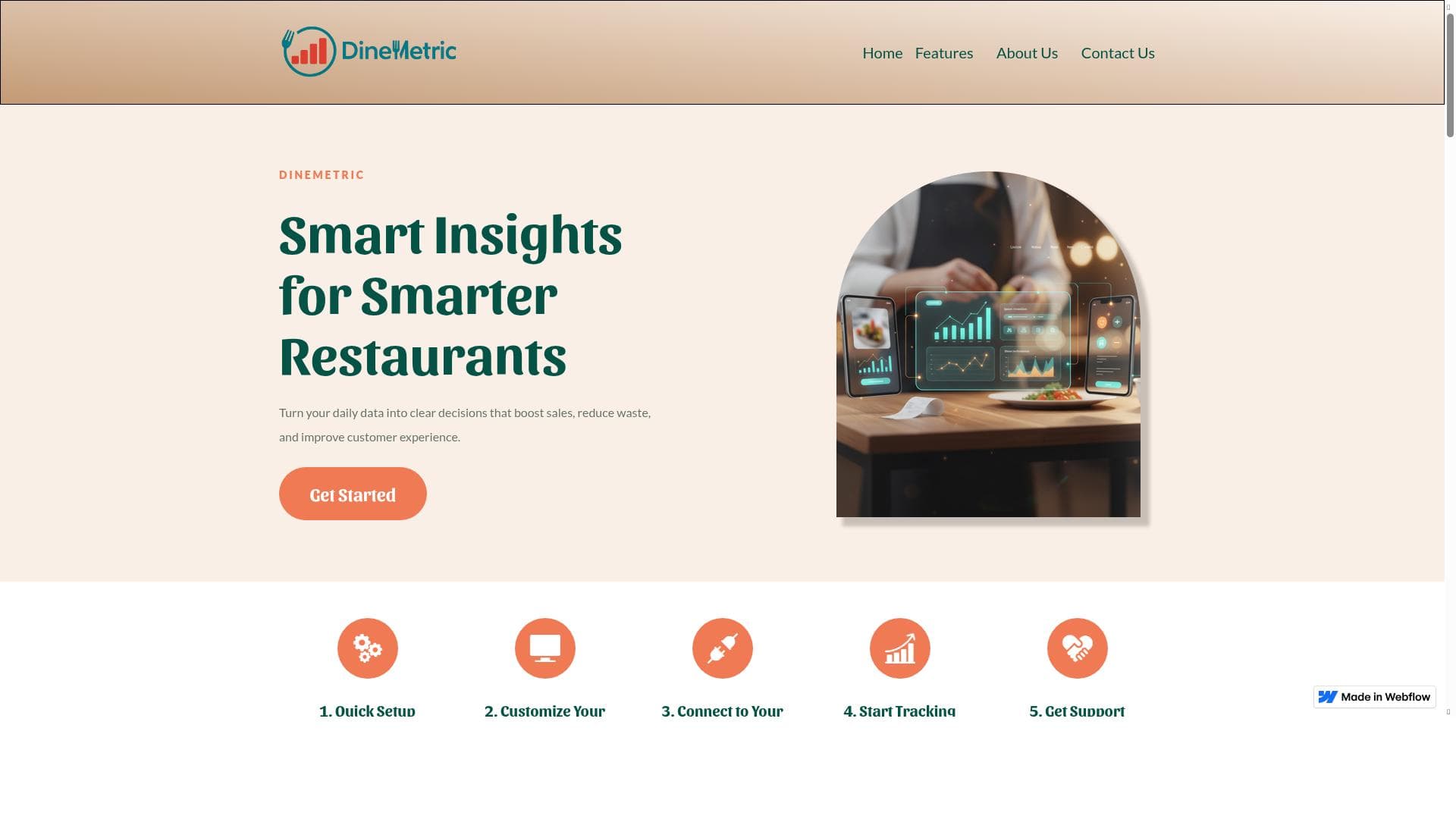
Dinemetric is an AI-powered analytics platform that transforms restaurant data into real-time, actionable insights to boost profits, reduce waste, and improve staff efficiency without needing a dedicated data team. Ideal for small to medium-sized restaurants, it offers quick setup, customizable dashboards, and smart forecasting based on events and weather, making data-driven decision-making accessible and effective.
Dinemetric is an advanced AI-powered analytics platform specifically designed to empower restaurants by transforming everyday operational data into clear, actionable insights. Its core purpose is to help restaurant owners and managers make data-driven decisions without the need for a dedicated data team or advanced technical skills. By integrating seamlessly with various data sources such as POS systems, inventory management, and customer feedback channels, Dinemetric consolidates critical information into a unified platform. This enables users to monitor their restaurant’s performance in real time, identify trends, and respond swiftly to operational challenges. The platform’s AI capabilities extend to forecasting demand by analyzing external factors like local events and weather conditions, which can significantly impact customer traffic and sales volumes. Additionally, Dinemetric detects anomalies such as sudden sales drops or unexpected cost spikes, alerting users to potential issues before they escalate. It also offers tailored recommendations aimed at boosting profits, reducing food waste, and improving staff efficiency, making it a comprehensive solution for restaurant management optimization. Key features of Dinemetric include its quick setup process, which allows restaurants to get started within minutes without requiring any technical expertise. This ease of onboarding is crucial for busy restaurant teams who need fast access to insights without a steep learning curve. The platform also offers customizable dashboards, enabling users to tailor the interface to their specific operational goals and preferences. This personalization ensures that each restaurant can focus on the metrics that matter most to their unique business model. Real-time actionable insights are at the heart of Dinemetric’s value proposition, providing continuous updates and recommendations that help restaurants increase sales, minimize waste, and enhance the overall customer experience. These insights are generated through sophisticated AI algorithms that analyze multiple data streams simultaneously, offering a holistic view of restaurant performance. Dinemetric is best suited for restaurant owners, managers, and operators who want to leverage data to improve operational efficiency and profitability without investing heavily in data science resources. It is ideal for small to medium-sized restaurants that may lack dedicated analytics teams but still want to compete effectively by using data-driven strategies. Use cases include demand forecasting to optimize staffing and inventory levels, anomaly detection to quickly address unexpected operational issues, and customer feedback analysis to refine service quality. Additionally, restaurants looking to reduce food waste and control costs will find Dinemetric’s recommendations particularly valuable. The platform follows a freemium pricing model, allowing users to access basic features at no cost while offering premium capabilities through paid plans. This approach makes it accessible to a wide range of restaurants, from startups to established chains, enabling them to scale their usage as their data needs grow. While specific pricing tiers and features included in each plan are not detailed publicly, the freemium model encourages users to try the service risk-free and upgrade as necessary. Compared to alternative restaurant analytics tools, Dinemetric stands out for its combination of ease of use, real-time insights, and AI-driven forecasting and anomaly detection. Many competing platforms require complex setup or rely heavily on manual data input, whereas Dinemetric automates data integration and analysis. Its focus on actionable recommendations rather than just reporting also differentiates it, helping restaurants implement changes that directly impact their bottom line. However, some competitors may offer deeper integrations with specific POS systems or more extensive customization options, which could be a consideration for highly specialized operations. One notable limitation of Dinemetric is that, while it simplifies data analysis, restaurants with very complex or unique data environments might require additional customization or support to fully leverage the platform. Additionally, the freemium model means that some advanced features are locked behind paid plans, which could be a barrier for very small businesses with limited budgets. Finally, as with any AI-driven tool, the quality of insights depends on the accuracy and completeness of the input data, so restaurants must ensure their data sources are reliable and consistently updated to maximize the platform’s effectiveness.

Description
Dinemetric is an AI-powered analytics platform that transforms restaurant data into real-time, actionable insights to boost profits, reduce waste, and improve staff efficiency without needing a dedicated data team. Ideal for small to medium-sized restaurants, it offers quick setup, customizable dashboards, and smart forecasting based on events and weather, making data-driven decision-making accessible and effective.
Dinemetric is an advanced AI-powered analytics platform specifically designed to empower restaurants by transforming everyday operational data into clear, actionable insights. Its core purpose is to help restaurant owners and managers make data-driven decisions without the need for a dedicated data team or advanced technical skills. By integrating seamlessly with various data sources such as POS systems, inventory management, and customer feedback channels, Dinemetric consolidates critical information into a unified platform. This enables users to monitor their restaurant’s performance in real time, identify trends, and respond swiftly to operational challenges. The platform’s AI capabilities extend to forecasting demand by analyzing external factors like local events and weather conditions, which can significantly impact customer traffic and sales volumes. Additionally, Dinemetric detects anomalies such as sudden sales drops or unexpected cost spikes, alerting users to potential issues before they escalate. It also offers tailored recommendations aimed at boosting profits, reducing food waste, and improving staff efficiency, making it a comprehensive solution for restaurant management optimization. Key features of Dinemetric include its quick setup process, which allows restaurants to get started within minutes without requiring any technical expertise. This ease of onboarding is crucial for busy restaurant teams who need fast access to insights without a steep learning curve. The platform also offers customizable dashboards, enabling users to tailor the interface to their specific operational goals and preferences. This personalization ensures that each restaurant can focus on the metrics that matter most to their unique business model. Real-time actionable insights are at the heart of Dinemetric’s value proposition, providing continuous updates and recommendations that help restaurants increase sales, minimize waste, and enhance the overall customer experience. These insights are generated through sophisticated AI algorithms that analyze multiple data streams simultaneously, offering a holistic view of restaurant performance. Dinemetric is best suited for restaurant owners, managers, and operators who want to leverage data to improve operational efficiency and profitability without investing heavily in data science resources. It is ideal for small to medium-sized restaurants that may lack dedicated analytics teams but still want to compete effectively by using data-driven strategies. Use cases include demand forecasting to optimize staffing and inventory levels, anomaly detection to quickly address unexpected operational issues, and customer feedback analysis to refine service quality. Additionally, restaurants looking to reduce food waste and control costs will find Dinemetric’s recommendations particularly valuable. The platform follows a freemium pricing model, allowing users to access basic features at no cost while offering premium capabilities through paid plans. This approach makes it accessible to a wide range of restaurants, from startups to established chains, enabling them to scale their usage as their data needs grow. While specific pricing tiers and features included in each plan are not detailed publicly, the freemium model encourages users to try the service risk-free and upgrade as necessary. Compared to alternative restaurant analytics tools, Dinemetric stands out for its combination of ease of use, real-time insights, and AI-driven forecasting and anomaly detection. Many competing platforms require complex setup or rely heavily on manual data input, whereas Dinemetric automates data integration and analysis. Its focus on actionable recommendations rather than just reporting also differentiates it, helping restaurants implement changes that directly impact their bottom line. However, some competitors may offer deeper integrations with specific POS systems or more extensive customization options, which could be a consideration for highly specialized operations. One notable limitation of Dinemetric is that, while it simplifies data analysis, restaurants with very complex or unique data environments might require additional customization or support to fully leverage the platform. Additionally, the freemium model means that some advanced features are locked behind paid plans, which could be a barrier for very small businesses with limited budgets. Finally, as with any AI-driven tool, the quality of insights depends on the accuracy and completeness of the input data, so restaurants must ensure their data sources are reliable and consistently updated to maximize the platform’s effectiveness.
Tool Features
- Quick Setup: Get started with DineMetric in minutes, easy setup with no technical skills required.
- Customize Your Dashboard: Personalize your restaurant's dashboard to match your unique needs and goals.
- Real-time actionable insights to boost sales, reduce waste, and improve customer experience.
Frequently Asked Questions
What is Dinemetric?
Dinemetric is an AI-powered analytics platform designed for restaurants to convert everyday data from POS systems, inventory, and customer feedback into actionable insights that help improve profitability, reduce waste, and enhance operational efficiency.
How much does Dinemetric cost?
Dinemetric offers a freemium pricing model, allowing users to access basic features for free with the option to upgrade to paid plans for advanced capabilities. Specific pricing details are available upon inquiry or during the signup process.
Who is Dinemetric best for?
Dinemetric is best suited for small to medium-sized restaurant owners and managers who want to leverage data-driven insights to optimize operations without needing a dedicated data team or advanced technical skills.
What are the main features of Dinemetric?
Key features include quick and easy setup, customizable dashboards tailored to unique restaurant needs, real-time actionable insights, demand forecasting based on events and weather, anomaly detection for sales drops or cost spikes, and recommendations to boost profits and reduce waste.
Does Dinemetric offer a free trial?
Yes, Dinemetric operates on a freemium model, which allows users to try the platform with basic features for free, effectively serving as a free trial before deciding to upgrade to premium plans.
What integrations does Dinemetric support?
Dinemetric integrates with common restaurant data sources such as POS systems, inventory management tools, and customer feedback platforms to consolidate data for comprehensive analysis.
How does Dinemetric work?
Dinemetric collects data from various restaurant systems, then uses AI algorithms to analyze performance in real time, forecast demand based on external factors like events and weather, detect anomalies, and provide actionable recommendations to improve profitability and efficiency.
Socials
Use ToolSponsored Tools





























Reviews
No reviews yet. Be the first to share your experience.