Description
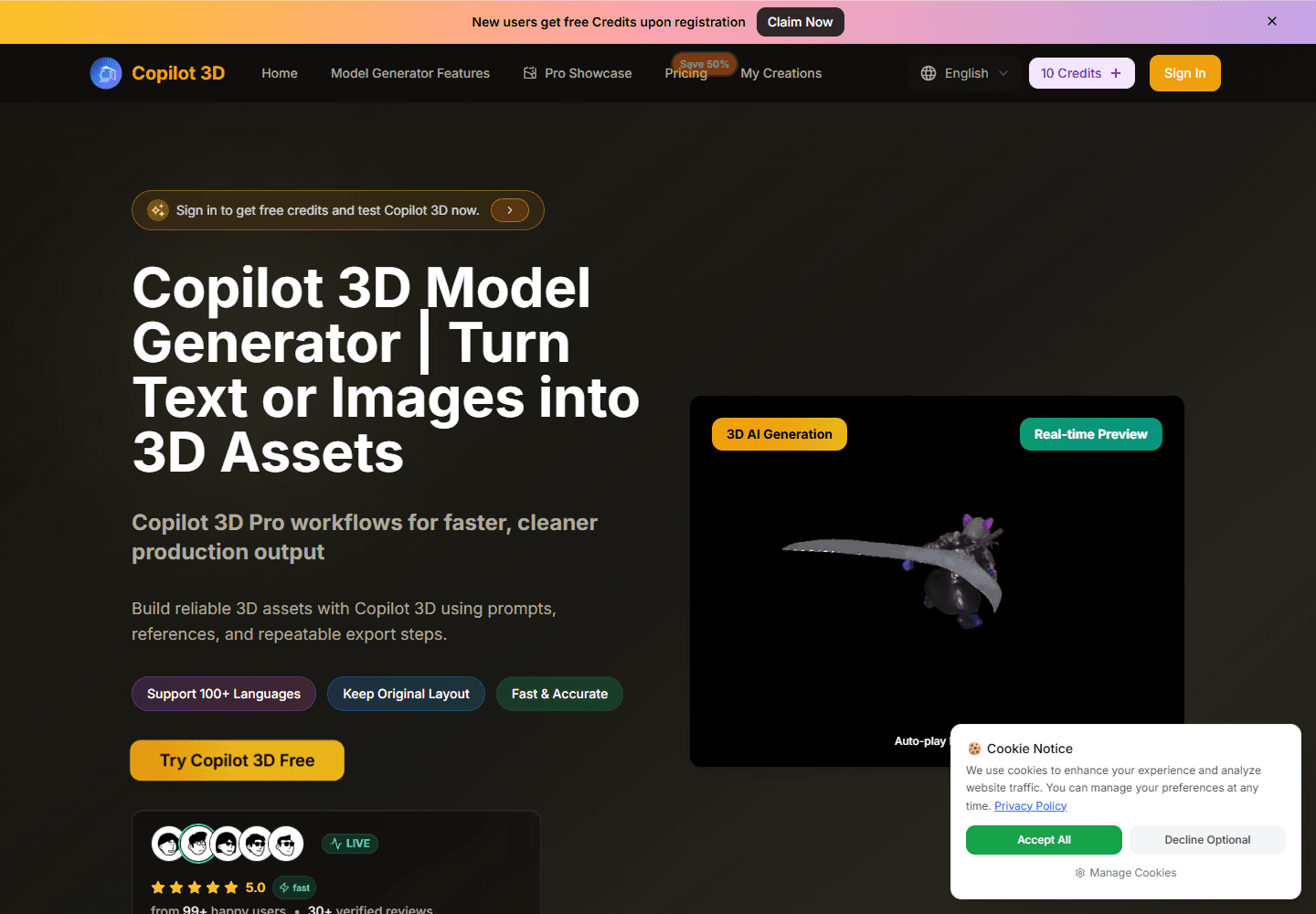
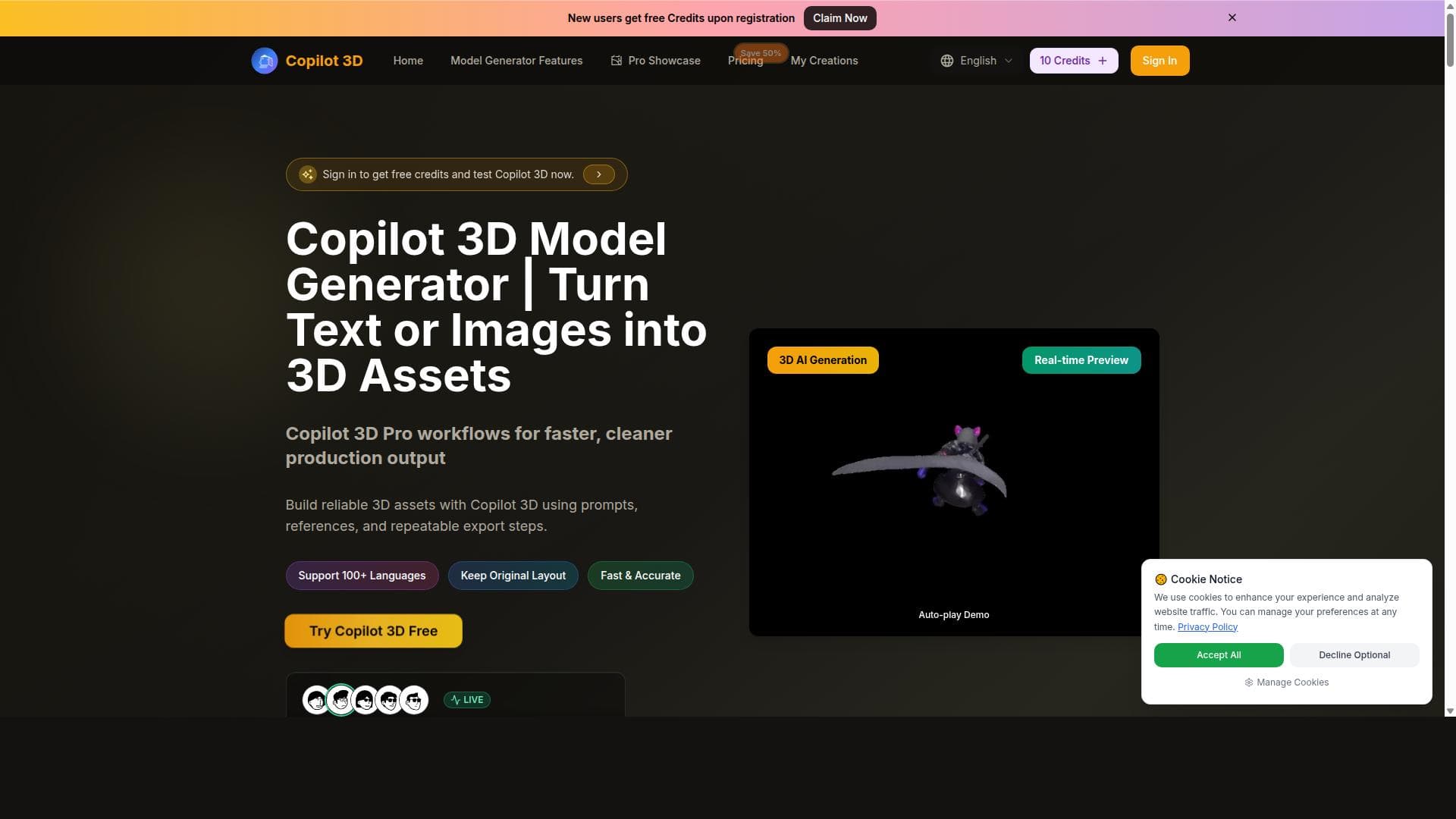
Copilot 3D harnesses AI to transform text prompts and images into consistent, export-ready 3D visuals, streamlining the creation process for campaigns, product shots, and storyboards. Perfect for creators and teams seeking efficient, on-brand 3D content generation without the complexity of traditional modeling tools.
Copilot 3D is an advanced AI-powered 3D model studio designed to revolutionize the way creators and teams generate 3D visuals. At its core, Copilot 3D transforms simple text prompts and reference images into fully consistent, export-ready 3D models and visuals that can be utilized across a variety of applications such as marketing campaigns, product shots, thumbnails, and storyboards. This tool addresses the growing demand for efficient and scalable 3D content creation by automating complex modeling tasks, allowing users to focus more on creative direction and less on technical execution. By leveraging artificial intelligence, Copilot 3D streamlines the 3D asset creation process, making it accessible to both seasoned 3D artists and those with limited modeling experience. The platform's key features include AI-powered 3D model generation from text prompts, which enables users to describe the desired object or scene in natural language and receive a detailed 3D model that matches their description. Additionally, Copilot 3D supports reference-driven generation, where users can upload images or other assets to guide the AI in creating models that align closely with specific visual styles or branding requirements. This dual input method ensures high fidelity and consistency, which is crucial for maintaining brand identity across multiple campaigns or projects. The tool also produces export-ready visuals, optimized for various use cases such as product photography, marketing materials, and storyboards, eliminating the need for extensive post-processing. Furthermore, Copilot 3D facilitates concept exploration by allowing rapid iteration on ideas, helping teams to visualize and refine concepts quickly before committing to final designs. Copilot 3D is ideally suited for creative professionals, marketing teams, product designers, and content creators who require high-quality 3D visuals but may lack the resources or time to build models from scratch. Advertising agencies can use it to generate consistent campaign assets, while e-commerce businesses can create compelling product shots without expensive photoshoots. Storyboard artists and animators benefit from the tool’s ability to quickly produce visual references, speeding up pre-production workflows. The platform’s collaborative features also make it a valuable asset for teams working remotely or across different disciplines, ensuring everyone stays aligned on visual direction. Regarding pricing, Copilot 3D offers tiered subscription plans tailored to different user needs, including individual creators and enterprise teams. While specific pricing details are available on their website, plans typically vary based on the number of exports, access to advanced AI features, and priority support. Some plans may include a limited free trial or demo to allow users to explore the platform’s capabilities before committing. This flexible pricing structure ensures that users can select a plan that fits their budget and project scale. When compared to alternative 3D modeling tools, Copilot 3D stands out due to its AI-driven approach that significantly reduces the time and expertise required to produce high-quality 3D visuals. Traditional 3D modeling software often demands extensive manual input and technical knowledge, whereas Copilot 3D automates much of this process through natural language and image-based inputs. This makes it more accessible and faster for non-experts and teams needing quick turnaround times. However, unlike some highly specialized 3D software, Copilot 3D may have limitations in ultra-complex or highly customized modeling scenarios where manual fine-tuning is essential. Notable considerations include the reliance on AI-generated outputs, which may occasionally require user adjustments to meet exact specifications or artistic preferences. Additionally, while the platform excels at generating consistent visuals, users should be aware of potential constraints in customization depth compared to traditional 3D suites. Finally, internet connectivity and cloud processing capabilities are necessary to leverage the full power of Copilot 3D’s AI engine, which might be a factor for users in low-bandwidth environments. Overall, Copilot 3D offers a powerful, efficient, and user-friendly solution for generating on-brand 3D visuals, making it a compelling choice for creators and teams aiming to enhance their 3D content workflows.

Description
Copilot 3D harnesses AI to transform text prompts and images into consistent, export-ready 3D visuals, streamlining the creation process for campaigns, product shots, and storyboards. Perfect for creators and teams seeking efficient, on-brand 3D content generation without the complexity of traditional modeling tools.
Copilot 3D is an advanced AI-powered 3D model studio designed to revolutionize the way creators and teams generate 3D visuals. At its core, Copilot 3D transforms simple text prompts and reference images into fully consistent, export-ready 3D models and visuals that can be utilized across a variety of applications such as marketing campaigns, product shots, thumbnails, and storyboards. This tool addresses the growing demand for efficient and scalable 3D content creation by automating complex modeling tasks, allowing users to focus more on creative direction and less on technical execution. By leveraging artificial intelligence, Copilot 3D streamlines the 3D asset creation process, making it accessible to both seasoned 3D artists and those with limited modeling experience. The platform's key features include AI-powered 3D model generation from text prompts, which enables users to describe the desired object or scene in natural language and receive a detailed 3D model that matches their description. Additionally, Copilot 3D supports reference-driven generation, where users can upload images or other assets to guide the AI in creating models that align closely with specific visual styles or branding requirements. This dual input method ensures high fidelity and consistency, which is crucial for maintaining brand identity across multiple campaigns or projects. The tool also produces export-ready visuals, optimized for various use cases such as product photography, marketing materials, and storyboards, eliminating the need for extensive post-processing. Furthermore, Copilot 3D facilitates concept exploration by allowing rapid iteration on ideas, helping teams to visualize and refine concepts quickly before committing to final designs. Copilot 3D is ideally suited for creative professionals, marketing teams, product designers, and content creators who require high-quality 3D visuals but may lack the resources or time to build models from scratch. Advertising agencies can use it to generate consistent campaign assets, while e-commerce businesses can create compelling product shots without expensive photoshoots. Storyboard artists and animators benefit from the tool’s ability to quickly produce visual references, speeding up pre-production workflows. The platform’s collaborative features also make it a valuable asset for teams working remotely or across different disciplines, ensuring everyone stays aligned on visual direction. Regarding pricing, Copilot 3D offers tiered subscription plans tailored to different user needs, including individual creators and enterprise teams. While specific pricing details are available on their website, plans typically vary based on the number of exports, access to advanced AI features, and priority support. Some plans may include a limited free trial or demo to allow users to explore the platform’s capabilities before committing. This flexible pricing structure ensures that users can select a plan that fits their budget and project scale. When compared to alternative 3D modeling tools, Copilot 3D stands out due to its AI-driven approach that significantly reduces the time and expertise required to produce high-quality 3D visuals. Traditional 3D modeling software often demands extensive manual input and technical knowledge, whereas Copilot 3D automates much of this process through natural language and image-based inputs. This makes it more accessible and faster for non-experts and teams needing quick turnaround times. However, unlike some highly specialized 3D software, Copilot 3D may have limitations in ultra-complex or highly customized modeling scenarios where manual fine-tuning is essential. Notable considerations include the reliance on AI-generated outputs, which may occasionally require user adjustments to meet exact specifications or artistic preferences. Additionally, while the platform excels at generating consistent visuals, users should be aware of potential constraints in customization depth compared to traditional 3D suites. Finally, internet connectivity and cloud processing capabilities are necessary to leverage the full power of Copilot 3D’s AI engine, which might be a factor for users in low-bandwidth environments. Overall, Copilot 3D offers a powerful, efficient, and user-friendly solution for generating on-brand 3D visuals, making it a compelling choice for creators and teams aiming to enhance their 3D content workflows.
Tool Features
- AI-powered 3D model generation from text prompts
- Reference-driven 3D model generation from images
- Consistent and export-ready visuals for campaigns and product shots
- Supports concept exploration and storyboard creation
- On-brand 3D visual generation for creators and teams
Frequently Asked Questions
What is Copilot 3D?
Copilot 3D is an AI-powered 3D model studio that converts text prompts and reference images into consistent, export-ready 3D visuals suitable for marketing campaigns, product shots, thumbnails, and storyboards.
How much does Copilot 3D cost?
Copilot 3D offers tiered subscription plans tailored to different user needs, including individual creators and enterprise teams. Pricing details and any free trial options are available on their official website.
Who is Copilot 3D best for?
It is best suited for creative professionals, marketing teams, product designers, content creators, advertising agencies, and storyboard artists who need efficient, high-quality 3D visuals without extensive modeling expertise.
What are the main features of Copilot 3D?
Key features include AI-powered 3D model generation from text prompts, reference-driven 3D model creation from images, consistent and export-ready visuals for various use cases, support for concept exploration, and on-brand 3D visual generation for teams.
Does Copilot 3D offer a free trial?
Copilot 3D may offer a limited free trial or demo to allow users to test its capabilities before purchasing a subscription. Details can be found on their website.
What integrations does Copilot 3D support?
While specific integrations are not detailed, Copilot 3D exports standard 3D visuals and assets compatible with common design and marketing tools, facilitating easy incorporation into existing workflows.
How does Copilot 3D work?
Copilot 3D uses AI to interpret text prompts and reference images, generating detailed 3D models and visuals that are consistent and export-ready. This process automates traditional modeling tasks, enabling rapid creation of on-brand 3D content.
Sponsored Tools




































Reviews
No reviews yet. Be the first to share your experience.