Description
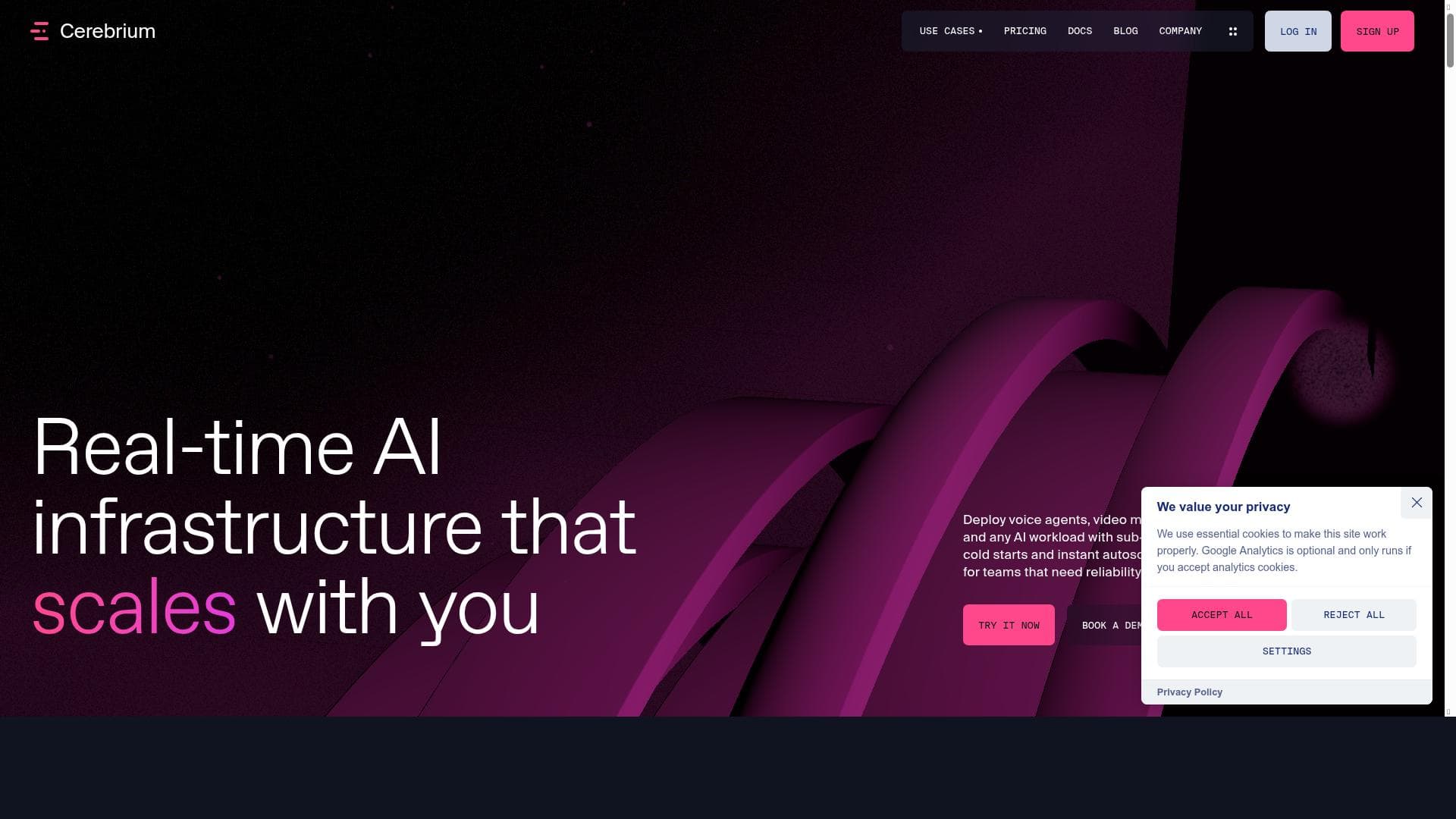
Cerebrium is a powerful serverless AI infrastructure platform that streamlines building, deploying, and scaling AI applications with ease. Featuring over a dozen GPU options, instant autoscaling, and sub-second cold starts, it’s ideal for developers and enterprises aiming to deploy voice agents, video models, and large language models without infrastructure hassles.
Cerebrium is a cutting-edge serverless AI infrastructure platform designed to simplify the process of building, deploying, and scaling AI applications. At its core, Cerebrium provides developers and enterprises with a flexible, scalable environment that eliminates the traditional complexities associated with managing AI infrastructure. By offering a serverless model, it allows users to focus on developing their AI models and applications without worrying about the underlying hardware or scaling challenges. This platform supports a wide range of AI workloads, from real-time voice applications to large-scale batch processing, making it a versatile solution for various AI deployment needs. One of the standout features of Cerebrium is its extensive GPU variety, offering over 12 different types of GPUs to choose from. This variety ensures that users can select the most appropriate hardware for their specific AI models, whether they require high-performance GPUs for deep learning or more cost-effective options for less intensive tasks. The platform supports deploying voice agents, video models, and large language models (LLMs), catering to diverse AI application domains such as natural language processing, computer vision, and conversational AI. Additionally, Cerebrium boasts sub-second cold starts and instant autoscaling capabilities, which are critical for applications requiring low latency and high availability. These features ensure that AI applications can handle fluctuating workloads seamlessly without performance degradation. Cerebrium is particularly well-suited for AI developers, startups, and enterprises looking to accelerate their AI initiatives without investing heavily in infrastructure management. Use cases include deploying real-time voice assistants for customer service, running complex video analytics models for security or media applications, and scaling large language models for chatbots or content generation. Its serverless nature also makes it ideal for teams that want to experiment with AI models quickly and scale them as needed without upfront hardware commitments. Regarding pricing, Cerebrium operates on a paid model, which typically aligns with usage-based billing common in cloud infrastructure services. While specific pricing details are not publicly disclosed, the paid model suggests that users pay for the compute resources and features they consume, offering flexibility and cost control. This approach is beneficial for businesses that want to scale their AI workloads dynamically without overprovisioning resources. Compared to alternative AI infrastructure platforms, Cerebrium stands out due to its serverless architecture combined with a broad selection of GPU options and support for various AI model types. Many competitors require manual infrastructure management or offer limited hardware choices, which can restrict scalability and performance optimization. Cerebrium’s instant autoscaling and sub-second cold start capabilities provide a competitive edge for latency-sensitive applications, a feature not universally available in other platforms. However, some alternatives might offer more extensive integrations or community support, which could be a consideration depending on the user’s ecosystem requirements. Potential limitations of Cerebrium include its paid-only pricing model, which might be a barrier for hobbyists or small teams seeking free or low-cost entry points. Additionally, while the platform supports a wide range of GPUs and AI models, users with highly specialized hardware needs or niche AI frameworks might find limitations in customization. As with any serverless platform, there may also be constraints related to debugging and monitoring compared to traditional managed infrastructure. Prospective users should evaluate these factors in the context of their specific AI projects and operational requirements to ensure Cerebrium aligns well with their goals.

Description
Cerebrium is a powerful serverless AI infrastructure platform that streamlines building, deploying, and scaling AI applications with ease. Featuring over a dozen GPU options, instant autoscaling, and sub-second cold starts, it’s ideal for developers and enterprises aiming to deploy voice agents, video models, and large language models without infrastructure hassles.
Cerebrium is a cutting-edge serverless AI infrastructure platform designed to simplify the process of building, deploying, and scaling AI applications. At its core, Cerebrium provides developers and enterprises with a flexible, scalable environment that eliminates the traditional complexities associated with managing AI infrastructure. By offering a serverless model, it allows users to focus on developing their AI models and applications without worrying about the underlying hardware or scaling challenges. This platform supports a wide range of AI workloads, from real-time voice applications to large-scale batch processing, making it a versatile solution for various AI deployment needs. One of the standout features of Cerebrium is its extensive GPU variety, offering over 12 different types of GPUs to choose from. This variety ensures that users can select the most appropriate hardware for their specific AI models, whether they require high-performance GPUs for deep learning or more cost-effective options for less intensive tasks. The platform supports deploying voice agents, video models, and large language models (LLMs), catering to diverse AI application domains such as natural language processing, computer vision, and conversational AI. Additionally, Cerebrium boasts sub-second cold starts and instant autoscaling capabilities, which are critical for applications requiring low latency and high availability. These features ensure that AI applications can handle fluctuating workloads seamlessly without performance degradation. Cerebrium is particularly well-suited for AI developers, startups, and enterprises looking to accelerate their AI initiatives without investing heavily in infrastructure management. Use cases include deploying real-time voice assistants for customer service, running complex video analytics models for security or media applications, and scaling large language models for chatbots or content generation. Its serverless nature also makes it ideal for teams that want to experiment with AI models quickly and scale them as needed without upfront hardware commitments. Regarding pricing, Cerebrium operates on a paid model, which typically aligns with usage-based billing common in cloud infrastructure services. While specific pricing details are not publicly disclosed, the paid model suggests that users pay for the compute resources and features they consume, offering flexibility and cost control. This approach is beneficial for businesses that want to scale their AI workloads dynamically without overprovisioning resources. Compared to alternative AI infrastructure platforms, Cerebrium stands out due to its serverless architecture combined with a broad selection of GPU options and support for various AI model types. Many competitors require manual infrastructure management or offer limited hardware choices, which can restrict scalability and performance optimization. Cerebrium’s instant autoscaling and sub-second cold start capabilities provide a competitive edge for latency-sensitive applications, a feature not universally available in other platforms. However, some alternatives might offer more extensive integrations or community support, which could be a consideration depending on the user’s ecosystem requirements. Potential limitations of Cerebrium include its paid-only pricing model, which might be a barrier for hobbyists or small teams seeking free or low-cost entry points. Additionally, while the platform supports a wide range of GPUs and AI models, users with highly specialized hardware needs or niche AI frameworks might find limitations in customization. As with any serverless platform, there may also be constraints related to debugging and monitoring compared to traditional managed infrastructure. Prospective users should evaluate these factors in the context of their specific AI projects and operational requirements to ensure Cerebrium aligns well with their goals.
Tool Features
- Serverless AI infrastructure
- Deploy voice agents
- Deploy video models
- Deploy large language models (LLMs)
- Sub-second cold starts
- Instant autoscaling
- Built for reliability at scale
Frequently Asked Questions
What is Cerebrium?
Cerebrium is a serverless AI infrastructure platform that enables users to build, deploy, and scale AI applications effortlessly. It offers a variety of GPU options and supports deploying voice agents, video models, and large language models with features like instant autoscaling and sub-second cold starts.
How much does Cerebrium cost?
Cerebrium operates on a paid pricing model, typically based on usage of compute resources and features. Specific pricing details are not publicly listed, so interested users should contact Cerebrium directly or visit their website for detailed pricing information.
Who is Cerebrium best for?
Cerebrium is best suited for AI developers, startups, and enterprises looking to deploy scalable AI applications such as real-time voice assistants, video analytics, and large language models without managing infrastructure.
What are the main features of Cerebrium?
Key features include serverless AI infrastructure, deployment of voice agents, video models, and large language models, access to over 12 types of GPUs, sub-second cold starts, instant autoscaling, and a platform built for reliability at scale.
Does Cerebrium offer a free trial?
There is no publicly available information indicating that Cerebrium offers a free trial. Prospective users should check the official website or contact the company directly for the most current trial or demo options.
What integrations does Cerebrium support?
While specific integrations are not detailed publicly, Cerebrium supports deploying a wide range of AI models including voice agents, video models, and large language models, suggesting compatibility with popular AI frameworks and tools. For detailed integration options, contacting Cerebrium is recommended.
How does Cerebrium work?
Cerebrium operates as a serverless platform where users select from various GPU types and deploy their AI models without managing the underlying infrastructure. It handles scaling automatically, supports rapid cold starts, and ensures reliable performance for diverse AI workloads.
Socials
Use ToolSponsored Tools



































Reviews
No reviews yet. Be the first to share your experience.