Description
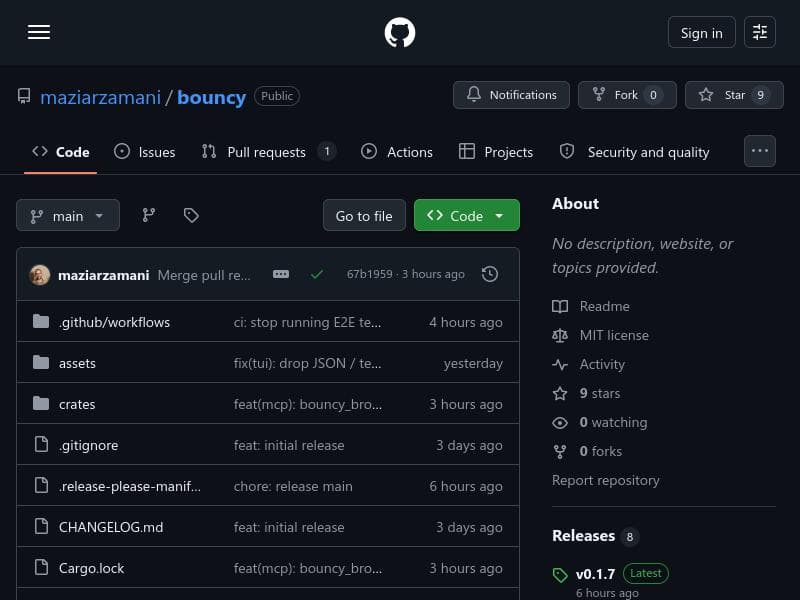
Bouncy is a compact, blazing-fast web scraper that runs as a single binary with no need for Node, Chrome, or Python. Perfect for developers and researchers needing quick, reliable access to HTML, visible text, or links—even on JavaScript-heavy pages—bouncy combines ease of use with powerful scraping capabilities.
Bouncy is a highly efficient and lightweight web scraping tool designed to simplify the process of extracting web content. Unlike many traditional scrapers that require bulky dependencies such as Node.js, Chrome, or Python environments, bouncy ships as a single binary executable, making it incredibly easy to deploy and use across different systems without complex setup. Its core purpose is to enable users to point it at any URL and retrieve structured data such as the raw HTML, visible text, or all hyperlinks present on the page. One of bouncy's standout capabilities is its ability to execute JavaScript on pages that require it for proper rendering, ensuring that dynamic content is fully accessible and scrapeable. This makes it a versatile choice for scraping modern web applications that rely heavily on client-side scripting. Bouncy offers multiple modes of operation to suit different user needs. It can be used directly from the command line, functioning similarly to curl, allowing quick and straightforward scraping tasks without writing code. Alternatively, it can be integrated as a backend engine for Playwright, a popular browser automation library, enabling developers to incorporate bouncy's scraping power into more complex workflows and automation scripts. This dual usage model enhances its flexibility and appeal to both casual users and developers. The tool's key features include its minimal installation footprint, speed, and the ability to handle JavaScript-rendered pages seamlessly. Additionally, bouncy supports extracting various types of content, including the full HTML source, visible text stripped of HTML tags, and all links on a page, which is particularly useful for link discovery and content analysis. Beyond scraping, bouncy also serves as a platform for discovering new products, sharing innovative tools, and helping users stay updated with the latest trends in technology and business, positioning it as more than just a scraper but also a resource hub. Bouncy is ideal for web developers, data analysts, product researchers, and digital marketers who need reliable and fast access to web data without the overhead of managing complex scraping environments. Use cases range from competitive analysis, market research, content aggregation, SEO monitoring, to automated testing of web pages. Its ability to run as a standalone binary makes it especially useful for environments where installing multiple dependencies is impractical or impossible. Regarding pricing, bouncy follows a freemium model, allowing users to access core features at no cost while offering premium capabilities or higher usage limits under paid plans. This approach makes it accessible to hobbyists and professionals alike, providing a risk-free way to evaluate the tool before committing financially. Compared to alternatives like Puppeteer, Selenium, or traditional Python-based scrapers, bouncy stands out for its simplicity and minimal resource requirements. While those tools often require setting up browsers or runtime environments, bouncy's single binary delivery and built-in JavaScript execution streamline the scraping process significantly. However, it may not yet offer the extensive customization or ecosystem integrations that more mature tools provide, which could be a consideration for highly specialized scraping projects. Potential limitations include the current scope of features focused primarily on scraping HTML, text, and links, with less emphasis on advanced data extraction, scheduling, or proxy management. Users requiring complex workflows or large-scale scraping operations might need to complement bouncy with additional tools. Additionally, as a relatively new project, community support and documentation may be less extensive than established alternatives. In summary, bouncy is a powerful, fast, and easy-to-use web scraper that excels in environments where simplicity and speed are paramount. Its ability to handle JavaScript-rendered content and operate without heavy dependencies makes it a compelling choice for a wide range of users looking to extract web data efficiently.

Description
Bouncy is a compact, blazing-fast web scraper that runs as a single binary with no need for Node, Chrome, or Python. Perfect for developers and researchers needing quick, reliable access to HTML, visible text, or links—even on JavaScript-heavy pages—bouncy combines ease of use with powerful scraping capabilities.
Bouncy is a highly efficient and lightweight web scraping tool designed to simplify the process of extracting web content. Unlike many traditional scrapers that require bulky dependencies such as Node.js, Chrome, or Python environments, bouncy ships as a single binary executable, making it incredibly easy to deploy and use across different systems without complex setup. Its core purpose is to enable users to point it at any URL and retrieve structured data such as the raw HTML, visible text, or all hyperlinks present on the page. One of bouncy's standout capabilities is its ability to execute JavaScript on pages that require it for proper rendering, ensuring that dynamic content is fully accessible and scrapeable. This makes it a versatile choice for scraping modern web applications that rely heavily on client-side scripting. Bouncy offers multiple modes of operation to suit different user needs. It can be used directly from the command line, functioning similarly to curl, allowing quick and straightforward scraping tasks without writing code. Alternatively, it can be integrated as a backend engine for Playwright, a popular browser automation library, enabling developers to incorporate bouncy's scraping power into more complex workflows and automation scripts. This dual usage model enhances its flexibility and appeal to both casual users and developers. The tool's key features include its minimal installation footprint, speed, and the ability to handle JavaScript-rendered pages seamlessly. Additionally, bouncy supports extracting various types of content, including the full HTML source, visible text stripped of HTML tags, and all links on a page, which is particularly useful for link discovery and content analysis. Beyond scraping, bouncy also serves as a platform for discovering new products, sharing innovative tools, and helping users stay updated with the latest trends in technology and business, positioning it as more than just a scraper but also a resource hub. Bouncy is ideal for web developers, data analysts, product researchers, and digital marketers who need reliable and fast access to web data without the overhead of managing complex scraping environments. Use cases range from competitive analysis, market research, content aggregation, SEO monitoring, to automated testing of web pages. Its ability to run as a standalone binary makes it especially useful for environments where installing multiple dependencies is impractical or impossible. Regarding pricing, bouncy follows a freemium model, allowing users to access core features at no cost while offering premium capabilities or higher usage limits under paid plans. This approach makes it accessible to hobbyists and professionals alike, providing a risk-free way to evaluate the tool before committing financially. Compared to alternatives like Puppeteer, Selenium, or traditional Python-based scrapers, bouncy stands out for its simplicity and minimal resource requirements. While those tools often require setting up browsers or runtime environments, bouncy's single binary delivery and built-in JavaScript execution streamline the scraping process significantly. However, it may not yet offer the extensive customization or ecosystem integrations that more mature tools provide, which could be a consideration for highly specialized scraping projects. Potential limitations include the current scope of features focused primarily on scraping HTML, text, and links, with less emphasis on advanced data extraction, scheduling, or proxy management. Users requiring complex workflows or large-scale scraping operations might need to complement bouncy with additional tools. Additionally, as a relatively new project, community support and documentation may be less extensive than established alternatives. In summary, bouncy is a powerful, fast, and easy-to-use web scraper that excels in environments where simplicity and speed are paramount. Its ability to handle JavaScript-rendered content and operate without heavy dependencies makes it a compelling choice for a wide range of users looking to extract web data efficiently.
Tool Features
- Platform for discovering new products
- Sharing and exploring innovative tools
- Helps users stay updated with latest trends
Frequently Asked Questions
What is bouncy?
Bouncy is a lightweight, fast web scraping tool that runs as a single binary without requiring Node.js, Chrome, or Python. It allows users to extract HTML, visible text, or links from any webpage, including those that require JavaScript to render properly.
How much does bouncy cost?
Bouncy operates on a freemium pricing model, offering core features for free with optional premium plans that provide additional capabilities or higher usage limits.
Who is bouncy best for?
Bouncy is ideal for web developers, data analysts, product researchers, and digital marketers who need a fast, easy-to-use scraper that can handle JavaScript-rendered pages without complex setup.
What are the main features of bouncy?
Key features include a single binary deployment with no external dependencies, ability to scrape HTML, visible text, and links, JavaScript execution for dynamic pages, command-line usage similar to curl, and integration as a Playwright backend.
Does bouncy offer a free trial?
Yes, bouncy's freemium model allows users to try the core features for free without any time-limited trial, enabling ongoing access to basic scraping capabilities.
What integrations does bouncy support?
Bouncy can be used standalone from the command line or integrated as a backend engine within Playwright, a browser automation framework, to support more complex scraping workflows.
How does bouncy work?
Bouncy works by accepting a URL input and fetching the webpage content, including executing JavaScript if necessary, then returning the raw HTML, visible text, or all links found on the page. It operates as a single binary executable, making it easy to run without installing additional software.
Socials
Use ToolSponsored Tools


































Reviews
No reviews yet. Be the first to share your experience.