Description
Anima revolutionizes the design-to-code workflow by using AI to generate precise, responsive frontend code directly from Figma files, ensuring your UI is on-brand and production-ready. Ideal for designers and developers seeking to accelerate product launches, Anima’s intelligent chat interface offers a seamless, interactive experience that eliminates generic code outputs.
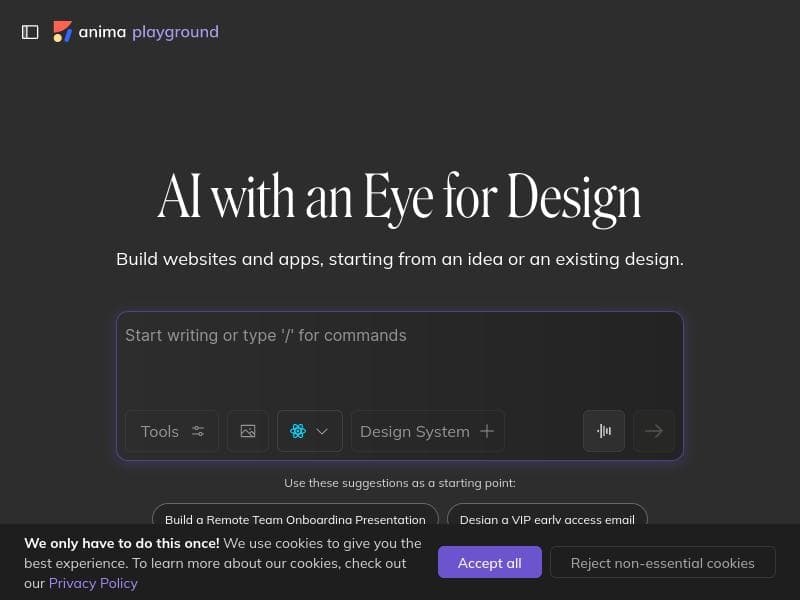
Anima is a cutting-edge AI-powered tool designed to transform rough design ideas into fully functional frontend code that aligns precisely with your design system. Its core purpose is to bridge the gap between design and development by automating the generation of responsive, real UI code directly from design files such as those created in Figma. Unlike generic code generation tools that produce boilerplate or inconsistent outputs, Anima focuses on delivering code that is on-brand, clean, and ready to ship, significantly accelerating the product development lifecycle. At the heart of Anima is its AI-powered chat interface, which facilitates an interactive and intelligent conversation between the user and the tool. This conversational approach allows designers and developers to communicate their needs naturally, ask for specific UI components, request adjustments, or clarify design intentions without leaving the interface. The AI understands context and design constraints, ensuring the generated code respects the established design system and branding guidelines. This seamless user experience eliminates the friction often encountered when translating static designs into dynamic code, making the process intuitive and efficient. Anima’s capabilities extend beyond simple code generation. It supports the creation of responsive layouts that adapt to different screen sizes and devices, ensuring that the UI looks and functions flawlessly across platforms. The tool integrates tightly with popular design software, primarily Figma, allowing users to import design files directly and generate corresponding frontend code in real-time. This integration streamlines workflows for product teams, enabling rapid prototyping and iteration without the need for manual coding. Additionally, Anima’s AI can handle complex UI elements and interactions, making it suitable for sophisticated web applications as well as simpler landing pages. This tool is best suited for UI/UX designers, frontend developers, product managers, and startups looking to accelerate their design-to-development handoff. Designers benefit from seeing their concepts come to life in code without needing deep programming knowledge, while developers save time by receiving clean, production-ready code that requires minimal tweaking. Startups and agile teams can leverage Anima to quickly validate ideas and launch MVPs faster, reducing time-to-market and development costs. It also serves educational purposes for those learning frontend development by providing a clear, code-based representation of design elements. Anima offers a freemium pricing model, making it accessible to individuals and small teams who want to explore its capabilities without upfront investment. The free tier typically includes basic features and limited usage, while premium plans unlock advanced functionalities such as higher code export limits, priority support, and access to enterprise-level integrations. This flexible pricing structure allows users to scale their usage according to project needs and team size. When compared to alternative tools, Anima stands out due to its AI-driven chat interface and its focus on generating code that strictly adheres to the user’s design system. Many competitors offer code export from design files but often produce generic or inconsistent code that requires significant manual refinement. Anima’s intelligent conversations and responsive UI generation provide a more tailored and efficient solution. However, users should consider that while Anima excels in frontend code generation, it may not cover backend development or complex business logic, which still require traditional development efforts. Notable limitations include the dependency on the quality and consistency of the input design files; poorly structured designs may lead to less optimal code output. Additionally, while Anima supports popular design tools like Figma, integration options may be limited for other design platforms. Users should also be aware that AI-generated code, while highly accurate, might occasionally require manual review to ensure compliance with specific project standards or performance optimizations. Despite these considerations, Anima remains a powerful tool for teams aiming to streamline UI development and improve collaboration between design and engineering.

Description
Anima revolutionizes the design-to-code workflow by using AI to generate precise, responsive frontend code directly from Figma files, ensuring your UI is on-brand and production-ready. Ideal for designers and developers seeking to accelerate product launches, Anima’s intelligent chat interface offers a seamless, interactive experience that eliminates generic code outputs.
Anima is a cutting-edge AI-powered tool designed to transform rough design ideas into fully functional frontend code that aligns precisely with your design system. Its core purpose is to bridge the gap between design and development by automating the generation of responsive, real UI code directly from design files such as those created in Figma. Unlike generic code generation tools that produce boilerplate or inconsistent outputs, Anima focuses on delivering code that is on-brand, clean, and ready to ship, significantly accelerating the product development lifecycle. At the heart of Anima is its AI-powered chat interface, which facilitates an interactive and intelligent conversation between the user and the tool. This conversational approach allows designers and developers to communicate their needs naturally, ask for specific UI components, request adjustments, or clarify design intentions without leaving the interface. The AI understands context and design constraints, ensuring the generated code respects the established design system and branding guidelines. This seamless user experience eliminates the friction often encountered when translating static designs into dynamic code, making the process intuitive and efficient. Anima’s capabilities extend beyond simple code generation. It supports the creation of responsive layouts that adapt to different screen sizes and devices, ensuring that the UI looks and functions flawlessly across platforms. The tool integrates tightly with popular design software, primarily Figma, allowing users to import design files directly and generate corresponding frontend code in real-time. This integration streamlines workflows for product teams, enabling rapid prototyping and iteration without the need for manual coding. Additionally, Anima’s AI can handle complex UI elements and interactions, making it suitable for sophisticated web applications as well as simpler landing pages. This tool is best suited for UI/UX designers, frontend developers, product managers, and startups looking to accelerate their design-to-development handoff. Designers benefit from seeing their concepts come to life in code without needing deep programming knowledge, while developers save time by receiving clean, production-ready code that requires minimal tweaking. Startups and agile teams can leverage Anima to quickly validate ideas and launch MVPs faster, reducing time-to-market and development costs. It also serves educational purposes for those learning frontend development by providing a clear, code-based representation of design elements. Anima offers a freemium pricing model, making it accessible to individuals and small teams who want to explore its capabilities without upfront investment. The free tier typically includes basic features and limited usage, while premium plans unlock advanced functionalities such as higher code export limits, priority support, and access to enterprise-level integrations. This flexible pricing structure allows users to scale their usage according to project needs and team size. When compared to alternative tools, Anima stands out due to its AI-driven chat interface and its focus on generating code that strictly adheres to the user’s design system. Many competitors offer code export from design files but often produce generic or inconsistent code that requires significant manual refinement. Anima’s intelligent conversations and responsive UI generation provide a more tailored and efficient solution. However, users should consider that while Anima excels in frontend code generation, it may not cover backend development or complex business logic, which still require traditional development efforts. Notable limitations include the dependency on the quality and consistency of the input design files; poorly structured designs may lead to less optimal code output. Additionally, while Anima supports popular design tools like Figma, integration options may be limited for other design platforms. Users should also be aware that AI-generated code, while highly accurate, might occasionally require manual review to ensure compliance with specific project standards or performance optimizations. Despite these considerations, Anima remains a powerful tool for teams aiming to streamline UI development and improve collaboration between design and engineering.
Tool Features
- AI-powered chat interface
- Interactive and intelligent conversations
- Seamless user experience
Frequently Asked Questions
What is Anima?
Anima is an AI-powered tool that converts design files, especially from Figma, into accurate, responsive frontend code that matches your design system, enabling faster and more efficient UI development.
How much does Anima cost?
Anima offers a freemium pricing model with a free tier providing basic features and usage limits, while premium plans unlock advanced capabilities, higher export limits, and priority support.
Who is Anima best for?
Anima is ideal for UI/UX designers, frontend developers, product managers, startups, and agile teams looking to streamline the design-to-development process and accelerate product delivery.
What are the main features of Anima?
Key features include an AI-powered chat interface for interactive conversations, generation of responsive frontend code aligned with your design system, seamless integration with Figma, and a user-friendly experience that reduces manual coding.
Does Anima offer a free trial?
Yes, Anima provides a free tier that allows users to try out essential features without cost, enabling them to evaluate the tool before committing to a paid plan.
What integrations does Anima support?
Anima primarily integrates with Figma, allowing direct import of design files for code generation. Additional integrations may be available depending on the plan and updates.
How does Anima work?
Anima uses AI to analyze your design files and, through an interactive chat interface, generates frontend code that is responsive and consistent with your design system, enabling seamless transition from design to development.
Socials
Use ToolSponsored Tools































Reviews
No reviews yet. Be the first to share your experience.