Description
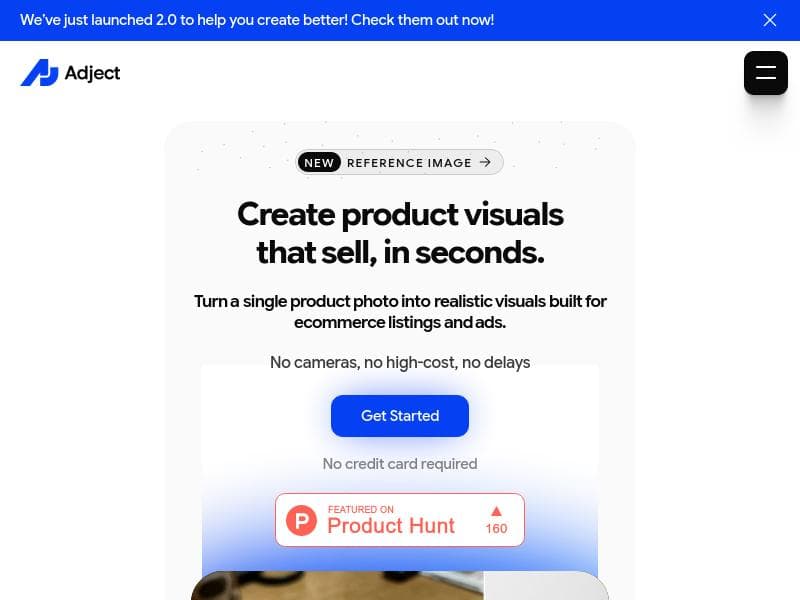
Adject 2.0 is a groundbreaking AI-powered product studio that enables brands to create, edit, and continuously evolve product visuals within a unified creative workflow. Perfect for ecommerce and marketing teams, it replaces traditional photoshoots with fast, consistent, and connected AI-generated images and videos, streamlining campaign creation without repetitive prompting or fragmented tools.
Adject 2.0 is an innovative agentic product studio designed to revolutionize how brands create, edit, and iterate product visuals within a seamless and continuous creative workflow. Unlike traditional AI tools that generate isolated images or videos, Adject 2.0 connects all elements—products, models, edits, videos, and assets—within unified projects that evolve over time. This approach allows brands to upload assets once and then generate contextually relevant visuals, iterate on them visually, and build comprehensive marketing campaigns without the need for fragmented tools or repetitive prompting. The platform is built to streamline the creative process for ecommerce and advertising teams, enabling fast, consistent, and commercial-ready content creation at scale. At its core, Adject 2.0 offers several powerful features tailored to meet the demands of modern digital marketing and ecommerce. Users can create high-quality, commercial-ready product images that replace the need for expensive and time-consuming traditional photoshoots. The platform also supports the generation of product videos, a critical asset for ecommerce brands looking to engage customers with dynamic content. By leveraging AI-generated visuals, brands can maintain visual consistency across campaigns while accelerating production timelines. The infinite creative workflow means that all assets remain connected within projects, allowing for continuous iteration and evolution of product visuals without losing context or quality. This eliminates the inefficiencies of starting from scratch with each new asset or campaign. Adject 2.0 is best suited for ecommerce brands, digital marketing agencies, product managers, and creative teams who require a scalable, efficient solution for producing visual content. Brands looking to reduce reliance on traditional photoshoots and streamline their creative pipelines will find Adject 2.0 particularly valuable. Use cases include creating product catalogs, social media campaigns, online ads, and video content that require frequent updates and variations. The platform’s ability to keep all creative assets interconnected supports ongoing campaign optimization and rapid response to market trends. Regarding pricing, Adject 2.0 is a paid service, though specific pricing tiers or plans are not detailed in the provided information. Prospective users should visit the official website to inquire about subscription options, enterprise plans, or custom pricing based on usage and feature needs. The paid model suggests a focus on professional users and businesses that prioritize quality, scalability, and integrated workflows over free or entry-level tools. When compared to alternatives, Adject 2.0 stands out by offering an agentic, project-based workflow rather than isolated AI generations. Many AI visual content tools focus on single image or video creation without maintaining asset relationships or supporting continuous iteration. Adject 2.0’s approach reduces repetitive prompting and fragmented tool usage, which can significantly improve efficiency and creative control. However, as a specialized paid platform, it may not be as accessible for individual creators or very small businesses with limited budgets. Additionally, while it replaces traditional photoshoots with AI-generated visuals, some brands may still require physical photography for certain product categories or high-end campaigns. Potential limitations include the need for users to adapt to a new workflow that integrates multiple asset types and continuous iteration, which could have a learning curve. Also, the quality and style of AI-generated visuals depend on the underlying models and training data, which may not perfectly replicate every brand’s unique aesthetic or product characteristics. Finally, since pricing details are not publicly specified, some users may find it challenging to assess cost-effectiveness without direct consultation. In summary, Adject 2.0 offers a cutting-edge solution for brands seeking to modernize and streamline their product visual creation process. Its agentic studio environment fosters ongoing creative evolution, making it ideal for ecommerce and marketing teams who need fast, consistent, and connected visual content generation. While it requires a paid subscription and may involve a learning curve, the platform’s unique workflow and comprehensive feature set position it as a strong contender in the AI-driven product content creation space.

Description
Adject 2.0 is a groundbreaking AI-powered product studio that enables brands to create, edit, and continuously evolve product visuals within a unified creative workflow. Perfect for ecommerce and marketing teams, it replaces traditional photoshoots with fast, consistent, and connected AI-generated images and videos, streamlining campaign creation without repetitive prompting or fragmented tools.
Adject 2.0 is an innovative agentic product studio designed to revolutionize how brands create, edit, and iterate product visuals within a seamless and continuous creative workflow. Unlike traditional AI tools that generate isolated images or videos, Adject 2.0 connects all elements—products, models, edits, videos, and assets—within unified projects that evolve over time. This approach allows brands to upload assets once and then generate contextually relevant visuals, iterate on them visually, and build comprehensive marketing campaigns without the need for fragmented tools or repetitive prompting. The platform is built to streamline the creative process for ecommerce and advertising teams, enabling fast, consistent, and commercial-ready content creation at scale. At its core, Adject 2.0 offers several powerful features tailored to meet the demands of modern digital marketing and ecommerce. Users can create high-quality, commercial-ready product images that replace the need for expensive and time-consuming traditional photoshoots. The platform also supports the generation of product videos, a critical asset for ecommerce brands looking to engage customers with dynamic content. By leveraging AI-generated visuals, brands can maintain visual consistency across campaigns while accelerating production timelines. The infinite creative workflow means that all assets remain connected within projects, allowing for continuous iteration and evolution of product visuals without losing context or quality. This eliminates the inefficiencies of starting from scratch with each new asset or campaign. Adject 2.0 is best suited for ecommerce brands, digital marketing agencies, product managers, and creative teams who require a scalable, efficient solution for producing visual content. Brands looking to reduce reliance on traditional photoshoots and streamline their creative pipelines will find Adject 2.0 particularly valuable. Use cases include creating product catalogs, social media campaigns, online ads, and video content that require frequent updates and variations. The platform’s ability to keep all creative assets interconnected supports ongoing campaign optimization and rapid response to market trends. Regarding pricing, Adject 2.0 is a paid service, though specific pricing tiers or plans are not detailed in the provided information. Prospective users should visit the official website to inquire about subscription options, enterprise plans, or custom pricing based on usage and feature needs. The paid model suggests a focus on professional users and businesses that prioritize quality, scalability, and integrated workflows over free or entry-level tools. When compared to alternatives, Adject 2.0 stands out by offering an agentic, project-based workflow rather than isolated AI generations. Many AI visual content tools focus on single image or video creation without maintaining asset relationships or supporting continuous iteration. Adject 2.0’s approach reduces repetitive prompting and fragmented tool usage, which can significantly improve efficiency and creative control. However, as a specialized paid platform, it may not be as accessible for individual creators or very small businesses with limited budgets. Additionally, while it replaces traditional photoshoots with AI-generated visuals, some brands may still require physical photography for certain product categories or high-end campaigns. Potential limitations include the need for users to adapt to a new workflow that integrates multiple asset types and continuous iteration, which could have a learning curve. Also, the quality and style of AI-generated visuals depend on the underlying models and training data, which may not perfectly replicate every brand’s unique aesthetic or product characteristics. Finally, since pricing details are not publicly specified, some users may find it challenging to assess cost-effectiveness without direct consultation. In summary, Adject 2.0 offers a cutting-edge solution for brands seeking to modernize and streamline their product visual creation process. Its agentic studio environment fosters ongoing creative evolution, making it ideal for ecommerce and marketing teams who need fast, consistent, and connected visual content generation. While it requires a paid subscription and may involve a learning curve, the platform’s unique workflow and comprehensive feature set position it as a strong contender in the AI-driven product content creation space.
Tool Features
- Create commercial-ready product images
- Generate product videos for ecommerce brands
- Replace traditional photoshoots with AI-generated visuals
- Fast and consistent visual content creation
Frequently Asked Questions
What is Adject 2.0?
Adject 2.0 is an agentic product studio that allows brands to create, edit, and iterate product visuals within an infinite creative workflow. It connects products, models, edits, videos, and assets inside projects that evolve continuously, enabling seamless and efficient visual content creation.
How much does Adject 2.0 cost?
Adject 2.0 is a paid service, but specific pricing details are not publicly available. Interested users should visit the official website or contact the company directly to learn about subscription plans and pricing options.
Who is Adject 2.0 best for?
Adject 2.0 is ideal for ecommerce brands, digital marketing agencies, product managers, and creative teams that need to produce commercial-ready product images and videos efficiently. It is especially useful for those looking to replace traditional photoshoots with AI-generated visuals and streamline their creative workflows.
What are the main features of Adject 2.0?
Key features include creating commercial-ready product images, generating product videos for ecommerce brands, replacing traditional photoshoots with AI-generated visuals, and enabling fast, consistent visual content creation within an infinite, connected creative workflow.
Does Adject 2.0 offer a free trial?
There is no information available about a free trial for Adject 2.0. Prospective users should check the official website or contact the company for the most current details on trial availability.
What integrations does Adject 2.0 support?
The provided information does not specify any integrations supported by Adject 2.0. Users interested in integration capabilities should consult the official website or contact the company for detailed technical information.
How does Adject 2.0 work?
Adject 2.0 works by allowing users to upload product assets once and then generate, edit, and iterate on visuals within a connected project environment. This infinite creative workflow keeps all assets linked, enabling continuous evolution of product images and videos without repetitive prompting or fragmented tool usage.
Socials
Use ToolSponsored Tools



































Reviews
No reviews yet. Be the first to share your experience.