Vibe3D
Description
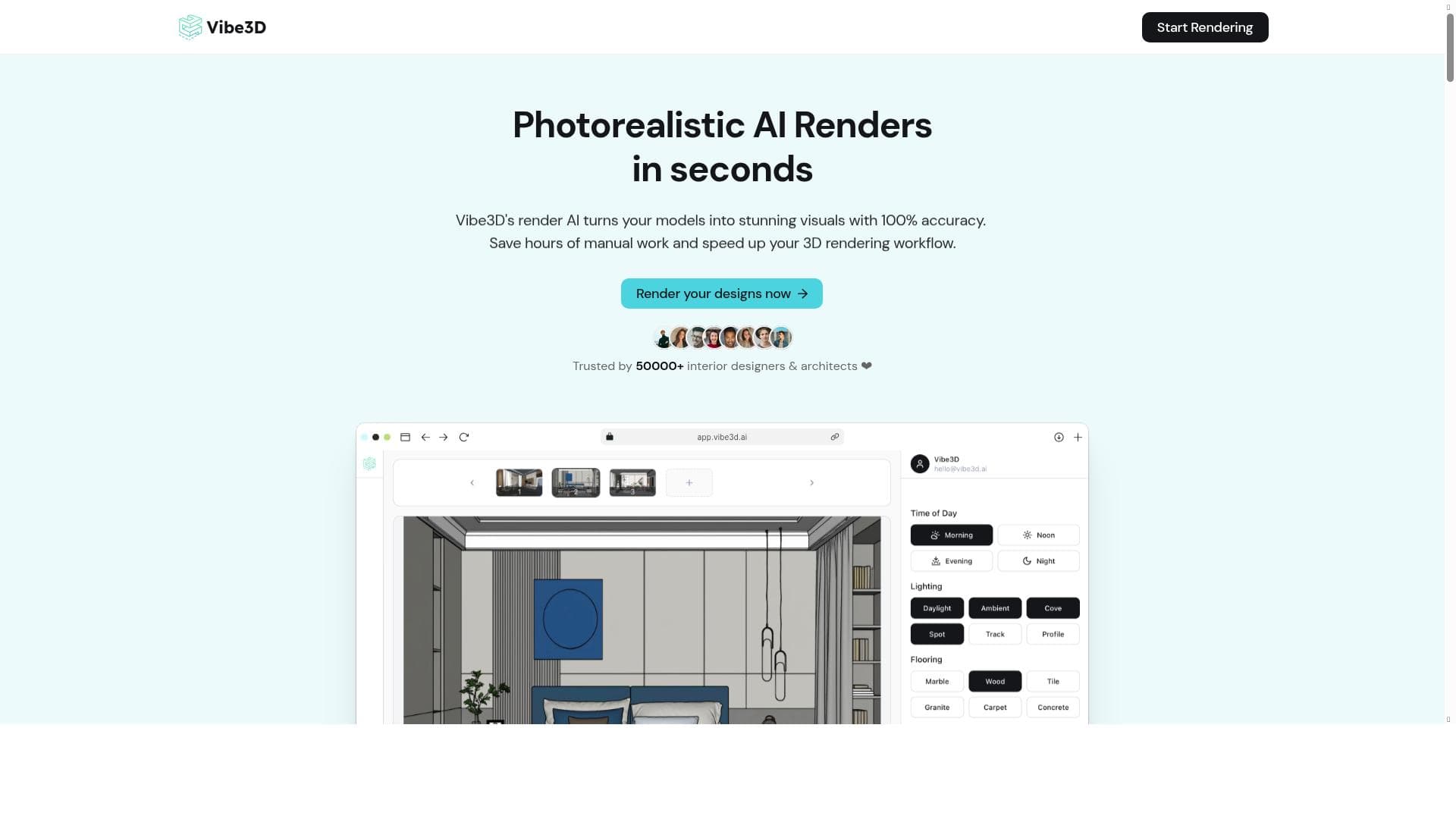
Vibe3D revolutionizes 3D rendering by delivering high-fidelity, photorealistic images from popular design software in seconds using AI technology. Ideal for architects, interior designers, and 3D artists, it accelerates workflows and enhances visual presentations with minimal effort.
Vibe3D is an advanced AI-powered rendering tool designed to transform 3D models into high-fidelity, photorealistic images within seconds. Its core purpose is to streamline and enhance the visualization process for architects, interior designers, and 3D artists by providing instant, realistic renders that accurately represent their design concepts. By leveraging artificial intelligence, Vibe3D eliminates the traditionally time-consuming and technically complex steps involved in rendering, allowing professionals to focus more on creativity and client engagement rather than technical execution. This makes Vibe3D an indispensable tool for anyone looking to quickly generate compelling visual content from their 3D models. One of Vibe3D's standout features is its compatibility with multiple popular design software platforms, including SketchUp, 3ds Max, Revit, Archicad, and Rhino. This broad support ensures that users can seamlessly integrate Vibe3D into their existing workflows without needing to convert or recreate models. The AI-powered rendering engine excels at producing realistic lighting, textures, and materials, which results in images that closely mimic real-world environments. Additionally, Vibe3D offers AI-driven interior design and architectural rendering capabilities, which not only enhance the visual quality but also provide intelligent suggestions and optimizations to improve the overall design presentation. This combination of speed, quality, and AI enhancement significantly elevates the design workflow by enabling rapid iteration and visualization. Vibe3D is best suited for professionals in architecture, interior design, real estate development, and 3D visualization who require fast and accurate renderings to communicate their ideas effectively. Interior designers can use it to experiment with different material finishes and lighting setups, while architects benefit from quick visualizations of building exteriors and interiors to present to clients or stakeholders. Real estate agents and developers can leverage Vibe3D to create compelling marketing visuals that showcase properties before they are built. The tool’s ability to handle complex models from various design software makes it versatile for a wide range of use cases, from conceptual design phases to final presentation. Regarding pricing, Vibe3D operates on a paid model. While specific pricing tiers are not detailed publicly, users can expect subscription-based plans that cater to different levels of usage, from individual professionals to larger teams or enterprises. This paid approach reflects the advanced AI technology and high-quality rendering output that Vibe3D delivers. Prospective users are encouraged to visit the official website to get the most current pricing information and inquire about any available trial options or demos. When compared to alternative rendering solutions, Vibe3D stands out due to its rapid rendering speed combined with AI-enhanced realism. Many traditional rendering tools require significant manual setup and long processing times, whereas Vibe3D automates much of this process without compromising on visual fidelity. Its multi-software support also provides an advantage over tools that are limited to a single platform. However, unlike some open-source or free rendering engines, Vibe3D’s paid model may be a consideration for budget-conscious users. Additionally, while AI enhancements improve workflow efficiency, users seeking highly customizable or specialized rendering effects might find Vibe3D’s automated approach less flexible than manual rendering software. Potential limitations include the reliance on internet connectivity for cloud-based rendering services, which may affect accessibility in low-bandwidth environments. Also, as with any AI-driven tool, the quality of the output can sometimes depend on the input model’s complexity and accuracy. Users should ensure their 3D models are well-prepared to maximize rendering quality. Despite these considerations, Vibe3D remains a powerful tool that significantly reduces the time and effort required to produce professional-grade 3D visualizations, making it a valuable asset for design professionals aiming to impress clients and accelerate project timelines.

Description
Vibe3D revolutionizes 3D rendering by delivering high-fidelity, photorealistic images from popular design software in seconds using AI technology. Ideal for architects, interior designers, and 3D artists, it accelerates workflows and enhances visual presentations with minimal effort.
Vibe3D is an advanced AI-powered rendering tool designed to transform 3D models into high-fidelity, photorealistic images within seconds. Its core purpose is to streamline and enhance the visualization process for architects, interior designers, and 3D artists by providing instant, realistic renders that accurately represent their design concepts. By leveraging artificial intelligence, Vibe3D eliminates the traditionally time-consuming and technically complex steps involved in rendering, allowing professionals to focus more on creativity and client engagement rather than technical execution. This makes Vibe3D an indispensable tool for anyone looking to quickly generate compelling visual content from their 3D models. One of Vibe3D's standout features is its compatibility with multiple popular design software platforms, including SketchUp, 3ds Max, Revit, Archicad, and Rhino. This broad support ensures that users can seamlessly integrate Vibe3D into their existing workflows without needing to convert or recreate models. The AI-powered rendering engine excels at producing realistic lighting, textures, and materials, which results in images that closely mimic real-world environments. Additionally, Vibe3D offers AI-driven interior design and architectural rendering capabilities, which not only enhance the visual quality but also provide intelligent suggestions and optimizations to improve the overall design presentation. This combination of speed, quality, and AI enhancement significantly elevates the design workflow by enabling rapid iteration and visualization. Vibe3D is best suited for professionals in architecture, interior design, real estate development, and 3D visualization who require fast and accurate renderings to communicate their ideas effectively. Interior designers can use it to experiment with different material finishes and lighting setups, while architects benefit from quick visualizations of building exteriors and interiors to present to clients or stakeholders. Real estate agents and developers can leverage Vibe3D to create compelling marketing visuals that showcase properties before they are built. The tool’s ability to handle complex models from various design software makes it versatile for a wide range of use cases, from conceptual design phases to final presentation. Regarding pricing, Vibe3D operates on a paid model. While specific pricing tiers are not detailed publicly, users can expect subscription-based plans that cater to different levels of usage, from individual professionals to larger teams or enterprises. This paid approach reflects the advanced AI technology and high-quality rendering output that Vibe3D delivers. Prospective users are encouraged to visit the official website to get the most current pricing information and inquire about any available trial options or demos. When compared to alternative rendering solutions, Vibe3D stands out due to its rapid rendering speed combined with AI-enhanced realism. Many traditional rendering tools require significant manual setup and long processing times, whereas Vibe3D automates much of this process without compromising on visual fidelity. Its multi-software support also provides an advantage over tools that are limited to a single platform. However, unlike some open-source or free rendering engines, Vibe3D’s paid model may be a consideration for budget-conscious users. Additionally, while AI enhancements improve workflow efficiency, users seeking highly customizable or specialized rendering effects might find Vibe3D’s automated approach less flexible than manual rendering software. Potential limitations include the reliance on internet connectivity for cloud-based rendering services, which may affect accessibility in low-bandwidth environments. Also, as with any AI-driven tool, the quality of the output can sometimes depend on the input model’s complexity and accuracy. Users should ensure their 3D models are well-prepared to maximize rendering quality. Despite these considerations, Vibe3D remains a powerful tool that significantly reduces the time and effort required to produce professional-grade 3D visualizations, making it a valuable asset for design professionals aiming to impress clients and accelerate project timelines.
Tool Features
- Instantly create realistic 3D renders from SketchUp, 3ds Max, Revit, Archicad, Rhino & more
- AI-powered interior design and architectural rendering
- Supports multiple popular design software inputs
- Enhances design workflow with AI-generated visualizations
Frequently Asked Questions
What is Vibe3D?
Vibe3D is an AI-powered rendering tool that instantly converts 3D models from various design software into high-quality, realistic images, streamlining the visualization process for architects, interior designers, and 3D artists.
How much does Vibe3D cost?
Vibe3D operates on a paid subscription model. Specific pricing details are available on their official website, and they may offer different plans tailored to individual professionals or teams.
Who is Vibe3D best for?
Vibe3D is best suited for architects, interior designers, real estate developers, and 3D visualization professionals who need fast, realistic renderings to present and refine their design concepts.
What are the main features of Vibe3D?
Key features include instant realistic 3D rendering from SketchUp, 3ds Max, Revit, Archicad, Rhino, AI-powered interior design and architectural rendering, support for multiple design software inputs, and AI-generated visualizations that enhance design workflows.
Does Vibe3D offer a free trial?
Information about a free trial is not explicitly stated; interested users should check the Vibe3D website or contact their support team to inquire about trial options or demos.
What integrations does Vibe3D support?
Vibe3D supports integration with multiple popular 3D design software including SketchUp, 3ds Max, Revit, Archicad, and Rhino, enabling seamless import of models for rendering.
How does Vibe3D work?
Vibe3D uses AI algorithms to analyze 3D models imported from supported design software and instantly generates photorealistic renders by simulating realistic lighting, textures, and materials, significantly speeding up the visualization process.
Socials
Use ToolSponsored Tools



































Reviews
No reviews yet. Be the first to share your experience.