Description
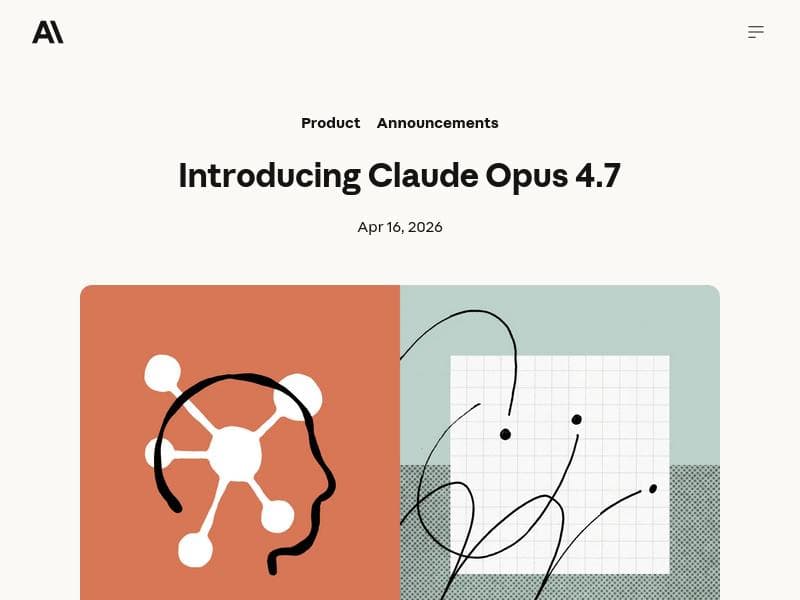
Claude Sonnet 4.6 is a cutting-edge AI model offering a massive 1 million token context window and enhanced capabilities in coding, reasoning, and design. Its focus on safety, transparency, and steerability makes it ideal for professionals seeking powerful yet ethical AI assistance across complex tasks.
Claude Sonnet 4.6 is an advanced AI tool designed to significantly enhance a wide range of tasks including coding, computer use, long-context reasoning, agent planning, knowledge work, and design. It represents a comprehensive upgrade over previous versions, integrating a powerful 1 million token context window currently in beta, which allows it to process and maintain far more information in a single session than most competitors. This capability enables users to work on complex projects that require extensive context retention without losing coherence or accuracy. Sonnet 4.6 has demonstrated improved performance across multiple benchmark tests, approaching the intelligence level of Opus models but at a more accessible price point, making it practical for a broader array of applications and users. One of the core strengths of Sonnet 4.6 lies in its focus on AI safety and reliability. The developers have prioritized creating interpretable AI systems, which means the model's decision-making processes are more transparent and understandable to users and developers alike. This transparency is critical for ethical AI research and deployment, ensuring that the AI behaves predictably and aligns with user intentions. Additionally, Sonnet 4.6 features steerable AI models, allowing users to guide the AI's behavior and outputs more precisely according to their specific needs. This steerability enhances customization and control, making the tool adaptable for diverse professional environments. Sonnet 4.6 is particularly well-suited for professionals engaged in knowledge work, software development, and design who require an AI assistant capable of managing complex, multi-step reasoning and planning. Its improved computer use skills make it an excellent partner for automating repetitive tasks, generating code snippets, debugging, and assisting with intricate design workflows. The long-context reasoning ability also benefits researchers, writers, and strategists who need to maintain thematic and logical consistency over large documents or datasets. The tool’s versatility extends to agent planning, supporting users in organizing and executing multi-phase projects with AI-driven foresight and adaptability. Regarding pricing, Sonnet 4.6 follows a freemium model, allowing users to access core functionalities for free while offering premium features and expanded capabilities under paid plans. This approach lowers the barrier to entry for individuals and small teams, while providing scalable options for enterprises requiring more extensive usage or advanced features. The inclusion of a 1 million token context window in beta suggests ongoing development and potential future enhancements that may be integrated into higher-tier plans. When compared to alternatives, Sonnet 4.6 stands out due to its combination of high intelligence, extensive context handling, and ethical design principles. While other AI models may offer similar capabilities in coding or natural language processing, few match the balance of performance, safety, and transparency that Sonnet 4.6 provides. Its steerable nature and focus on interpretable AI systems also differentiate it from black-box models, making it a preferred choice for users concerned with accountability and ethical AI use. However, as with any cutting-edge AI, there are considerations to keep in mind. The 1 million token context window is currently in beta, which means users might encounter occasional limitations or bugs as this feature is refined. Additionally, while the freemium pricing model is accessible, advanced features and extensive usage may require investment in paid plans. Users should also be aware that, despite improvements, AI-generated outputs should be reviewed critically, especially in high-stakes or sensitive applications. Overall, Claude Sonnet 4.6 offers a powerful, reliable, and ethically designed AI solution that is well-positioned to support a wide range of professional and creative workflows.

Description
Claude Sonnet 4.6 is a cutting-edge AI model offering a massive 1 million token context window and enhanced capabilities in coding, reasoning, and design. Its focus on safety, transparency, and steerability makes it ideal for professionals seeking powerful yet ethical AI assistance across complex tasks.
Claude Sonnet 4.6 is an advanced AI tool designed to significantly enhance a wide range of tasks including coding, computer use, long-context reasoning, agent planning, knowledge work, and design. It represents a comprehensive upgrade over previous versions, integrating a powerful 1 million token context window currently in beta, which allows it to process and maintain far more information in a single session than most competitors. This capability enables users to work on complex projects that require extensive context retention without losing coherence or accuracy. Sonnet 4.6 has demonstrated improved performance across multiple benchmark tests, approaching the intelligence level of Opus models but at a more accessible price point, making it practical for a broader array of applications and users. One of the core strengths of Sonnet 4.6 lies in its focus on AI safety and reliability. The developers have prioritized creating interpretable AI systems, which means the model's decision-making processes are more transparent and understandable to users and developers alike. This transparency is critical for ethical AI research and deployment, ensuring that the AI behaves predictably and aligns with user intentions. Additionally, Sonnet 4.6 features steerable AI models, allowing users to guide the AI's behavior and outputs more precisely according to their specific needs. This steerability enhances customization and control, making the tool adaptable for diverse professional environments. Sonnet 4.6 is particularly well-suited for professionals engaged in knowledge work, software development, and design who require an AI assistant capable of managing complex, multi-step reasoning and planning. Its improved computer use skills make it an excellent partner for automating repetitive tasks, generating code snippets, debugging, and assisting with intricate design workflows. The long-context reasoning ability also benefits researchers, writers, and strategists who need to maintain thematic and logical consistency over large documents or datasets. The tool’s versatility extends to agent planning, supporting users in organizing and executing multi-phase projects with AI-driven foresight and adaptability. Regarding pricing, Sonnet 4.6 follows a freemium model, allowing users to access core functionalities for free while offering premium features and expanded capabilities under paid plans. This approach lowers the barrier to entry for individuals and small teams, while providing scalable options for enterprises requiring more extensive usage or advanced features. The inclusion of a 1 million token context window in beta suggests ongoing development and potential future enhancements that may be integrated into higher-tier plans. When compared to alternatives, Sonnet 4.6 stands out due to its combination of high intelligence, extensive context handling, and ethical design principles. While other AI models may offer similar capabilities in coding or natural language processing, few match the balance of performance, safety, and transparency that Sonnet 4.6 provides. Its steerable nature and focus on interpretable AI systems also differentiate it from black-box models, making it a preferred choice for users concerned with accountability and ethical AI use. However, as with any cutting-edge AI, there are considerations to keep in mind. The 1 million token context window is currently in beta, which means users might encounter occasional limitations or bugs as this feature is refined. Additionally, while the freemium pricing model is accessible, advanced features and extensive usage may require investment in paid plans. Users should also be aware that, despite improvements, AI-generated outputs should be reviewed critically, especially in high-stakes or sensitive applications. Overall, Claude Sonnet 4.6 offers a powerful, reliable, and ethically designed AI solution that is well-positioned to support a wide range of professional and creative workflows.
Tool Features
- Focus on AI safety and reliability
- Development of interpretable AI systems
- Steerable AI models
- Ethical AI research
- Transparency in AI development
Frequently Asked Questions
What is Sonnet 4.6?
Sonnet 4.6 is an advanced AI tool developed by Anthropic that upgrades capabilities in coding, computer use, long-context reasoning, agent planning, knowledge work, and design. It features a large 1 million token context window in beta and emphasizes AI safety, reliability, and ethical development.
How much does Sonnet 4.6 cost?
Sonnet 4.6 operates on a freemium pricing model, offering free access to core features with optional paid plans for premium capabilities and expanded usage.
Who is Sonnet 4.6 best for?
It is best suited for professionals in software development, knowledge work, research, design, and project planning who need advanced AI assistance with complex reasoning, large-context processing, and ethical AI behavior.
What are the main features of Sonnet 4.6?
Key features include a 1 million token context window (beta), improved coding and computer use skills, long-context reasoning, agent planning, steerable AI models, interpretable AI systems, and a strong focus on AI safety, transparency, and ethical research.
Does Sonnet 4.6 offer a free trial?
Yes, Sonnet 4.6 offers free access to its core functionalities under its freemium model, allowing users to try the tool before opting for paid plans.
What integrations does Sonnet 4.6 support?
While specific integrations are not detailed, Sonnet 4.6’s improved computer use capabilities suggest compatibility with various software environments and workflows, enabling it to assist in coding, design, and knowledge work tasks.
How does Sonnet 4.6 work?
Sonnet 4.6 uses advanced AI models trained to handle extensive context and complex reasoning, allowing it to generate, plan, and assist across multiple domains. Its steerable and interpretable design ensures outputs align with user intentions while maintaining transparency and ethical standards.
Socials
Use ToolSponsored Tools
































Reviews
No reviews yet. Be the first to share your experience.