Description
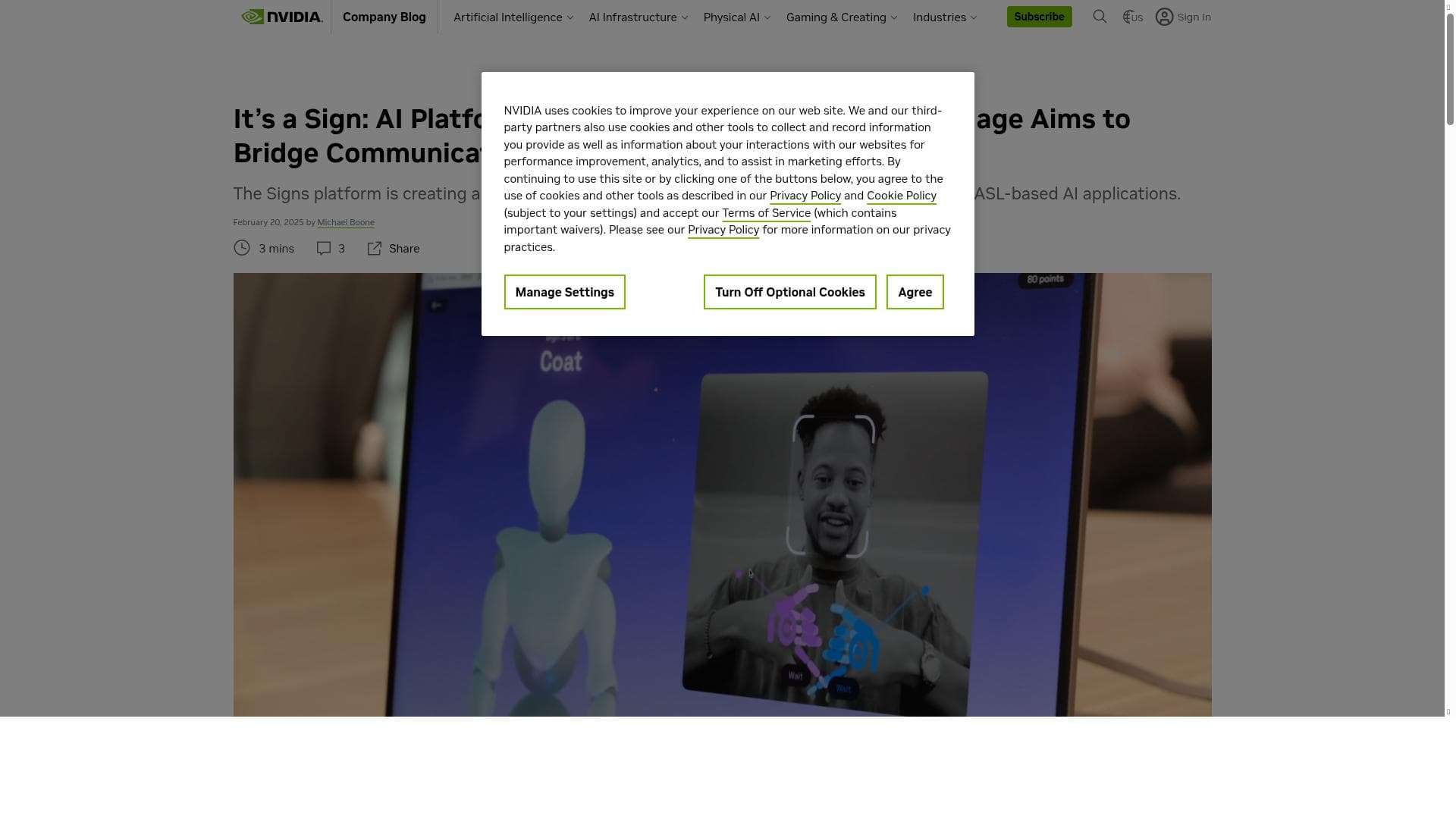
Signs by NVIDIA is a cutting-edge AI platform that offers real-time feedback for learning American Sign Language while building a validated, open-source dataset to support accessible AI development. It uniquely serves both learners and developers, fostering a collaborative environment to bridge communication gaps using advanced AI technology.
Signs is an innovative AI-powered platform developed by NVIDIA in collaboration with partners, designed to revolutionize the way American Sign Language (ASL) is learned, practiced, and integrated into technology. At its core, Signs serves a dual purpose: to provide learners with real-time feedback on their signing proficiency and to build a validated, open-source dataset that supports the development of AI applications centered around ASL. This initiative not only empowers individuals seeking to master sign language but also fosters the creation of accessible AI tools that bridge communication gaps for the Deaf and hard-of-hearing communities. One of the standout features of Signs is its ability to generate a validated dataset specifically tailored for sign language learners. This dataset is meticulously curated to ensure accuracy and reliability, making it an invaluable resource for both educational purposes and AI development. By crowdsourcing contributions from users, Signs continuously expands and refines this dataset, promoting a collaborative ecosystem where learners and developers alike benefit from enriched data. In addition to dataset creation, Signs offers robust support for developers aiming to build ASL-based AI applications. The platform provides access to high-quality data and tools that facilitate the training and validation of machine learning models focused on sign recognition and interpretation. This support is crucial for advancing AI technologies that can interpret sign language in real time, enabling more seamless communication between Deaf individuals and those who do not know ASL. A key capability of Signs is its real-time feedback mechanism. Learners can practice signing and receive immediate, AI-driven assessments of their accuracy and fluency. This interactive approach accelerates learning by allowing users to correct mistakes on the spot and track their progress over time. Such feedback is especially beneficial for self-learners and educators seeking to enhance their teaching methodologies with technology. Signs is ideally suited for a diverse audience, including ASL learners at various proficiency levels, educators, researchers, and AI developers focused on accessibility solutions. For learners, it offers an engaging and effective way to practice and improve their signing skills. Educators can leverage the platform to supplement traditional teaching methods with data-driven insights. Researchers and developers gain access to a rich dataset and tools necessary for creating innovative AI applications that facilitate communication and accessibility. The platform operates on a freemium pricing model, allowing users to access core features at no cost while offering premium options for enhanced capabilities or extended usage. This approach lowers the barrier to entry, encouraging widespread adoption and contribution to the dataset. While specific premium features and pricing tiers are not detailed publicly, the freemium model ensures that essential functionalities remain accessible to the community. Compared to alternative sign language learning tools and datasets, Signs distinguishes itself through its integration of AI for real-time feedback and its commitment to building an open-source, validated dataset. Many existing platforms focus solely on instructional content without providing interactive, AI-driven assessments or contributing to a shared data resource. Signs’ collaborative model and developer support position it uniquely at the intersection of education and AI innovation. However, users should consider that as a relatively new platform, Signs may still be expanding its dataset and refining its AI models. The accuracy of real-time feedback and the breadth of supported signs may evolve over time. Additionally, while the freemium model is accessible, advanced features may require payment, which could limit access for some users. Integration options with other educational or AI tools are not extensively documented, which may be a consideration for developers seeking seamless interoperability. In summary, Signs is a forward-thinking AI platform that combines learning, data creation, and developer support to advance ASL education and accessibility technology. Its real-time feedback, validated dataset, and open-source ethos make it a valuable resource for learners, educators, and AI innovators committed to bridging communication barriers through technology.

Description
Signs by NVIDIA is a cutting-edge AI platform that offers real-time feedback for learning American Sign Language while building a validated, open-source dataset to support accessible AI development. It uniquely serves both learners and developers, fostering a collaborative environment to bridge communication gaps using advanced AI technology.
Signs is an innovative AI-powered platform developed by NVIDIA in collaboration with partners, designed to revolutionize the way American Sign Language (ASL) is learned, practiced, and integrated into technology. At its core, Signs serves a dual purpose: to provide learners with real-time feedback on their signing proficiency and to build a validated, open-source dataset that supports the development of AI applications centered around ASL. This initiative not only empowers individuals seeking to master sign language but also fosters the creation of accessible AI tools that bridge communication gaps for the Deaf and hard-of-hearing communities. One of the standout features of Signs is its ability to generate a validated dataset specifically tailored for sign language learners. This dataset is meticulously curated to ensure accuracy and reliability, making it an invaluable resource for both educational purposes and AI development. By crowdsourcing contributions from users, Signs continuously expands and refines this dataset, promoting a collaborative ecosystem where learners and developers alike benefit from enriched data. In addition to dataset creation, Signs offers robust support for developers aiming to build ASL-based AI applications. The platform provides access to high-quality data and tools that facilitate the training and validation of machine learning models focused on sign recognition and interpretation. This support is crucial for advancing AI technologies that can interpret sign language in real time, enabling more seamless communication between Deaf individuals and those who do not know ASL. A key capability of Signs is its real-time feedback mechanism. Learners can practice signing and receive immediate, AI-driven assessments of their accuracy and fluency. This interactive approach accelerates learning by allowing users to correct mistakes on the spot and track their progress over time. Such feedback is especially beneficial for self-learners and educators seeking to enhance their teaching methodologies with technology. Signs is ideally suited for a diverse audience, including ASL learners at various proficiency levels, educators, researchers, and AI developers focused on accessibility solutions. For learners, it offers an engaging and effective way to practice and improve their signing skills. Educators can leverage the platform to supplement traditional teaching methods with data-driven insights. Researchers and developers gain access to a rich dataset and tools necessary for creating innovative AI applications that facilitate communication and accessibility. The platform operates on a freemium pricing model, allowing users to access core features at no cost while offering premium options for enhanced capabilities or extended usage. This approach lowers the barrier to entry, encouraging widespread adoption and contribution to the dataset. While specific premium features and pricing tiers are not detailed publicly, the freemium model ensures that essential functionalities remain accessible to the community. Compared to alternative sign language learning tools and datasets, Signs distinguishes itself through its integration of AI for real-time feedback and its commitment to building an open-source, validated dataset. Many existing platforms focus solely on instructional content without providing interactive, AI-driven assessments or contributing to a shared data resource. Signs’ collaborative model and developer support position it uniquely at the intersection of education and AI innovation. However, users should consider that as a relatively new platform, Signs may still be expanding its dataset and refining its AI models. The accuracy of real-time feedback and the breadth of supported signs may evolve over time. Additionally, while the freemium model is accessible, advanced features may require payment, which could limit access for some users. Integration options with other educational or AI tools are not extensively documented, which may be a consideration for developers seeking seamless interoperability. In summary, Signs is a forward-thinking AI platform that combines learning, data creation, and developer support to advance ASL education and accessibility technology. Its real-time feedback, validated dataset, and open-source ethos make it a valuable resource for learners, educators, and AI innovators committed to bridging communication barriers through technology.
Tool Features
- Creation of a validated dataset for sign language learners
- Support for developers of ASL-based AI applications
- Bridging communication gaps using AI technology
Frequently Asked Questions
What is Signs?
Signs is an AI-powered platform developed by NVIDIA and partners designed to help users learn American Sign Language (ASL) through real-time feedback and to build a validated, open-source dataset that supports the development of ASL-based AI applications.
How much does Signs cost?
Signs operates on a freemium pricing model, offering core features for free with optional premium plans for enhanced capabilities. Specific pricing details for premium tiers are not publicly detailed.
Who is Signs best for?
Signs is ideal for ASL learners of all levels, educators seeking to enhance teaching methods, researchers, and AI developers focused on creating accessible communication tools for the Deaf and hard-of-hearing communities.
What are the main features of Signs?
Key features include the creation of a validated, open-source dataset for sign language learners, real-time AI-driven feedback on signing accuracy, and support for developers building ASL-based AI applications to bridge communication gaps.
Does Signs offer a free trial?
Yes, Signs offers free access to its core features under a freemium model, allowing users to try the platform without upfront cost.
What integrations does Signs support?
While Signs primarily focuses on dataset creation and AI feedback for ASL, detailed information about integrations with other platforms or tools is not extensively documented at this time.
How does Signs work?
Signs uses AI technology to analyze users’ sign language in real time, providing immediate feedback to improve accuracy and fluency. It also collects validated sign data contributed by users to build an open-source dataset that supports AI development for accessible communication.
Socials
Use ToolSponsored Tools





























Reviews
No reviews yet. Be the first to share your experience.