Description
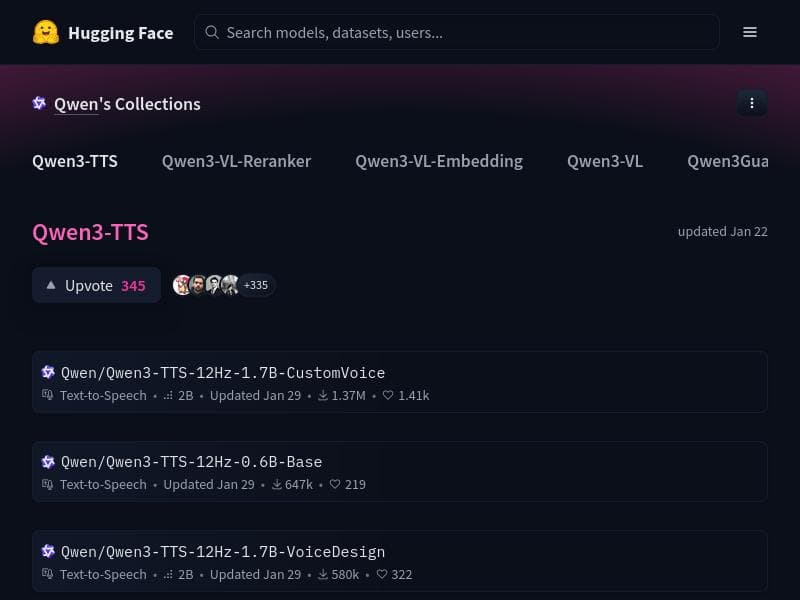
Qwen3-TTS is a state-of-the-art, multilingual text-to-speech system featuring prompt-based voice design and rapid zero-shot voice cloning, all delivered with ultra-low latency. Ideal for developers and researchers seeking a flexible, open-source TTS solution that supports 10 languages and real-time streaming without cost.
Qwen3-TTS is an advanced text-to-speech (TTS) system that represents the cutting edge of speech synthesis technology. Developed as part of the Qwen AI model collection, it offers state-of-the-art speech models available in two sizes, 0.6 billion and 1.7 billion parameters, designed to deliver natural, high-quality audio output across 10 different languages. The core purpose of Qwen3-TTS is to provide developers, researchers, and businesses with a versatile, efficient, and highly customizable TTS solution that can be integrated into a wide range of applications, from virtual assistants and audiobooks to accessibility tools and real-time communication platforms. Its open-source and open-science approach ensures transparency and fosters innovation within the AI community. One of the standout features of Qwen3-TTS is its prompt-based Voice Design capability, which allows users to tailor the voice output dynamically by providing specific prompts. This feature enables the creation of unique voice personas without the need for extensive retraining or voice data collection. Additionally, Qwen3-TTS supports 3-second zero-shot cloning, meaning it can mimic a new voice style or speaker with just a brief audio sample, significantly reducing the time and data required for voice adaptation. This makes it ideal for applications requiring rapid personalization or voice switching. Another critical capability is its extreme low-latency streaming, which ensures that synthesized speech can be generated and delivered in near real-time, a vital feature for interactive voice-based systems such as chatbots, live broadcasts, and telecommunication services. Qwen3-TTS is best suited for developers, AI researchers, and enterprises looking for a flexible and powerful TTS engine that supports multilingual output and voice customization. It is particularly useful for companies developing voice-enabled products that require natural-sounding speech synthesis with minimal delay. Use cases include creating personalized virtual assistants that can switch voices on the fly, generating audio content in multiple languages for global audiences, and enhancing accessibility tools for visually impaired users. Its open-source nature also makes it an excellent choice for academic research and experimentation in speech synthesis and voice cloning. The tool is offered completely free of charge, reflecting its commitment to open science and broad accessibility. This pricing model makes Qwen3-TTS an attractive option for startups, independent developers, and educational institutions that need high-quality TTS capabilities without incurring licensing fees. Users can access the models and integrate them into their projects via the Hugging Face platform, benefiting from community support and continuous updates. Compared to other TTS solutions, Qwen3-TTS stands out due to its combination of multilingual support, prompt-based voice customization, and rapid zero-shot cloning. Many commercial TTS services offer high-quality voices but often lack the flexibility for prompt-driven voice design or require extensive voice data for cloning. Additionally, proprietary platforms typically impose usage costs and restrictions, whereas Qwen3-TTS’s open-source framework promotes experimentation and adaptation. However, while it excels in flexibility and innovation, users may need technical expertise to deploy and fine-tune the models effectively, as it may not offer the same out-of-the-box simplicity as some commercial SaaS TTS providers. Potential limitations include the requirement for computational resources to run the larger 1.7B parameter model efficiently, which might be a barrier for users with limited hardware capabilities. Also, while the zero-shot cloning is impressive, the quality and accuracy of voice replication can vary depending on the input sample quality and language. As an open-source project, ongoing maintenance and support depend largely on the community and developers behind Qwen3-TTS, which might affect long-term reliability compared to commercial offerings with dedicated support teams. In summary, Qwen3-TTS is a powerful, flexible, and multilingual text-to-speech engine that pushes the boundaries of voice synthesis technology. Its unique features like prompt-based voice design and rapid zero-shot cloning make it highly adaptable for a variety of innovative applications, especially for users who value open-source solutions and customization. While it requires some technical know-how and sufficient computational resources, its free access and advanced capabilities position it as a compelling choice for developers and researchers aiming to leverage state-of-the-art TTS technology.

Description
Qwen3-TTS is a state-of-the-art, multilingual text-to-speech system featuring prompt-based voice design and rapid zero-shot voice cloning, all delivered with ultra-low latency. Ideal for developers and researchers seeking a flexible, open-source TTS solution that supports 10 languages and real-time streaming without cost.
Qwen3-TTS is an advanced text-to-speech (TTS) system that represents the cutting edge of speech synthesis technology. Developed as part of the Qwen AI model collection, it offers state-of-the-art speech models available in two sizes, 0.6 billion and 1.7 billion parameters, designed to deliver natural, high-quality audio output across 10 different languages. The core purpose of Qwen3-TTS is to provide developers, researchers, and businesses with a versatile, efficient, and highly customizable TTS solution that can be integrated into a wide range of applications, from virtual assistants and audiobooks to accessibility tools and real-time communication platforms. Its open-source and open-science approach ensures transparency and fosters innovation within the AI community. One of the standout features of Qwen3-TTS is its prompt-based Voice Design capability, which allows users to tailor the voice output dynamically by providing specific prompts. This feature enables the creation of unique voice personas without the need for extensive retraining or voice data collection. Additionally, Qwen3-TTS supports 3-second zero-shot cloning, meaning it can mimic a new voice style or speaker with just a brief audio sample, significantly reducing the time and data required for voice adaptation. This makes it ideal for applications requiring rapid personalization or voice switching. Another critical capability is its extreme low-latency streaming, which ensures that synthesized speech can be generated and delivered in near real-time, a vital feature for interactive voice-based systems such as chatbots, live broadcasts, and telecommunication services. Qwen3-TTS is best suited for developers, AI researchers, and enterprises looking for a flexible and powerful TTS engine that supports multilingual output and voice customization. It is particularly useful for companies developing voice-enabled products that require natural-sounding speech synthesis with minimal delay. Use cases include creating personalized virtual assistants that can switch voices on the fly, generating audio content in multiple languages for global audiences, and enhancing accessibility tools for visually impaired users. Its open-source nature also makes it an excellent choice for academic research and experimentation in speech synthesis and voice cloning. The tool is offered completely free of charge, reflecting its commitment to open science and broad accessibility. This pricing model makes Qwen3-TTS an attractive option for startups, independent developers, and educational institutions that need high-quality TTS capabilities without incurring licensing fees. Users can access the models and integrate them into their projects via the Hugging Face platform, benefiting from community support and continuous updates. Compared to other TTS solutions, Qwen3-TTS stands out due to its combination of multilingual support, prompt-based voice customization, and rapid zero-shot cloning. Many commercial TTS services offer high-quality voices but often lack the flexibility for prompt-driven voice design or require extensive voice data for cloning. Additionally, proprietary platforms typically impose usage costs and restrictions, whereas Qwen3-TTS’s open-source framework promotes experimentation and adaptation. However, while it excels in flexibility and innovation, users may need technical expertise to deploy and fine-tune the models effectively, as it may not offer the same out-of-the-box simplicity as some commercial SaaS TTS providers. Potential limitations include the requirement for computational resources to run the larger 1.7B parameter model efficiently, which might be a barrier for users with limited hardware capabilities. Also, while the zero-shot cloning is impressive, the quality and accuracy of voice replication can vary depending on the input sample quality and language. As an open-source project, ongoing maintenance and support depend largely on the community and developers behind Qwen3-TTS, which might affect long-term reliability compared to commercial offerings with dedicated support teams. In summary, Qwen3-TTS is a powerful, flexible, and multilingual text-to-speech engine that pushes the boundaries of voice synthesis technology. Its unique features like prompt-based voice design and rapid zero-shot cloning make it highly adaptable for a variety of innovative applications, especially for users who value open-source solutions and customization. While it requires some technical know-how and sufficient computational resources, its free access and advanced capabilities position it as a compelling choice for developers and researchers aiming to leverage state-of-the-art TTS technology.
Tool Features
- Open source and open science approach
- High-quality text-to-speech synthesis
- Part of the Qwen AI model collection
Frequently Asked Questions
What is Qwen3-TTS?
Qwen3-TTS is a family of state-of-the-art text-to-speech models that support 10 languages and offer advanced features like prompt-based voice design, 3-second zero-shot voice cloning, and extremely low-latency streaming. It is part of the Qwen AI model collection and is designed to provide high-quality, customizable speech synthesis.
How much does Qwen3-TTS cost?
Qwen3-TTS is completely free to use, reflecting its open-source and open-science approach. Users can access and integrate the models without any licensing fees.
Who is Qwen3-TTS best for?
Qwen3-TTS is best suited for developers, AI researchers, startups, and enterprises looking for a flexible, multilingual TTS engine with advanced voice customization capabilities. It is ideal for creating personalized virtual assistants, multilingual audio content, accessibility tools, and real-time voice applications.
What are the main features of Qwen3-TTS?
Key features include prompt-based voice design allowing dynamic voice customization, 3-second zero-shot voice cloning for rapid voice adaptation, support for 10 languages, extreme low-latency streaming for real-time applications, and an open-source framework promoting transparency and innovation.
Does Qwen3-TTS offer a free trial?
Yes, Qwen3-TTS is fully free to use with no trial restrictions, as it is an open-source project available to the public.
What integrations does Qwen3-TTS support?
Qwen3-TTS can be integrated via the Hugging Face platform, allowing developers to incorporate it into various applications and workflows. Being open source, it can be adapted for use in custom software, APIs, and other AI-driven systems.
How does Qwen3-TTS work?
Qwen3-TTS uses large-scale neural network models trained on multilingual speech data to convert text into natural-sounding speech. It leverages prompt-based voice design to customize voice characteristics and employs zero-shot cloning to mimic new voices from brief audio samples, all while maintaining low latency for streaming applications.
Socials
Use ToolSponsored Tools





























Reviews
No reviews yet. Be the first to share your experience.