Qwen-Image-Layered
Description
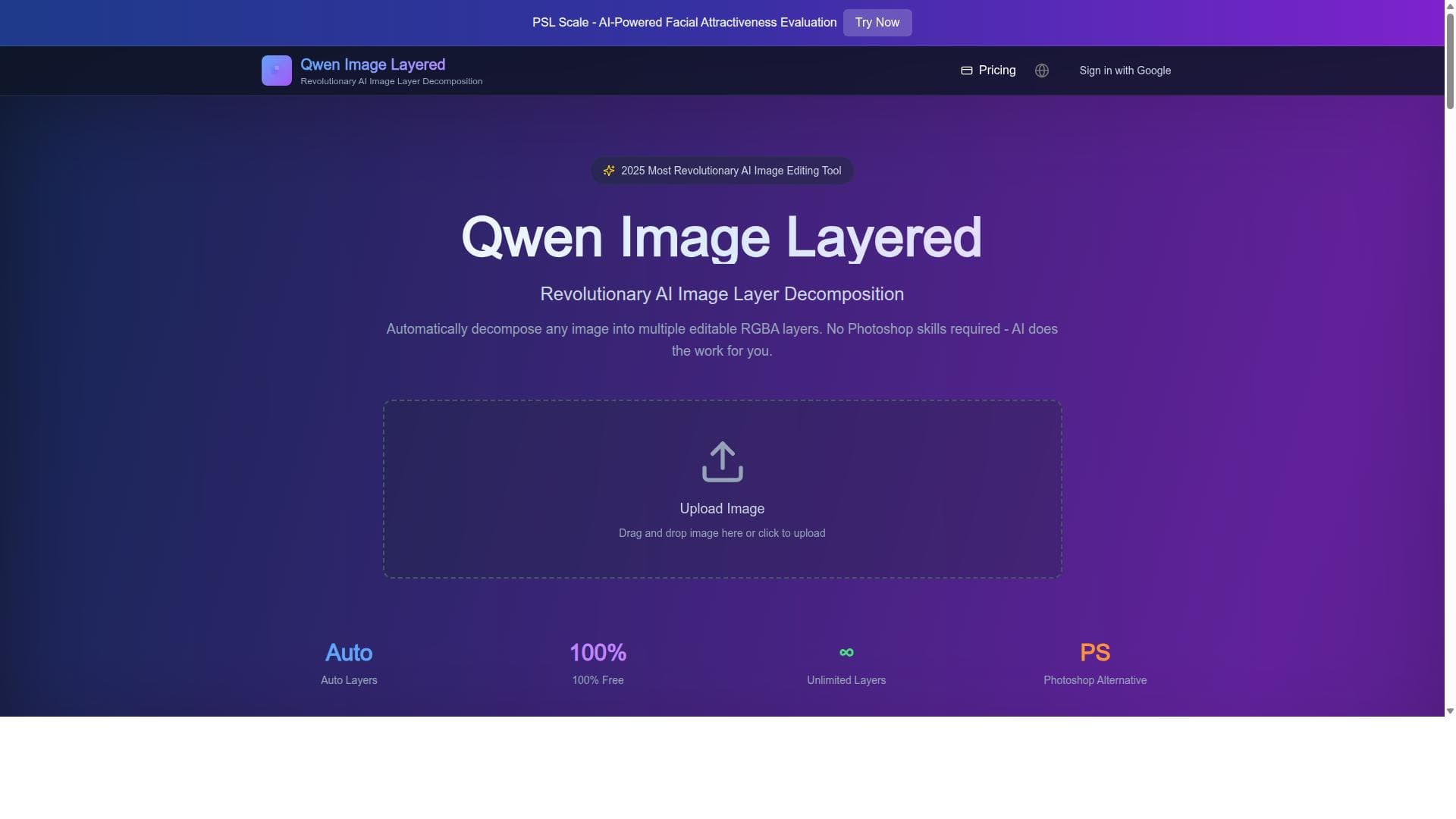
Qwen-Image-Layered revolutionizes image editing by decomposing images into transparent, editable RGBA layers, enabling artifact-free manipulation of individual objects. Ideal for designers and developers seeking granular control, this open source AI tool offers advanced, recursive layer decomposition completely free of charge.
Qwen-Image-Layered is an innovative AI tool designed to decompose images into transparent RGBA layers, fundamentally transforming how images can be edited and manipulated. Its core purpose is to unlock the inherent editability of images by breaking them down into multiple layers that can be independently moved, resized, or deleted without causing visual artifacts. This layered approach to image processing offers a level of flexibility and control that traditional flat image editing tools cannot match, making it a powerful asset for graphic designers, digital artists, and developers working with complex visual content. At the heart of Qwen-Image-Layered is its open source AI model, which leverages advanced image processing techniques to analyze and segment images into meaningful layers. The tool supports recursive decomposition, allowing users to break down images into as many layers as needed, depending on the complexity and the desired level of detail. This variable layer count capability means users can tailor the decomposition process to their specific project requirements, whether they need a few broad layers or many fine-grained ones. The transparent RGBA format ensures that each layer maintains its visual integrity, enabling seamless recombination or individual editing without compromising image quality. Key features of Qwen-Image-Layered include its open source nature, which promotes transparency, collaboration, and continuous improvement within the AI and image processing communities. The layered image generation capability is central to its functionality, providing users with editable components rather than static images. Its advanced image processing capabilities include precise object segmentation and artifact-free editing, which are critical for professional-grade image manipulation. Additionally, the tool supports the democratization of AI by making sophisticated image editing accessible to a broader audience, aligning with its focus on open science principles. Qwen-Image-Layered is best suited for graphic designers, digital artists, animators, and developers who require granular control over image elements. It is particularly valuable in workflows where images need to be dynamically adjusted or repurposed, such as in game development, advertising, UI/UX design, and multimedia content creation. By enabling users to manipulate individual objects within an image without degrading quality, it streamlines the editing process and reduces the need for time-consuming manual masking or reconstruction. The tool is offered free of charge, making it an attractive option for individuals and organizations looking to leverage advanced AI-driven image editing without financial barriers. This pricing model supports its mission to democratize AI technology and foster an open science ecosystem where innovation can thrive through community engagement and shared resources. Compared to traditional image editing software and other AI-based image segmentation tools, Qwen-Image-Layered stands out due to its recursive decomposition and variable layer count features, which provide unmatched flexibility. While many tools offer static segmentation or limited layer extraction, Qwen-Image-Layered’s approach allows for deeper, more customizable image breakdowns. Its open source status also differentiates it from proprietary solutions, offering users the ability to inspect, modify, and contribute to the underlying model. However, users should consider that as an open source AI model, the tool may require some technical knowledge to fully integrate and utilize within custom workflows. Additionally, while it excels at layered decomposition, it may not replace all functionalities of comprehensive image editing suites, especially those focused on raster painting or vector graphics creation. Performance and accuracy may vary depending on image complexity and the computational resources available. Overall, Qwen-Image-Layered is a cutting-edge AI tool that redefines image editability through layered decomposition. Its combination of open source accessibility, advanced processing capabilities, and user-centric design makes it a valuable resource for anyone seeking to enhance their image editing toolkit with AI-powered flexibility and precision.

Description
Qwen-Image-Layered revolutionizes image editing by decomposing images into transparent, editable RGBA layers, enabling artifact-free manipulation of individual objects. Ideal for designers and developers seeking granular control, this open source AI tool offers advanced, recursive layer decomposition completely free of charge.
Qwen-Image-Layered is an innovative AI tool designed to decompose images into transparent RGBA layers, fundamentally transforming how images can be edited and manipulated. Its core purpose is to unlock the inherent editability of images by breaking them down into multiple layers that can be independently moved, resized, or deleted without causing visual artifacts. This layered approach to image processing offers a level of flexibility and control that traditional flat image editing tools cannot match, making it a powerful asset for graphic designers, digital artists, and developers working with complex visual content. At the heart of Qwen-Image-Layered is its open source AI model, which leverages advanced image processing techniques to analyze and segment images into meaningful layers. The tool supports recursive decomposition, allowing users to break down images into as many layers as needed, depending on the complexity and the desired level of detail. This variable layer count capability means users can tailor the decomposition process to their specific project requirements, whether they need a few broad layers or many fine-grained ones. The transparent RGBA format ensures that each layer maintains its visual integrity, enabling seamless recombination or individual editing without compromising image quality. Key features of Qwen-Image-Layered include its open source nature, which promotes transparency, collaboration, and continuous improvement within the AI and image processing communities. The layered image generation capability is central to its functionality, providing users with editable components rather than static images. Its advanced image processing capabilities include precise object segmentation and artifact-free editing, which are critical for professional-grade image manipulation. Additionally, the tool supports the democratization of AI by making sophisticated image editing accessible to a broader audience, aligning with its focus on open science principles. Qwen-Image-Layered is best suited for graphic designers, digital artists, animators, and developers who require granular control over image elements. It is particularly valuable in workflows where images need to be dynamically adjusted or repurposed, such as in game development, advertising, UI/UX design, and multimedia content creation. By enabling users to manipulate individual objects within an image without degrading quality, it streamlines the editing process and reduces the need for time-consuming manual masking or reconstruction. The tool is offered free of charge, making it an attractive option for individuals and organizations looking to leverage advanced AI-driven image editing without financial barriers. This pricing model supports its mission to democratize AI technology and foster an open science ecosystem where innovation can thrive through community engagement and shared resources. Compared to traditional image editing software and other AI-based image segmentation tools, Qwen-Image-Layered stands out due to its recursive decomposition and variable layer count features, which provide unmatched flexibility. While many tools offer static segmentation or limited layer extraction, Qwen-Image-Layered’s approach allows for deeper, more customizable image breakdowns. Its open source status also differentiates it from proprietary solutions, offering users the ability to inspect, modify, and contribute to the underlying model. However, users should consider that as an open source AI model, the tool may require some technical knowledge to fully integrate and utilize within custom workflows. Additionally, while it excels at layered decomposition, it may not replace all functionalities of comprehensive image editing suites, especially those focused on raster painting or vector graphics creation. Performance and accuracy may vary depending on image complexity and the computational resources available. Overall, Qwen-Image-Layered is a cutting-edge AI tool that redefines image editability through layered decomposition. Its combination of open source accessibility, advanced processing capabilities, and user-centric design makes it a valuable resource for anyone seeking to enhance their image editing toolkit with AI-powered flexibility and precision.
Tool Features
- Open source AI model
- Layered image generation
- Advanced image processing capabilities
- Supports democratization of AI
- Focus on open science
Frequently Asked Questions
What is Qwen-Image-Layered?
Qwen-Image-Layered is an open source AI tool that decomposes images into transparent RGBA layers, allowing users to move, resize, or delete individual objects within an image without causing visual artifacts.
How much does Qwen-Image-Layered cost?
Qwen-Image-Layered is completely free to use, supporting its mission to democratize AI and promote open science.
Who is Qwen-Image-Layered best for?
It is best suited for graphic designers, digital artists, animators, and developers who need detailed control over image elements for tasks such as game development, advertising, UI/UX design, and multimedia content creation.
What are the main features of Qwen-Image-Layered?
Key features include open source AI modeling, layered image generation with transparent RGBA layers, recursive decomposition allowing variable layer counts, advanced image processing for artifact-free editing, and a focus on democratizing AI technology.
Does Qwen-Image-Layered offer a free trial?
Since Qwen-Image-Layered is free and open source, there is no need for a trial period; users can access and use the tool immediately without cost.
What integrations does Qwen-Image-Layered support?
As an open source AI model hosted on Hugging Face, Qwen-Image-Layered can be integrated into custom workflows and applications via APIs or direct model downloads, though specific third-party integrations depend on user implementation.
How does Qwen-Image-Layered work?
The tool uses AI-driven image processing to analyze an input image and recursively decompose it into multiple transparent RGBA layers. Each layer represents distinct objects or regions, enabling independent editing without artifacts.
Socials
Use ToolSponsored Tools






























Reviews
No reviews yet. Be the first to share your experience.