Description
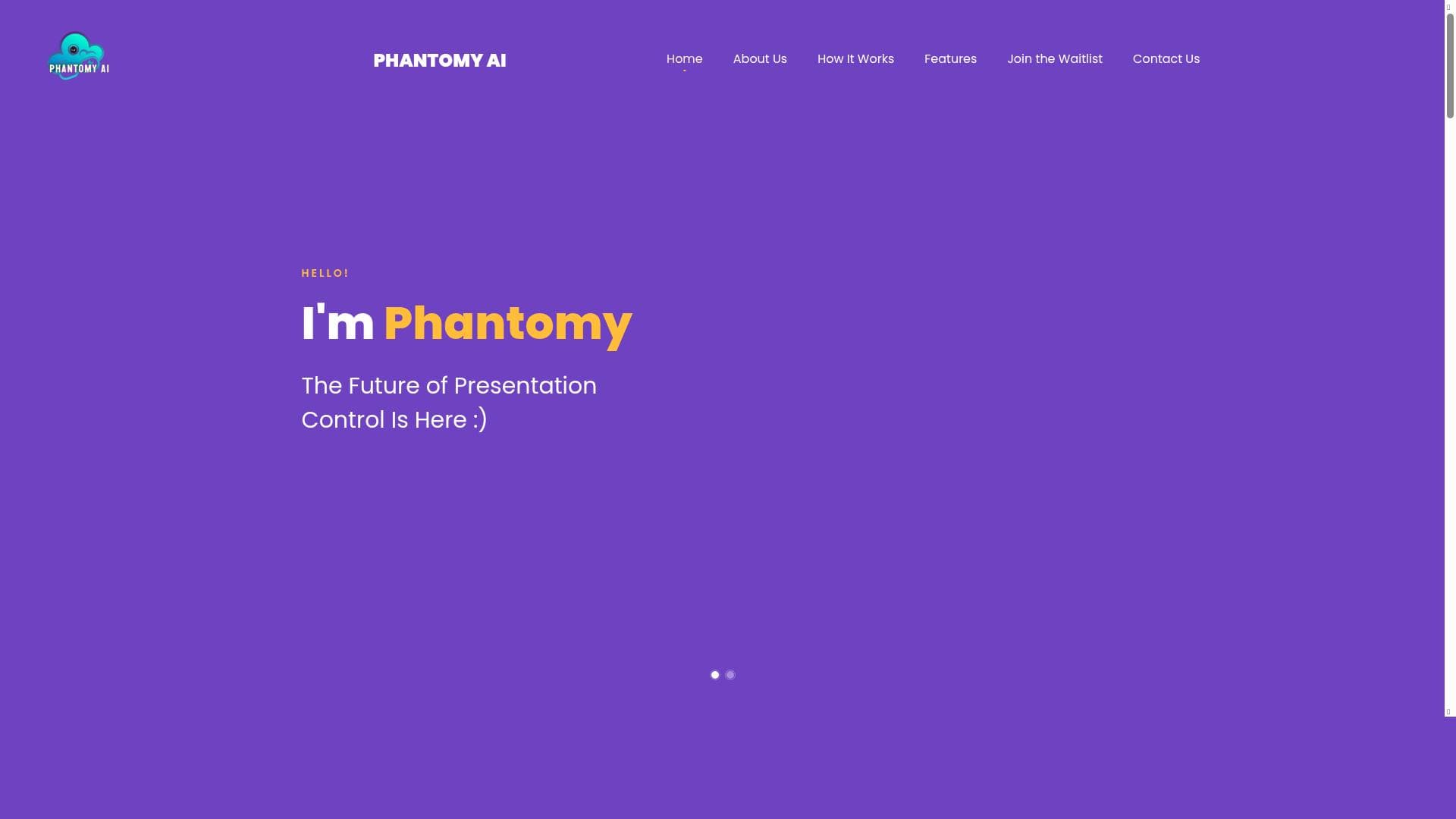
Phantomy transforms computer interaction by enabling precise, intuitive control through natural hand gestures—no keyboard, mouse, or extra hardware needed. Ideal for professionals, creatives, and accessibility users, it offers seamless navigation, drawing, and program control with advanced screen object detection for unmatched accuracy.
Phantomy is an innovative AI-powered tool designed to revolutionize the way users interact with their computers by enabling full control through intuitive hand gestures, eliminating the need for traditional input devices like keyboards and mice. At its core, Phantomy leverages advanced computer vision and edge detection algorithms to detect on-screen objects such as buttons and interactive elements with remarkable precision. This allows users to navigate slides, scroll through documents, zoom in and out, draw, and even activate or stop programs seamlessly using natural hand movements. The tool’s primary purpose is to create a more fluid, efficient, and ergonomic computing experience that caters to a wide range of users, from professionals delivering presentations to creatives working on digital art, and anyone seeking a touch-free interface for enhanced accessibility or hygiene reasons. One of Phantomy’s standout features is its Screen Object Detection capability, which uses sophisticated edge detection techniques to accurately identify interactive elements on the screen. This ensures that gesture commands are contextually relevant and precise, minimizing errors and improving overall responsiveness. Complementing this is the Gesture-Based Control system, which interprets a variety of natural hand gestures to perform mouse movements and other control functions. This system is designed to be highly intuitive, reducing the learning curve and enabling users to quickly adapt to gesture-based navigation. Additionally, Phantomy is compatible with diverse screen types and user interfaces, making it versatile across different operating systems and application environments. Importantly, it requires no additional hardware such as specialized cameras or sensors, relying instead on existing device cameras to capture hand movements, which simplifies setup and lowers barriers to adoption. Phantomy is particularly well-suited for professionals who frequently present or collaborate remotely, as it allows effortless slide navigation and program control without interrupting the flow of their presentation. Creative professionals and digital artists can benefit from the drawing and zooming functionalities, enabling more natural interactions with their digital canvases. Furthermore, individuals with mobility impairments or those seeking hygienic, touch-free computing solutions will find Phantomy’s gesture-based control an empowering alternative to conventional input devices. Educational environments can also leverage Phantomy to create more engaging and interactive learning experiences. The tool operates on a freemium pricing model, offering a free tier that provides access to core functionalities, making it accessible for casual users and those wanting to test its capabilities. Premium plans likely unlock advanced features, enhanced precision, or additional customization options, though specific pricing details would typically be available on the official website. This model allows users to experience the value of Phantomy before committing financially, fostering wider adoption. Compared to alternative gesture control solutions, Phantomy stands out by not requiring any extra hardware, which is a significant advantage over competitors that depend on specialized sensors or gloves. Its advanced screen object detection also provides a higher degree of accuracy and contextual awareness than many generic gesture recognition tools. While some alternatives may offer broader ecosystem integrations or multi-device support, Phantomy’s focus on precision and ease of use makes it a compelling choice for users prioritizing seamless gesture control without hardware investments. Potential limitations include reliance on camera quality and lighting conditions, which can affect gesture recognition accuracy. Users operating in dimly lit environments or with lower-resolution webcams may experience reduced performance. Additionally, while Phantomy supports diverse screen types, some niche or highly customized user interfaces might present challenges for object detection. As with any emerging technology, there may be a learning curve for users unfamiliar with gesture-based controls, though Phantomy’s intuitive design aims to mitigate this. Overall, Phantomy offers a cutting-edge, accessible solution for hands-free computer interaction that balances innovation with practical usability.

Description
Phantomy transforms computer interaction by enabling precise, intuitive control through natural hand gestures—no keyboard, mouse, or extra hardware needed. Ideal for professionals, creatives, and accessibility users, it offers seamless navigation, drawing, and program control with advanced screen object detection for unmatched accuracy.
Phantomy is an innovative AI-powered tool designed to revolutionize the way users interact with their computers by enabling full control through intuitive hand gestures, eliminating the need for traditional input devices like keyboards and mice. At its core, Phantomy leverages advanced computer vision and edge detection algorithms to detect on-screen objects such as buttons and interactive elements with remarkable precision. This allows users to navigate slides, scroll through documents, zoom in and out, draw, and even activate or stop programs seamlessly using natural hand movements. The tool’s primary purpose is to create a more fluid, efficient, and ergonomic computing experience that caters to a wide range of users, from professionals delivering presentations to creatives working on digital art, and anyone seeking a touch-free interface for enhanced accessibility or hygiene reasons. One of Phantomy’s standout features is its Screen Object Detection capability, which uses sophisticated edge detection techniques to accurately identify interactive elements on the screen. This ensures that gesture commands are contextually relevant and precise, minimizing errors and improving overall responsiveness. Complementing this is the Gesture-Based Control system, which interprets a variety of natural hand gestures to perform mouse movements and other control functions. This system is designed to be highly intuitive, reducing the learning curve and enabling users to quickly adapt to gesture-based navigation. Additionally, Phantomy is compatible with diverse screen types and user interfaces, making it versatile across different operating systems and application environments. Importantly, it requires no additional hardware such as specialized cameras or sensors, relying instead on existing device cameras to capture hand movements, which simplifies setup and lowers barriers to adoption. Phantomy is particularly well-suited for professionals who frequently present or collaborate remotely, as it allows effortless slide navigation and program control without interrupting the flow of their presentation. Creative professionals and digital artists can benefit from the drawing and zooming functionalities, enabling more natural interactions with their digital canvases. Furthermore, individuals with mobility impairments or those seeking hygienic, touch-free computing solutions will find Phantomy’s gesture-based control an empowering alternative to conventional input devices. Educational environments can also leverage Phantomy to create more engaging and interactive learning experiences. The tool operates on a freemium pricing model, offering a free tier that provides access to core functionalities, making it accessible for casual users and those wanting to test its capabilities. Premium plans likely unlock advanced features, enhanced precision, or additional customization options, though specific pricing details would typically be available on the official website. This model allows users to experience the value of Phantomy before committing financially, fostering wider adoption. Compared to alternative gesture control solutions, Phantomy stands out by not requiring any extra hardware, which is a significant advantage over competitors that depend on specialized sensors or gloves. Its advanced screen object detection also provides a higher degree of accuracy and contextual awareness than many generic gesture recognition tools. While some alternatives may offer broader ecosystem integrations or multi-device support, Phantomy’s focus on precision and ease of use makes it a compelling choice for users prioritizing seamless gesture control without hardware investments. Potential limitations include reliance on camera quality and lighting conditions, which can affect gesture recognition accuracy. Users operating in dimly lit environments or with lower-resolution webcams may experience reduced performance. Additionally, while Phantomy supports diverse screen types, some niche or highly customized user interfaces might present challenges for object detection. As with any emerging technology, there may be a learning curve for users unfamiliar with gesture-based controls, though Phantomy’s intuitive design aims to mitigate this. Overall, Phantomy offers a cutting-edge, accessible solution for hands-free computer interaction that balances innovation with practical usability.
Tool Features
- Screen Object Detection: Detects on-screen objects such as buttons and interactive elements with precision using advanced edge detection algorithms.
- Gesture-Based Control: Enables full control of screen and applications using natural hand gestures including mouse movement.
- Compatible with diverse screen types and user interfaces.
- No additional hardware required for gesture control.
Frequently Asked Questions
What is Phantomy ?
Phantomy is an AI-powered tool that allows users to control their computer entirely through natural hand gestures, enabling actions like navigating slides, scrolling, zooming, drawing, and program activation without using a keyboard or mouse.
How much does Phantomy cost?
Phantomy operates on a freemium pricing model, offering a free tier with core features and premium plans that likely provide advanced functionalities and customization options. Detailed pricing information is available on their official website.
Who is Phantomy best for?
Phantomy is ideal for professionals delivering presentations, digital artists, individuals with mobility impairments, and anyone seeking a touch-free, intuitive way to interact with their computer across various environments.
What are the main features of Phantomy ?
Key features include Screen Object Detection for precise identification of on-screen interactive elements, Gesture-Based Control enabling full computer navigation through natural hand movements, compatibility with diverse screen types and interfaces, and no requirement for additional hardware.
Does Phantomy offer a free trial?
Yes, Phantomy offers a freemium model which includes a free tier allowing users to try out the core features without any initial cost.
What integrations does Phantomy support?
Phantomy is compatible with a wide range of screen types and user interfaces, enabling it to work seamlessly across various operating systems and applications without needing specialized integrations.
How does Phantomy work?
Phantomy uses your device’s existing camera to detect hand gestures and employs advanced edge detection algorithms to identify on-screen objects, translating natural hand movements into precise computer control commands without requiring additional hardware.
Sponsored Tools



































Reviews
No reviews yet. Be the first to share your experience.